Last Updated on September 17, 2026 by Ellen Christian
Fall and winter can turn even the neatest entryway into a cluttered mess. Coats pile up, boots collect by the door, and suddenly there are hats, gloves, bags, umbrellas, and mail everywhere.
Posts may be sponsored. This post contains affiliate links, which means I will make a commission at no extra cost to you should you click through and make a purchase. As an Amazon Associate I earn from qualifying purchases.
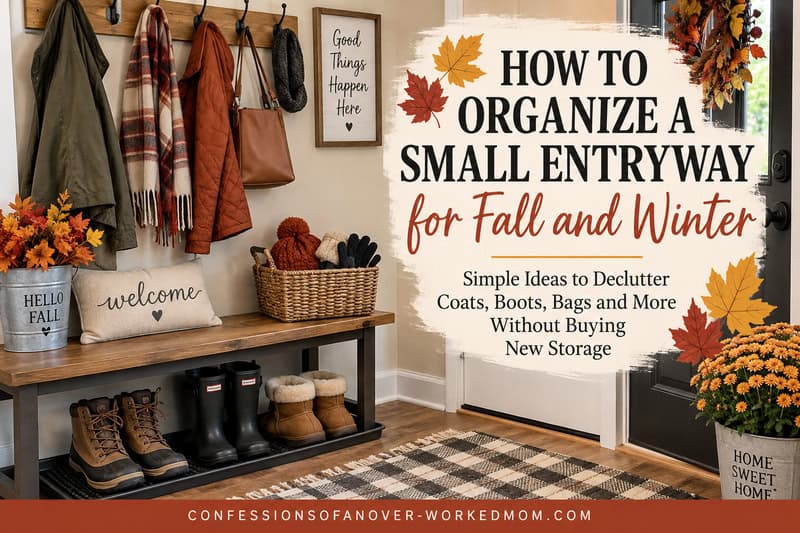
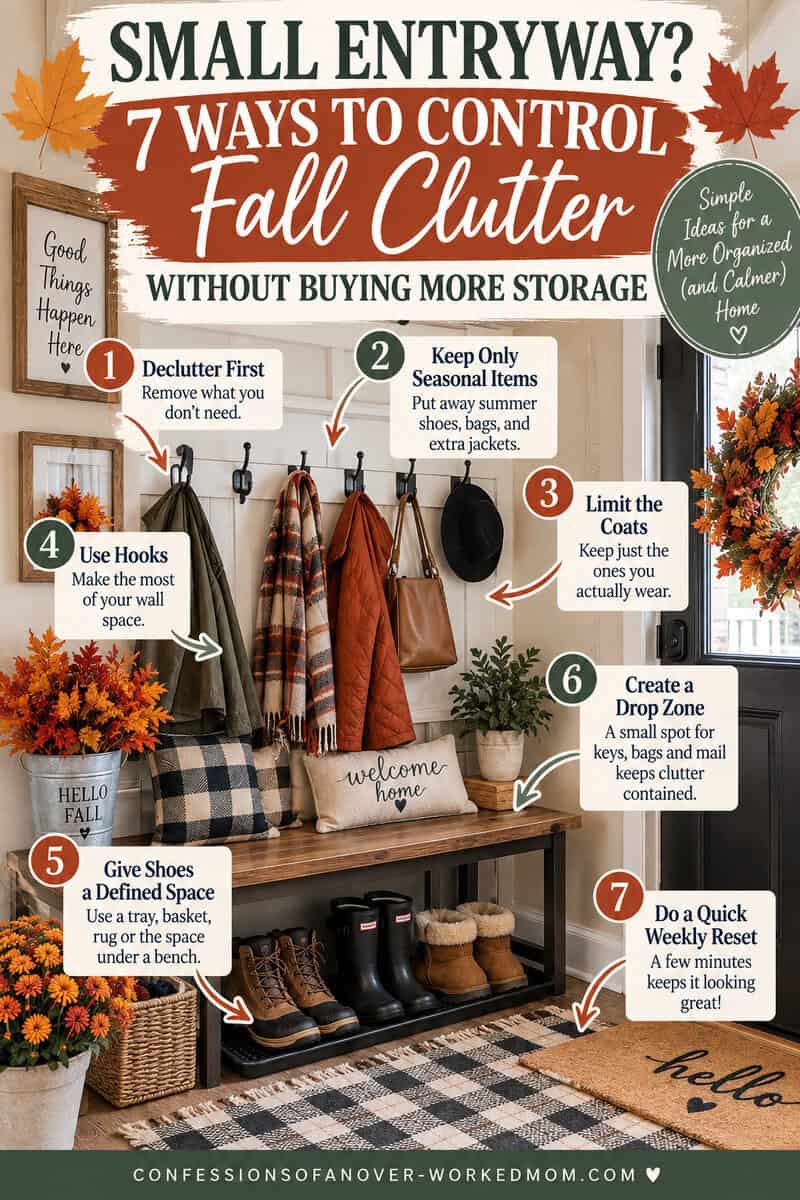
If you’re wondering how to organize a small entryway, you don’t necessarily need more storage containers or an expensive entryway makeover. In many cases, the best place to start is by removing what doesn’t need to be there.
A small entryway works much better when you limit it to the things your family actually uses when leaving or entering the house. These simple ideas will help you get your entryway ready for fall and winter without filling it with more stuff.
Start by Completely Clearing the Entryway
Before you start organizing, remove as much as possible from the space. Take down coats, pick up shoes and boots, empty baskets, and remove anything sitting on tables, shelves, or benches.
Starting with an empty space makes it much easier to see what you actually have.
As you remove things, separate them into a few basic groups:
- Keep in the entryway
- Put away somewhere else
- Donate
- Throw away or recycle
Try not to organize things you already know you don’t need. Getting rid of excess items first means you’ll have less to find a home for later.
If you’re working on reducing clutter throughout your home, this is also a good time to use the ideas in The One-In, One-Out Rule: A Simple System That Actually Works.
Put Away Anything From the Previous Season
One of the easiest ways to make a small entryway feel crowded is to leave several seasons of belongings there at the same time.
As cooler weather arrives, put away things you probably won’t need again until spring or summer. Depending on your household, that might include sandals, sun hats, lightweight jackets, gardening shoes, or summer tote bags.
You don’t need winter boots, rain boots, sneakers, sandals, and dress shoes all sitting beside the door at once.
Keep the things you’re currently using in the entryway and store the rest somewhere else.
Decide What Really Needs to Live by the Door
Once you’ve removed the clutter, think about what your family genuinely needs when leaving the house.
For fall and winter, that will probably include some combination of:
- Everyday coats
- Frequently worn shoes or boots
- Hats
- Gloves or mittens
- Scarves
- Handbags or backpacks
- Keys
- An umbrella
That doesn’t mean every coat, pair of shoes, or winter accessory you own needs to be stored there.
Try limiting each person to one or two frequently used coats and a couple of pairs of shoes or boots. Extras can stay in bedroom closets or another storage area.
This one change can make a surprisingly big difference in a small entryway.
Give Shoes and Boots a Defined Space
Shoes tend to spread across whatever floor space is available unless they have a boundary.
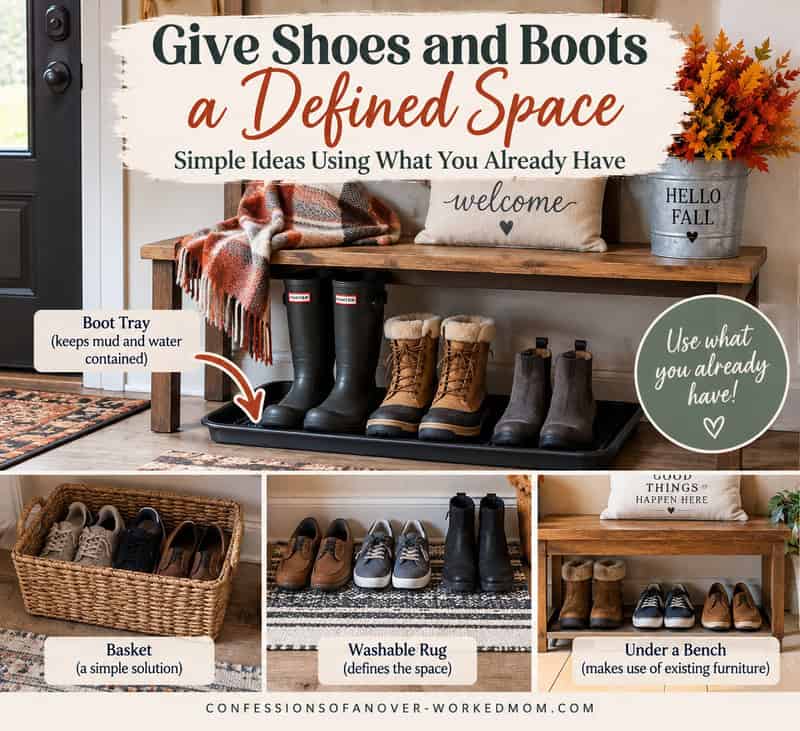
You don’t necessarily need to buy a new shoe organizer. Look around your house first.
A boot tray you already own, a washable rug, a low basket, or the space beneath an existing bench may be enough.
The goal is simply to establish one area where everyday footwear belongs.
During Vermont mud and snow season, having a designated place for wet boots is especially useful. It helps contain water, mud, road salt, and bits of leaves rather than having them tracked farther into the house.
If the designated area is full, that’s a good indication that some shoes need to be put away.
Limit the Number of Coats in Your Entryway
Coats can overwhelm a small space quickly.
If you have six coats hanging by the door but regularly wear only two of them, move the others elsewhere.
The same principle applies to guests’ coats, children’s jackets, work coats, and special-occasion outerwear. Your entryway doesn’t need to function as long-term storage for every piece of outerwear your household owns.
Keeping only frequently worn coats near the door makes the area look less cluttered and makes it easier to find what you need.
Create One Place for Hats and Gloves
Small winter accessories are another major source of entryway clutter.
Instead of letting hats, mittens, gloves, and scarves collect on every available surface, designate one place for them.
You may already have something at home that will work. Try an existing basket, fabric bin, drawer, or even a sturdy reusable tote tucked onto a shelf.
If several people use the entryway, separate containers can help. But don’t automatically buy several matching bins just because an organizing photo online shows them.
Use what you already have first.
Once winter arrives, periodically go through the container. Remove gloves that have lost their mates, items children have outgrown, and accessories no one actually wears.
Use Vertical Space Before Adding Furniture
When floor space is limited, look at your walls.
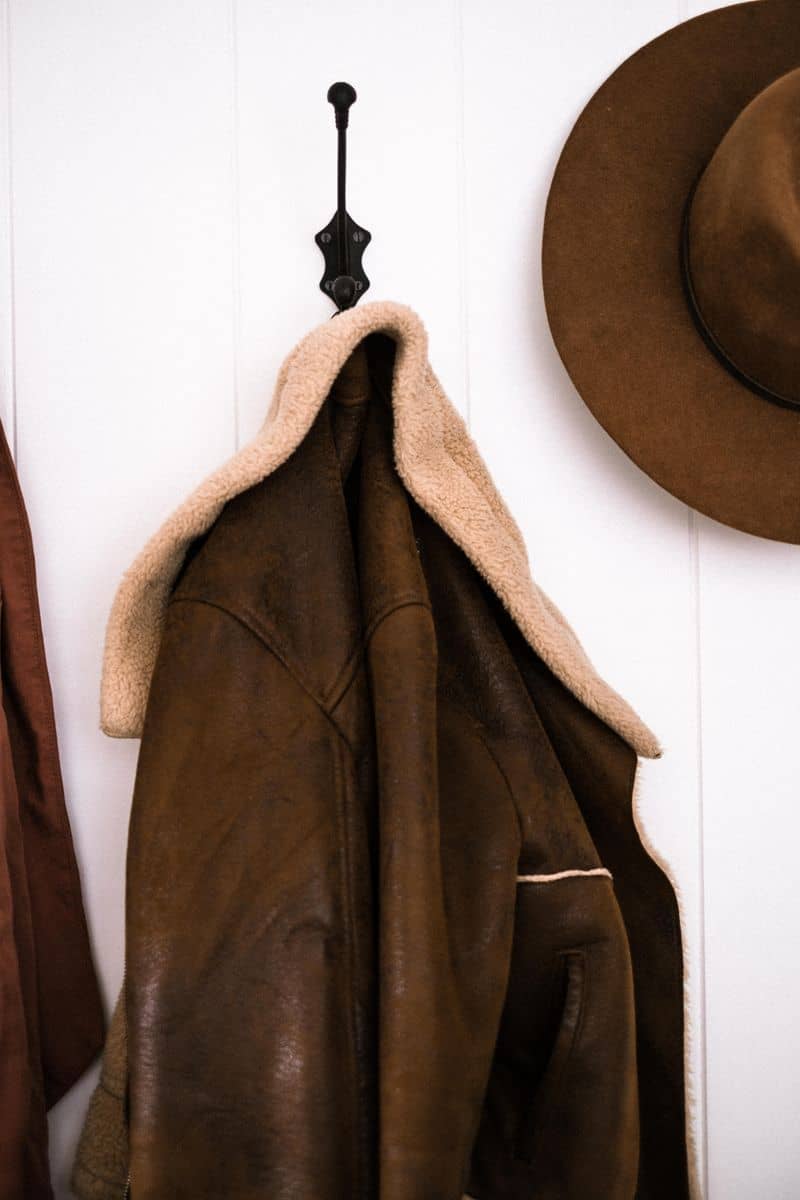
Existing hooks can hold coats, bags, umbrellas, dog leashes, or reusable shopping bags. If you already have unused hooks somewhere else in your home, consider relocating them rather than buying new ones.
You can also make better use of shelves that are already in the entryway.
Keep frequently used items at an easy-to-reach height and move less frequently used things higher up.
Try to avoid adding another piece of furniture unless you genuinely need it. A new cabinet or storage bench may provide more storage, but it also takes away valuable floor space.
Sometimes the best small-entryway solution is simply having less to store.
Make a Simple Drop Zone
Most households have a few things that get dropped the moment someone walks through the door.
Keys, wallets, sunglasses, work badges, handbags, and mail are common examples.
Choose one small location for these everyday items.
You might use a small bowl you already own for keys, one hook for your handbag, and a small basket for incoming mail.
The drop zone should be intentionally small. A large surface tends to invite more clutter.
If papers are one of your biggest trouble spots, my tips for How to Declutter Paper and What to Keep can help you decide what deserves space in your home.
Don’t Let the Entryway Become a Holding Area
It’s easy to leave things by the door because you’re planning to deal with them later.
Returns that need to go to the store, donations waiting to be dropped off, packages to mail, items that belong to someone else, and things destined for the car can all accumulate there.
It’s fine to temporarily place something by the door so you remember it. The problem starts when the temporary holding area becomes permanent.
Try setting a simple rule: if something has been sitting in the entryway for more than a few days, either take care of it or move it somewhere else.
Create a Routine for Incoming Mail
Mail can take over an entryway surprisingly quickly.
Rather than setting the entire pile on a table, deal with obvious junk mail and recycling as soon as possible. Put bills and important papers in whatever location you normally use for household paperwork.
The less paper that stays in the entryway, the easier the space will be to maintain.
This doesn’t need to become a complicated organizing system. The goal is simply to prevent the front door from becoming your household filing cabinet.
Make It Easy for Everyone to Put Things Away
An organizing system only works if it’s easy enough to use every day.
If children can’t reach their coat hooks, coats will probably end up on the floor. If the shoe basket is hidden behind something, shoes will probably stay beside the door. If putting gloves away requires opening three containers, they’ll probably land on the nearest table.
Keep everyday systems simple.
A hook, basket, tray, or shelf that takes only a few seconds to use will usually work better than an elaborate system that looks beautiful but is inconvenient.
Do a Five-Minute Entryway Reset Once a Week
Once you’ve organized your entryway, maintaining it should take very little time.
Spend about five minutes once a week returning stray items to their proper homes.
Put away extra shoes. Hang coats. Empty the mail basket. Return reusable shopping bags to the car. Move items that have migrated into the entryway from other rooms.
A quick weekly reset prevents small amounts of clutter from turning into another major organizing project.
For more ideas on preventing clutter from returning, read How to Declutter Your Home and Keep It That Way.
What Should You Buy to Organize a Small Entryway?
Before buying anything, live with your newly decluttered entryway for a week or two.
You may discover that you don’t need anything at all.
If you still have a specific problem, then consider buying something that solves that particular problem. For example, a boot tray may make sense if wet winter boots are damaging the floor. Extra hooks may help if everyone uses the same two hooks every day.
Avoid buying baskets, bins, shelves, or cabinets simply because they are marketed as organizing products.
Buying more storage doesn’t necessarily solve clutter. Sometimes it just gives you more places to keep things you don’t need.
Optional Entryway Helpers
You may already have everything you need to organize your entryway. But if you’re missing one or two basics, a few inexpensive items can make it easier to keep fall and winter mess under control.
A boot tray is especially helpful during rainy, muddy, or snowy weather. Place it beneath a bench or near the door to give wet shoes and boots a defined place while protecting your floor.
If you don’t have much floor space, wall hooks or over-the-door hooks can provide a convenient spot for frequently used coats, bags, scarves, or umbrellas without adding another piece of furniture.
A washable entryway rug can also help contain dirt and moisture while creating a visual boundary for shoes and boots. Choose one that’s easy to clean during the messier fall and winter months.
Before buying anything, check your closets, basement, or other rooms first. You may already own something that will work just as well.
A Small Entryway Doesn’t Need to Hold Everything
Learning how to organize a small entryway is really about deciding what deserves to take up limited space.
Keep the coats, shoes, bags, and accessories your family uses regularly. Move seasonal and occasional items elsewhere. Give everyday necessities simple homes, and resist the temptation to solve every clutter problem by buying another storage container.
When you have fewer things competing for space, even a very small entryway can be easier to use and much easier to keep organized.

Ellen is a busy mom of a 29-year-old son and 33-year-old daughter. She owns nine blogs and is addicted to social media. She believes that it doesn’t have to be difficult to lead a healthy life. She shares simple healthy living tips to show busy women how to lead fulfilling lives. If you’d like to work together, email info@confessionsofanover-workedmom.com to chat.
