Last Updated on June 23, 2026 by Ellen Christian
If you’ve ever decluttered your home only to find it cluttered again a few months later, you’re not alone. Many organizing systems focus on getting rid of excess items, but they don’t address what happens next. New things continue to enter our homes, and before long, the clutter returns.
Posts may be sponsored. This post contains affiliate links, which means I will make a commission at no extra cost to you should you click through and make a purchase. As an Amazon Associate I earn from qualifying purchases.
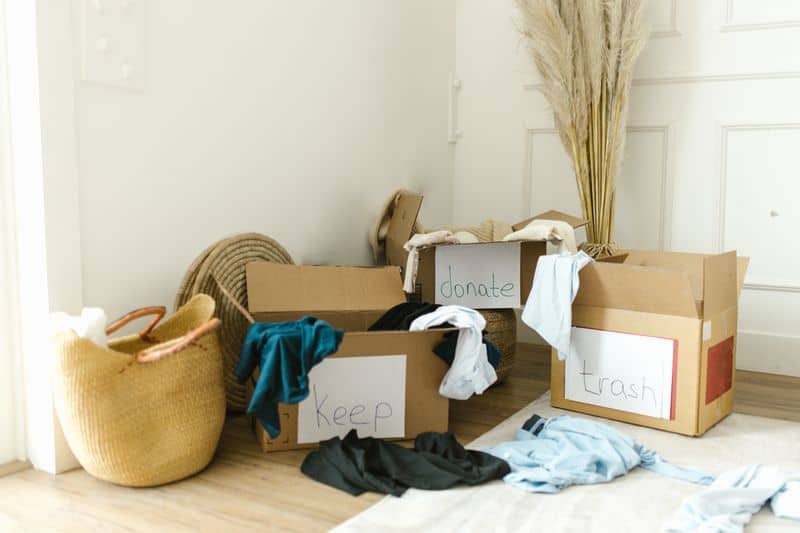
That’s where the One-In, One-Out Rule comes in.
This simple decluttering strategy helps prevent clutter from building up in the first place. Instead of constantly organizing and re-organizing, you create a sustainable system that keeps your home balanced. Best of all, it requires very little time or effort once it becomes a habit.
If you’re looking for an easy way to maintain a clutter-free home without feeling overwhelmed, the One-In, One-Out Rule may be exactly what you need.
What Is the One-In, One-Out Rule?
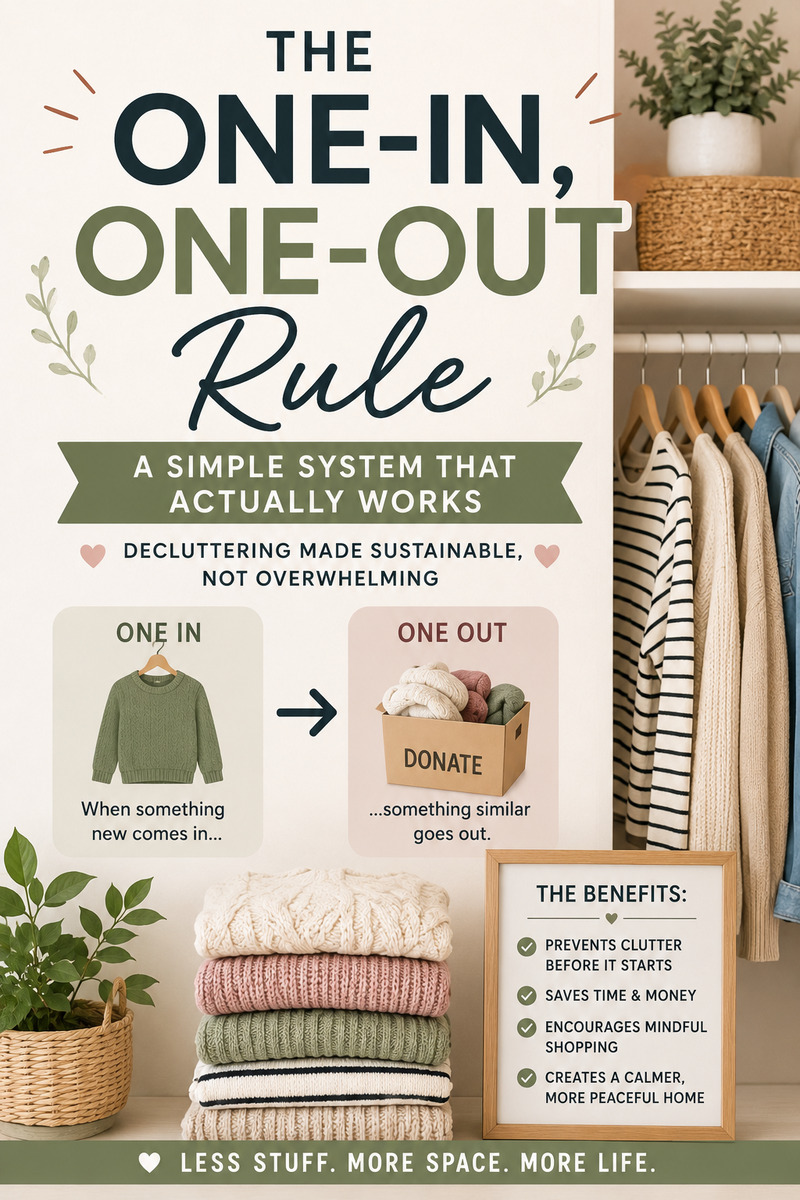
The One-In, One-Out Rule is straightforward: whenever you bring a new item into your home, you remove a similar item.
For example:
- Buy a new sweater? Donate an old sweater.
- Bring home a new coffee mug? Remove one you no longer use.
- Purchase a new pair of shoes? Let go of an older pair.
The goal isn’t perfection. The goal is maintaining balance.
Instead of allowing possessions to accumulate endlessly, you’re creating limits that keep your home from becoming overcrowded.
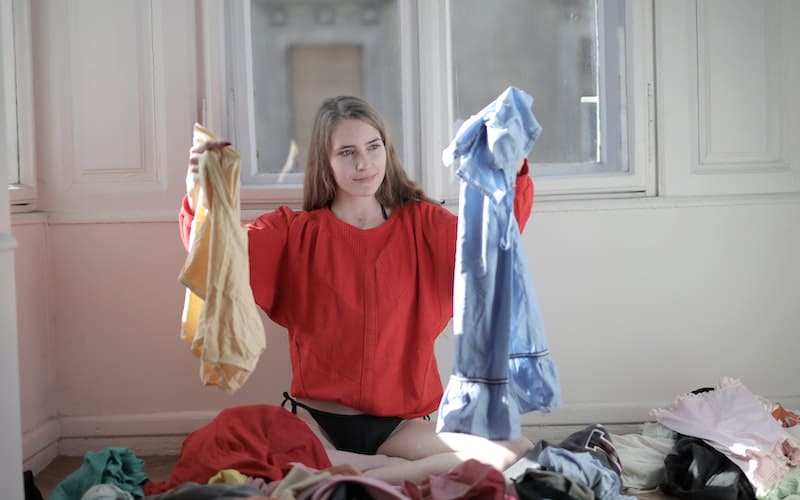
Why Traditional Decluttering Often Fails
Many people approach decluttering as a one-time event. They spend an entire weekend cleaning out closets, organizing drawers, and hauling bags to donation centers.
While this can feel satisfying, it doesn’t solve the underlying problem.
Most clutter returns because:
- New purchases keep entering the home.
- Gifts accumulate over time.
- Free items are accepted without much thought.
- Storage spaces expand to accommodate more stuff.
Without a system to control incoming items, clutter slowly creeps back.
The One-In, One-Out Rule addresses the source of the problem rather than just the symptoms.
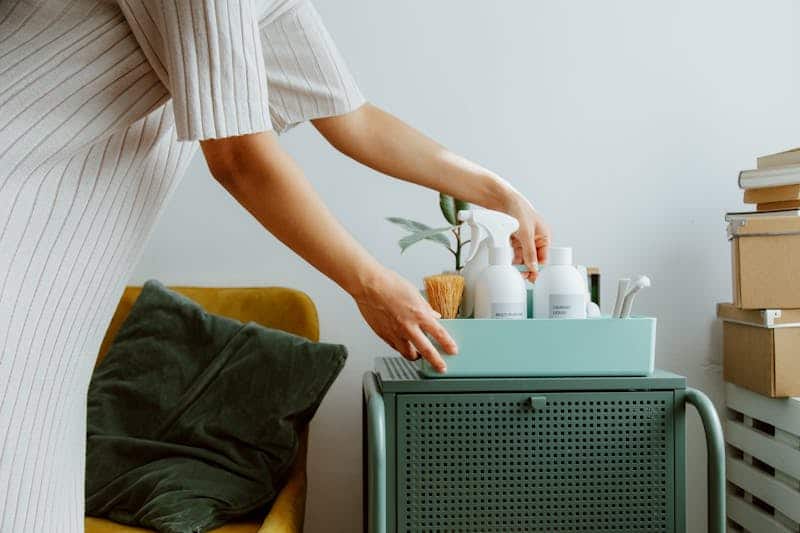
The Benefits of the One-In, One-Out Rule
Reduces Clutter Before It Starts
Instead of waiting until your home feels overwhelming, you stop clutter at the door.
Every new item forces you to evaluate what you already own. This keeps your belongings at a manageable level.
Saves Time
Decluttering marathons can take hours or even days.
With the One-In, One-Out Rule, decluttering becomes part of everyday life. You spend a few minutes making decisions instead of dedicating entire weekends to organizing.
Encourages Mindful Spending
When you know that every purchase requires letting go of something else, you naturally become more intentional.
Before buying an item, you may ask yourself:
- Do I really need this?
- Is it better than what I already own?
- Am I willing to replace something I currently have?
These questions can help reduce impulse purchases and unnecessary spending.
Makes Cleaning Easier
The fewer items you own, the easier it is to clean, organize, and maintain your home.
Counters stay clearer. Closets are easier to navigate. Drawers open without overflowing.
Less stuff simply means less work.
How to Start Using the One-In, One-Out Rule
The beauty of this method is its simplicity.
You don’t need special bins, labels, or organizing products.
Start by choosing categories where clutter tends to accumulate.
Good categories include:
- Clothing
- Shoes
- Kitchen gadgets
- Coffee mugs
- Books
- Toys
- Towels
- Beauty products
- Office supplies
- Home décor
Whenever something new enters one of these categories, remove a similar item.
The process takes only a few minutes but delivers long-term results.
Clothing Is the Perfect Place to Start
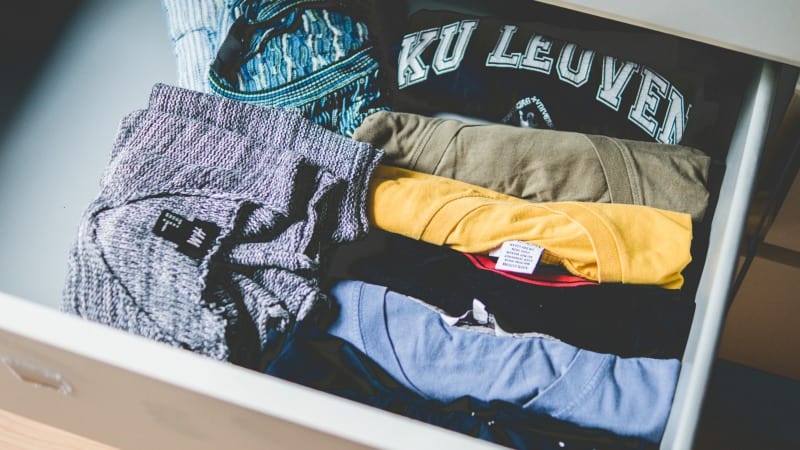
Clothing is often one of the easiest categories to manage with the One-In, One-Out Rule.
When you buy a new shirt, sweater, jacket, or pair of jeans, immediately identify an item you no longer wear.
Ask yourself:
- Does it fit?
- Do I enjoy wearing it?
- Have I worn it in the past year?
- Would I buy it again today?
If the answer is no, it’s probably time to let it go.
Over time, your closet becomes filled with items you actually wear instead of pieces that simply take up space.
What About Gifts?
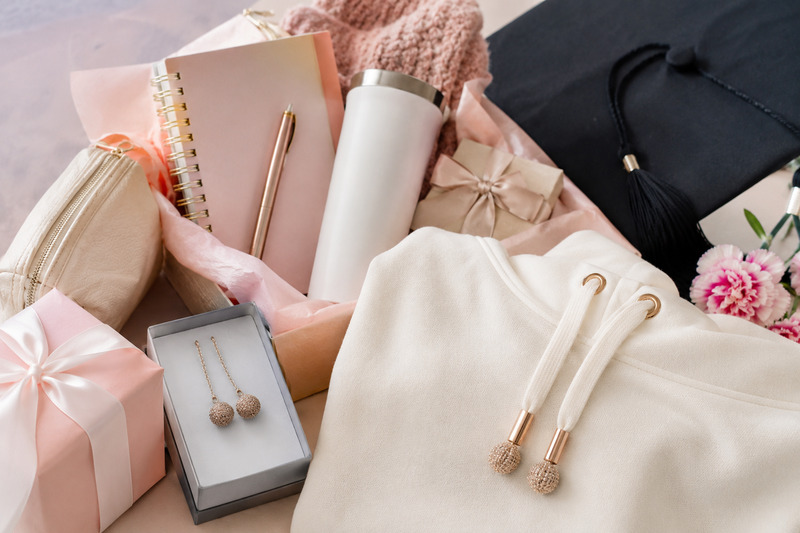
Many people struggle with applying decluttering rules to gifts.
Remember that the purpose of a gift is to bring joy and usefulness. Once it has served that purpose, you’re not obligated to keep it forever.
If a new gift enters your home, consider whether there is a similar item you can donate.
This approach allows you to appreciate the gift while still maintaining a manageable amount of belongings.
Create a Donation Box
One way to make the One-In, One-Out Rule effortless is to keep a donation box in a closet, laundry room, or garage.
Whenever you identify an item to remove, place it directly into the box.
Once the box is full, donate the contents.
This prevents decluttered items from lingering around the house and finding their way back into your storage spaces.
When the Rule Should Be Flexible
Like any organizing method, the One-In, One-Out Rule isn’t meant to be rigid.
There may be times when flexibility makes sense.
For example:
- Growing children may need additional clothing.
- Seasonal items may require temporary expansion.
- Replacing worn-out essentials doesn’t always require strict matching.
The goal is progress, not perfection.
Use the rule as a guide rather than a source of stress.
Take It Further With One-In, Two-Out
If you’re currently dealing with significant clutter, consider upgrading the system temporarily.
For every new item that enters your home, remove two items.
This creates a gradual reduction in your belongings without requiring a massive decluttering project.
Many people find this approach especially helpful when simplifying closets, kitchens, and storage areas.
Common Mistakes to Avoid
Waiting Too Long
Don’t postpone choosing the item that will leave.
The best time to remove something is immediately after bringing home a replacement.
Removing Items Nobody Wants
If an item is broken, stained, or unusable, it may need to be discarded rather than donated.
Choose items that still have value whenever possible.
Ignoring Small Purchases
It’s easy to focus on large items while overlooking smaller ones.
However, clutter often accumulates through:
- Pens
- Mugs
- Water bottles
- Decorative items
- Kitchen gadgets
Applying the rule consistently to small purchases can make a surprisingly big difference.
A Simpler Home Starts With Better Habits
Decluttering doesn’t have to involve complicated systems, expensive storage products, or exhausting weekend projects.
The most effective solutions are often the simplest.
The One-In, One-Out Rule works because it transforms decluttering from a major event into a daily habit. By creating balance between what enters and leaves your home, you can prevent clutter from taking over your space.
Over time, you’ll spend less time organizing, less money on unnecessary purchases, and less energy managing excess belongings.
A clutter-free home isn’t created through one massive decluttering session. It’s built through small, consistent habits.
And the One-In, One-Out Rule is one habit that actually works.

Ellen is a busy mom of a 29-year-old son and 33-year-old daughter. She owns nine blogs and is addicted to social media. She believes that it doesn’t have to be difficult to lead a healthy life. She shares simple healthy living tips to show busy women how to lead fulfilling lives. If you’d like to work together, email info@confessionsofanover-workedmom.com to chat.
