
Last Updated on October 5, 2026 by Ellen Christian
With the coming of autumn season, the family will instantly be engulfed in going back to school, practicing and the change in weather. With all of them busy with the changes in the fall routine, there is one task which everyone in every family does at the very last minute: to clean up all of their outdoor gear that is now occupying the garage or the basement space.
Posts may be sponsored. This post contains affiliate links, which means I will make a commission at no extra cost to you should you click through and make a purchase. As an Amazon Associate I earn from qualifying purchases.
Bikes, canoes, camping gear, patios and other pieces of equipment used during the summer season should be quickly cleaned up. Leaving them outdoors when the weather gets cold early in the fall could damage them due to the changing season.
This will help you avoid hassle later on.
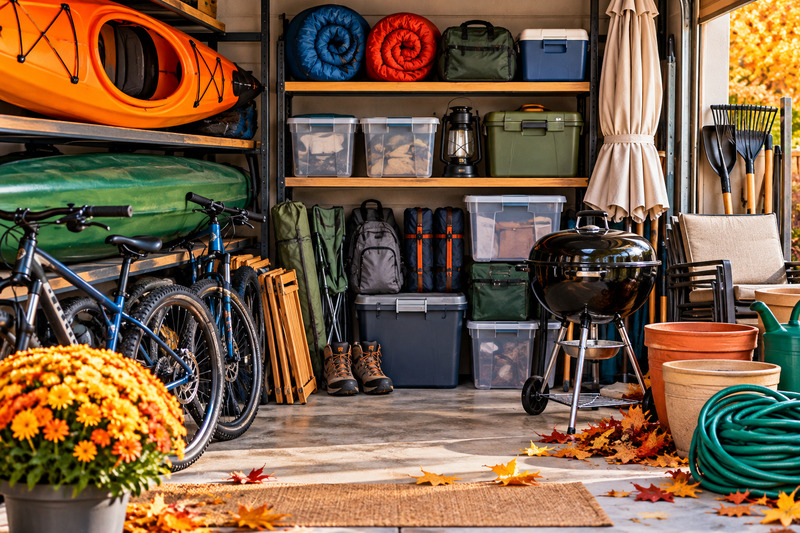
What Has Actually Accumulated in Your Space?
As you go about lifting heavy objects in the yard and carrying boxes downstairs, first of all, you have to make an assessment of what has accumulated during the spring and summer seasons. The process involves making a tour of the porch, garage, and basement with the intention of doing the following:
- Active Summer Gear: Bicycles, kayaks, canoes, floatation gear, and safety vests for leisure on weekends.
- Camping Essentials: Tents, sleeping bags, camping stove, lights, and patio chairs.
- Outdoor Living Items: Outdoor tables, table covers, umbrellas, barbecue grills, and outdoor toys.
- Lawn & Garden Equipment: Hose reel, pressure washers, planters, and yard tools.
By organizing your items according to the different categories, you will be able to determine what needs cleaning alone and what needs additional protection from the environment.
What Is Worth Storing vs. What Is Just Seasonal Clutter?
The autumn is a perfect time for de-cluttering rather than wasting time on packing items that your family no longer needs.
Clean and Store Proper:
- Quality Bicycles & Helmets: Wipe the tubes, apply oil on the chains, and lift tires off from damp floorboards.
- Camping Equipment: Let tents dry out properly ensuring that sleeping bags are fully dry before storing in order to prevent serious mildew formation.
- Patio & Garden Furniture: Clean metal, wicker, and wood furniture parts ensuring that fabric seats are thoroughly dried before storing.
Donate or Recycle:
- Outgrown Sports Gear: Kids grow rapidly; therefore, ice skates, helmets, and bikes that have become too small should be donated to other families.
- Cracked Garden Plastics: If plastic garden tools start getting fragile due to exposure to the sun and cold winter weather, throw them away.
- Broken Camping Accessories: If the folding chair frame and tent poles are damaged after a long camping season, throw them away.

Why Garages and Basements Put Outdoor Gear at Risk
All families tend to store their seasonal items in the garage or basement when they have extra space for storing things. However, both of these places create a significant threat to any item that is stored in such rooms:
1. Severe Garage Temperature Swings
The garage faces significant temperature changes all through the fall and winter periods. As the outside freezes overnight, and the afternoon sun warms up the building, condensation forms inside on the metal surface.
2. High Basement Humidity
The basement keeps constant levels of high humidity all through the year. Due to the lack of proper airflow in the underground room, moisture accumulates in it.
3. The Real Damage Threat: Excess Moisture
The threat does not lie in the cold, but the excessive moisture causes trouble:
- Metal Items: Results in rust formation on bicycles, drive chain, tools, and metal components of furniture.
- Wood Products: Leads to deformation of the patio table, wooden paddles, and furniture.
- Fabrics & Paper: Leads to musty smell and black spots of mold on the tent material, clothes, and other camping gear.
- Electronics: Destroys fine electronic circuits in batteries of lanterns, digital meters, and electric bike parts.
How Climate-Controlled Storage Solves the Problem
In the cases where normal living spaces do not offer enough room, using climate controlled rooms guarantees that the optimum conditions are available for storing items at homes.
Unlike basic unheated sheds or storage units, choosing climate controlled storage in Calgary through Bow City Storage manages both temperature ranges and relative humidity levels continuously. The constancy of the inside air prevents the items from getting wet, preventing any chance of rusting on the metals, deterioration of woods, and formation of mold in freezing winters.
Using the large items like kayaks, bicycles, and patio furniture in a climate-controlled facility would provide adequate room in the home garage for parking the vehicle in the winter season due to snowfall.
Simple Steps for Safe Gear Prep
- Clean and Dry First: Do not place those objects which have not been cleaned yet as the dust acts as a sponge to attract moisture, and the moisture remains trapped right against paint and metal.
- Elevate Off Concrete Floors: Never allow anything that belongs to you to come in contact with wet ground; always use racks and shelves for storing them.
- Avoid Airtight Plastic Covers on Fabrics: If you store your fabric things in plastic bags, moisture will remain trapped inside the bag.
- Remove All Batteries: Never use batteries in any electrical items as leakage from batteries causes great harm.
If you take an organized way for storing your seasonal belongings, then you will keep your home organized and safe, and your outdoor equipment will be ready for use in spring.

Ellen is a busy mom of a 29-year-old son and 33-year-old daughter. She owns nine blogs and is addicted to social media. She believes that it doesn’t have to be difficult to lead a healthy life. She shares simple healthy living tips to show busy women how to lead fulfilling lives. If you’d like to work together, email info@confessionsofanover-workedmom.com to chat.
