Last Updated on October 11, 2026 by Ellen Christian
Wondering how to organize a small kitchen when it feels like there simply isn’t enough room for everything? A small kitchen can quickly become cluttered when cabinets are full, counters are crowded, and every drawer seems to be overflowing.
Posts may be sponsored. This post contains affiliate links, which means I will make a commission at no extra cost to you should you click through and make a purchase. As an Amazon Associate I earn from qualifying purchases.
Fortunately, you don’t necessarily need more cabinets or an expensive kitchen remodel. A few simple changes can help you use the space you already have more efficiently.
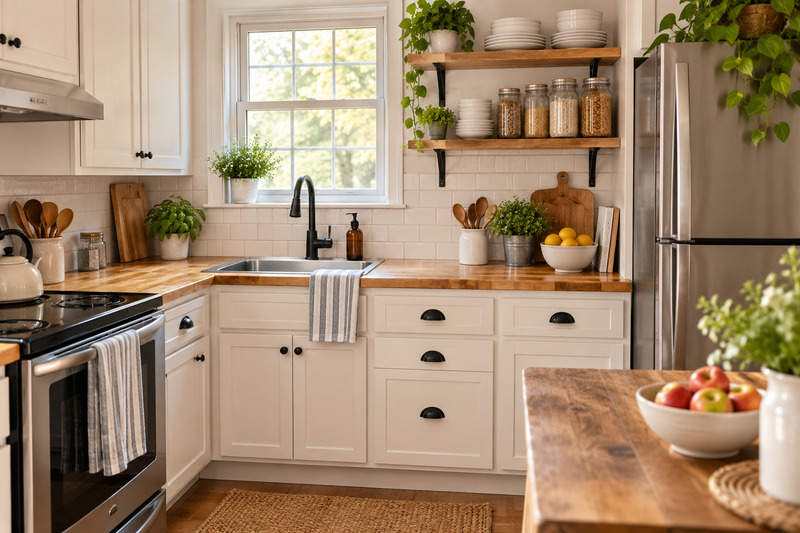
Start by Getting Rid of Things You Don’t Use
Before buying organizers, go through your kitchen and remove things you rarely or never use.
Look for duplicate utensils, extra mugs, food storage containers without lids, appliances you haven’t used in years, and pantry foods that are expired.
The less you have to store, the easier it will be to organize a small kitchen.
If you’re trying to simplify what you keep, these minimalist kitchen essentials can help you decide what really deserves space in your kitchen.
Keep Your Counters as Clear as Possible
Counter space is especially valuable in a small kitchen. Try to keep only the things you use regularly on your counters.
If you use your coffee maker every morning, it makes sense to leave it out. An appliance you use twice a year probably doesn’t need permanent counter space.
Clear counters also make a small kitchen look larger and make cleaning much easier.
Use the Inside of Cabinet Doors
The inside of cabinet doors is often completely unused.
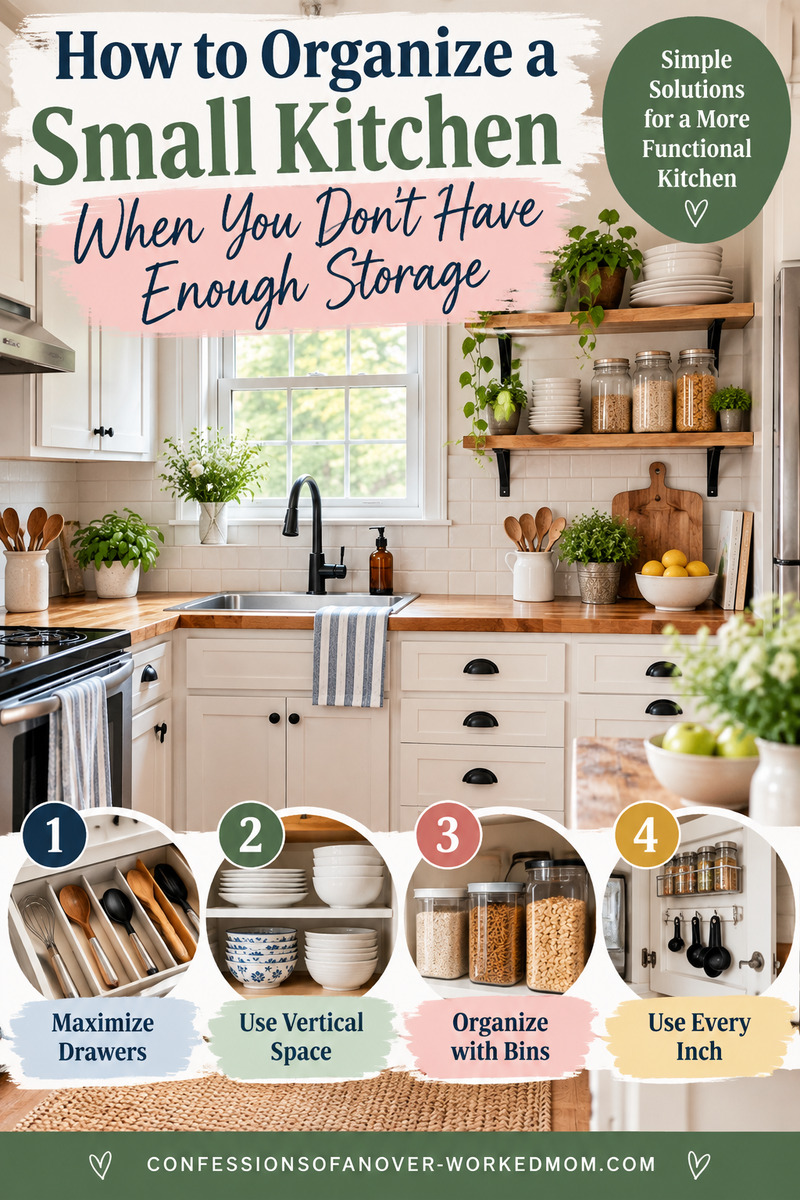
Depending on the cabinet, you can add small adhesive hooks, lightweight organizers, or racks to hold things like measuring spoons, pot lids, cleaning supplies, or small kitchen tools.
Just make sure anything you attach doesn’t interfere with the shelves when the door closes.
Add Shelf Risers to Cabinets
Tall cabinet shelves often leave a lot of wasted vertical space.
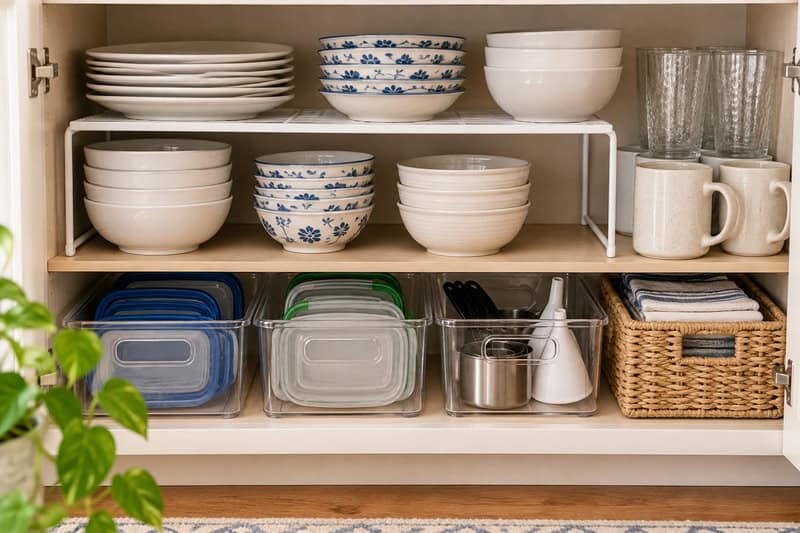
A simple cabinet shelf riser can create another level for dishes, mugs, bowls, canned foods, or pantry staples.
This is one of the easiest ways to create additional storage without permanently changing your cabinets.
Use Bins to Control Deep Cabinets
Deep cabinets can hold a lot, but items tend to disappear in the back.
Use inexpensive bins or baskets to group similar things together. For example, you might have separate bins for baking supplies, snacks, breakfast foods, or seasoning packets.
Instead of digging through the cabinet, you can pull out the entire bin.
If reusable grocery bags are adding to your kitchen clutter, check out my tips for organizing reusable shopping bags in a small space
Make Better Use of Drawer Space
Kitchen drawers can quickly become a jumble of utensils and gadgets.
Use drawer dividers to separate cooking utensils, measuring tools, and other small items. Before putting everything back, ask yourself whether you actually use each item.
Don’t give valuable drawer space to kitchen gadgets you never reach for.
Store Items Where You Use Them
One of the easiest ways to make a small kitchen work better is to create zones.
Keep baking supplies near the area where you normally bake. Store coffee mugs close to the coffee maker. Keep everyday dishes near the dishwasher or drying rack.
Your kitchen doesn’t have to be organized according to traditional rules. It needs to be organized around how you actually use it.
Use Vertical Space
Look around your kitchen for unused vertical space.
Depending on your kitchen, you may be able to use hooks beneath cabinets, a wall-mounted rack, magnetic storage, or the sides of cabinets.
Even a few additional storage spots can make a noticeable difference in a small kitchen.
Don’t Overfill Your Pantry
A packed pantry isn’t necessarily a well-stocked pantry.
When shelves are crammed full, it’s easy to forget what you already have and buy duplicates.
Leave enough room that you can see your food. Group similar items together and put older foods toward the front so they get used first.
Create a Home for Things That Cause Clutter
Pay attention to what repeatedly ends up on your kitchen counters.
Mail? Reusable shopping bags? Vitamins? Water bottles? Coupons?
Instead of continually moving these things around, decide where each category should live. Sometimes solving one recurring clutter problem makes the entire kitchen feel more organized.
Use the One-In, One-Out Rule
Once you’ve organized your kitchen, try a simple rule to prevent clutter from building up again.
When you bring home a new mug, gadget, serving dish, or small appliance, consider letting go of something you no longer use.
This is especially helpful when storage space is limited.
Once everything has a home, my 15-minute daily reset can help keep kitchen counters and other clutter from getting out of control again
Small Kitchen Organization Doesn’t Have to Be Expensive
You don’t need matching containers or an elaborate organization system to make a small kitchen work better.
Start by removing what you don’t use, clear your counters, and make better use of the cabinets and drawers you already have. Then add inexpensive organizers only where they’ll solve a specific problem.
A small kitchen may never have unlimited storage, but with a little planning, it can still be comfortable, functional, and easy to keep organized.
If another tight space is giving you trouble, I also have simple ideas for organizing a small entryway without filling it with more stuff.

Ellen is a busy mom of a 29-year-old son and 33-year-old daughter. She owns nine blogs and is addicted to social media. She believes that it doesn’t have to be difficult to lead a healthy life. She shares simple healthy living tips to show busy women how to lead fulfilling lives. If you’d like to work together, email info@confessionsofanover-workedmom.com to chat.
