Last Updated on September 22, 2026 by Ellen Christian
Every year it starts the same way. You tell yourself you’ll be finished by the first week of December, and then somehow it’s the 22nd, you’re standing in a checkout line with a candle you don’t feel great about, and you still haven’t figured out what to get your brother-in-law. The problem usually isn’t money or time. Most people shop for Christmas reactively—wandering into stores, scrolling sales, hoping something jumps out. A little structure up front turns the whole season from a scramble into something that actually resembles fun, and it leaves you enough room at the end to make the gifts feel personal rather than just purchased.
Posts may be sponsored. This post contains affiliate links, which means I will make a commission at no extra cost to you should you click through and make a purchase. As an Amazon Associate I earn from qualifying purchases.

Build One Master List Before You Buy Anything
The single most useful thing you can do is write down every person you’re buying for in one place — before you look at a single product. Include the obvious names, then the easy-to-forget ones: teachers, mail carriers, the neighbor who watches your dog, party hosts, and the two or three “just in case” backups you always end up needing.
Next to each name, add four columns: budget, gift idea, status, and wrapping. That last column matters more than people expect, and we’ll come back to it.
Set the Total Budget First, Then Divide It
Most people do this backward — they assign amounts per person and discover in January what the total was. Flip it. Decide what you can comfortably spend on the entire holiday, including wrapping, shipping, cards, and food, then divide that number across your list.
A common split looks like this:
- 50% — immediate family
- 25% — extended family and close friends
- 15% — coworkers, teachers, service providers, hosts
- 10% — wrapping, postage, and unplanned gifts
A per-person number attached to each name is what stops the slow creep of “it’s only twenty more dollars,” which is where holiday budgets actually go to die.
Group Your List by Person, Not by Store
Sort people into categories based on what they’re actually like. One good idea usually covers several people at once, which is far more efficient than shopping store by store.
- The hosts — nice olive oil, cocktail bitters, cloth napkins, a good serving board
- The hard-to-shop-for — experiences beat objects: concert tickets, a class, a membership
- The kids — one “big” gift plus one small, rather than five medium ones nobody remembers
- The obligation gifts — buy in multiples; six identical nice candles solve six problems at once
Work Backward From a Shipping Deadline
Build your calendar backward from the last date things need to arrive.
- Early November — finish the list and budget; order anything personalized or custom-made.
- Mid-November to early December — buy the bulk of your list.
- December 10–15 — final deadline for standard domestic and international shipping
- December 16–20 — local and in-store purchases only
- December 21 onward — digital gift cards, experiences, and memberships
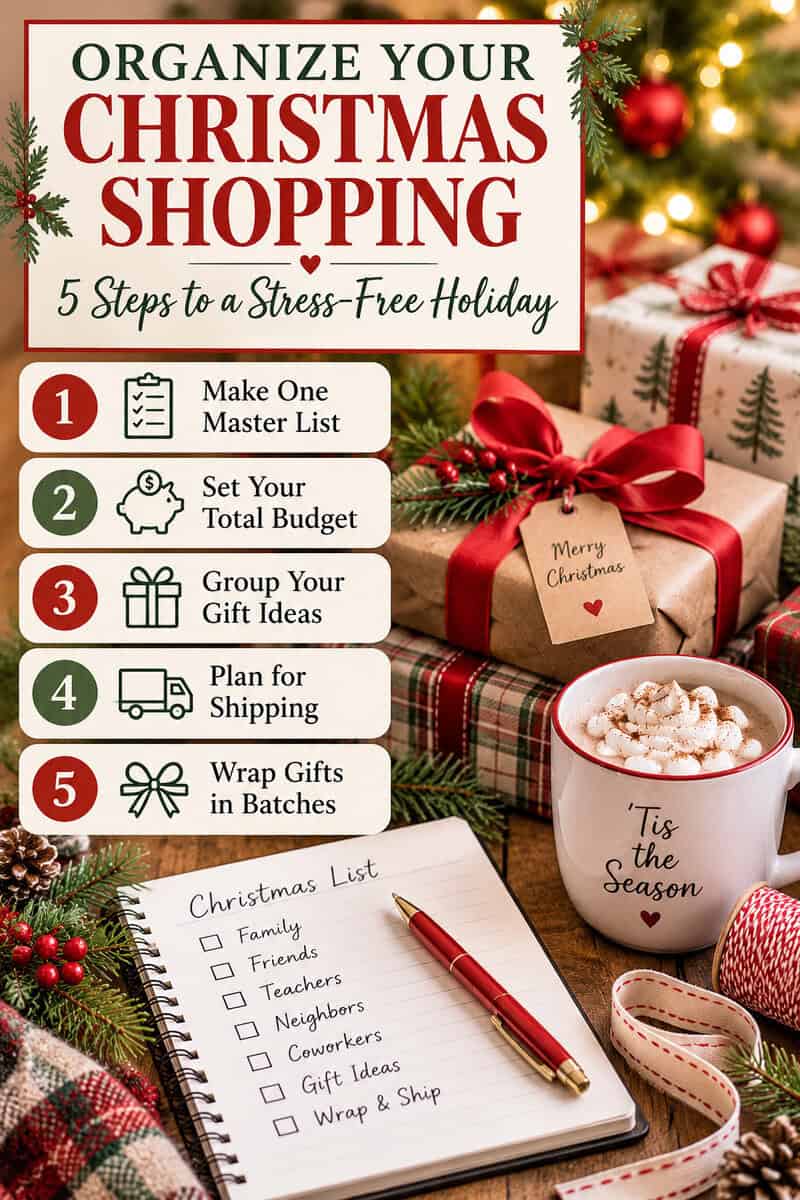
Make the Wrapping Personal to Each Person
Here’s the part organized shoppers get to enjoy: when the buying is done early, wrapping stops being a frantic Christmas Eve chore and becomes the step that makes an ordinary gift feel considered.
Skip the printed rolls and start with plain kraft or white butcher paper. It’s cheap, it photographs beautifully under a tree, and it’s a blank canvas you can customize per person. A set of distress oxide sprays lets you build a completely different color story for every name on your list—misted over a stencil for one recipient, blended into a soft ombré wash for another, or spattered across a tag for the kids’ packages. Because the color is water-reactive, a few flicks of water over a dried background bloom into halos and rings that no store-bought paper can replicate.
Practical ways to tie the wrapping to the person:
- Assign each recipient a color. Deep teal for your sister, rust and gold for your dad. Nobody needs name tags, and the tree looks intentional.
- Match the paper to the gift inside. Botanical stencils for the gardener, sheet-music stamps for the musician.
- Layer a handmade tag over the paper with the recipient’s initial in the same palette.
- Save a sheet for photos. Custom-wrapped gifts are the ones people actually photograph.
Set aside one evening, spray and dry your papers in batches, then wrap everything you have on hand at once. Keep supplies in a single bin so you’re not hunting for scissors each time, and label each package as soon as it’s wrapped.

Ellen is a busy mom of a 29-year-old son and 33-year-old daughter. She owns nine blogs and is addicted to social media. She believes that it doesn’t have to be difficult to lead a healthy life. She shares simple healthy living tips to show busy women how to lead fulfilling lives. If you’d like to work together, email info@confessionsofanover-workedmom.com to chat.
