
Last Updated on October 12, 2026 by Ellen Christian
If you’ve ever opened your refrigerator and struggled to find the mustard behind six bottles of salad dressing, you’re not alone. Refrigerator door shelves have a way of collecting half-empty condiments, forgotten sauces, and sticky bottles that nobody seems to use.
Posts may be sponsored. This post contains affiliate links, which means I will make a commission at no extra cost to you should you click through and make a purchase. As an Amazon Associate I earn from qualifying purchases.
Learning how to organize refrigerator door shelves is one of the easiest ways to make your kitchen feel more organized. You don’t need expensive refrigerator organizers or a complete kitchen makeover. A little decluttering and a simple system can make a big difference.
Here’s how to clean out your refrigerator door, organize your condiments, and keep everything tidy without spending a lot of money.
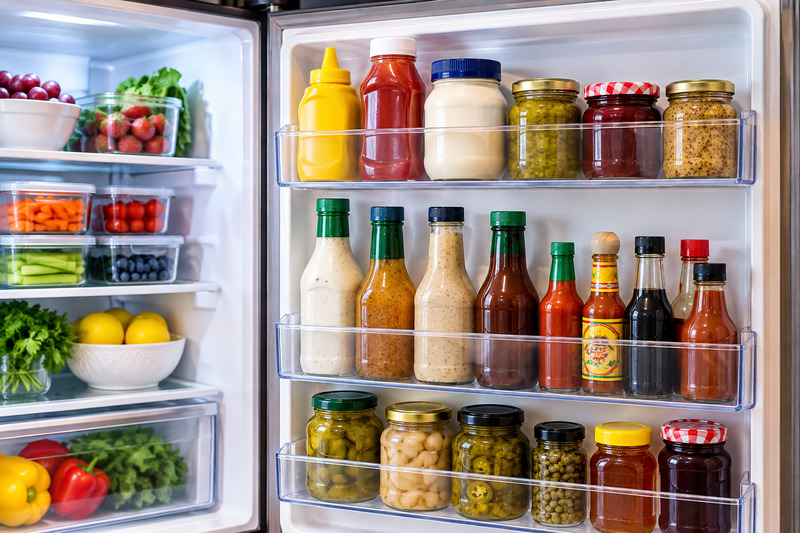
Why Do Refrigerator Door Shelves Get So Cluttered?
The refrigerator door is one of the easiest places to put something when you’re in a hurry.
You open a bottle of salad dressing, use a little, and put it back wherever there’s room. Then you buy another bottle because you can’t find the first one.
Before long, you have several half-empty bottles of the same condiment, sauces you tried once, and jars that have been sitting there for months.
Refrigerator door shelves also tend to be narrow and deep enough for smaller bottles to get hidden behind taller ones.
The good news is that this is usually a quick organizing project. You can make a noticeable difference in about 20 to 30 minutes, depending on how much you’ve accumulated.
How to Organize Refrigerator Door Shelves
The easiest way to organize your refrigerator door is to empty it completely, sort what you have, and put back only the items you actually use.
1. Take Everything Out of the Refrigerator Door
Start by removing the bottles, jars, and containers from every door shelf.
Place everything on your kitchen counter so you can see what you have.
Work efficiently so refrigerated foods aren’t left at room temperature for long. If you have a large collection or expect the job to take a while, keep items that need refrigeration in a cooler with ice packs while you clean.
Don’t start rearranging things until you’ve looked at everything. Otherwise, you’ll just be moving clutter from one shelf to another.
2. Check Expiration Dates and Opened Condiments
Before putting anything back, check the dates on your condiments and sauces.
Look for:
- Condiments that have been open longer than recommended
- Bottles with damaged lids or broken seals
- Products showing mold, unusual discoloration, or other signs of spoilage
- Sauces nobody in your family likes
- Multiple open containers of the same product
Remember that a best by date usually relates to quality rather than an automatic safety cutoff. How long a condiment remains safe also depends on its ingredients, whether it’s been opened, and how it has been stored.
Follow the manufacturer’s storage instructions and recommended use-after-opening period. If a product shows signs of spoilage, discard it rather than tasting it.
You may be surprised by how much space you free up just by getting rid of things you no longer use.
3. Wipe Down the Refrigerator Door Shelves
Once the shelves are empty, it’s time to clean them.
Use warm water with a little dish soap and a soft cloth to wipe away spills, sticky spots, and dried condiment residue.
If your refrigerator has removable door bins, check the owner’s manual to see whether they can be taken out for easier cleaning.
Avoid putting cold glass shelves or bins directly into very hot water, since sudden temperature changes can cause damage.
Dry everything thoroughly before replacing the food.
Pay special attention to the bottoms of the shelves where sticky bottles have been sitting.
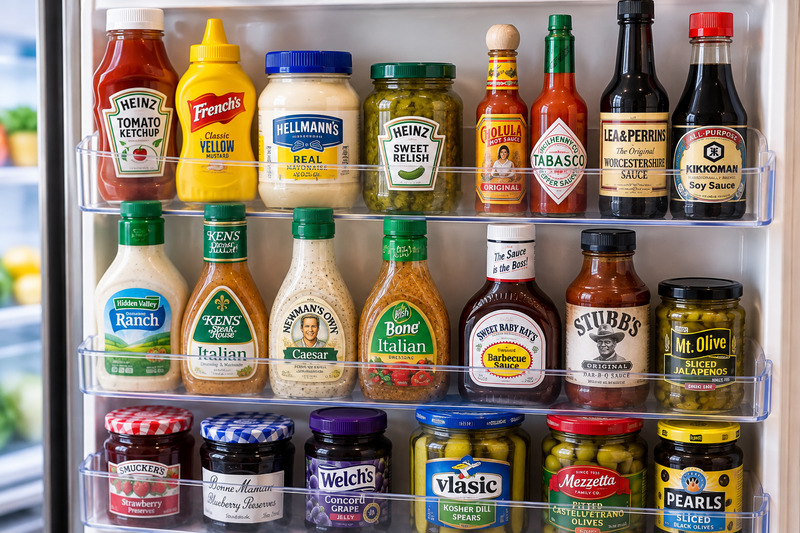
4. Group Similar Condiments Together
Now that you’ve removed the clutter, organize the remaining bottles by category.
You might group them like this:
- Everyday condiments: Ketchup, mustard, mayonnaise, and relish
- Salad dressings: Ranch, Italian, vinaigrettes, and other dressings
- Cooking sauces: Soy sauce, hot sauce, barbecue sauce, and marinades
- Jams and spreads: Jelly, preserves, and other refrigerated spreads
- Specialty condiments: Sauces you use occasionally for specific recipes
You don’t need a separate organizer for each category.
Simply keeping similar items next to one another makes it easier to find what you’re looking for.
If you only have a few bottles in one category, combine them with another group that makes sense for your household.
5. Put Frequently Used Condiments Where You Can Reach Them
Think about which condiments your family reaches for most often.
If you use mustard and mayonnaise several times a week, they should be easy to grab.
Place everyday condiments in a convenient door bin and keep less frequently used sauces in another suitable location.
Try to avoid hiding short bottles behind tall ones. Arrange items so you can see their labels without moving everything around.
The goal is to make your refrigerator easier to use, not to create a perfectly arranged display.
If you have lots of small condiment bottles that keep getting lost, a clear refrigerator condiment caddy can help keep them together. Look for one with handles that fits your refrigerator door shelves so you can easily remove it for cleaning.
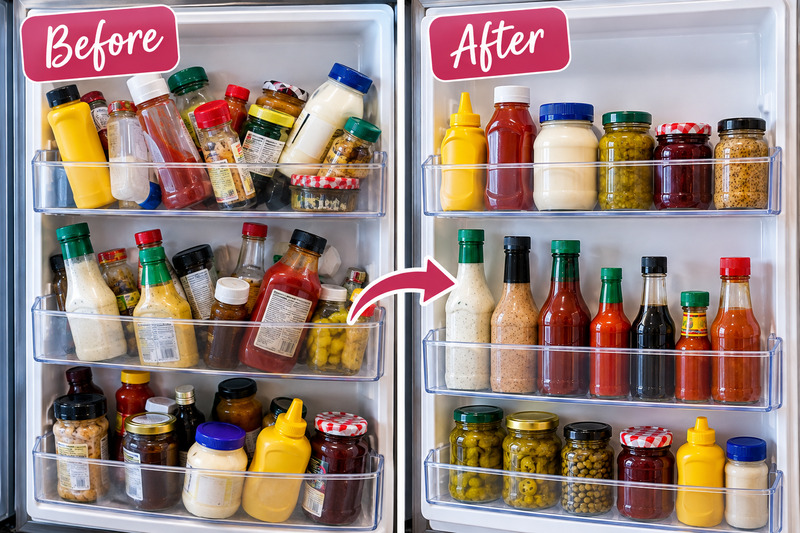
What Should You Store in Refrigerator Door Shelves?
Not every refrigerated food belongs in the refrigerator door.
The temperature in the door tends to fluctuate more than the temperature toward the back of the refrigerator because the door is exposed to warmer air whenever it’s opened.
That’s why the refrigerator door is generally best for foods that can tolerate some temperature variation.
Good candidates often include commercially prepared condiments and sauces that require refrigeration after opening, provided their labels and storage instructions allow it.
Examples may include:
- Ketchup
- Mustard
- Pickles
- Relish
- Commercially prepared salad dressings
- Certain bottled sauces
Always follow the storage directions on the package.
What Shouldn’t You Store in the Refrigerator Door?
Some foods need more consistent cold temperatures.
Avoid using the refrigerator door as your regular storage spot for highly perishable foods such as:
- Milk
- Raw meat or seafood
- Other foods that require the coldest, most temperature-stable refrigerator storage
Store these foods on appropriate interior shelves instead.
Eggs are also generally better kept in their original carton on an interior shelf rather than in an egg holder built into the refrigerator door.
Keep your refrigerator at 40°F or below, and use an appliance thermometer to check that it stays cold enough.
An inexpensive refrigerator thermometer makes it easy to monitor the temperature inside your fridge and helps ensure your food is being stored safely.
How to Organize Refrigerator Condiments Without Buying Organizers
You don’t have to purchase plastic bins or specialty refrigerator containers to organize your condiments.
In fact, many refrigerator doors are already designed with adjustable shelves that work well for bottles and jars.
Here are a few ways to make better use of what you have.
Adjust the Door Shelves
If your refrigerator has adjustable door bins, move them to accommodate the bottles you use most often.
You may be able to create one taller section for large condiment bottles and another section for shorter jars.
Be sure to follow the manufacturer’s instructions and avoid overloading the bins.
Store Bottles in Rows
Instead of pushing everything toward the back, arrange bottles in rows so the labels are visible.
If a shelf is deep enough for two rows, place taller bottles behind shorter ones.
This makes it easier to see what you have and helps prevent buying duplicates.
Keep One Space for New Condiments
If you frequently buy sauces or salad dressings, consider leaving a little extra room for newly opened bottles.
That way, you won’t have to rearrange the entire refrigerator every time you open something new.
Use Containers You Already Own
If your refrigerator door has room for a small removable container, you might use a washable, food-safe container you already own to hold little jars or condiment packets.
Make sure it fits securely, doesn’t interfere with the door closing, and can be cleaned easily.
However, don’t feel that you need to add another container just to make the refrigerator look organized.
Often, removing unnecessary items is enough.
If you’re trying to organize your kitchen without spending money on storage products, you might also like my tips for decluttering a junk drawer without buying organizers.
How to Prevent Sticky Refrigerator Door Shelves
Sticky shelves are one of the most frustrating parts of keeping condiments organized.
Fortunately, a few simple habits can help.
Wipe bottle rims before putting them away. Ketchup, syrup, and sauces can drip down the sides of containers and leave sticky rings on your shelves.
Check that lids are closed tightly. This helps prevent leaks when bottles are moved around.
Clean spills as soon as you notice them. Fresh spills are much easier to remove than dried, sticky residue.
Wipe shelves during your regular kitchen cleaning. A quick wipe takes less time than removing months of buildup.
You don’t need a special refrigerator cleaning product for most everyday spills. Mild dish soap and water are usually sufficient.
Washable refrigerator shelf liners can help protect your shelves from sticky condiment spills and make cleanup easier. Choose liners that fit securely in your refrigerator door bins without blocking airflow.
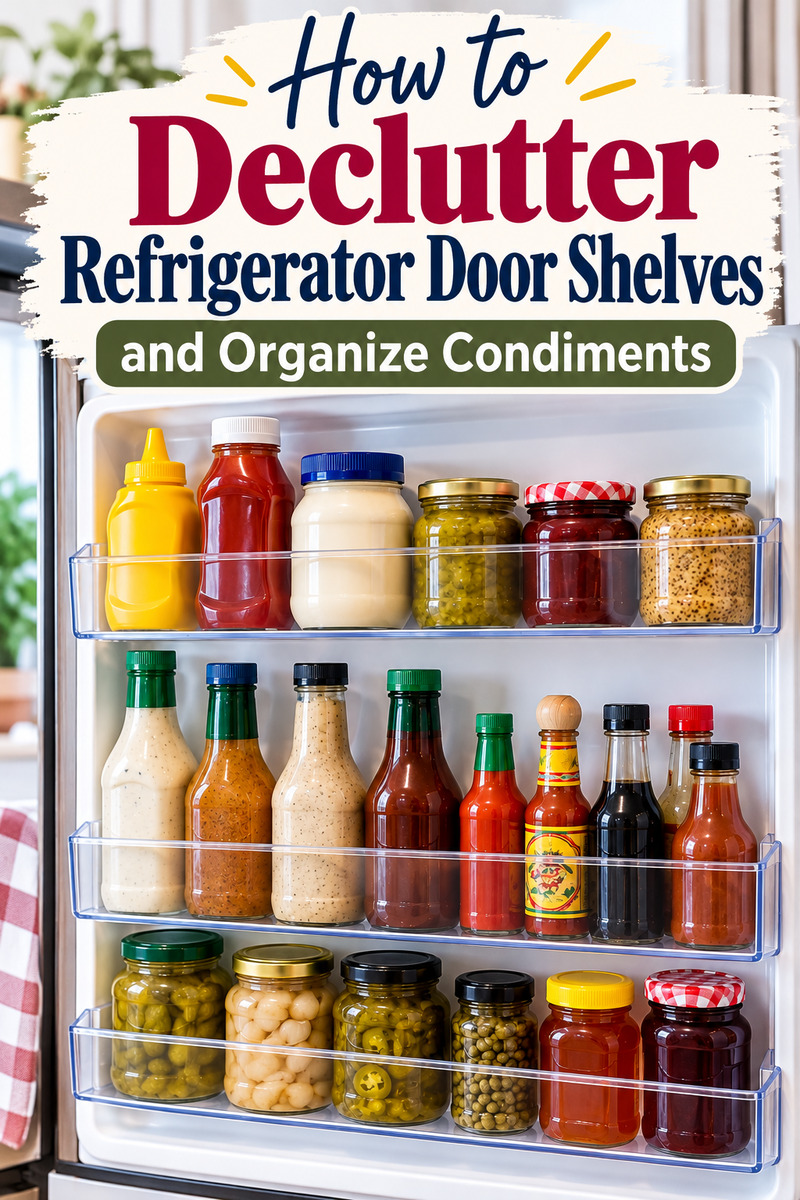
How to Stop Buying Duplicate Condiments
One of the biggest benefits of organizing refrigerator door shelves is that you can see what you already have.
Before making your grocery list, take a quick look at your condiments.
Check whether you really need another bottle of mustard, salad dressing, or barbecue sauce.
If you have several open bottles of the same condiment, use those before opening another.
It’s also helpful to keep unopened shelf-stable condiments together in your pantry until you’re ready to use them, following the package directions.
This simple habit can save money and prevent unnecessary food waste.
How Often Should You Declutter Refrigerator Door Shelves?
You don’t need to completely reorganize your refrigerator every week.
A quick check once a month is usually enough to keep clutter from building up.
During your monthly check:
- Look for condiments that are no longer usable.
- Wipe up sticky spills.
- Move older products toward the front when appropriate.
- Check for duplicate bottles.
- Put items back in their designated spots.
Before major holidays or family gatherings, you may also want to make a little extra room for special ingredients and leftovers.
Keeping up with these small tasks is much easier than waiting until your refrigerator door is overflowing.
How to Keep Your Refrigerator Organized Long-Term
The best organizing system is one that works with your everyday habits.
If everyone in your family uses the same few condiments, keep those bottles together in an easy-to-reach location.
If you enjoy trying new sauces, designate one area for specialty condiments so they don’t get mixed in with everyday essentials.
Most importantly, resist the temptation to fill every inch of available space.
A little empty room makes it easier to find what you need and put groceries away.
You can also make refrigerator maintenance part of your regular kitchen cleaning routine.
Related reading: If you’re working on other cluttered areas of your kitchen, check out my small kitchen organization tips for more ways to make the most of limited space.
Final Thoughts on Organizing Refrigerator Door Shelves
Learning how to organize refrigerator door shelves doesn’t have to be complicated or expensive.
Start by removing everything, checking your condiments, and cleaning the shelves. Then group similar items together and put frequently used products where they’re easy to reach.
With a little regular maintenance, you can prevent sticky spills, avoid buying duplicate condiments, and make your refrigerator easier to use.
Best of all, you can accomplish most of this project with supplies you already have at home.

Ellen is a busy mom of a 29-year-old son and 33-year-old daughter. She owns nine blogs and is addicted to social media. She believes that it doesn’t have to be difficult to lead a healthy life. She shares simple healthy living tips to show busy women how to lead fulfilling lives. If you’d like to work together, email info@confessionsofanover-workedmom.com to chat.
