Last Updated on May 28, 2026 by Ellen Christian
Oral health problems are almost always a slow burn. The gum recession that develops over years of brushing too hard, the enamel wear accumulating from daily coffee, and the dry mouth from new medications quietly increase your cavity risk.
Posts may be sponsored. This post contains affiliate links, which means I will make a commission at no extra cost to you should you click through and make a purchase. As an Amazon Associate I earn from qualifying purchases.
These daily habits are bad for oral health and rarely cause immediate pain, making them incredibly easy to ignore.
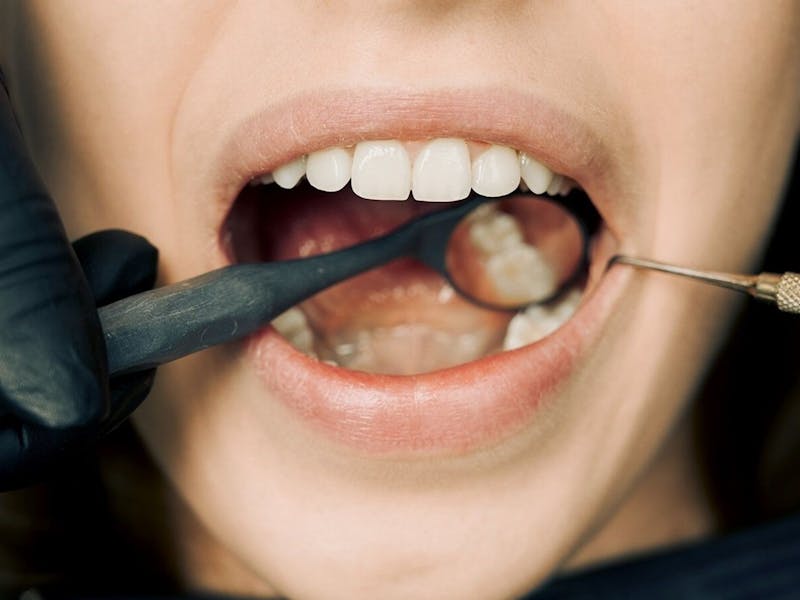
The habits responsible for the most cumulative damage are highly automatic, which is precisely why most people never think to question them.
Fortunately, shifting these patterns requires almost no added time or effort. By adjusting a few key elements of your natural oral care routine, you can protect your smile easily. Here are four straightforward fixes to try.
1. Brushing Too Hard, Too Soon
Most of us approach brushing with the same logic we use to scrub a kitchen surface. We assume that applying more pressure naturally equals a much deeper clean.
However, combining a medium bristle brush with a full fist grip creates cumulative gum recession. The damage remains slow, entirely invisible, and completely unintentional.
The timing of your routine also matters heavily for enamel protection. Brushing immediately after consuming coffee, citrus, or vinegar dressing means you are scrubbing temporarily softened enamel.
You must wait before brushing to avoid removing this weakened layer completely.
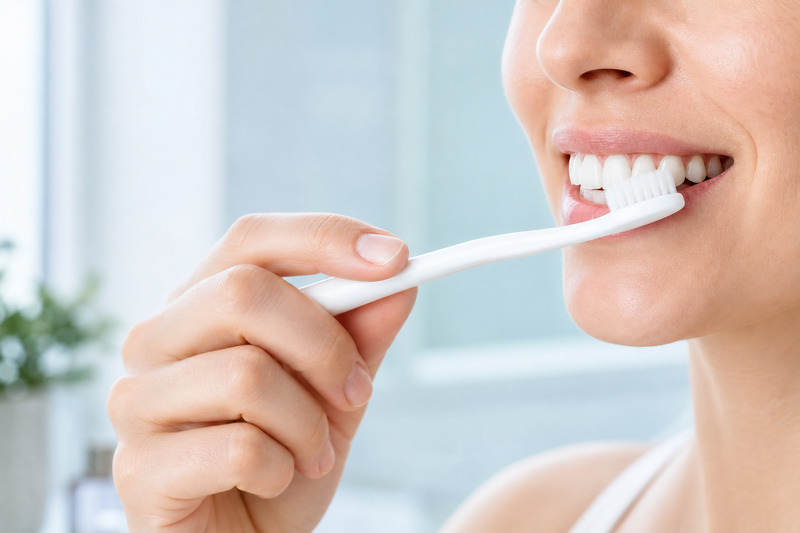
Fixing this requires a simple mechanical adjustment rather than a demanding new protocol. Switch to a soft-bristle brush and hold it with a relaxed fingertip grip to reduce pressure naturally.
The American Dental Association recommends that people use a soft-bristle toothbrush and apply gentle pressure to help reduce the risk of gingival injury.
| Warning: Brushing within 30 minutes of eating acidic foods etches away softened enamel, causing irreversible wear. Use a soft-bristle brush with a fingertip grip to protect your gums and teeth. |
2. Running on Low-Grade Dry Mouth
Saliva acts as your mouth’s primary self-cleaning system throughout the day. It neutralizes harmful acids, delivers essential minerals back to your enamel, and keeps bacterial populations in check.
However, chronic mild dehydration quietly shuts this vital protective system down. Low saliva production rarely feels severe, so many people never register it as an active threat.
Caffeine often dominates our daytime beverage choices, leaving little room for plain water.
Additionally, natural hormonal shifts can further reduce baseline saliva production as women get older.
Health experts warn that dry mouth increases the risk for tooth decay or fungal infections in the mouth because saliva helps keep harmful germs in check.
Combining this dryness with daily medications creates an environment highly susceptible to rapid enamel damage.
Addressing this issue remains one of the most effective oral health tips women can implement.
Sip water consistently throughout your schedule, keeping in mind that frequency matters far more than volume.
Chewing xylitol gum after meals actively stimulates healthy saliva production with absolutely no added time investment.
If you experience hormonally driven dryness at night, running a bedroom humidifier offers excellent passive support.
3. The Toothpaste Ingredient You Never Thought to Question
Most consumers choose their dental products based on flavor or the brand they grew up using. Almost no one stops to read the ingredient label for potential irritants.
Moving toward an ingredient-conscious formula is a crucial functional shift for long-term resilience.
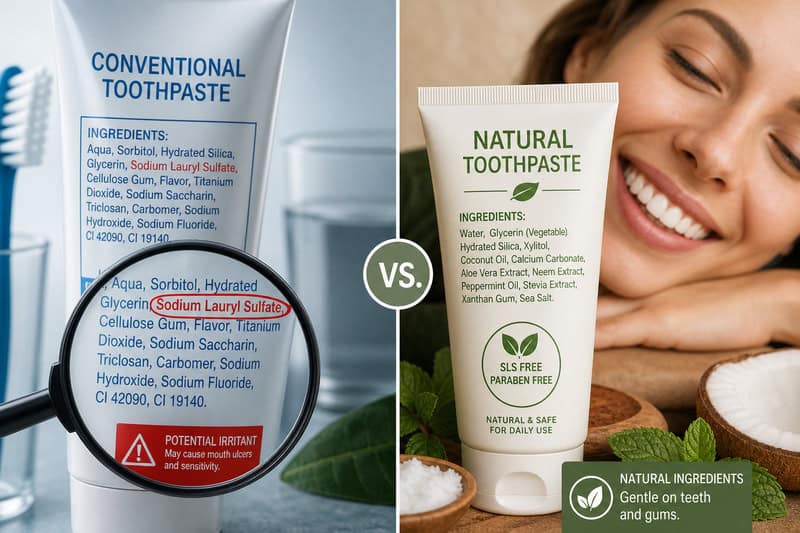
A prime example is the heavy prevalence of sodium lauryl sulfate in conventional formulas.
This detergent foaming agent creates the sensation of sudsing without providing any real functional cleaning benefit.
Instead, it exposes your mouth to a harsh surfactant that strips the natural mucosal lining.
Research indicates that using an SLS-free dentifrice significantly reduces the number and duration of painful oral ulcers.
Upgrading your daily paste is one of the lowest effort changes on this list. For instance, choosing a natural toothpaste with hydroxyapatite from Wellnesse alongside a simple soft-bristle brush intentionally removes microbiome-disrupting chemicals.
These clean formulations avoid sodium lauryl sulfate entirely, supporting your mouth’s natural bacterial balance rather than constantly upsetting it.
This makes your daily routine a genuinely functional upgrade rather than just a natural aesthetic preference.
| Pro Tip: Ditch toothpaste with sodium lauryl sulfate (SLS). It creates foam but strips your mouth’s protective lining and upsets the oral microbiome. Choose an SLS-free formula for a healthier mouth. |

4. Eating or Drinking After Nighttime Brushing
Consuming something after an evening brush is a universally practiced mistake. We often enjoy a slow cup of herbal tea or a late snack before bed.
Most people never connect this innocent habit to a failing nighttime oral care routine. This single action entirely undoes the protective effect of thoroughly cleaning your teeth.
The biological mechanism behind this damage is remarkably straightforward to understand. Saliva flow drops dramatically while we sleep, leaving the mouth dry and undefended.
Any food residue or acidic liquid left on the teeth feeds bacteria for hours. This creates precisely the conditions where cavity risk peaks during the night.
Establishing healthy mouth habits for women over 40 becomes increasingly vital as enamel naturally thins.
The fix costs nothing and takes zero time. Build a firm boundary of consuming only plain water after brushing.
If a warm drink is non-negotiable for your wind-down routine, simply enjoy it beforehand.
The Big Takeaway
The most impactful improvements to your dental wellness rarely require more time or money.
Instead, they require directed attention toward automatic behaviors most of us perform unconsciously every single day.
These four habits were never questioned because you simply had no reason to scrutinize them until now.
Making minor mechanical adjustments to your brushing technique pays massive dividends over time.
Prioritizing consistent hydration and auditing your toothpaste ingredients creates a much healthier oral environment.
Holding a firm evening boundary against food prevents unnecessary acid exposure while you sleep.
Ultimately, these small compounding shifts help you avoid expensive dental bills for years to come.
| Key Insight: The most powerful dental improvements come from adjusting tiny automatic habits like brushing technique, hydration, ingredients, and nighttime boundaries. These small shifts compound into a resilient, healthy smile. |
Your 30 Second Oral Health Audit
Take thirty seconds to review your daily baseline and improve oral health habits immediately. Ask yourself these four simple questions to spot easy growth opportunities.
Are you using a soft-bristle brush with a gentle fingertip grip every morning?
Does your daily toothpaste avoid harsh detergents that strip away beneficial oral bacteria?
Does your mouth feel comfortably moist by late afternoon from consistent water sipping?
Do you consume exclusively plain water after completing your evening brushing routine?
Every negative answer on this list represents a low effort opportunity rather than a personal failure.
Choose just one small shift to focus on this week. Let these practical adjustments build naturally to protect your smile for the long haul.
| Author Profile: Wellnesse is a specialized natural personal care brand focused primarily on oral health products formulated with non-toxic, science-backed ingredients. |

Ellen is a busy mom of a 29-year-old son and 33-year-old daughter. She owns nine blogs and is addicted to social media. She believes that it doesn’t have to be difficult to lead a healthy life. She shares simple healthy living tips to show busy women how to lead fulfilling lives. If you’d like to work together, email info@confessionsofanover-workedmom.com to chat.
