
Last Updated on October 11, 2026 by Ellen Christian
Your siding is quietly doing more work than any other part of your home’s exterior. It blocks wind-driven rain, resists UV damage, insulates your walls, and sets the tone for every first impression your home makes. Pick the wrong material, and you’ll be repainting every four years, patching cracks after a windy season, or watching your resale value quietly shrink. Pick the right one, and you might not think about it again for 30 to 50 years.
Posts may be sponsored. This post contains affiliate links, which means I will make a commission at no extra cost to you should you click through and make a purchase. As an Amazon Associate I earn from qualifying purchases.
The problem is that the options look overwhelming at first: vinyl, fiber cement, engineered wood, aluminum, stucco, brick veneer. Each one has a sales pitch and a price tag. What most homeowners need is a clear framework for narrowing that list down to the two or three materials that actually fit their situation, then making an informed call from there.
That’s exactly what this guide gives you.

Why Siding Deserves More Budget Than Most People Give It
Here’s a number that tends to surprise people: exterior renovations deliver a higher return on investment than discretionary interior remodels, and that pattern has held across two decades of industry data. Real estate professionals place high value on curb appeal when establishing a selling price, and of the top 10 projects with the highest ROI, eight are exterior replacements, according to the 2025 Cost vs. Value Report published annually by Zonda and the Journal of Light Construction.
That’s not a coincidence. A buyer walking up to your house makes a judgment call in seconds. Fresh, well-maintained siding signals that the rest of the home was probably cared for too. Cracked, faded, or warped siding signals the opposite, and buyers price that risk into their offer before they even open the front door.
On the spending side, homeowner spending on exterior replacements, including roofing, siding, windows, and doors, more than doubled in real terms from $55 billion in 1995 to $111 billion in 2017, according to the Harvard Joint Center for Housing Studies. Homeowners figured out decades ago that the exterior is worth protecting. The question is just which material to protect it with.
RELATED: How to make your home exterior feel fresh.
The Four Materials Worth Considering (And One to Approach Carefully)
- Vinyl is the most popular siding in North America for a reason. It’s affordable, low-maintenance, and available in dozens of profiles and colors. Vinyl siding typically lasts 20 to 40 years, with most quality installations falling in the 25 to 35-year range. UV exposure is its main enemy; in sun-heavy climates, budget-grade vinyl can fade and become brittle faster than the packaging implies, so go premium or don’t bother.
- Fiber cement is the material I’d pick for most homes. Fiber cement siding has a lifespan of 30 to 50 years and offers high resistance to fire, rot, and pests, significantly extending its longevity. It holds paint better than wood, tolerates coastal moisture far better than vinyl, and reads as a substantial material to buyers and appraisers alike. The trade-off is weight and cost: installation takes longer, and the per-square-foot price runs higher than vinyl.
- Engineered wood splits the difference between the warmth of natural wood and the durability of modern composites. Products like LP SmartSide resist rot and insects through a manufacturing process that treats each strand of wood before it’s formed into panels. Expect a lifespan similar to fiber cement with the right maintenance, and a look that traditional wood fans tend to prefer.
- Natural wood is beautiful and the reason we all have aesthetic preferences for siding in the first place. Cedar and redwood are the most durable species, but you should expect to repaint or restain every 5 to 7 years to reach the upper end of its lifespan. In humid environments, a single missed paint cycle can let water against the board long enough to start rot that spreads invisibly behind the surface. Wood is the right call for certain architectural styles where nothing else reads as authentic. Just go in with realistic maintenance expectations.
- Stucco deserves a separate mention for homeowners in dry, warm climates. It performs brilliantly in Southern California conditions but can crack and allow water intrusion if not properly installed and maintained in wetter climates. The bottom line: stucco is a climate-specific choice, not a universal one.
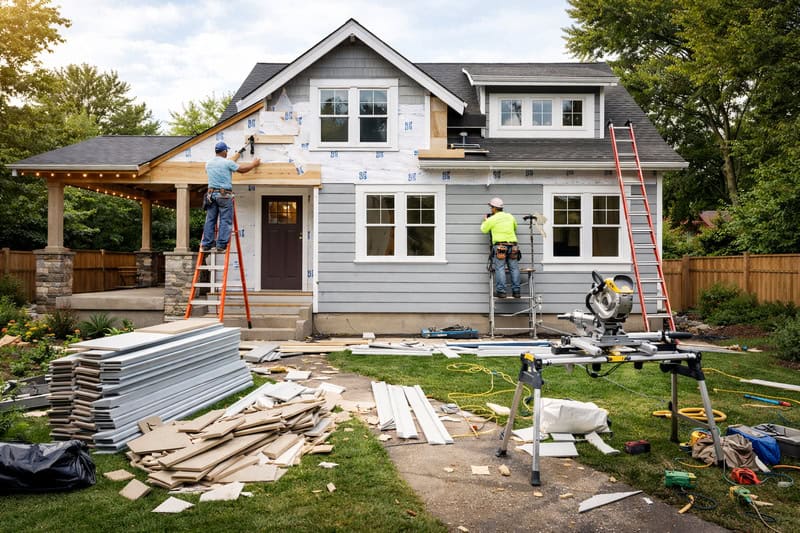
The Climate Fit Framework: Matching Material to Where You Live
The most common siding mistake is choosing a material based on national average data without adjusting for local climate. Here’s a practical decision model built around four climate variables: UV intensity, moisture exposure, temperature swing, and wind/impact frequency.
| Climate Profile | Best Primary Option | Strong Alternative | Avoid
|
|---|---|---|---|
| Hot, dry, high UV (e.g., Southern California, Arizona) | Fiber cement | Premium vinyl (thick profile, UV-rated) | Budget vinyl, untreated wood |
| Humid, coastal (Gulf Coast, Southeast) | Fiber cement | Engineered wood | Natural wood (without aggressive maintenance), aluminum |
| Cold, heavy freeze-thaw (Midwest, Northeast) | Engineered wood | Fiber cement | Stucco (prone to freeze-related cracking) |
| Mild, four-season (Pacific Northwest, mid-Atlantic) | Vinyl (premium) or fiber cement | Natural wood with proper maintenance | Aluminum (color fade, denting) |
Take a Southern California home as a concrete example. You’re dealing with intense UV from roughly March through October, occasional Santa Ana wind events that carry abrasive dust and debris, and periodic marine layer moisture if you’re within 20 miles of the coast. Budget vinyl fades in that UV load. Untreated wood struggles with the moisture swings. Fiber cement handles all three stressors without complaint, which is why it’s become the material of choice for so many professional contractors in the region. When homeowners in Orange County look at siding installation in Fullerton, fiber cement consistently comes up as the front-runner recommendation for exactly this climate profile.
A Practical Checklist Before You Commit to a Material
Run through these five questions before signing any contract:
- What’s your climate’s biggest threat? UV, moisture, freeze-thaw, or impact? Lead with your climate’s dominant stressor, not aesthetics.
- How long are you staying? If you’re selling in three years, prioritize resale optics and ROI. If you’re staying 20-plus years, prioritize durability and long-term maintenance cost.
- What’s your real maintenance tolerance? Be honest. If you didn’t repaint the trim last year when you said you would, natural wood is probably not your material.
- Does the material match the architecture? Craftsman bungalows read better with lap siding. Spanish Colonial and Mediterranean homes pair naturally with stucco. Forcing a mismatch hurts curb appeal even when the material is technically high-quality.
- Is your contractor material-certified? Fiber cement in particular requires specific installation techniques, including proper flashing, fastener spacing, and clearances from grade. A material installed incorrectly will underperform its warranty regardless of what the spec sheet says.
“Exterior replacement projects remain the clear winners when it comes to adding resale value. While large interior remodels may be personally rewarding, their appeal is often too subjective to deliver the same return when it’s time to sell.”- Clay DeKorne, chief editor of Zonda’s JLC Group, 2025 Cost vs. Value Report

The Number That Should Drive Your Final Decision
If you’re still on the fence between vinyl and fiber cement, here’s the data point that tends to settle the conversation: according to the 2025 Journal of Light Construction Cost vs. Value report, replacing siding with fiber cement returns about 114% of its cost at resale, meaning more than full cost recouped, while vinyl siding replacement has a national cost-recoup rate of up to 97%. Both are strong. Fiber cement is stronger.
The decision about whether to update your home’s exterior ultimately comes down to what you’re optimizing for. Budget-conscious and staying short-term? Premium vinyl makes a solid case. Prioritizing longevity, climate performance, and maximum resale return? Fiber cement is consistently the choice that professional contractors and real estate agents point to when someone asks what they’d do with their own house.
Your siding is a 30-year decision. Treat it like one. Get at least two contractor quotes, ask each one what they’d install on their own home and why, and then look at their previous installations in your neighborhood before you sign anything. The right material on a well-maintained home isn’t just a practical upgrade. It’s the kind of exterior that makes people slow down when they drive past.

Ellen is a busy mom of a 29-year-old son and 33-year-old daughter. She owns nine blogs and is addicted to social media. She believes that it doesn’t have to be difficult to lead a healthy life. She shares simple healthy living tips to show busy women how to lead fulfilling lives. If you’d like to work together, email info@confessionsofanover-workedmom.com to chat.
