
Last Updated on September 16, 2026 by Ellen Christian
Most storm damage doesn’t show up all at once. The wind dies, the sky clears, and your house looks fine from the driveway. That’s the trap. What you can’t see from the ground are the cracked shingles, the lifted flashing, and the water that’s already pooling under your roof decking while you’re brewing your first post-storm cup of coffee.
Posts may be sponsored. This post contains affiliate links, which means I will make a commission at no extra cost to you should you click through and make a purchase. As an Amazon Associate I earn from qualifying purchases.
Storms don’t ruin homes in one dramatic moment. They open a door, and time does the rest. If you understand what’s actually happening inside your walls and on your roof in the hours after a storm hits, you’ll make smarter decisions faster, and you might save yourself tens of thousands of dollars.

The 48-Hour Window: Why Timing Is Everything
Here’s a framework worth keeping in your back pocket: call it the 48-Hour Window. The first two days after a storm are when secondary damage accelerates fastest and when most homeowners do the least. The storm itself caused the initial wound. The 48-hour window determines whether that wound festers or gets treated.
Water is the main villain here. Once rain breaches your roofline, it follows the path of least resistance through insulation, across ceiling joists, down interior walls. By the 24-hour mark, mold can begin forming on wet organic materials. By 48 hours, drywall starts to weaken, and structural wood begins absorbing moisture. None of that is visible from your living room, which is exactly why so many homeowners underestimate the urgency.
The financial stakes are real. According to the Harvard Joint Center for Housing Studies’ Improving America’s Housing 2025 report, spending on disaster repairs reached $49 billion in 2022 and 2023 combined, an astonishing leap from $16 billion in 2002 and 2003. Much of that jump comes not from bigger storms but from delayed responses that turn manageable repairs into full-scale rebuilds. So the question isn’t whether the storm hurt your house. It’s what you do in the next 48 hours.
Hour 0 to 6: The Immediate Assessment
The storm has just passed. Before you do anything else, take a slow walk around the outside perimeter of your home. You’re not diagnosing, you’re observing. Look up. Look at the roofline from every angle. You’re scanning for four things:
- Missing or visibly lifted shingles
- Debris that landed on the roof and is still sitting there
- Gutters that are pulled away from the fascia board
- Any visible gaps where the roof meets dormers, chimneys, or skylights
Inside, check your attic if it’s safely accessible. Bring a flashlight. Water stains on the decking, wet insulation, or actual drips tell you exactly where infiltration is happening before it reaches your ceiling below. Check every ceiling in the top-floor rooms. Run your hand along the wall near windows. Feel for moisture, not just look for it. Don’t get on the roof yourself. Wet roofs are slippery, structurally compromised roofs are unpredictable, and the risk is genuinely not worth it. That’s what professionals are for.
RELATED: Computer Preparation for Storm Season
Why Severe Storms Are Getting More Punishing
If it feels like storms are hitting harder and more often, that’s because they are. The NOAA National Centers for Environmental Information confirmed that 2023 was a historic year for costly disasters, with 28 weather and climate disasters each causing at least $1 billion in damage, surpassing the previous record of 22 in 2020. That’s not a trend line that’s flattening anytime soon.
For homeowners in states like Utah, the combination of hailstorms, sudden wind events, and freeze-thaw cycles creates a unique threat profile. Hail punctures shingles. High-altitude wind peels back flashing. And when temperatures swing hard between day and night, any water that got in during the storm refreezes inside your roof structure, expanding cracks that weren’t there before. A roof that survives a summer storm in perfect shape can fail quietly through an October freeze cycle. This is why professional storm assessment isn’t an upsell. It’s triage.
Temporary Protection: The Case for Acting Before Repairs Are Done
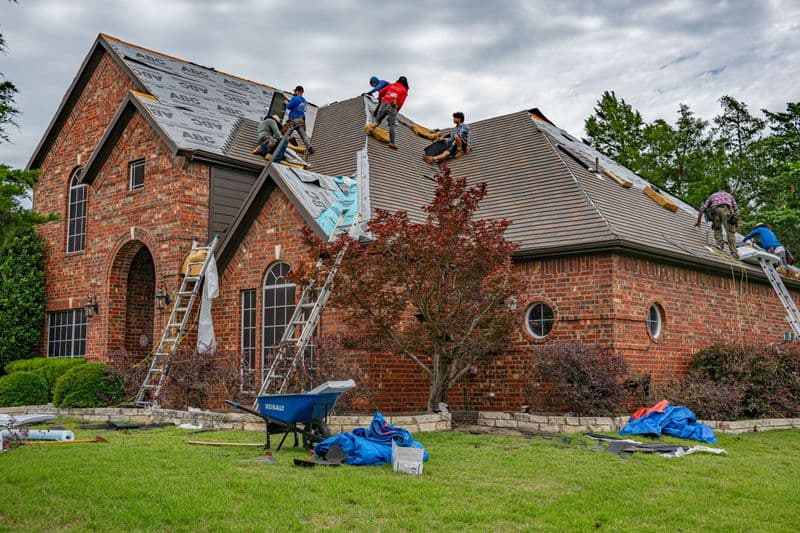
Permanent roof repairs take time. Materials need to be ordered, schedules need to coordinate, and if the storm hit your whole neighborhood, every roofer in a 30-mile radius just got a hundred calls. You might be waiting days or even a week for a full repair appointment.
That waiting period is not a passive one. Rain doesn’t check your repair calendar. A quality temporary protection install, done by someone who knows what they’re doing, stops the clock on secondary damage while you wait. Think of it as buying time without trading away your claim integrity or your roof’s structural condition.
For homeowners in the Salt Lake Valley, calling a local roofer for a West Jordan emergency roof tarp immediately after a storm is often the single most cost-effective decision they make in the entire repair process. A tarp installed correctly, sealed at the edges, and weighted or fastened properly can keep a compromised roof watertight for weeks while a permanent fix is arranged.
A tarp installed badly, on the other hand, creates a false sense of security and can channel water directly into the problem areas it was meant to protect. Installation matters as much as the material itself.
RELATED: Prepare your roof for severe weather
Storm Damage by the Numbers: A Quick Reference
| Storm Type | Common Roof Impact | Typical First Sign Inside the Home | Urgency Level
|
|---|---|---|---|
| Hail | Shingle granule loss, punctures | None immediately; shows up months later | High (inspect within 24 hours) |
| High winds | Lifted or missing shingles, flashing gaps | Ceiling stains within hours of next rain | Critical (act same day) |
| Heavy snow/ice | Ice dams, structural compression | Interior water staining near eaves | High (monitor daily) |
| Severe rain | Seam and flashing infiltration | Attic drips, wet insulation | Critical (inspect attic immediately) |
What to Tell Your Insurance Company
Document everything before any work begins. This is where homeowners lose money, not in the claim itself but in the documentation. Your phone camera is your best tool right now. Photograph the exterior from all four sides. Photograph the gutters, the fascia, and any debris on or near the roof. Go inside and photograph every ceiling you can see, every wall near a window, and your attic if you accessed it.
Create a timestamped record. Most smartphones embed the date and time in the photo metadata automatically, but email the photos to yourself anyway to create an independent record with a clear timestamp. Then call your insurer and report the damage before any repairs start. Most policies require notice within a specific window, and temporary protective measures, like a tarp install, are almost always covered as a necessary mitigation step.
“Acting quickly after storm damage isn’t just about stopping leaks. It’s about preserving your right to a fair claim payout. Insurers look at mitigation behavior when settling. Homeowners who act fast and document everything get better outcomes.” This position reflects the consistent consensus among public insurance adjusters and property claims professionals who advise homeowners on post-storm procedures.
The Post-Storm Action Checklist
- Walk the exterior perimeter and look at the roofline from all four angles.
- Check the attic for signs of water infiltration.
- Photograph all damage, inside and outside, with timestamps.
- Call a local roofing professional for an emergency assessment, not a week from now, today.
- Request temporary protective measures while you wait for permanent repairs.
- Notify your insurance company before any repair work begins.
- Keep all receipts for any emergency protective services, as most are reimbursable.
The homeowners who come out of major storms in the best financial shape aren’t the ones who were lucky enough to avoid damage. They’re the ones who treated the hours after the storm the same way they’d treat any other emergency: with speed, documentation, and the right help. Your roof did its job during the storm. Now it’s your turn.

Ellen is a busy mom of a 29-year-old son and 33-year-old daughter. She owns nine blogs and is addicted to social media. She believes that it doesn’t have to be difficult to lead a healthy life. She shares simple healthy living tips to show busy women how to lead fulfilling lives. If you’d like to work together, email info@confessionsofanover-workedmom.com to chat.
