
Last Updated on September 10, 2026 by Ellen Christian
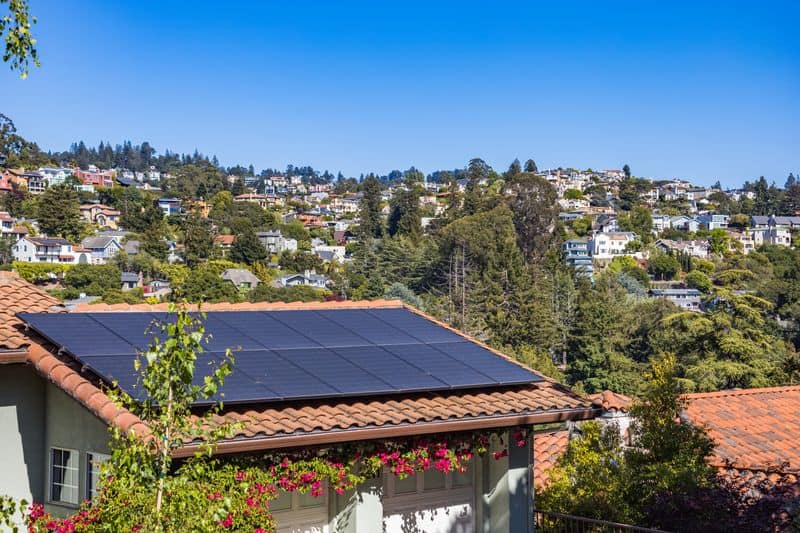
Most homeowners think about solar panels in terms of monthly electricity savings. That’s fair. But there’s a second number almost nobody talks about at the kitchen table: what those panels do to your sale price when it’s time to move. That number is bigger than you’d expect, and it compounds over time in ways that make solar one of the most interesting home upgrades you can make right now.
Posts may be sponsored. This post contains affiliate links, which means I will make a commission at no extra cost to you should you click through and make a purchase. As an Amazon Associate I earn from qualifying purchases.
This isn’t a pitch to go solar. It’s a clear-eyed look at the financial mechanics, the research behind the property premium, and the things that determine whether you actually capture that value or watch it evaporate at closing.

The Equity Multiplier: Why Solar Is Different From Other Upgrades
A kitchen remodel gives you a beautiful kitchen. A bathroom renovation gives you a beautiful bathroom. Neither one generates revenue after you build it. Solar does. And that’s the fundamental difference that changes how appraisers and buyers treat it.
Think of it this way: your solar system is producing an asset that has a measurable annual yield in the form of reduced electricity costs. Buyers don’t just see panels on a roof. Savvy buyers see a stream of future savings baked into the property. That’s why solar gets treated more like income-generating equipment than cosmetic improvement, which is exactly how the research frames it.
Call it the Equity Multiplier Effect: the value of a solar installation isn’t just its hardware cost, it’s the capitalized present value of the energy it will produce over its remaining life. A $25,000 kitchen doesn’t keep paying you back. A $25,000 solar system does, every single month for 25 or more years.
What the Research Actually Shows
The landmark study on this question came from Lawrence Berkeley National Laboratory, funded by the U.S. Department of Energy. According to the LBNL “Selling Into the Sun” report published by the Department of Energy’s Office of Scientific and Technical Information, researchers analyzed 22,822 home sales across eight states and found that buyers consistently paid a premium for homes with owned solar systems, averaging roughly $4 per watt or about $15,000 for a typical 3.6-kilowatt installation.
That was the baseline a decade ago. More recent data puts the premium higher. A 2024 study based on Zillow transaction data found that homes with solar sold for an average of 6.8% more than comparable homes without it. On a $450,000 home, that’s over $30,000 in additional sale price, before you factor in a single dollar of electricity savings.
One critical nuance: only owned systems drive a meaningful premium. Homes with leased panels or power purchase agreements showed little to no measurable price bump in multiple studies. If you sign a lease, you’re essentially telling future buyers they’re inheriting a financial obligation, not a free asset. That’s a very different conversation at the negotiating table.
The Numbers Side by Side
| Scenario | Home Value Impact | Monthly Bill Impact | Source
|
|---|---|---|---|
| No solar | Baseline | Full utility rate | N/A |
| Leased solar | Minimal to none | Fixed lease payment replaces bill | LBNL / Solar Insure 2025 |
| Owned solar (avg. 3.6 kW) | ~$15,000 premium (2015 baseline) | Significantly reduced or zero | LBNL “Selling Into the Sun” |
| Owned solar (current) | ~4.1–6.8% of home value | Significantly reduced or zero | Zillow 2024 data |
Why Location Multiplies Everything
The solar premium isn’t uniform. It concentrates in places with high electricity rates, abundant sun, and strong buyer awareness of energy costs. That combination is exactly why the desert Southwest punches above the national average on solar value.
Take St. George, Utah as a concrete example. The region logs over 300 days of sunshine per year. Rocky Mountain Power rates have climbed steadily, meaning the annual yield from a rooftop system keeps growing in real dollar terms. A homeowner who works with reputable solar installers in St. George to put an owned system on their roof today is locking in an asset that becomes more valuable with every utility rate increase that follows. That’s not theory. That’s how the math works when you model it out over a 10-year hold.
The broader national picture backs this up. The U.S. Energy Information Administration reported in its 2023 Short-Term Energy Outlook that the residential sector accounts for 67% of small-scale solar capacity in the U.S., a sign that homeowners, not businesses, are driving the adoption curve. When that many buyers and sellers have solar experience, the premium becomes more standardized and easier for appraisers to document. That’s good news if you’re the seller.
Four Decisions That Determine Whether You Capture the Premium
Research shows the premium is real. But not every solar installation delivers it. Here are the four variables that separate the homeowners who pocket the premium from those who don’t.
- Own, don’t lease. Every study points the same direction. Ownership is the only path to a reliable price bump at sale.
- Size the system correctly. A system that covers 80 to 100 percent of your current usage is the sweet spot. Oversized systems rarely earn proportionally more, and undersized systems confuse buyers.
- Keep your documentation. Utility bills before and after, the original permit, the inverter warranty, and annual production records. Appraisers who specialize in green homes will ask for exactly these. Have them ready.
- Roof condition matters as much as panel condition. A great solar system on a tired roof creates a liability, not an asset. Buyers will either discount the price or walk away. If you’re adding solar, assess your roof first. A roofer who also installs solar is in the best position to evaluate both at once.
“Home buyers are consistently willing to pay PV home premiums across various states, housing and PV markets, and home types.” That conclusion from the Lawrence Berkeley National Laboratory’s multi-state analysis of over 22,000 home sales is about as definitive as real estate research gets.

The Timing Question
One thing that often gets overlooked: when you install matters. A system installed five or more years before a sale still earns a solid premium, typically 5 to 6 percent, but a newer system tends to earn more, around 7 to 9 percent, because buyers aren’t pricing in near-term component replacement. That means the homeowner who installs today and sells in three years is likely sitting in the best premium window.
Electricity prices are also trending the right way for solar owners. Historically, U.S. residential electricity rates have risen year over year, which means the value of a fixed-cost energy source climbs right along with them. The longer you hold a solar home, the more your locked-in production cost looks like a bargain compared to whatever the grid is charging your neighbors.
Solar isn’t a vanity upgrade. It’s a revenue-generating asset that happens to sit on your roof. Treat it that way from the start, own it outright, document it carefully, and pair it with a roof that’s in good shape, and the premium almost always follows.

Ellen is a busy mom of a 29-year-old son and 33-year-old daughter. She owns nine blogs and is addicted to social media. She believes that it doesn’t have to be difficult to lead a healthy life. She shares simple healthy living tips to show busy women how to lead fulfilling lives. If you’d like to work together, email info@confessionsofanover-workedmom.com to chat.
