Last Updated on August 17, 2026 by Ellen Christian
You don’t need a huge garden to accumulate a ridiculous amount of gardening supplies.
Posts may be sponsored. This post contains affiliate links, which means I will make a commission at no extra cost to you should you click through and make a purchase. As an Amazon Associate I earn from qualifying purchases.
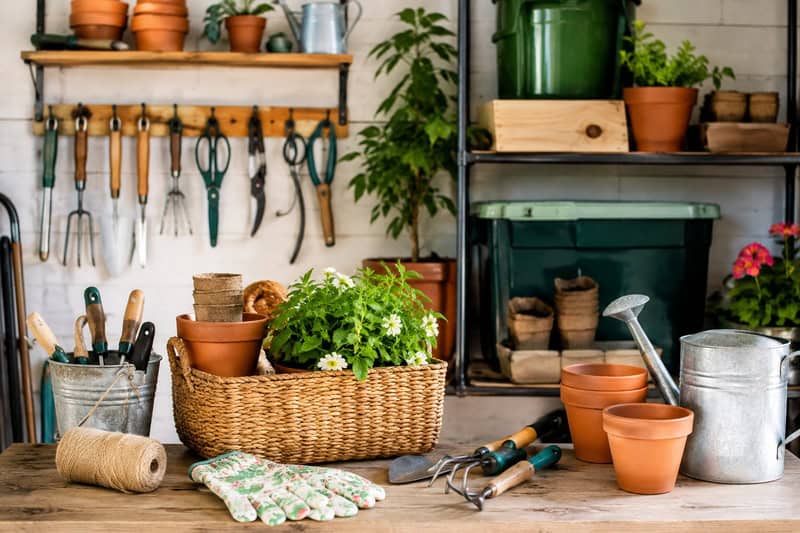
A couple of pairs of gloves turns into six. A few flower pots somehow become a stack of twenty. Then there are hand tools, plant labels, twine, tomato supports, fertilizer, potting soil, and all those little things you buy because you’re sure you’ll need them eventually.
And if you don’t have a garden shed, finding a place for everything can become a real problem.
The good news is that you don’t necessarily need to buy a shed or dedicate an entire room to gardening supplies. With a little sorting and some strategic storage, you can organize garden supplies using the space you already have.
Start by Sorting Your Garden Supplies
Before buying a single storage container, take everything out and sort it.
I like to divide gardening supplies into three basic groups.
Things You Use All the Time
These are the things you reach for constantly during gardening season:
- Gardening gloves
- Hand trowel
- Pruning shears
- Twine
- Plant ties
- Small hand tools
- Plant labels
These should be the easiest things to access.
There’s no reason to put your gardening gloves in a box behind six other boxes when you’re using them several times a week.
Things You Use Occasionally
This might include:
- Specialty gardening tools
- Plant supports
- Extra flower pots
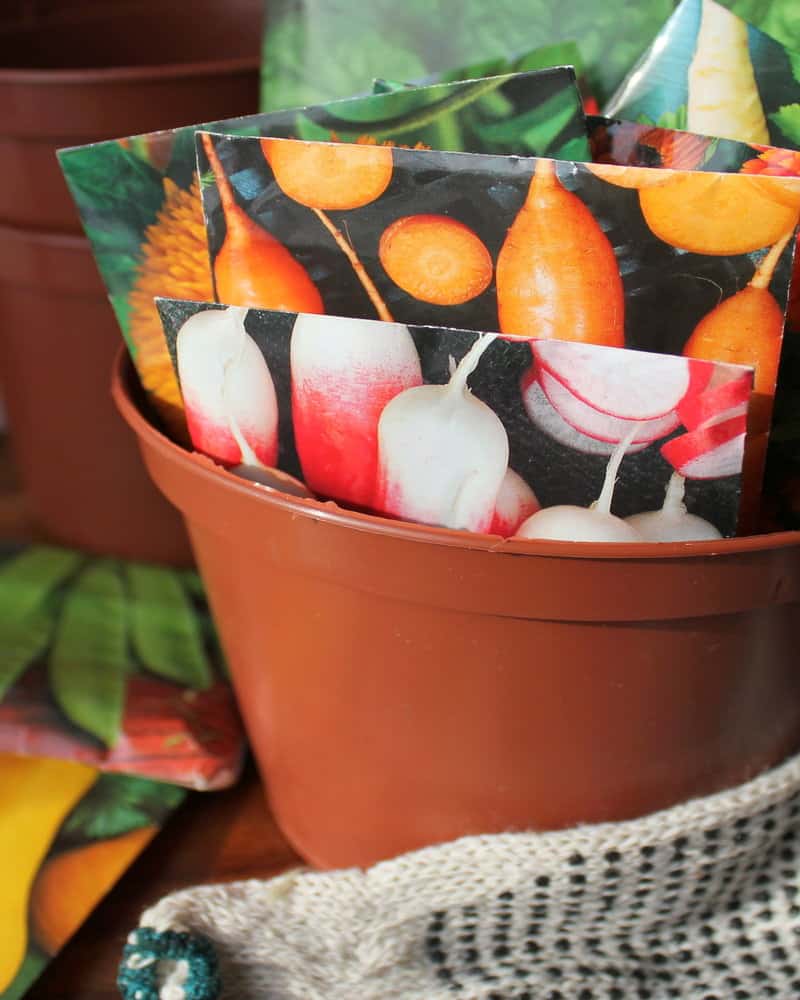
- Seed-starting supplies
- Extra garden gloves
- Specialty pruning tools
These can be stored in a labeled container or on a shelf.
Seasonal Garden Supplies
Some things only come out for a few weeks or months each year.
Think about:
- Frost protection
- Seed-starting equipment
- Harvest baskets
- Certain gardening supplies
- Extra plant containers
- Seasonal decorations
These can go into less convenient storage.
You don’t need your winter garden supplies taking up the most accessible space in July.
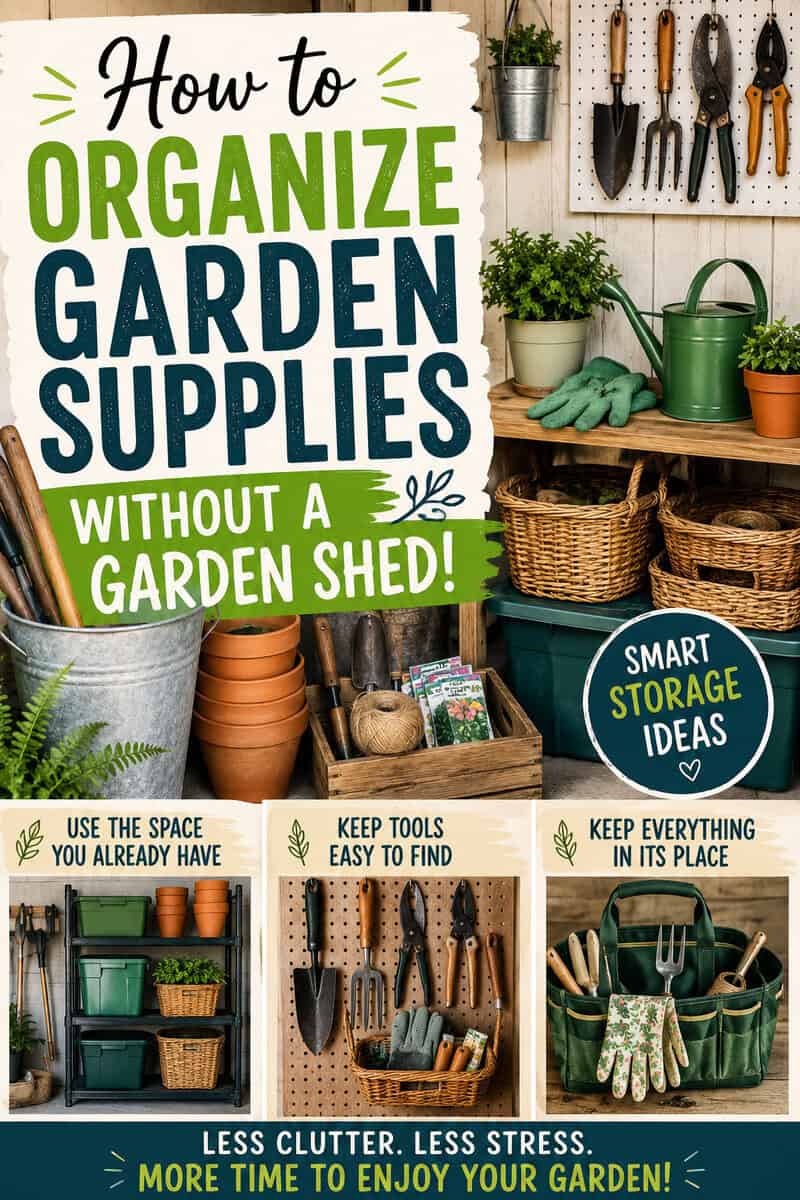
Use the Space You Already Have
If you don’t have a garden shed, look around your home for space you’re already using inefficiently.
You might have room in:
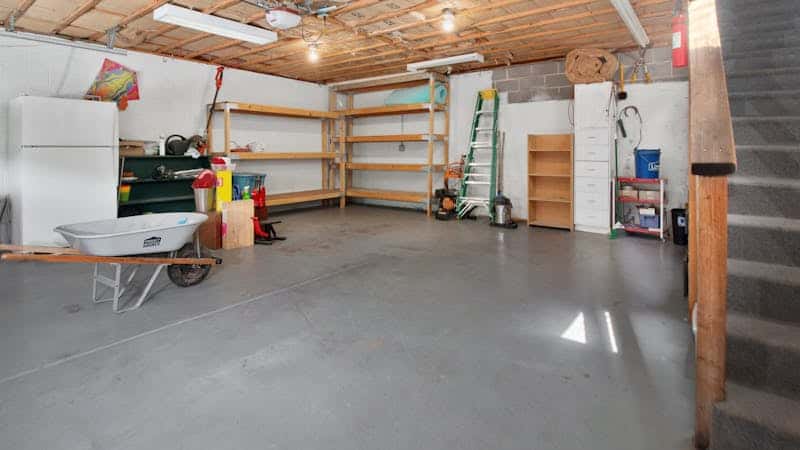
- The garage
- Basement
- Laundry room
- Mudroom
- Entryway closet
- Covered porch
- Utility room
- Under the stairs
You don’t need to create a dedicated “garden room.”
Instead, create a small garden storage zone.
For example, one section of the garage could hold your garden tools, pots, and soil. A basement shelf might be perfect for seeds and smaller supplies.
The goal is to keep everything together enough that you know where to look when you need something.
Create a Garden Grab-and-Go Station
One of the easiest things you can do is create a small garden caddy for the supplies you use most.
You could keep:
- Gardening gloves
- Hand trowel
- Pruning shears
- Plant ties
- Twine
- Small labels
- Weeding tool
in one portable container.
Then when you head outside, you can grab the whole thing instead of making six trips into the house.
A sturdy garden tool tote or caddy can be especially useful if your gardening area isn’t right next to your storage space.
Store Garden Tools Vertically
If floor space is limited, look up.
Seriously.
Walls are some of the most underused storage space in a garage or basement.
A wall-mounted tool rack, hooks, or pegboard can hold:
- Hand tools
- Long-handled tools
- Pruners
- Garden shears
- Hoses
- Small baskets
Keeping tools off the floor also makes it easier to sweep, clean, and actually find what you’re looking for.
If you’re working with a small space, vertical storage can make a surprisingly big difference.
A Pegboard Can Be Useful for Small Gardening Supplies
A pegboard isn’t just for a workshop.
You can use hooks and small baskets to keep gardening tools visible and accessible. You can also rearrange the hooks as your storage needs change.
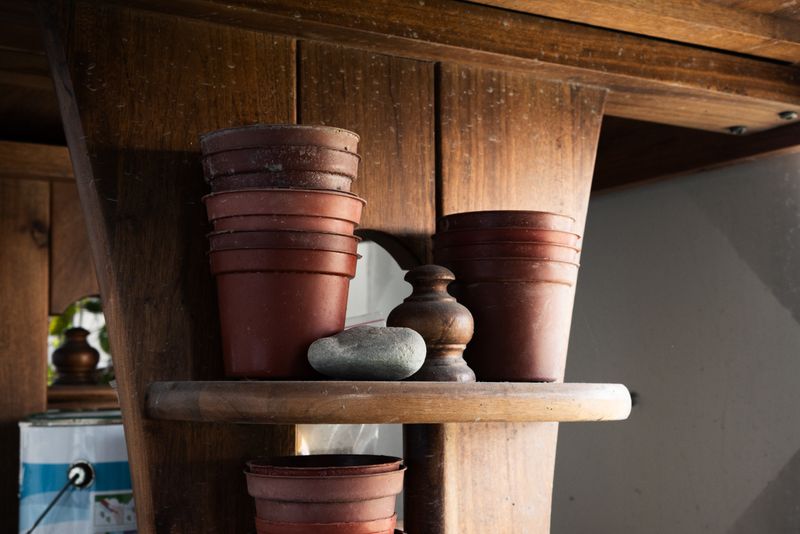
Don’t Store Every Empty Flower Pot Together
Gardeners have a tendency to collect flower pots.
You buy a plant.
You keep the pot.
Then another plant comes home in another pot.
Before you know it, you have a tower of containers taking up an entire corner of the garage.
Instead, sort your pots by size and nest them together.
Get rid of cracked, broken, or unusable pots unless you have a specific reason to keep them.
Then keep the pots you use most often somewhere accessible and move the extras to less convenient storage.
You don’t need every pot you’ve accumulated over the past decade within arm’s reach.
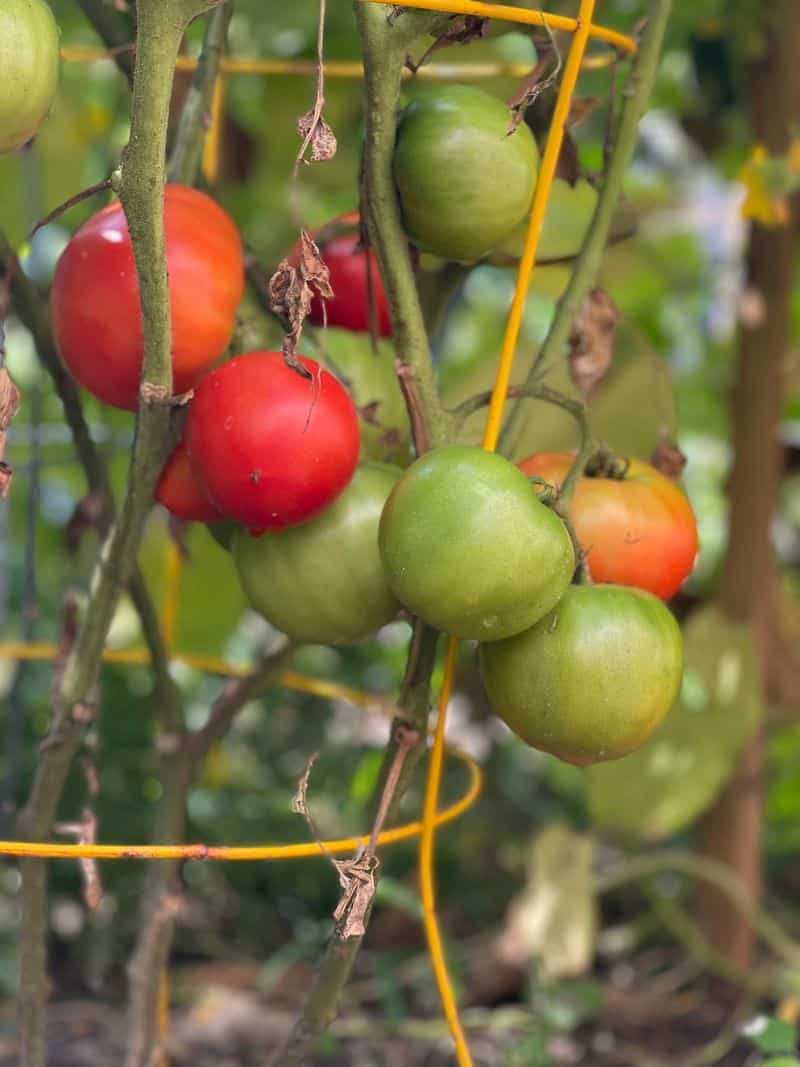
Give Plant Supports Their Own Storage Spot
Tomato cages, stakes, trellises, and plant supports are awkward because they’re long and difficult to stack neatly.
Instead of laying them across the floor, give them a vertical home.
A tall corner of your garage, basement, or covered storage area can work well.
You can also bundle smaller stakes together so they don’t end up scattered everywhere.
The key is to keep them together.
There’s nothing more frustrating than needing a tomato stake and discovering that the one you want is buried behind five bags of potting soil.
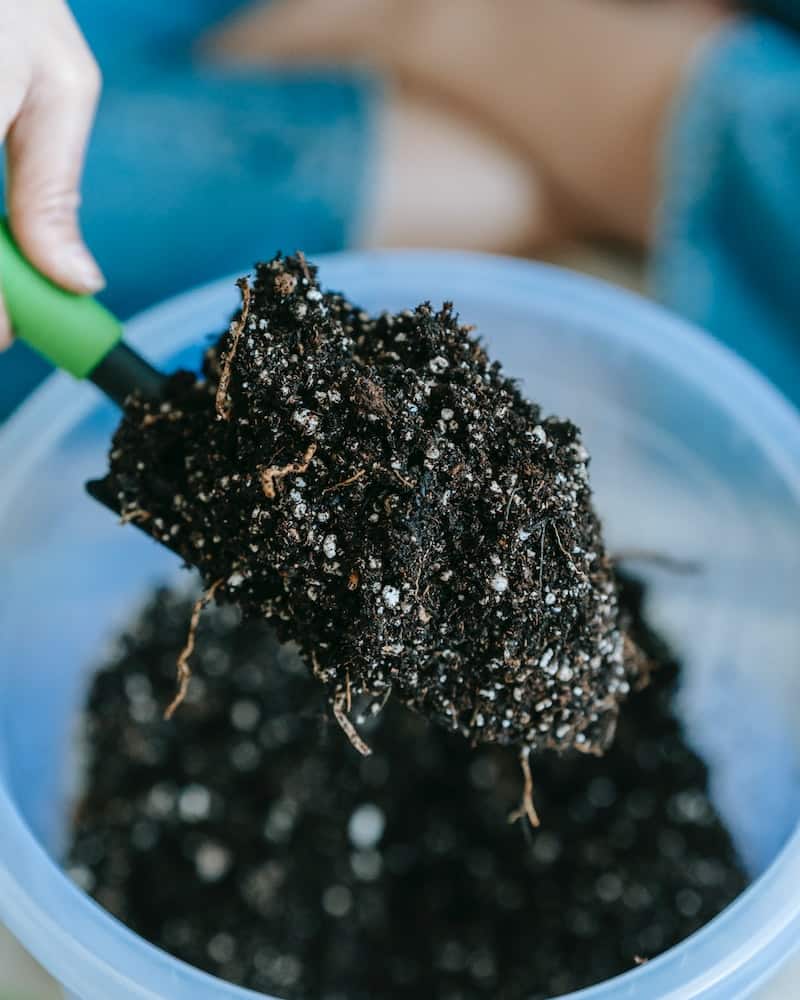
How to Store Open Bags of Potting Soil
Opened bags of potting soil can become messy very quickly.
If you’re storing them in a garage or basement, keep them somewhere dry and protected from moisture.
A sturdy shelf can keep bags off the floor and make the area easier to clean.
For smaller amounts of soil or other gardening materials, appropriately sized storage containers can help keep things contained.
Just make sure any container is clearly labeled with what is inside.
You don’t want to be guessing whether something is potting mix, fertilizer, or another garden product.
Always follow the storage instructions on the original product packaging, particularly for fertilizers and other garden chemicals.
Give Every Garden Supply a Home
This is one of the simplest organizing rules you can use:
If you can’t say where something belongs, you don’t really have a storage system yet.
That doesn’t mean everything needs its own special container.
It simply means you should know where something goes when you’re finished using it.
For example:
Gardening gloves: Garden caddy
Hand tools: Garden caddy
Long-handled tools: Wall rack
Plant supports: Tall storage area
Flower pots: Nested by size
Seeds: Small labeled container
Twine and plant ties: Small organizer
Extra soil: Designated shelf or storage area
Once you establish these homes, putting things away becomes much easier.
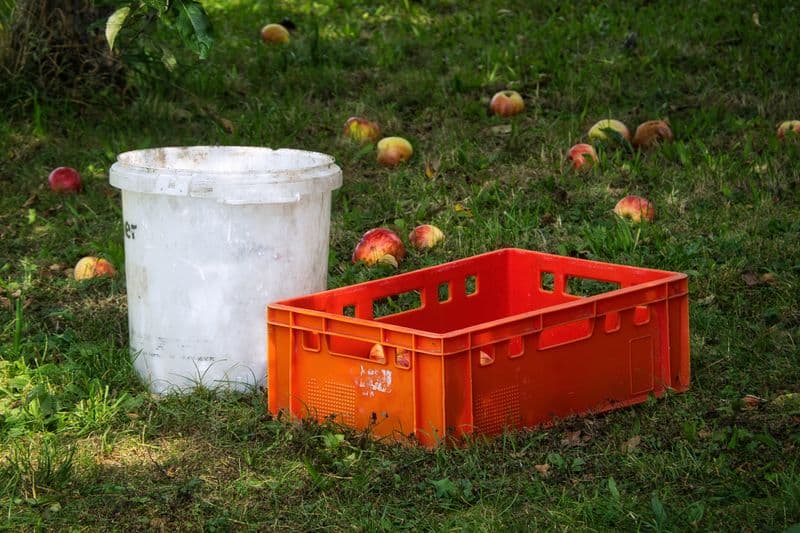
Don’t Buy Storage Containers Before You Sort
This is one of my favorite frugal organizing rules.
Don’t buy containers first.
It is incredibly easy to spend $100 on baskets, bins, hooks, and organizers only to discover that you didn’t actually need half of them.
Instead:
- Pull everything out.
- Get rid of what you don’t use.
- Group similar things together.
- Decide what needs to be easily accessible.
- Measure the space you have.
- Reuse containers you already own.
- Buy only the storage pieces that solve an actual problem.
You may discover that the plastic bin sitting unused in your basement is exactly the right size for your garden gloves and hand tools.
That’s a much better deal than buying a new organizer just because it looks good on Pinterest.
Make a Small Garden Supply Station
You don’t need an entire shed to have organized gardening supplies.
A small shelf, cabinet, or section of your garage can become your garden supply station. This will help you stop buying garden supplies you don’t need.
Try keeping your most frequently used supplies together:
- Hand tools
- Gloves
- Twine
- Plant ties
- Labels
- Small pots
- Pruning supplies
Then use higher shelves or less accessible areas for things you don’t need every week.
If your storage space is small, think vertically rather than trying to spread everything across the floor.
When You Actually Need More Storage
Sometimes, despite your best efforts, you really do need more storage.
If you’ve sorted everything, gotten rid of what you don’t use, used the available walls and shelves, and still can’t fit everything comfortably, additional storage may be worthwhile.
Depending on your space, that might mean:
- A small outdoor storage cabinet
- A deck box
- Heavy-duty shelving
- A storage bench
- A small garden shed
But I would make that the last step, not the first.
The goal isn’t to buy something to contain all the stuff you’ve accumulated.
The goal is to figure out what you actually use and create a practical home for it.
The Best Garden Storage Solution May Be the Simplest One
You don’t need a picture-perfect garden shed with matching containers and custom shelving to be organized.
You need to be able to answer three questions:
What do I have?
Where does it belong?
Can I find it when I need it?
If the answer to those questions is yes, your garden supplies are organized.
And if you can accomplish that using a few containers you already own, a couple of wall hooks, and some space in the garage or basement, even better.
Because gardening is expensive enough without spending a fortune organizing all the things you already bought to do it.

Ellen is a busy mom of a 29-year-old son and 33-year-old daughter. She owns nine blogs and is addicted to social media. She believes that it doesn’t have to be difficult to lead a healthy life. She shares simple healthy living tips to show busy women how to lead fulfilling lives. If you’d like to work together, email info@confessionsofanover-workedmom.com to chat.
