
Last Updated on August 12, 2026 by Ellen Christian
Have you ever gone to the garden center because you needed one specific thing, only to come home with three things you weren’t looking for?
Posts may be sponsored. This post contains affiliate links, which means I will make a commission at no extra cost to you should you click through and make a purchase. As an Amazon Associate I earn from qualifying purchases.
Or maybe you were sure you had a package of plant labels somewhere. You looked through the garage, couldn’t find them, and bought another package. Then, six months later, you discovered the original package tucked behind the garden tools.
I’ve done this with gardening supplies more times than I care to admit.
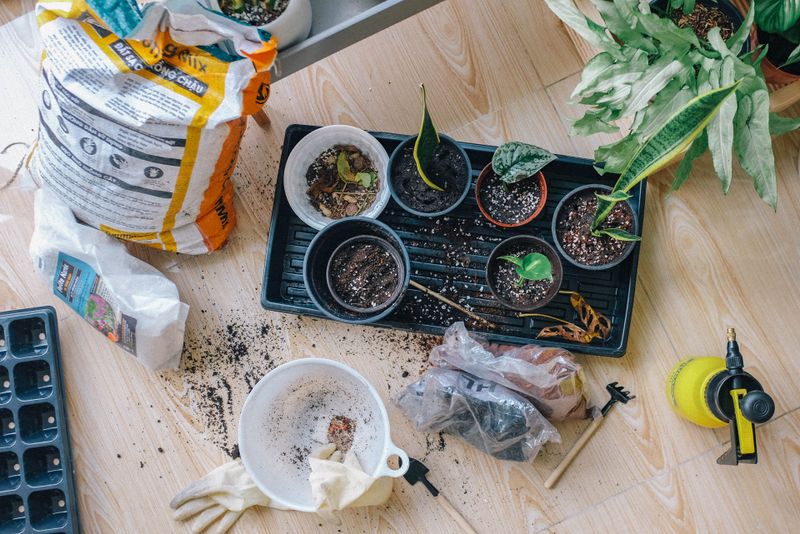
The problem usually isn’t that we have too few garden supplies. It’s that we don’t know exactly what we already have or where we put it.
If you’ve been gardening for years, those little purchases can really add up. Here’s a simple system for organizing your garden supplies so you can use what you have, stop buying duplicates, and save money.
Start by Gathering All Your Garden Supplies
Before you buy storage containers or start organizing, gather everything together.
This is important because garden supplies have a way of migrating all over the house.
Check:
- Garage
- Basement
- Shed
- Mudroom
- Porch
- Greenhouse
- Garden cart
- Tool drawers
- Shelves
- Old boxes
- Bins
- Anywhere you’ve stored gardening supplies in the past
You may be surprised by what you find.
You might discover three packages of plant markers, several rolls of garden twine, more pots than you remember buying, or enough plant supports to last several seasons.
Don’t buy anything new until you’ve done this step.
You can’t organize what you don’t know you have.
Sort Your Gardening Supplies Into Four Categories
You don’t need a complicated organizing system. I like four basic categories because they’re easy to maintain.
1. Things You Use Regularly
These are the supplies you reach for throughout the gardening season.
Examples include:
- Hand trowels
- Pruners
- Gardening gloves
- Plant markers
- Garden twine
- Plant ties
- Small pots
Keep these somewhere convenient because you don’t want to dig through a storage bin every time you need them.
2. Seasonal Supplies
Some things are only used during certain parts of the gardening year.
These might include:
- Seed-starting trays
- Frost protection
- Plant supports
- Row covers
- Certain fertilizers
- Bulb-planting tools
Store these together so you know where they are when that season arrives.
3. Things You Need to Use Up
This category can save you money.
Look for things you already own that don’t need to be replaced yet, such as:
- Partially used fertilizer
- Plant ties
- Garden twine
- Plant labels
- Pots
- Seed-starting supplies
- Soil amendments
Make a point of using these before buying more.
4. Things You Don’t Need
Be honest here.
If you haven’t used something in several gardening seasons and can’t think of a realistic reason you will use it, it may be time to let it go.
Usable tools and supplies could potentially be given to another gardener, donated, or passed along to a community garden.
You don’t need to keep something simply because you might use it someday.
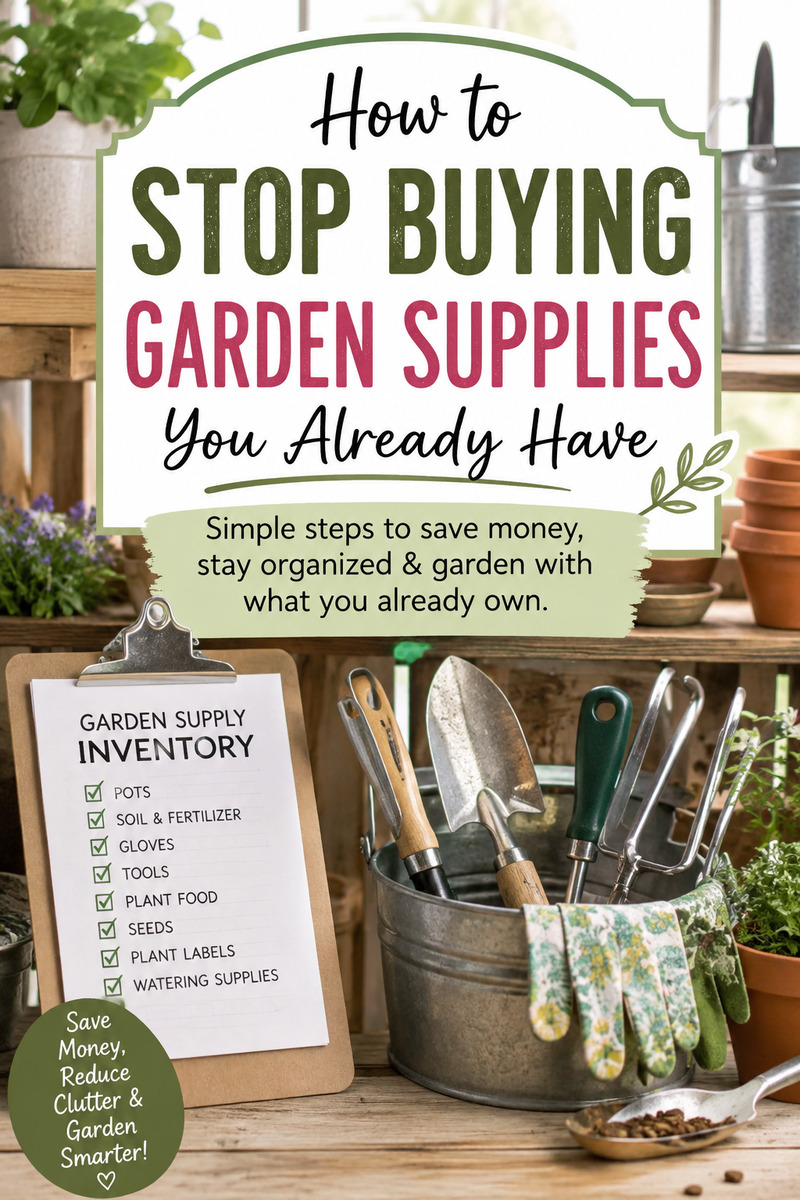
Make a Simple Garden Supply Inventory
This is the part that makes the biggest difference for me.
Create a simple inventory of what you have.
It doesn’t need to be fancy. You can use a notebook, spreadsheet, or note on your phone.
Here’s an example:
| Item | Quantity | Location | Need More? |
|---|---|---|---|
| Tomato clips | 24 | Shed | No |
| Garden twine | 2 rolls | Garage | No |
| Plant labels | 50 | Basement bin | No |
| Seed-starting trays | 8 | Basement | No |
| Hand pruners | 2 | Garden shed | No |
The location column is especially important.
It’s not enough to know that you own garden twine.
You need to know that the garden twine is in the blue storage bin on the garage shelf.
That way, when you’re standing in the garden center wondering if you need more, you can check your inventory instead of guessing.
Give Each Category a Home
Once you’ve figured out what you own, give everything a designated place.
You don’t need a Pinterest-perfect garden shed.
You just need a system that makes sense to you.
For example, you might have:
Planting Supplies
- Seed-starting trays
- Pots
- Plant labels
- Garden markers
Plant Support
- Stakes
- Clips
- Ties
- Trellis pieces
Hand Tools
- Trowels
- Pruners
- Cultivators
- Garden gloves
Garden Amendments
- Fertilizer
- Soil amendments
- Other gardening products
The important thing is that similar things live together.
If all your plant supports are together, you’re much less likely to buy another package because you can’t find the ones you already own.
Don’t Buy Storage Before You Declutter
This is one of my favorite organizing rules:
Don’t turn organizing into a shopping project.
It’s very tempting to decide you need matching bins, specialty garden organizers, shelving, labels, and storage systems before you’ve even figured out what you have.
You might not.
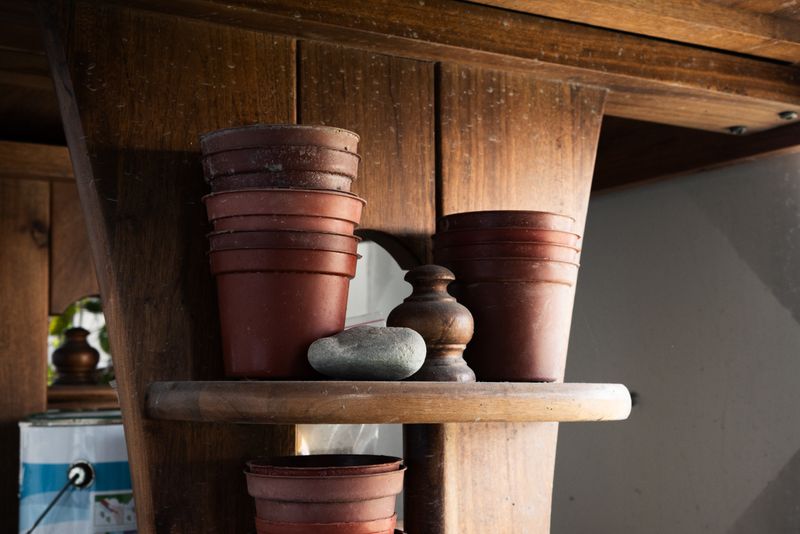
Use containers you already own first.
An old plastic bin may work perfectly well for plant labels and small gardening supplies. A cardboard box may be perfectly adequate for things that need to stay dry and protected.
If you eventually discover that you genuinely need additional storage, then buy what solves the actual problem.
The goal is to organize your garden supplies—not buy more things to organize them with.
Create a “Use This Before Buying More” Rule
This is where the system starts saving real money.
Before buying a garden supply, ask yourself:
Do I already have this?
If you’re not sure, check your inventory.
Then check the actual storage area.
If you already have it, use what you own.
This is particularly helpful with inexpensive gardening supplies.
It’s easy to think, “It’s only $4.99,” and toss another package into your cart.
But those little purchases add up.
Buying the same inexpensive item five times because you couldn’t find the original isn’t actually inexpensive.
Keep a Garden Shopping List
Your inventory can also become your shopping list.
Before heading to the garden center, look at what you actually need.
For example:
Spring Garden Shopping List
- Tomato seeds
- Potting soil
- Replacement pruners
- Plant supports
If you already have plenty of garden twine, plant labels, and seed-starting trays, they don’t go on the list.
This simple step can keep you from impulse buying.
I also like the idea of taking a quick look at your inventory before you start browsing online. It’s much easier to avoid unnecessary purchases when you know you already have what you need at home.

What Should You Do With Duplicate Garden Supplies?
Finding duplicates doesn’t mean you have to throw everything away.
First, figure out whether you’ll realistically use them.
If you have six packages of plant labels and know you’ll use them over the next few seasons, keep them.
If you have far more than you’ll ever use, consider giving some to another gardener or donating usable supplies.
For tools, you might discover that you really don’t need four hand trowels.
On the other hand, if you have several family members gardening at the same time, keeping extras might make sense.
The goal isn’t to own as little as possible.
The goal is to know what you own and make sure it earns its space.
Be Careful With Garden Chemicals
Garden chemicals, fertilizers, pesticides, and other products should be treated differently from ordinary gardening supplies.
Don’t combine products just to save space, and don’t remove them from their original labeled containers.
Keep them stored according to the manufacturer’s instructions and dispose of unwanted products according to your local guidelines.
The money-saving goal isn’t worth creating a safety problem.
Consider a Garden Caddy for the Things You Use Constantly
If you’re constantly walking back and forth to the shed because you’ve forgotten your pruners, gloves, twine, or hand trowel, a simple garden caddy can be useful.
You could keep your most frequently used small tools together and carry them with you while you’re working.
This isn’t something everyone needs.
If you already have a basket or container that works, use that.
But if carrying tools around the yard is a recurring problem, a garden caddy can be a practical solution.
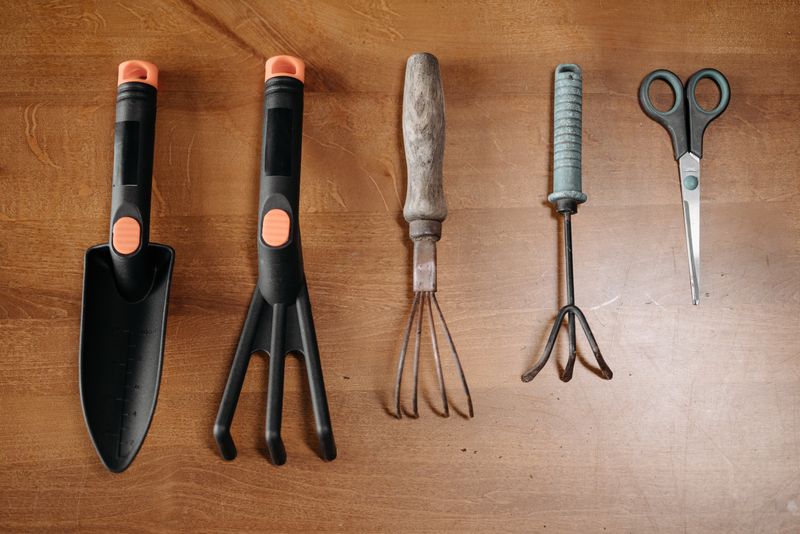
Use a Small Organizer for Your Hand Tools
Hand tools are another category that tends to get scattered.
Instead of tossing everything into a large box, consider keeping your most-used tools together.
A small tool organizer, garden tool rack, or wall-mounted storage system can make it easier to see what you have.
And there’s another benefit:
If you can see your tools, you’re less likely to buy another one because you forgot you already owned it.
Do a Garden Inventory Twice a Year
You don’t need to maintain your inventory constantly.
Twice a year is probably enough for most gardeners.
Spring
Before buying your gardening supplies, check what you already have.
This is the perfect time to update your quantities and make your shopping list.
Fall
Before putting everything away for winter, take a few minutes to look at what you used and what you still have.
You may discover that you don’t need to buy certain supplies next spring.
It’s also a good time to put things back in their designated locations so you’re not starting the next gardening season with a scavenger hunt.
The “Use What You Have” Garden Challenge
If your garden supplies have gotten a little out of control, try this.
For the next month, don’t buy any gardening supply you already own.
Before every purchase, check your inventory.
You might be surprised at how much you can accomplish with what you already have.
You can even make it a game.
Instead of buying another package of plant clips, find the ones you already own.
Instead of buying another container for seedlings, see whether you have something suitable at home.
Instead of buying another tool, look through the shed.
Every time you use something you already own instead of buying another one, you’ve saved money.
You Don’t Need a Pinterest-Perfect Garden Shed
There’s a tendency to think organization means everything needs to match.
It doesn’t.
Your garden storage doesn’t need beautiful labels and matching containers.
It needs to work.
You should be able to answer four questions:
What do I have?
How much do I have?
Where is it?
Do I actually need more?
If you can answer those questions, you’re already ahead of most of us.
And you may discover that the best way to save money on gardening supplies isn’t finding a better sale.
It’s using the supplies you already bought.
Want to Stop Buying Things You Already Own?
If you’re the kind of person who discovers three packages of the same garden supply every spring, I’ve got a simple solution.
Create your own Garden Supply Inventory.
You can use a notebook or spreadsheet, or make a simple printable with columns for:
- Item
- Quantity
- Where I Keep It
- Need More?
Keep it somewhere easy to access before you go shopping.
That little list can save you from those “I know I have some somewhere…” purchases.
And honestly, there’s something satisfying about realizing you already have exactly what you need sitting at home.
What garden supply do you seem to buy over and over again because you can never find the one you already own?
A few optional tools that can make this system easier
You don’t need to buy anything new to get started. But if your existing storage isn’t working, a few practical items can help:
- Garden storage bins: Useful for keeping smaller supplies together and protecting them from moisture and dirt. Here
- Garden tool organizer: Helpful if hand tools keep getting scattered around the garage or shed. Here
- Reusable garden labels: A good option if you’re constantly buying disposable plant markers. Here
- Garden caddy: Useful for keeping the handful of tools you use most often together while you’re working. Here
Start with what you already have. Buy storage only when you know exactly what problem you’re trying to solve.
That’s the part that keeps an organizing project from becoming another reason to go shopping.

Ellen is a busy mom of a 29-year-old son and 33-year-old daughter. She owns nine blogs and is addicted to social media. She believes that it doesn’t have to be difficult to lead a healthy life. She shares simple healthy living tips to show busy women how to lead fulfilling lives. If you’d like to work together, email info@confessionsofanover-workedmom.com to chat.
