
Last Updated on September 24, 2026 by Ellen Christian
Roofs are probably the most underrated parts of a building. Certain roof designs do more for property owners and businesses than provide shelter from rain. For instance, most commercial buildings prefer flat roofs for cost efficiency and space for storage, meetings, or relaxation.
Posts may be sponsored. This post contains affiliate links, which means I will make a commission at no extra cost to you should you click through and make a purchase. As an Amazon Associate I earn from qualifying purchases.
Most property owners have no trouble deciding what type of roof they want; what bothers them is who to trust with the job.
Finding a reliable company can be tricky. Mistakes can cost thousands in extra payments or lead to a legal issue when homeowners hire without asking questions first.
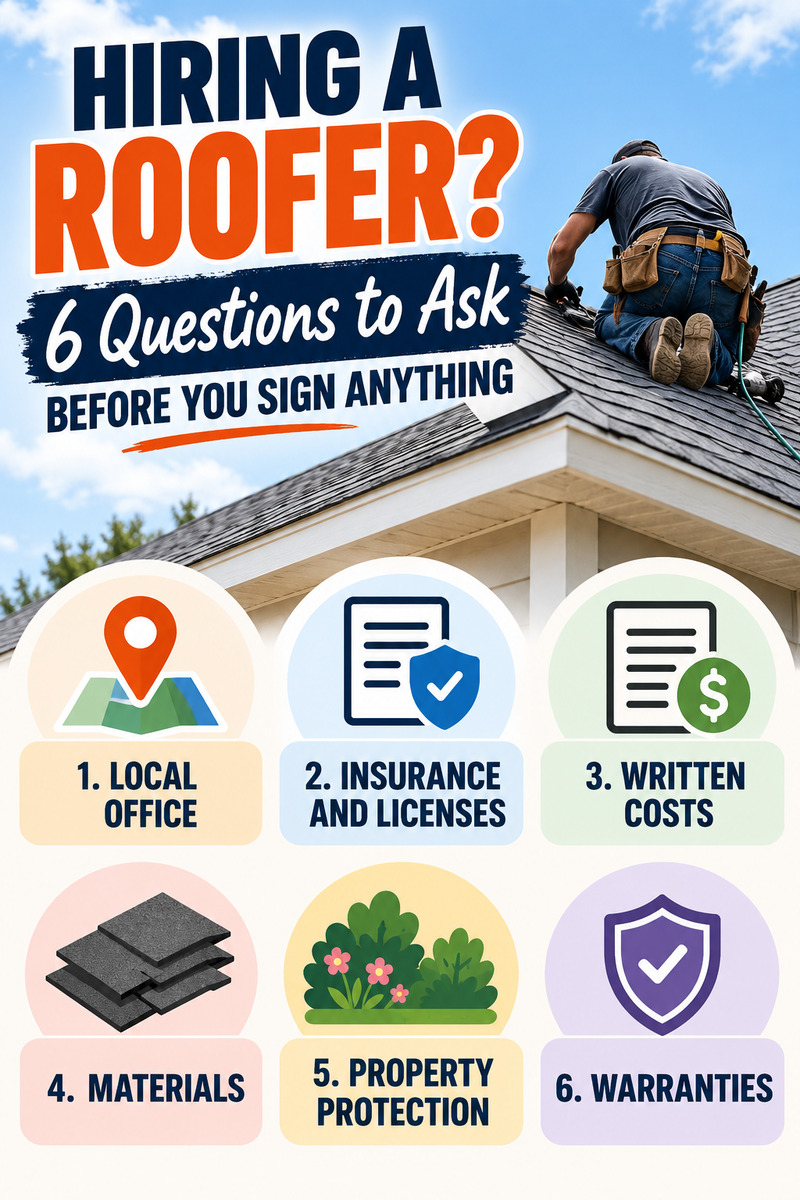
Asking a few straightforward questions before work begins helps ensure the job gets done without money or court issues. In this guide, we’ll explore some of the most important questions every property owner should ask a roofer. You will also learn why these questions matter and how they can protect you and your property.
1. Is There a Real Local Office Nearby?
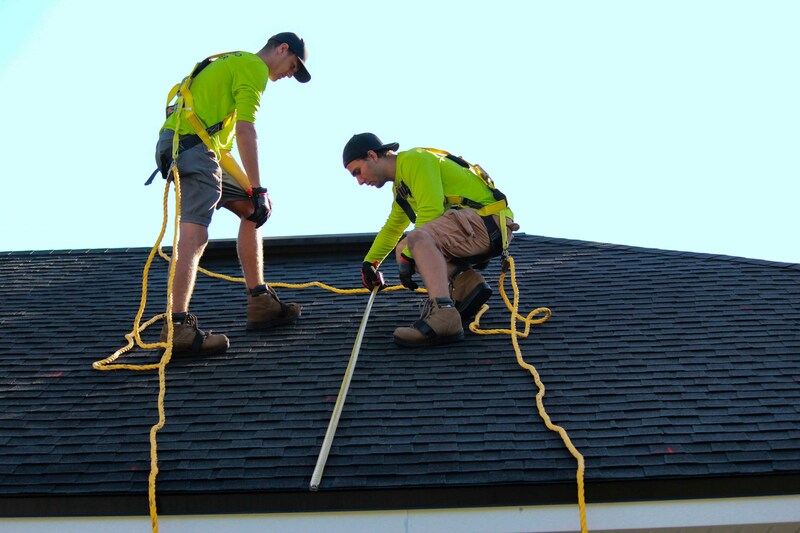
In many states, especially Nebraska, roofing construction and repairs have peak seasons. After major summer hail storms roll through town, out-of-state roofers often troop into the neighborhood. Before you even pick up the phone, they are already at your door, offering fast repairs, charging competitive rates, and zooming off to the next town.
You might be wondering, “How is that such a bad thing?” While it might not seem so at the moment, things might be completely different in six months when a leak shows up, and the repair crew is far away on the East Coast.
To avoid being stranded in an emergency, you want a roofing expert that you can easily access. So, confirm they have a physical office address in the area when hiring roofing companies Lincoln NE.
Local roofing companies take their reputation seriously because they live in the same town. They also understand the local weather patterns of the Midwestern state, such as heavy winter snowfall, high winds, and summer hail, so they build roofs strong enough to stand up to Nebraska storms.
RELATED: How to prepare your roof for severe weather
2. Are the Workers Covered by Insurance and Licenses?
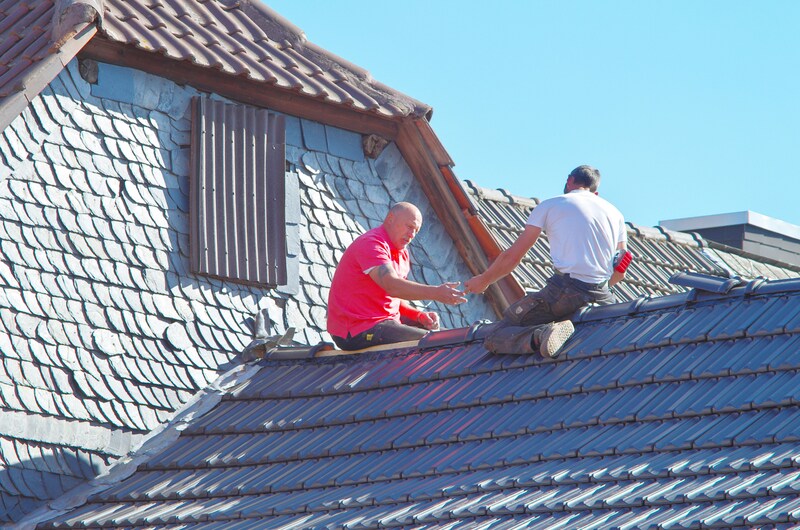
As long as the project is on your property, you risk being liable for accidents. So, before anyone straps on their boots, make sure they have all the proper insurance paperwork ready.
The legislation for permits and insurance is different for each US state. For construction companies in Nebraska, workers’ compensation insurance is mandatory to practice roofing within the state.
Workers’ compensation covers the medical expenses that may result from an injury to a worker on your property. For example, if an uninsured worker falls off your roof, you would likely have no choice but to cover the medical bills.
For that reason, checking for active license papers and official insurance documents is essential. It protects you from financial and legal trouble while proving that the business is legit.
3. Will You Present All Receipts and Invoices?
Roofing issues can make homeowners feel exposed. So, they get desperate when finding a roofer and ignore crucial traits that might prove costly later. Knowing property owners can be desperate, unethical roofers take advantage by overcharging or falsifying quotes.
You can prevent that by asking your roofer candidates before work starts about their transparency policies. Perhaps the best way to be sure they don’t rip you off is to ask for receipts for every purchase. That way, they account for every dollar spent.
Crooks can doctor these proofs of payment, but it becomes increasingly difficult for them if you know what to look for. The written quote must list the price of the new shingles, the black waterproof paper underneath, new metal nails, and the labor cost to tear off the old roof. It must also include the fee for renting a big trash container to hold the old wood and shingles. When all costs are well documented, no one can hand you any surprise bills after the work is finished.
4. What Kinds of Materials Are Going on the House?
While you may only see the top shingles from the outside, roofs have multiple internal layers. You must discuss the quality and type of materials that will be nailed down early on. For instance, the shingles have a thick sheet of waterproof material underneath to keep rain from soaking into the roof boards.
Metal strips are nailed around the chimney and roof pipes so water cannot slide into open cracks. Ask how tough the shingles will be during heavy wind and flying hail. Although stronger impact-resistant shingles aren’t the cheapest, they don’t crack as easily during major hailstorms.
5. How Will You Keep the Yard and Flower Beds Safe?
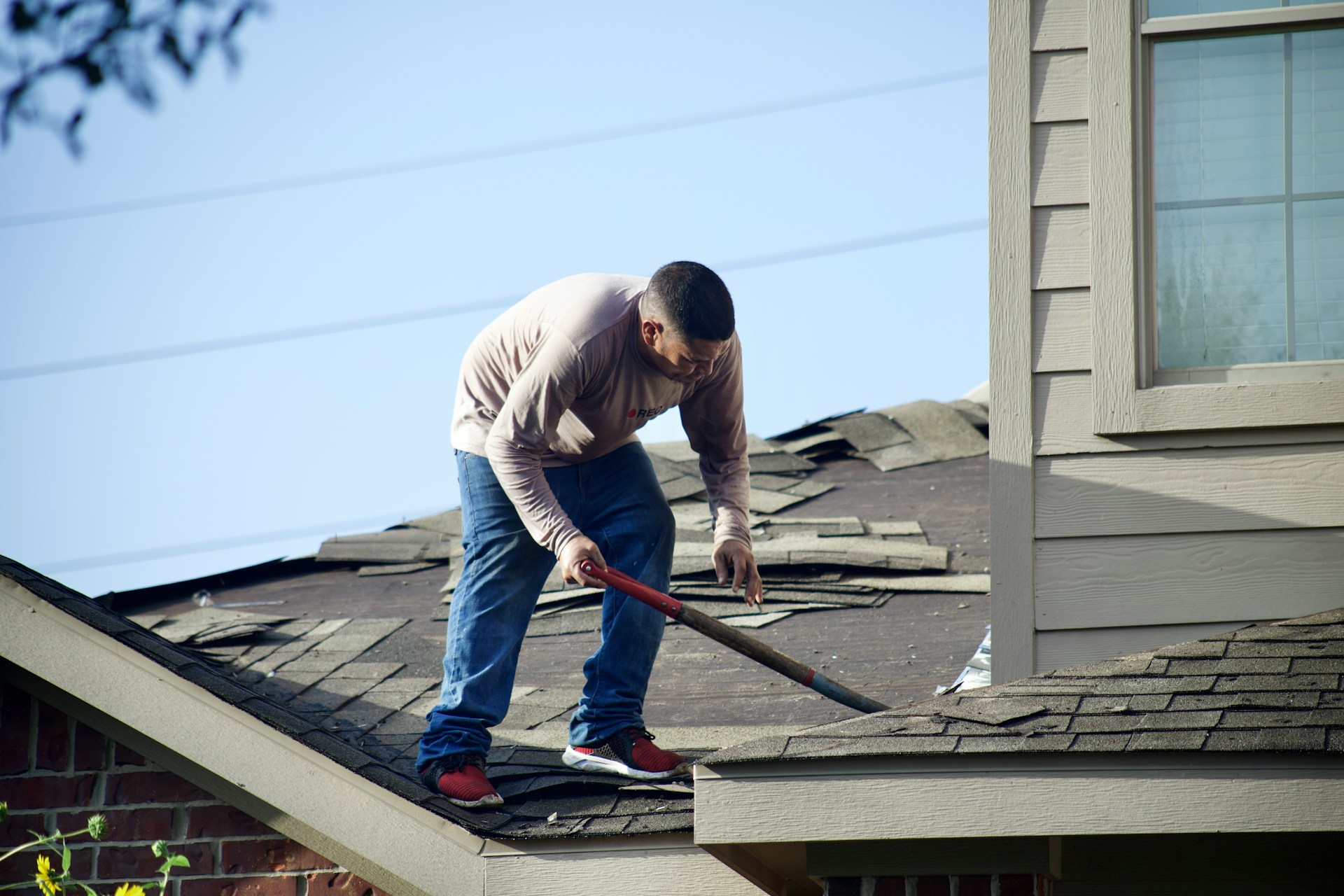
Replacing an old roof starts with tearing down the damaged parts. Although necessary, this process can be messy. Hundreds of old, rusty nails, wood debris, and sharp shingle scraps fall off the roof. These objects can damage the decorative pieces in the compound, such as flower beds and lawns.
If this bothers you, ask the crew to explain how they will clean the yard afterwards. The best roofers typically lay heavy plastic tarps over grass and flowers, and lean thick plywood boards against glass windows and air conditioning units.
After nailing down the new roof, a worker rolls a long magnetic wheel over the grass and driveway. The magnetic equipment picks up stray metal pieces and nails so no human, pet, or vehicle tire steps on them.
6. What Warranties Come With the Job?
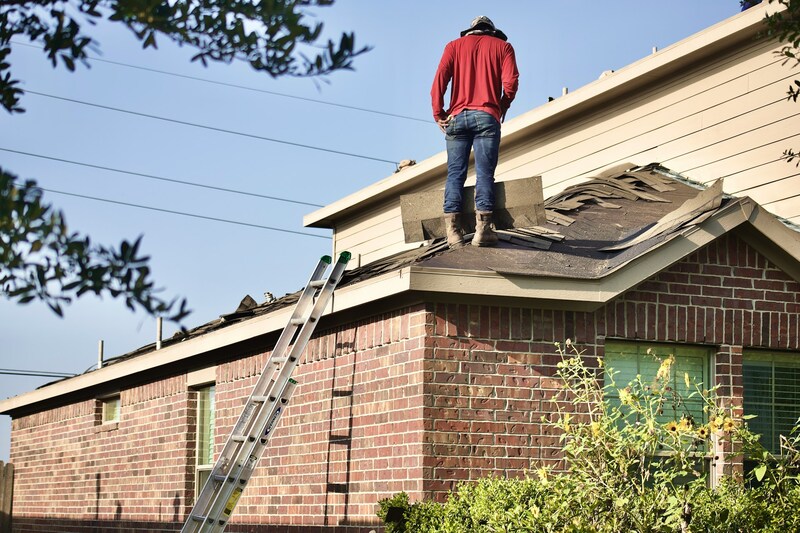
Considering the repair or replacement cost and completion time, choose a roofer with warranties. A new roof should have a material warranty from the factory and a work warranty from the local roofer.
The factory warranty covers accidentally broken shingles made back at the manufacturing plant. This means that if the shingles crumble early because the factory mixed the asphalt incorrectly, it pays for new materials.
Meanwhile, the roofer’s work warranty covers errors made while nailing the roof. It implies that if a worker forgets to seal a pipe or leaves a gap near the chimney, the roofer comes back to correct the error for free.
The Bottomline
Online information doesn’t begin to scratch the surface when trying to find a reliable roofer. Asking crucial questions early on makes choosing a trustworthy team much easier.
Protecting your home starts long before the first shingle is nailed down; it involves getting clear answers on permits. By verifying local licenses, ensuring the yard will be kept clean, and double-checking warranty promises, you can easily avoid stressful surprises.
Taking the time to ask these simple questions enables you to spend wisely and keep your house dry, safe, and protected for years to come.

Ellen is a busy mom of a 29-year-old son and 33-year-old daughter. She owns nine blogs and is addicted to social media. She believes that it doesn’t have to be difficult to lead a healthy life. She shares simple healthy living tips to show busy women how to lead fulfilling lives. If you’d like to work together, email info@confessionsofanover-workedmom.com to chat.
