
Last Updated on October 27, 2026 by Ellen Christian
Many homeowners have found ways to reduce household waste. They compost kitchen scraps, carry reusable bags, and recycle packaging whenever possible. Roofing is another area worth considering. Working with a roof repair company to address damage early may help extend a roof’s useful life, reduce unnecessary material waste, and delay replacement when the roof remains in suitable condition.
Posts may be sponsored. This post contains affiliate links, which means I will make a commission at no extra cost to you should you click through and make a purchase. As an Amazon Associate I earn from qualifying purchases.
The U.S. Environmental Protection Agency (EPA) has reported that approximately 11 million tons of asphalt roofing shingle scrap are generated annually in the United States. This estimate, cited in federal construction-materials guidance, includes waste from roof replacements and shingle manufacturing. Most of the post-consumer waste comes from residential roofing projects.
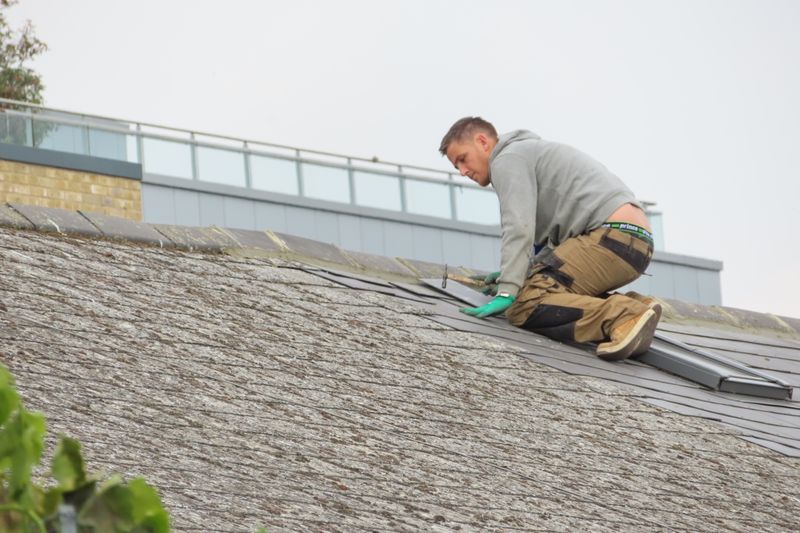
However, not every roofing problem can be resolved with a minor repair. Missing shingles, damaged flashing, and visible leaks may indicate localized issues, but they can also be symptoms of more extensive deterioration. A professional assessment can help determine whether repair is appropriate or whether more comprehensive work should be considered.
The goal is to make informed decisions that balance the roof’s condition, long-term performance, cost, and environmental impact. Understanding how roofing waste is generated, which warning signs require attention, and what questions to ask a contractor can help homeowners choose the right approach for their property.
How Much Waste Does a Roof Tear-Off Create?
Removing an existing asphalt shingle roof generates construction and demolition waste, including shingles and potentially underlayment, flashing, and damaged roof decking. The amount varies depending on the roof’s size, the number of existing layers, the roofing materials, and the extent of any underlying damage.
The Federal Highway Administration has estimated that approximately 11 million tons of asphalt roofing shingle scrap are generated annually in the United States, with most of this material associated with roof replacements. Although this is a longstanding estimate rather than a current annual measurement, it illustrates the scale of the material involved.
Asphalt shingles can be recycled in some locations. According to the Construction & Demolition Recycling Association’s ShingleRecycling.org, recycled shingles are used in asphalt paving applications. The association reports that more than 16 million tons of shingle waste have been recycled into asphalt roads since 2009.
However, recycling availability varies by location, and not all removed roofing materials are suitable for processing. Local regulations, contamination, transportation costs, and access to recycling facilities can affect whether shingles are accepted.
For homeowners, the practical goal is to avoid unnecessary replacement while ensuring that the roof continues to protect the property effectively. Repairing existing materials where appropriate can help reduce waste, but safety, structural integrity, and long-term performance must remain the priorities.
Early Warning Signs a Roof Repair Company Can Assess
Roof problems can begin with relatively small areas of damage, but their causes and severity vary. Some issues may be resolved by replacing individual shingles or repairing flashing. Others may indicate broader deterioration or hidden moisture damage that requires a more extensive assessment.
The following signs can help homeowners recognize when a professional inspection may be necessary.
| Warning sign | What it may indicate | Possible next step |
| Granules accumulating in gutters | Normal aging, accelerated shingle wear, or surface deterioration | Assess the extent and cause of granule loss |
| Cracked, bruised, or damaged shingles | Weathering, hail, impact, or material deterioration | Determine whether localized shingle replacement is appropriate |
| Missing shingles | Wind damage, failed fasteners, or weakened roofing materials | Inspect the exposed area and surrounding shingles |
| Lifted, loose, or rusted flashing | A deteriorating seal around chimneys, walls, vents, or other roof penetrations | Assess whether resealing or flashing replacement is sufficient |
| Ceiling stains or signs of moisture | A possible roof leak, condensation, or another source of water intrusion | Identify the source and investigate potential hidden damage |
| Sagging roof areas or soft decking | Possible structural deterioration or prolonged moisture exposure | Arrange a prompt professional assessment |
These warning signs do not automatically mean a roof needs replacement, but they should not be assumed to require only minor repairs.
For example, missing shingles on an otherwise sound roof may be repairable. However, widespread shingle deterioration or damage to the underlying decking may require more extensive work. Similarly, a ceiling stain can result from a localized flashing problem, but it may also indicate prolonged water intrusion that has affected materials beneath the roof surface.
A professional inspection helps establish whether the damage is isolated or part of a larger problem. Photographs, an assessment of the roof’s condition, and an explanation of the proposed work can help homeowners understand the available options before authorizing repairs.
When Does Roof Repair Make Sense, and When Should Replacement Be Considered?
Repairing an existing roof can conserve materials, but repeated patching is not always the most practical or durable solution. The decision depends on the roof’s age, the condition of its materials, the extent of damage, and its expected remaining service life.
Several conditions may justify a more comprehensive evaluation:
- Widespread shingle deterioration. Extensive granule loss, brittleness, curling, or cracking may indicate that the roofing material is approaching the end of its useful life.
- Multiple leaks or recurring moisture problems. Leaks in several locations may point to a broader roofing issue, although the underlying causes need to be established.
- Damaged roof decking or structural components. Soft spots, sagging, or evidence of prolonged moisture exposure may require work beyond replacing shingles.
- Repeated repairs with limited results. Recurring problems may indicate that the original cause has not been resolved or that the existing roofing system is deteriorating.
- Age and overall condition. An older roof is not automatically due for replacement, but its age should be considered alongside the condition of its materials and other components.
No single sign determines whether replacement is necessary. The extent of the damage, the condition of the underlying structure, the roof’s expected remaining life, and the cost and durability of available solutions all matter.
When comparing repair and replacement proposals, homeowners can ask contractors to document the damage and explain the reasoning behind their recommendations. If the assessments differ significantly, obtaining another professional opinion may help clarify the options.
The most environmentally responsible decision is not necessarily the one with the smallest immediate repair bill or the least material removed today. It is the solution that addresses the underlying problem, protects the property, and avoids unnecessary work without compromising safety or durability.
Questions to Ask an Eco-Minded Roof Repair Company
Before approving roofing work, homeowners can ask a few practical questions to understand the proposed solution and its environmental implications.
Can you match my existing shingles?
If replacement shingles are available and compatible with the existing roofing system, matching them may help preserve the roof’s appearance. The contractor should explain any limitations involving material age, availability, or installation requirements.
Is the damage localized or widespread?
Ask the contractor to explain which areas are affected, whether there are signs of deterioration elsewhere, and whether additional investigation is necessary before deciding on the scope of work.
Where will the removed materials go?
Ask whether old shingles and other roofing debris will be sent to a landfill or whether a local recycling option is available.
Will the repair affect my roof warranty?
The answer may depend on the manufacturer’s warranty, the existing installation, and the type of repair. Request clarification before work begins.
Can you provide photographs and a written estimate?
Photographs of the affected areas, a description of the proposed work, and an itemized estimate make it easier to understand the recommendation and compare proposals.
The recycling question deserves particular attention. Asphalt shingle recycling is not available everywhere, and acceptance requirements vary. A contractor familiar with local disposal and recycling options should be able to explain what is practical in the area.

Making Roof Repairs Last Longer
Regular maintenance can help homeowners identify problems before they become more extensive. Although maintenance cannot prevent every type of roof damage, several practices can support the performance of an existing roof.
- Keep gutters clear. Remove accumulated leaves and debris so rainwater can drain properly and avoid contributing to moisture problems around roof edges.
- Manage overhanging branches. Trim branches that scrape roofing materials or drop substantial debris onto the roof.
- Check attic ventilation. Ensure that ventilation openings remain unobstructed and that the attic does not have persistent moisture problems. Ventilation requirements vary by roof design, so changes should follow professional guidance.
- Look for visible changes after severe weather. From the ground, use binoculars to check for missing shingles, displaced flashing, or other obvious damage after strong winds or hail.
- Arrange inspections when problems appear. Interior water stains, recurring leaks, or visible roof deterioration warrant investigation rather than repeated temporary fixes.
Homeowners should avoid climbing onto a roof to inspect it themselves, particularly when surfaces are wet, steep, or damaged. A qualified professional can assess areas that are difficult or unsafe to access.
Maintenance and timely repairs may extend a roof’s service life when its underlying condition allows. They cannot guarantee that replacement will be avoided, but they can help homeowners make decisions based on the roof’s actual needs rather than waiting until damage becomes more extensive.
Finding a Roof Repair Company in Pennsylvania, New Jersey, and Delaware
Homeowners in Pennsylvania, New Jersey, and Delaware can contact Paramount Home Solutions for roof inspections and repair estimates involving issues such as leaks, damaged shingles, and flashing problems. The company works with asphalt shingle and cedar shake roofing.
When requesting an inspection, ask for photographs of the affected areas and a clear explanation of whether the damage appears localized or more widespread. This information can help you compare repair and replacement options and choose an approach that addresses the roof’s condition without unnecessary work.

Ellen is a busy mom of a 29-year-old son and 33-year-old daughter. She owns nine blogs and is addicted to social media. She believes that it doesn’t have to be difficult to lead a healthy life. She shares simple healthy living tips to show busy women how to lead fulfilling lives. If you’d like to work together, email info@confessionsofanover-workedmom.com to chat.
