
Last Updated on October 15, 2026 by Ellen Christian
If you struggle with heel pain or plantar fasciitis, you may have wondered whether adding arch support inserts to your favorite shoes could make walking and standing more comfortable. Shoe inserts can provide additional support, but they don’t work equally well in every type of footwear.
Posts may be sponsored. This post contains affiliate links, which means I will make a commission at no extra cost to you should you click through and make a purchase. As an Amazon Associate I earn from qualifying purchases.
The good news is that many sneakers, walking shoes, and everyday shoes can accommodate arch support inserts designed for plantar fasciitis. However, the shape of your shoes, the amount of room inside them, and the type of support you need all make a difference.
Here’s what you should know before adding plantar fasciitis inserts to your shoes.
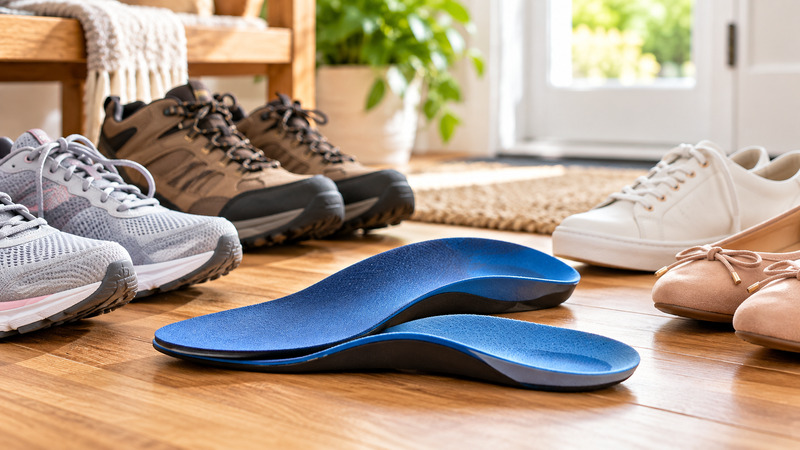
Can You Put Arch Support Inserts in Any Shoes?
You can use arch support inserts in many types of shoes, but not necessarily all of them.
Most full-length plantar fasciitis inserts work best in shoes with removable factory footbeds. Removing the original footbed creates space for the replacement insert without making your shoes feel too tight.
Shoes with a roomy toe box, supportive heel, and enough interior depth are generally better candidates for structured arch support inserts.
Some shoes, particularly narrow dress shoes, ballet flats, and certain slip-on styles, may not have enough room for a full-length insert.
Trying to squeeze a thick insert into a shoe that already fits snugly can create pressure points, crowd your toes, or cause your heel to slip out of place.
The goal is to improve comfort and support without compromising how your shoes fit.
What Makes Plantar Fasciitis Shoe Inserts Different?
Not all shoe inserts are designed for the same purpose.
Some inexpensive inserts primarily add a soft layer of cushioning. While cushioning can feel comfortable, it doesn’t necessarily provide the structured support that someone with plantar fasciitis may need.
Arch support inserts designed for plantar fasciitis often include several features.
- Contoured arch support: Helps support the foot’s natural arch and may reduce strain on the plantar fascia.
- Heel cushioning: Helps absorb some of the impact associated with walking and standing.
- A supportive heel cup: Helps position and stabilize the heel inside the shoe.
- A structured base: Provides more consistent support than a very soft foam insert alone.
The plantar fascia is a thick band of tissue running along the bottom of your foot from your heel toward your toes. When it becomes irritated, you may experience heel pain, especially during your first steps in the morning or after sitting for a long time.
Appropriately selected shoe inserts can be one part of managing plantar fasciitis symptoms, along with supportive footwear, stretching, and other measures recommended by a healthcare professional.
However, more cushioning or a higher arch isn’t automatically better. The right insert should match your foot and fit comfortably inside your shoe.

Which Shoes Work Best With Plantar Fasciitis Inserts?
If you’re shopping for shoes to wear with arch support inserts, look for styles that offer enough room and a stable foundation.
Walking Shoes
Walking shoes are often a good choice because many have removable footbeds and are designed for everyday comfort.
Look for a secure heel, adequate toe room, and enough interior depth to accommodate your inserts.
If you spend time walking around the neighborhood, shopping, or running errands, a supportive walking shoe paired with properly fitted arch support inserts may help make those activities more comfortable.
Athletic Sneakers
Many athletic sneakers are compatible with full-length arch support inserts.
Before adding an insert, check whether the existing footbed can be removed. You should also make sure the new insert doesn’t lift your heel too high or make the upper part of the shoe feel tight.
A sneaker with a stable sole and secure lacing system can help keep your foot in place.
Work Shoes
If your job requires standing or walking for long periods, comfortable footwear becomes especially important.
Some work shoes and boots have enough space for supportive plantar fasciitis inserts. However, it’s important to check the fit, especially if your footwear has safety features or specific workplace requirements.
A replacement insert should not interfere with the shoe’s protective function.
Casual Everyday Shoes
Certain casual lace-up shoes and roomy slip-ons can also accommodate arch support inserts.
The important thing is to choose footwear that holds the insert securely and provides enough room for your foot.
Even a supportive insert cannot completely compensate for a shoe that is too small, unstable, or badly worn.

Can You Use Plantar Fasciitis Inserts in Flats or Dress Shoes?
This is where choosing the right type of insert becomes especially important.
Many flats and dress shoes have limited interior space. A full-length plantar fasciitis insert may be too thick, particularly if the shoe has a narrow toe box or shallow heel.
For these styles, a lower-profile insert or a shorter design may be more practical, provided it offers appropriate support and fits securely.
Some shoes simply aren’t suitable for additional inserts.
If adding an insert makes your toes feel cramped, causes rubbing, or pushes your heel out of the shoe, don’t force it.
You may be better off choosing a different pair of shoes that can accommodate the support you need.
Should You Remove the Original Shoe Inserts First?
In most shoes designed to accommodate replacement inserts, yes.
Removing the factory footbed usually provides the extra room needed for a full-length arch support insert.
Before putting your new inserts in place, compare their shape and length with the original footbeds.
Some replacement inserts can be trimmed at the toe to fit your shoes. Always follow the manufacturer’s instructions before cutting them.
Once the new inserts are inside, put on your shoes and walk around.
Your heel should feel secure, your toes should have room to move, and the arch support should feel appropriately positioned beneath your foot.
Avoid stacking full-length inserts on top of the original footbeds unless the manufacturer specifically recommends it.
How to Choose the Right Arch Support Inserts for Plantar Fasciitis
Choosing shoe inserts isn’t simply about finding the softest or thickest option.
Start by considering the shoes you plan to wear, how much time you spend standing or walking, and where you need support.
Here are a few things to look for.
Arch support: Choose a design that supports your arch comfortably without creating excessive pressure.
Heel support: A contoured heel cup and appropriate cushioning may help improve comfort during daily activities.
Insert thickness: Make sure the inserts fit inside your shoes without making them too tight.
Shoe compatibility: Check whether the inserts are intended for athletic shoes, casual footwear, work boots, or another style.
Sizing: Follow the manufacturer’s sizing instructions, particularly if the inserts need trimming.
Structured arch support inserts, including options designed specifically for plantar fasciitis, can be worth considering when ordinary cushioned inserts don’t provide the support you’re looking for.
Keep in mind that foot shape and symptoms vary. An insert that feels comfortable for one person may not be the right choice for another.
How Long Does It Take to Get Used to New Arch Support Inserts?
New arch support inserts may feel different from the flat or cushioned footbeds you’re accustomed to wearing.
Rather than wearing them for an entire day immediately, follow the manufacturer’s break-in recommendations and gradually increase your wearing time.
Start with a shorter period in comfortable shoes, then pay attention to how your feet feel.
A different sensation under your arches can be normal at first,

Ellen is a busy mom of a 29-year-old son and 33-year-old daughter. She owns nine blogs and is addicted to social media. She believes that it doesn’t have to be difficult to lead a healthy life. She shares simple healthy living tips to show busy women how to lead fulfilling lives. If you’d like to work together, email info@confessionsofanover-workedmom.com to chat.
