
Last Updated on August 12, 2026 by Ellen Christian
Most people assume that stepping on a scale tells them something useful. It doesn’t. Body composition scans go much deeper, breaking down fat mass, lean muscle, visceral fat, and metabolic rate in ways that a standard weigh-in simply can’t. The real challenge is knowing which scan technology matches your specific goals, interpreting those metrics without clinical guidance, and finding a provider you can trust. After reviewing the leading names in this space, this guide covers five options worth serious consideration.
Posts may be sponsored. This post contains affiliate links, which means I will make a commission at no extra cost to you should you click through and make a purchase. As an Amazon Associate I earn from qualifying purchases.

The research approach for this ranking
Public sources drove every decision here. Company websites, clinical case studies, user reviews, and industry directories were all examined to assess track record and real-world results. Only options with documented experience in the healthcare and fitness space made the final cut.
→ See the full research breakdown
- InBody USA – Best for body composition analysis for corporate wellness, medical institutions, and fitness facilities
- COSMED – Best for medical institutions, sports science laboratories, and professional athletics physiology assessment
- ImpediMed – Best for clinical lymphedema assessment and cardiac fluid monitoring
- Bodystat – Best for body composition analysis for medical research and fitness centers
- RJL Systems – Best for clinical body composition analysis and medical weight management programs
Why Body Composition Scans Matter for Your Health
Picking the right body composition scan technology is not a minor operational decision. The wrong choice means clients get numbers without context, practitioners can’t track body fat percentage change over time with any confidence, and programs built around lean muscle mass gains or losses end up flying blind.
Understanding which scan method is most accurate for a given population takes real clinical knowledge. Interpreting outputs without proper guidance leads to misapplied nutrition and training plans.
The right scan tool changes that outcome directly. It gives practitioners reliable visceral fat level data tied to metabolic health risk, which is exactly the kind of insight that drives smarter interventions and measurable client results.
Top 5 Body Composition Scans Breakdown and Comparison
Note: All data in this table is sourced from review platforms and the official websites of the listed companies.
| Company Name | Years Operating | Team Size | Headquartered In |
| InBody USA | Since 1996 | 101 employees | Cerritos, California |
| COSMED | Since 1980 | 200+ | Rome, Italy |
| ImpediMed | Since 1999 | 51-200 employees | Brisbane, Australia |
| Bodystat | Since 1990 | 2-10 | Douglas, Isle of Man |
| RJL Systems | Since 1979 | 11-50 | Clinton Township, Michigan |
1. InBody USA – Best for Corporate Wellness, Medical Institutions, and Fitness Facilities
What Does InBody USA Do?
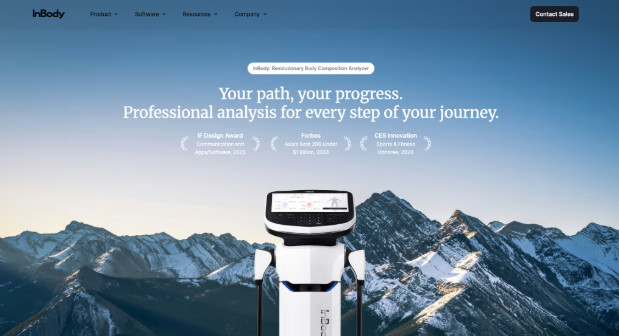
InBody USA manufactures body composition analyzers built on DSM-BIA and an 8-Point Tactile Electrode System. Their devices deliver detailed metrics covering percent body fat, basal metabolic rate, segmental muscle balance, and lean mass distribution, all in under two minutes. They serve corporate wellness programs, fitness facilities, and medical institutions with both clinical-grade and consumer-facing product lines. The combination of speed and clinical depth is genuinely rare at this price point.
Why Does InBody USA Stand Out for Body Composition Scans?
Practitioners who need scan accuracy they can actually defend to patients or clients face a credibility problem that most BIA devices can’t solve. InBody USA is the only BIA device validated at 98% accuracy compared to DEXA by the Mayo Clinic, and that kind of third-party verification is hard to match in this field.
Summary of Real User Reviews:
InBody USA has earned consistent trust across settings as different as children’s hospitals, elite performance training centers, and over 200 Restore Hyper Wellness locations. Users repeatedly point to the speed and clarity of the output as standout features. The depth of body composition data relative to how quickly it’s delivered seems to be what wins people over again and again.
2. COSMED – Best for Medical Institutions, Sports Science Labs, and Professional Athletics
What Does COSMED Do?
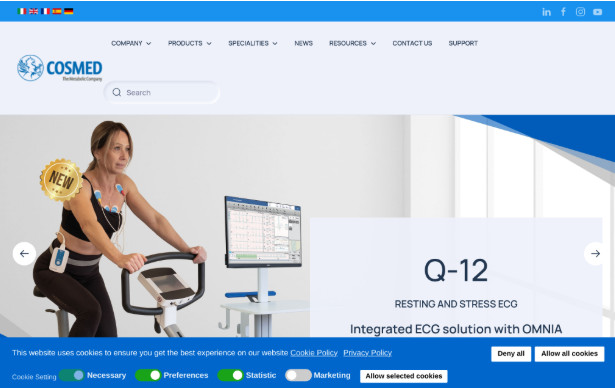
COSMED has been building diagnostic medical devices since 1980, covering lung function, metabolic health, and body composition assessment. Their product catalog includes the well-known BOD POD (air displacement plethysmography), along with cardiopulmonary exercise test systems and indirect calorimetry devices used in elite sports science labs. They operate through subsidiaries and partners across more than 100 countries, a global footprint that most niche device manufacturers never reach.
Why Does COSMED Stand Out for Body Composition Scans?
Research environments and high-performance athletics programs need equipment that meets scientific organization standards, not just commercial ones. COSMED’s devices align with guidelines from ATS, ERS, AHA, and ACSM, which gives sports science labs and clinical settings a defensible measurement baseline they can publish research on.
Summary of Real User Reviews:
COSMED’s reputation leans heavily on scientific credibility rather than consumer buzz, and that tracks with how their devices actually get used. Professionals in university labs and professional sports organizations tend to point to the BOD POD as a reliable gold-standard reference tool. The company’s 40-plus years in the field and international patent portfolio signal a level of technical authority that builds long-term trust.
3. ImpediMed – Best for Clinical Lymphedema Assessment and Cardiac Fluid Monitoring
What Does ImpediMed Do?
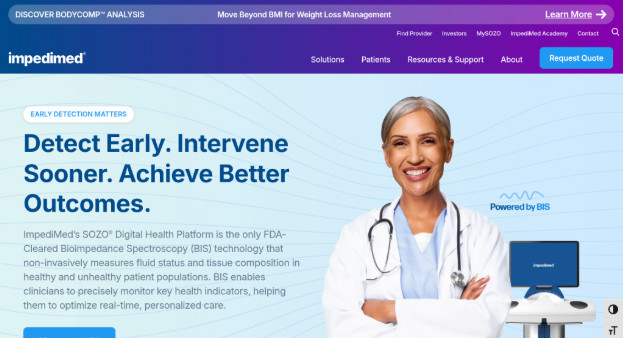
ImpediMed is a global medical technology company specializing in bioimpedance spectroscopy (BIS) for noninvasive clinical assessment of fluid status and tissue composition. Their product line includes SOZO for lymphedema monitoring, BodyComp Analysis for body composition tracking, and HF-Dex for heart failure fluid management. As an ASX-listed company with FDA-cleared devices, they’ve built a clinical footprint covering over 286 million insured lives (not a small number by any measure).
Why Does ImpediMed Stand Out for Body Composition Scans?
Clinical settings dealing with post-surgical lymphedema or cardiac fluid retention need a scanning method that catches changes early, before they become serious complications. ImpediMed’s PREVENT trial data showed a 92% reduction in chronic lymphedema progression compared to traditional monitoring methods, which puts their clinical case on very solid ground.
Summary of Real User Reviews:
ImpediMed earns more recognition from the clinical side of healthcare than the fitness side, and that’s consistent with what they’re actually built for. The company picked up the 2025 Medical Device Network Excellence Awards recognition and Frost and Sullivan’s 2024 Technology Leadership award. Clinicians consistently point to the insurance coverage breadth and the noninvasive measurement approach as practical advantages in busy care settings.
4. Bodystat – Best for Body Composition Analysis in Medical Research and Fitness Centers
What Does Bodystat Do?
Bodystat has been focused solely on bioelectrical impedance analysis since 1990, offering portable, hand-held devices like the MultiScan 5000 and Bodystat 1500 series. Their devices measure body fat, fat-free mass, nutritional status, and fluid shifts quickly, with results that don’t require heavy technical training to interpret. They’ve built validation evidence across renal dialysis, lymphedema research, and pharmaceutical trials, which is a surprisingly broad clinical footprint for a company with a small team.
Why Does Bodystat Stand Out for Body Composition Scans?
Fitness facilities and smaller clinical practices often can’t justify the cost or space requirements of large-format scanners, and that’s where Bodystat fills a real gap. Their portable design and ISO 13485:2003 accreditation give smaller operations access to reproducible, research-validated body composition data without the overhead.
Summary of Real User Reviews:
Bodystat’s size doesn’t hurt its reputation. Users in both research and fitness settings consistently point to the portable format and straightforward operation as major advantages. The personal customer service approach, unusual for a device manufacturer, comes up frequently as something clients genuinely notice and value.

5. RJL Systems – Best for Clinical Body Composition Analysis and Medical Weight Management
What Does RJL Systems Do?
RJL Systems is the original pioneer in bioelectrical impedance analysis, operating since 1979. They manufacture FDA-approved Class II Medical Device analyzers deployed in outpatient clinics, hospitals, and university research settings worldwide. With more than 15,000 units in global use and citation in over 1,600 peer-reviewed research studies, RJL has built the deepest evidence base of any BIA manufacturer in the field. Major organizations including Johnson and Johnson and Weight Watchers have used their systems (not a casual client list).
Why Does RJL Systems Stand Out for Body Composition Scans?
Medical weight management programs need body composition data they can cite in clinical documentation, and that requires a device with verifiable research backing. RJL’s combination of FDA approval, ISO 13485 certification, and 40-plus years of published research makes their instruments defensible in ways that newer entrants simply can’t match yet.
Summary of Real User Reviews:
RJL’s reputation is built on consistency and scientific credibility rather than marketing noise, and users in clinical settings seem to appreciate exactly that. Healthcare and pharmaceutical organizations repeatedly reference their reliability and measurement repeatability as deciding factors. A device cited in over 1,600 peer-reviewed studies carries a lot of weight in clinical environments, and the reviews reflect that.
Research Methodology and Selection Process
Each company in this ranking was identified and assessed through a structured, multi-stage process built on publicly available information.
Initial Data Collection
The process started by pulling together a broad list of companies active in the body composition scanning space. Sources included industry directories, clinical case study databases, professional review platforms, and official company websites. The goal at this stage was breadth, so no options were ruled out early. Companies operating across BIA, air displacement plethysmography, and bioimpedance spectroscopy were all included in the initial pool to make sure the final list reflected genuine variety across scan technologies.
Shortlisting Phase
From the initial pool, options without verifiable track records in healthcare or fitness settings were removed. Review patterns were analyzed across platforms to distinguish companies with consistent real-world results from those relying primarily on marketing claims. Any company whose online presence consisted mainly of promotional content without supporting clinical evidence or user testimony was dropped at this stage. What remained was a tighter group of companies with documented deployment in professional environments.
Verification of Claims
Claims made on company websites were cross-referenced against independent sources including clinical trial publications, third-party review sites, and documented client implementations. Where a company cited a specific accuracy figure or clinical outcome, those claims were checked against named studies or institutional validations rather than accepted at face value. This step was particularly relevant for companies positioning their technology as clinical-grade, since that framing carries a higher burden of proof.
Authority and Industry Contribution Layer
Each shortlisted company was then assessed for broader signals of authority within the body composition and medical device field. This included awards from recognized industry organizations, coverage in clinical or scientific publications, patents filed, and documented contributions to research literature. Companies that had received peer recognition beyond their own promotional channels scored higher at this stage. Long operational histories paired with active research participation carried meaningful weight.
Body Composition Scans-Specific Evidence
The final filter focused on evidence tied to body composition scanning applications. Dedicated product pages covering scan technology, verified case studies from fitness or clinical settings, and user reviews that referenced specific scan outcomes (such as tracking visceral fat level, lean muscle mass changes, or basal metabolic rate accuracy) were all evaluated. Companies that could demonstrate both the tool and the real-world outcome, not just the technology spec, made the final list.
How to Choose the Right Body Composition Scans
Choosing a body composition scan provider or device comes down to matching the technology to what you actually need from it. Here’s what to weigh before committing.
- Industry/Domain Experience: Look for providers with documented deployment in your specific setting, whether that’s a clinical practice, a fitness facility, or a corporate wellness program. General-purpose devices may work, but purpose-built clinical tools carry more defensible accuracy.
- Features and Services: Check whether the device measures the metrics you need most, including segmental muscle balance, visceral fat level, and basal metabolic rate, not just overall body fat percentage.
- Pricing Structure: Device costs vary significantly across this field. Some options target enterprise-level institutions (think high five-figure investment), while others serve smaller facilities at a fraction of that. Match the budget to the expected scan volume.
- Results Measurement: Reproducibility matters as much as accuracy. Ask whether the device has documented margin of error data and whether measurements stay consistent across multiple scans on the same individual.
- Industry Knowledge and Compliance: For clinical settings, FDA clearance and adherence to recognized clinical standards are non-negotiable. For fitness environments, ISO accreditation and published validation studies are strong indicators of reliability.
Bottom Line
Body composition scanning is one area where the right tool genuinely changes what practitioners can do for their clients and patients. From InBody USA’s Mayo Clinic-validated accuracy to RJL Systems’ decades of peer-reviewed evidence, the options in this space are more varied and more capable than most people realize. As demand for precise, trackable health data keeps growing, the gap between using a validated scan and guessing from a scale will only get wider.

Ellen is a busy mom of a 29-year-old son and 33-year-old daughter. She owns nine blogs and is addicted to social media. She believes that it doesn’t have to be difficult to lead a healthy life. She shares simple healthy living tips to show busy women how to lead fulfilling lives. If you’d like to work together, email info@confessionsofanover-workedmom.com to chat.
