
Last Updated on November 25, 2026 by Ellen Christian
Home drain clogs usually form over several weeks as grease, hair, or soap residue collects inside the pipes. A sink that empties a little slower each week is the first visible sign of this buildup in a kitchen or bathroom. A short weekly routine may help keep that layer from growing, with no special tools or harsh chemicals required.
Posts may be sponsored. This post contains affiliate links, which means I will make a commission at no extra cost to you should you click through and make a purchase. As an Amazon Associate I earn from qualifying purchases.
This guide explains a simple weekly routine for household drains, along with two popular home remedies worth skipping. The final sections list warning signs of a deeper blockage that call for professional drain cleaning services. Each step focuses on what enters the drain, since that habit shapes how fast buildup returns.
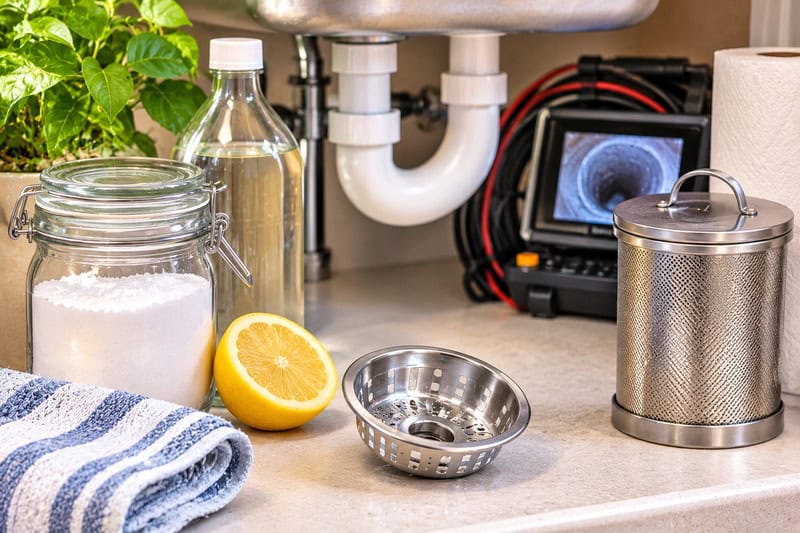
Slow Buildup Inside Drain Pipes Leads to Costly Backups
Kitchen grease poured into a sink cools inside the pipe before it reaches the sewer line. The cooled grease hardens against the inner pipe wall to form a sticky coating over several weeks. Coffee grounds, rice, or pasta catch on that coating to narrow the opening a little further each week. Bathroom drains collect hair wrapped in soap residue, which forms a similar plug just below the drain cover.
A partial clog may still let water through for weeks before it stops without warning. Public sewer utilities warn that grease blockages can push raw sewage back into homes, with a cleanup bill that usually falls on the homeowner. A state insurance regulator notes that sewer backups can leave homeowners paying thousands of dollars for damaged flooring, furniture, or electrical equipment. Weekly prevention requires only a basic sink strainer plus a few spare minutes each week.
A Simple Weekly Routine for Household Drains
Each step below targets one source of buildup, so the full routine stays short enough to repeat every week. A quick look at each basin after the tap shuts off reveals any drain where water lingers in a pool.
Keep Grease Away from the Kitchen Sink
Pour cooled grease into a lidded can, then place the can in the trash once it fills. Wipe greasy pans with a paper towel before they reach the sink, since even a thin oil film coats pipe walls. A mesh strainer in the drain opening catches rice, coffee grounds, or eggshells for the trash. A city utility guide on grease disposal notes that grease still clings to pipe walls after it passes through a garbage disposal. Scraps with fat or oil belong in the trash, even in a kitchen with a disposal under the sink.
While performing your weekly bathroom drain maintenance, don’t overlook the small opening near the top of your sink. Learning how to clean a bathroom sink overflow hole can help prevent unpleasant odors and remove accumulated soap residue and grime.
Clear Hair from Shower Drains Each Week
Hair wraps around the stopper or the strainer basket just below the drain cover. Lift the stopper or unscrew the cover once a week to pull out the hair with a gloved hand. A small plastic hair catcher over the opening traps loose strands before they enter the pipe. Bathroom sinks need the same weekly check, since soap or toothpaste residue binds to hair in that drain as well.
Flush Only Toilet Paper
Wipes labeled flushable may hold together in water, which lets them catch on grease inside the pipe. One county sewer utility warns that household wipes marketed as flushable can clog the sewer line on a home’s own property. A small lidded bin beside the toilet gives wipes, floss, or cotton swabs a place to go.

Popular Home Remedies That Fall Short
Boiling water poured into a sink may push grease a short distance down the pipe. The same city guidance explains that hot water melts grease for a short time before it cools to harden again inside the line. A full pot of boiling water carried to the sink also adds a burn risk with little lasting benefit for the drain. Grease scraped into the trash before dish cleanup removes the problem at its source.
Baking soda mixed with vinegar produces a burst of visible foam at the drain opening within seconds. The reaction leaves behind mostly water, a little sodium acetate salt plus carbon dioxide gas. Those leftovers carry little cleaning power against grease, hair or a solid object lodged in the trap. The mix may help freshen a mild drain odor, while hair or grease still requires removal at the source.
Tree Roots Can Reach the Main Sewer Line
Tree roots follow moisture toward cracks or loose joints in a sewer line, then grow inside the pipe. Fine roots inside the pipe catch toilet paper or grease to form a mat that may slow every drain in the house. Roots that a plumber trims inside a pipe may regrow, which makes careful tree placement the main prevention step. One city sewer FAQ bars willow or poplar trees within thirty feet of any public or private sewer line. Mark the route of the sewer line before a new tree goes into the yard. Recurring clogs at the same spot every few months may point to root intrusion inside the line.
Warning Signs That Point to a Deeper Blockage
Weekly habits help limit buildup, though certain signs show a blockage beyond the reach of a strainer.
- A single sink drains slowly while every other fixture in the home empties at a normal pace
- Several drains slow down at the same time, which may signal a partial blockage in the main sewer line
- Sewage odors linger around a drain after the strainer or stopper is clean
- Water rises in a tub or shower when the washing machine empties
- A toilet or sink gurgles when another fixture runs nearby
A single sink that slows again soon after a cleanup has passed the point for household care. Two or more slow fixtures at once call for a same-day service visit, since sewage may surface at the lowest drain. Skip plungers or chemical cleaners on a main line backup, as they add liquid to a pipe with nowhere to drain.

What a Professional Drain Visit Involves
On arrival, a licensed plumber usually runs water at several fixtures to find where the slowdown begins. A cleanout is a capped access pipe near the foundation that opens straight into the main sewer line. The technician may open that cleanout to reach a main line blockage directly. A sewer camera fed into the pipe shows the exact location of grease, roots or a broken section. A steel drain cable called an auger cuts through the blockage once the camera confirms its position. Hydro jetting uses a high-pressure water spray to scour grease from long stretches of pipe wall.
Camera footage gives the homeowner a clear view of the problem before any excavation or pipe repair begins. A plain note on the cause of the clog helps the household adjust its weekly routine for that drain.
Helpful Products to Prevent Household Drain Clogs
Keeping a few inexpensive household essentials on hand can make your weekly drain maintenance routine easier. These products help prevent common sources of buildup from entering your pipes in the first place.
- Stainless steel kitchen sink strainers: Catch food scraps, coffee grounds, and other debris before they enter your kitchen drain.
- Silicone shower drain hair catchers: Collect loose hair before it combines with soap residue inside your pipes.
- Disposable cooking grease containers: Provide a convenient way to collect cooled cooking grease for proper disposal.
- Small bathroom trash cans with lids: Encourage household members to throw away wipes, dental floss, and cotton swabs instead of flushing them.
- Reusable household cleaning gloves: Keep your hands protected when removing accumulated hair and debris from drain covers.
These simple preventative products can help reduce everyday drain buildup, but persistent clogs and recurring backups still require professional attention.
Steady Habits Help Keep Home Drains Clear
Drain clogs build from grease, hair or wipes that enter the pipes a little at a time. A weekly routine with a grease can, sink strainers plus quick hair removal helps stop that buildup at the source. Persistent slowdowns or sewage odors call for a licensed plumber with a camera before water reaches the floors. The household gains drains that empty freely, with less risk of a sudden backup in the kitchen or bathroom.

Ellen is a busy mom of a 29-year-old son and 33-year-old daughter. She owns nine blogs and is addicted to social media. She believes that it doesn’t have to be difficult to lead a healthy life. She shares simple healthy living tips to show busy women how to lead fulfilling lives. If you’d like to work together, email info@confessionsofanover-workedmom.com to chat.
