
Last Updated on November 25, 2026 by Ellen Christian
You know the first slushy week of the season by the floor. You come home with your arms full of groceries, and the lobby tile already has a gray film and a puddle by the mailboxes. One neighbor stomped off her boots, someone else rolled in a stroller, and by noon the whole entrance feels like a hazard.
Posts may be sponsored. This post contains affiliate links, which means I will make a commission at no extra cost to you should you click through and make a purchase. As an Amazon Associate I earn from qualifying purchases.
If you live in an apartment or condo, or you help look after a church hall or community space, you know this mess. Shared entrances see far more boots than your own mudroom, and nobody’s quite in charge of them. A little planning before the first big storm keeps that floor drier, safer, and much nicer to come home to until spring.
Why Shared Entrances Get Messy So Fast
Your own front door might see a dozen trips on a snowy day. A shared entrance sees dozens of people, each carrying in snow, slush, and whatever was spread on the sidewalk. Salt and sand ride in on boot treads and settle into the first few feet of floor.
Wet coats, dripping umbrellas, strollers, walkers, and grocery carts add even more. Before long, the water has traveled down the hallway and onto the stairs.
The bigger worry is a fall. A wet entrance is an easy place to slip, especially for older neighbors, little kids, and anyone carrying bags. Keeping it dry is about looking out for each other as much as keeping things tidy.
Start Outside the Door
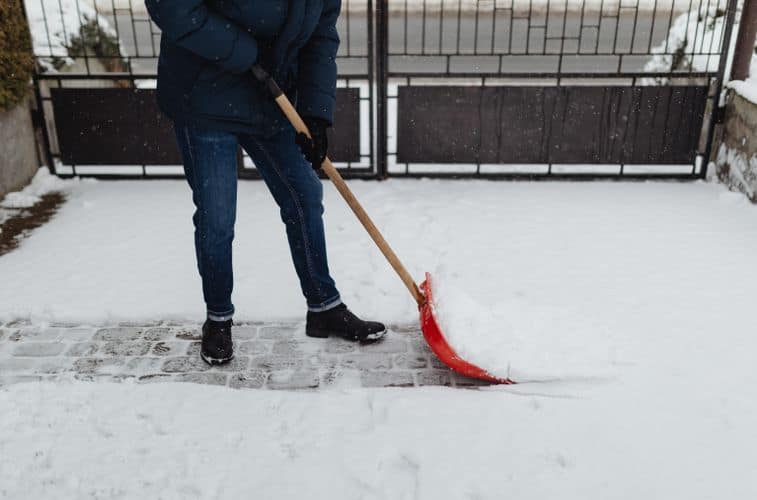
A clean lobby starts with the walkway. The less snow and ice people walk through, the less they track inside. Even OSHA’s winter safety tips for workplaces say to clear snow and spread deicer as soon as you can after a storm, and the same timing works at home.
Go easy on the ice melt and follow the directions on the bag, since extra product mostly ends up on the lobby floor. A boot scraper or brush mat beside the door gives everyone a spot to knock off packed snow before stepping in.
It’s also worth a quick look up and around. A gutter dripping onto the front step can refreeze into a sheet of ice overnight, and a burned-out porch light makes that ice hard to see on dark winter evenings.
Give Boots More Room to Dry Off
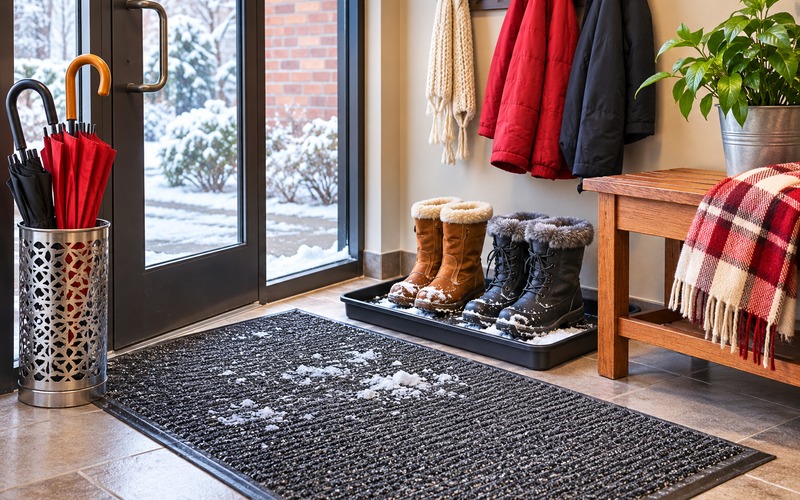
One small rug inside the door only catches the first step or two. After that, the water lands on bare floor. The fix is a longer stretch of mat, so every boot gets several steps to shed snow.
Two mats do the job nicely. A rough scraper mat outside or in the vestibule grabs grit and packed snow, and a soft, absorbent mat just inside soaks up what’s left. Make the inside mat wide enough to cover the whole doorway, so nobody steps around it. If most people head straight for the stairs or elevator, a runner along that path catches the drips that follow them.
Mats only help while they can still hold water. Once one is soaked, it starts pushing moisture onto the floor around it, so keep a spare to swap in on storm days. And keep an eye on the edges. A curled corner or a mat that slides is its own tripping hazard, so rubber-backed mats that lie flat are worth it.
Give Wet Gear a Place to Land
Plenty of the water in a lobby comes from what people carry, not just their boots. A boot tray by the door lets everyone set down wet footwear without leaving puddles, and a row of hooks keeps dripping parkas off the banister.
If there’s room, a small bench is a real kindness. Sitting down makes it so much easier to tug off wet boots without wobbling on a slick floor, and anyone juggling kids and bags will appreciate it.
Umbrellas need their own spot too. An umbrella stand by the door keeps the drips in one place, and an umbrella bag holder lets people slip a wet umbrella into a plastic sleeve before heading down a carpeted hall. You’ve probably seen both in offices and libraries. If your condo board or church committee wants sturdier versions than the household kind, a commercial supplier like Golden Group International carries umbrella stands, umbrella bag holders, and janitorial supplies for busy public spaces. For a smaller building, a simple boot tray and a few hooks may be all you need.
Make Storm-Day Cleanup Easy for Anyone
Even with good mats, some water will reach the floor. The goal is making cleanup so easy that whoever spots the puddle can just handle it. Keep a mop, a bucket, and a wet floor sign in a closet near the entrance so nobody has to go hunting.
Salt residue deserves a little attention too. Those white streaks can dull some floors over a long winter, so ask your building manager which cleaner is safe for that surface and keep it with the mop.
Sharing the work keeps it from always landing on the same person. Someone mops and puts out the sign during and after each storm, swaps soaked mats for dry ones, and empties the boot tray and umbrella stand. Once a week, someone wipes the salt off the first few feet of floor. A sign-up sheet on the bulletin board or a group text lets neighbors trade off weeks, and it works a lot like a quick evening reset at home: small, regular, and easy to keep up.
Who Handles What in a Shared Building
If you rent, snow removal and entrance upkeep usually fall to your landlord or property manager. In a condo, your bylaws or management contract should spell it out. At a church or community hall, it might be a custodian, a volunteer, or a committee.
Whatever your setup, putting it in writing helps. A short note listing who shovels, who spreads ice melt, and who checks the mats keeps things from slipping through the cracks. Snow rules vary by town, so check your lease, bylaws, or local ordinance for the details.
If you rent and notice a hazard, like an icy step or a soaked, curled mat, let your landlord know in writing. A quick dated photo makes it hard to overlook and gives everyone a clear record.
Helpful Winter Entryway Essentials
A few practical winter essentials can make it easier to prevent snow, slush, and moisture from spreading throughout your building.
- Heavy-duty boot tray: Contain melting snow and protect flooring from wet winter footwear.
- Wooden entryway bench: Provide a convenient place to sit while removing snowy boots.
- Outdoor boot scraper: Remove packed snow, dirt, and debris before stepping inside.
- Ergonomic snow shovel: Keep walkways clear and reduce the amount of snow tracked indoors.
- Motion-activated outdoor lights: Improve visibility around entrances and walkways during dark winter evenings.
Having these essentials in place before the first major snowfall can make winter maintenance easier and help keep your entrance cleaner throughout the season.
Set It Up Before the First Big Storm
A dry winter entrance really comes down to a few habits: clear the walkway, give boots enough mat, and give wet gear somewhere to go. Add a mop that’s easy to find and a clear sense of who does what, and the lobby stays manageable all season.
This week, take a quick walk through your building’s entrance and jot down what’s missing. A couple of mats, a boot tray, and a sign-up sheet are much easier to sort out in November than in the middle of a February thaw.

Ellen is a busy mom of a 29-year-old son and 33-year-old daughter. She owns nine blogs and is addicted to social media. She believes that it doesn’t have to be difficult to lead a healthy life. She shares simple healthy living tips to show busy women how to lead fulfilling lives. If you’d like to work together, email info@confessionsofanover-workedmom.com to chat.
