
Last Updated on November 11, 2026 by Ellen Christian
If you’ve noticed an unpleasant smell coming from your bathroom sink, the drain might not be the only problem. The small overflow hole near the top of your sink can collect soap residue, toothpaste, and other buildup that may eventually develop an unpleasant odor.
Posts may be sponsored. This post contains affiliate links, which means I will make a commission at no extra cost to you should you click through and make a purchase. As an Amazon Associate I earn from qualifying purchases.
Learning how to clean a bathroom sink overflow hole is a simple way to tackle one of the most overlooked places in your bathroom. You don’t need expensive cleaning products or special plumbing equipment to clean the accessible parts of the opening.
Here’s how to clean the overflow opening, remove stubborn residue, and help prevent odors from returning.
What Is the Overflow Hole in a Bathroom Sink?
The overflow hole is a small opening located near the upper inside edge of many bathroom sinks. Depending on the sink design, it may be a round hole or a narrow horizontal slot.
Its purpose is to direct excess water into the drain system when the water level rises high enough to reach the opening.
Not every bathroom sink has an overflow. Some vessel sinks and modern sink designs don’t include one.
The overflow passage is connected to the sink’s drainage system, which means moisture and residue can accumulate inside it over time.
Unlike the main drain, the overflow opening doesn’t receive a steady flow of water during everyday use. This can allow buildup to remain undisturbed.
Why Does a Bathroom Sink Overflow Hole Smell?
A musty or unpleasant odor near the overflow opening may be caused by organic residue and microbial buildup in the passage.
Several things can contribute to the problem.
Soap and Toothpaste Residue
Soap, toothpaste, and other bathroom products can leave a film on surfaces. When residue collects near the overflow opening, it may trap dirt and moisture.
Standing Moisture
The overflow passage can stay damp, especially when the sink is used frequently.
Moist conditions can encourage the growth of odor-producing microorganisms.
Hair and Other Debris
Small particles of hair, lint, and dirt can collect around the opening and contribute to buildup.
A Problem Elsewhere in the Drain
Sometimes an odor that seems to come from the overflow is actually coming from the main drain, sink stopper, or plumbing.
If cleaning the overflow doesn’t help, you’ll need to investigate those other possibilities.
Supplies Needed to Clean a Bathroom Sink Overflow Hole
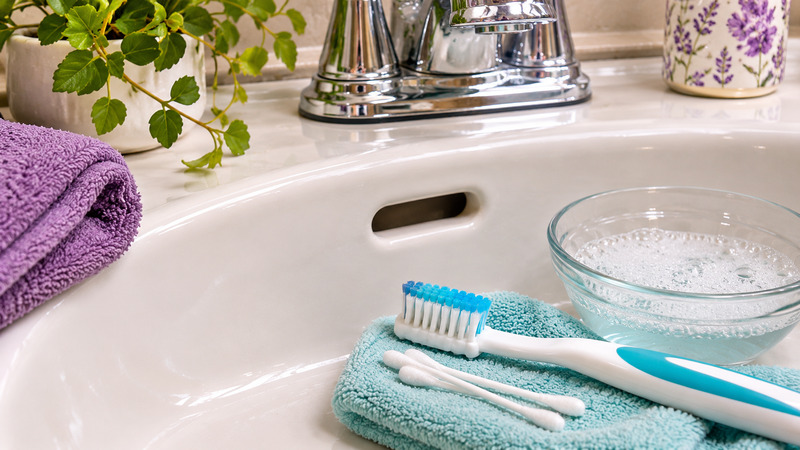
You can clean the visible overflow opening with a few basic household supplies.
- Warm water
- Mild liquid dish soap
- A small, soft cleaning brush or old toothbrush
- Cotton swabs
- Microfiber cloth
- Small bowl
- Clean water for rinsing
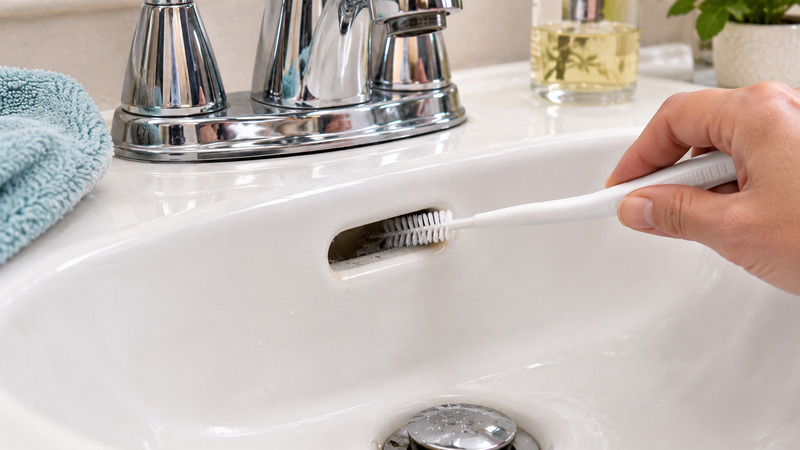
A narrow, flexible nylon cleaning brush designed for small openings may be useful if the shape of your sink allows it.
Avoid using stiff metal brushes or sharp tools that could scratch the sink or damage the overflow passage.
You also don’t need bleach, drain cleaner, or other harsh chemicals for this routine cleaning method.
A small, soft cleaning brush can make it easier to reach buildup around the sink overflow opening. Look for a narrow nylon brush with flexible bristles that won’t scratch the sink’s finish.
How to Clean a Bathroom Sink Overflow Hole Step by Step
Before starting, make sure the sink is empty and that no chemical drain cleaner or other cleaning product is sitting in the drain.
Step 1: Locate the Overflow Opening
Look along the inside wall of your bathroom sink, usually near the upper edge beneath the faucet.
You’ll typically see a small round opening or a horizontal slot.
If your sink doesn’t have an overflow opening, skip this cleaning process.
Step 2: Prepare a Mild Cleaning Solution
Fill a small bowl with warm water and add a few drops of mild dish soap.
Mix gently until the soap is dispersed.
You don’t need a highly concentrated solution. A little dish soap is enough to loosen ordinary surface residue.
Step 3: Clean Around the Opening
Dip a soft toothbrush or small cleaning brush into the soapy water.
Gently scrub around the edges of the overflow opening.
Pay attention to any visible soap film, discoloration, or residue.
If your sink has a decorative overflow cover, follow the manufacturer’s instructions before attempting to remove it. Some covers are not designed to be removed by the homeowner.
Step 4: Clean Just Inside the Opening
If the opening is large enough, use a small, soft nylon brush to gently clean the accessible interior surfaces.
Don’t force the brush into the passage or push it around tight bends.
The goal is to loosen buildup you can safely reach, not to scrape the entire hidden channel.
A cotton swab can help clean around the edges of a narrow overflow slot.
Be careful not to leave cotton fibers or other materials inside the opening.
Step 5: Wipe Away Loosened Residue
Use a damp microfiber cloth to wipe away any residue around the overflow opening.
Rinse the brush as needed and repeat the gentle scrubbing if visible buildup remains.
Step 6: Rinse Carefully
Use a small amount of clean, warm water to rinse the accessible opening, allowing the water to drain through the overflow passage.
Avoid directing a forceful stream of water into the opening or using a pressurized cleaning tool.
If water backs up, leaks beneath the sink, or doesn’t drain normally, stop and investigate the problem before continuing.
Step 7: Dry the Surrounding Surface
Wipe the sink and the area around the overflow opening with a clean microfiber cloth.
You won’t be able to dry the entire hidden overflow channel, but keeping the surrounding sink surface clean can help reduce residue.
How to Remove Stubborn Buildup From a Sink Overflow
If the opening still looks dirty after the first cleaning, repeat the process using warm, soapy water and a soft brush.
For residue around the exterior of the opening, hold a damp, soapy cloth against the area briefly before gently scrubbing again.
Avoid scraping the sink with metal tools or abrasive pads.
If you suspect heavy buildup deep inside the overflow passage, don’t try to clear it with a coat hanger, screwdriver, or other rigid object.
The passage may have bends or internal surfaces that are difficult to reach safely.
A plumber can assess a blocked or heavily contaminated overflow passage if routine cleaning doesn’t solve the problem.
What If the Bathroom Sink Still Smells After Cleaning?
If you’ve cleaned the overflow opening and the unpleasant odor remains, the smell may be coming from another part of the drainage system.
Here are a few places to check.
Clean the Sink Stopper
Pop-up sink stoppers can collect hair, toothpaste residue, soap film, and other debris.
This buildup can produce an unpleasant odor.
If your stopper is removable, follow the manufacturer’s instructions to take it out and clean it with warm, soapy water.
Rinse thoroughly before reinstalling it.
Check the Main Drain
Odors can also develop when residue accumulates inside the sink drain.
Cleaning the accessible drain opening and stopper assembly may help.
Avoid pouring different drain-cleaning chemicals into the plumbing, especially if you’ve already used another product.
Consider a Dry P-Trap
The P-trap is the curved section of pipe beneath the sink that normally holds water.
That water helps prevent sewer gases from entering the bathroom.
If the sink hasn’t been used for an extended period, water in the trap may evaporate.
Running water for a short time may refill a dry trap.
However, a persistent sewer-like smell, gurgling, slow drainage, or recurring trap problems can indicate a plumbing issue that requires professional attention.
Look for Leaks
Check beneath the sink for dampness, staining, or signs of leaking.
Water escaping from a damaged drain or overflow connection can contribute to unpleasant odors and moisture problems.
If you notice leaking, stop using the sink until the problem is addressed.
What Should You Avoid Putting Down a Bathroom Sink Overflow Hole?
Because the overflow passage can be narrow and difficult to access, it’s important to avoid cleaning methods that might damage it or create additional problems.
Avoid these methods:
- Pouring bleach or chemical drain cleaners directly into the overflow.
- Mixing bleach with vinegar, ammonia, acids, or other cleaning chemicals.
- Using boiling water that could damage certain sink materials or plumbing components.
- Forcing rigid objects into the passage.
- Using high-pressure air or water to clear the opening.
- Pouring oils or thick cleaning mixtures into the overflow.
For ordinary maintenance, mild dish soap, warm water, and gentle brushing are usually a better starting point.
Always follow your sink manufacturer’s cleaning recommendations, particularly for natural stone, specialty finishes, or other sensitive materials.
How Often Should You Clean a Bathroom Sink Overflow Hole?
There isn’t one cleaning schedule that works for every bathroom.
A sink used by several family members may accumulate residue more quickly than a sink in a rarely used guest bathroom.
As a starting point, inspect the overflow opening during your regular bathroom cleaning routine.
If you notice visible buildup, gently clean it.
For frequently used sinks, checking the opening about once a month is a reasonable maintenance habit.
You may not need to clean the interior passage that often if there are no signs of residue or odor.
How to Help Prevent Sink Overflow Odors
Keeping the overflow area clean is easier than dealing with heavy buildup later.
Try these simple habits:
- Wipe away toothpaste and soap splashes before they dry.
- Include the overflow opening when cleaning the sink.
- Clean removable sink stoppers periodically.
- Avoid letting hair and other debris collect around the drain.
- Investigate slow drainage or persistent odors rather than repeatedly adding cleaning products.
- Check beneath the sink occasionally for signs of leaks.
These small maintenance steps can help keep the bathroom sink cleaner without adding much time to your routine.
Frequently Asked Questions
Can I pour vinegar into my bathroom sink overflow hole?
Vinegar isn’t necessary for routine overflow cleaning, and acidic cleaners may be unsuitable for some sink materials or finishes. Mild dish soap and warm water are a safer general starting point. Never use vinegar if bleach or another incompatible cleaning chemical may be present.
Can I use baking soda to clean the overflow?
Baking soda is sometimes recommended for drain odors, but loose powder can be difficult to flush through a narrow overflow passage. Gentle brushing and soapy water are better choices for accessible residue.
Why does my sink overflow smell like rotten eggs?
A rotten-egg or sewer-like odor may indicate a problem elsewhere in the drainage system, including the P-trap or plumbing connections. If the smell persists after ordinary cleaning, have the plumbing inspected.
Is black buildup around the overflow hole mold?
Black or dark-colored buildup can have several causes, including dirt, soap residue, and microbial growth. Color alone cannot identify mold. Clean accessible residue carefully and investigate recurring moisture or growth.
Can a bathroom sink overflow get clogged?
Yes. Residue and debris can restrict an overflow passage. If water does not drain through it properly, avoid forcing objects or pressurized water into the opening. A plumber can evaluate the blockage.
Do all bathroom sinks have overflow holes?
No. Some vessel sinks and other sink designs do not have overflow openings. Always use a drain assembly compatible with your sink’s design.
Cleaning the sink overflow is just one part of keeping your bathroom fresh. For a complete room-by-room approach, check out my bathroom cleaning list for a thorough top-to-bottom clean.
Final Thoughts
Learning how to clean a bathroom sink overflow hole is one more way to keep your bathroom fresh and prevent overlooked buildup.
For routine cleaning, start with warm water, mild dish soap, and a soft brush. Focus on the surfaces you can safely reach rather than forcing tools or harsh chemicals into the hidden passage.
If an unpleasant odor continues after cleaning, check the sink stopper and drain, and consider whether a plumbing problem may be responsible.
Adding this small task to your regular bathroom cleaning routine can help you catch residue before it becomes a bigger problem.

Ellen is a busy mom of a 29-year-old son and 33-year-old daughter. She owns nine blogs and is addicted to social media. She believes that it doesn’t have to be difficult to lead a healthy life. She shares simple healthy living tips to show busy women how to lead fulfilling lives. If you’d like to work together, email info@confessionsofanover-workedmom.com to chat.
