
Last Updated on October 10, 2026 by Ellen Christian
This mayonnaise olive oil recipe is both simple and delicious. Making and preserving homemade mayonnaise couldn’t be easier. Try my recipe today.
Posts may be sponsored. This post contains affiliate links, which means I will make a commission at no extra cost to you should you click through and make a purchase. As an Amazon Associate I earn from qualifying purchases.
I know that mayonnaise is probably one of those things you’ve been buying at the grocery store all of your life. But, like many condiments, it can be made by hand for a fraction of the cost. One of the reasons I enjoy making our own condiments is that I have control over the ingredients.
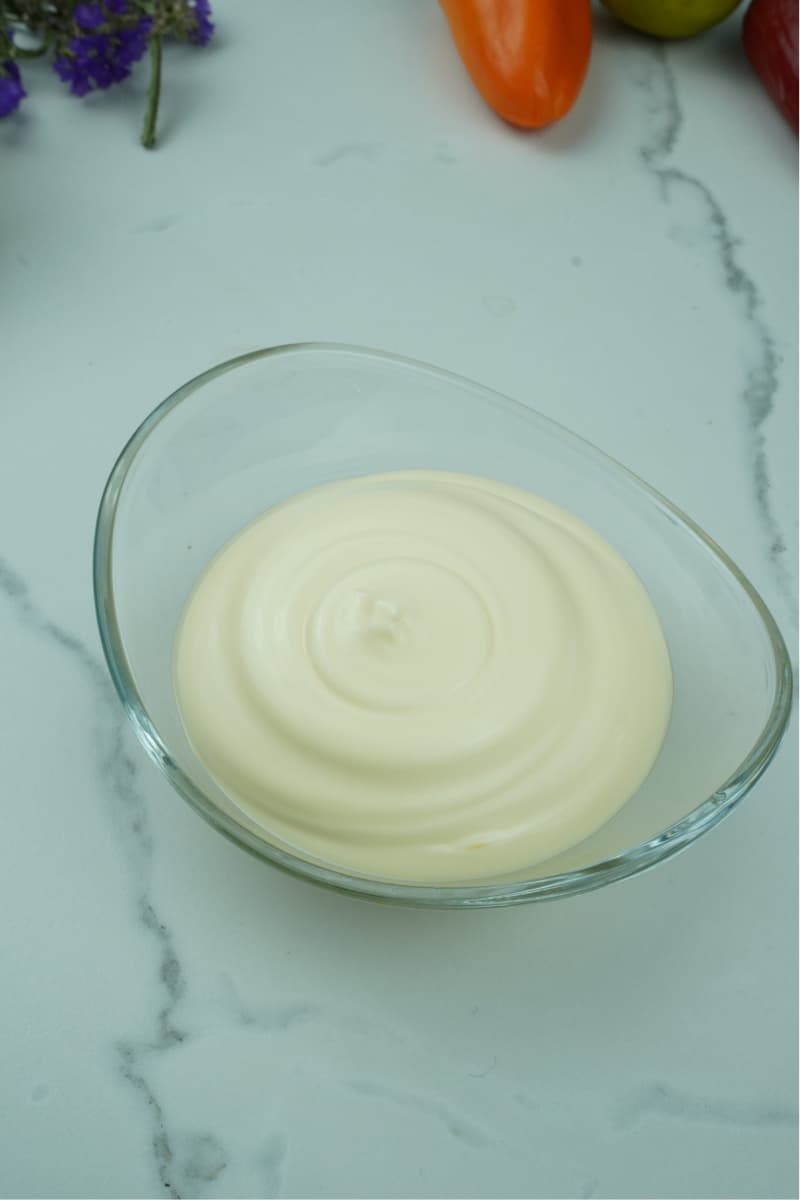
Homemade Mayonnaise with Olive Oil
Have you tried to make mustard from scratch? Or, you could make homemade barbecue sauce. This ramp pesto recipe is a favorite for spring. Want a few more ideas, why not make tartar sauce or shrimp cocktail sauce.
We’ve been making this homemade olive oil mayonnaise recipe for years. It tastes so much better than the store-bought kind and it’s very easy to make. It requires only three simple ingredients that you probably have on hand in the kitchen right now.
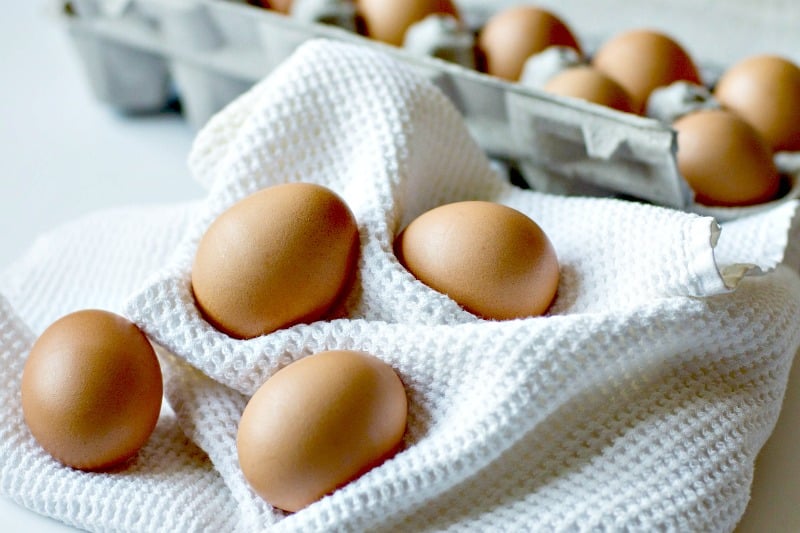
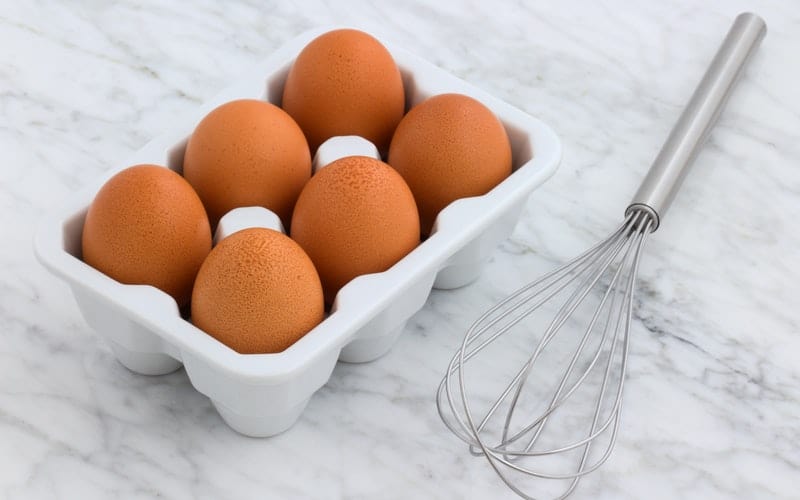
Please make sure you use fresh, organic eggs in this whole egg mayonnaise recipe because this contains no preservatives and is not cooked.
It’s very important to use the freshest ingredients you can. If you don’t have your own chickens, you may be able to buy from someone locally. If not, be sure that you look for organic eggs at the grocery store.
Is mayonnaise made with olive oil better for you?
Better is a relative term. Both canola oil and olive oil are considered healthy fats. We use them instead of soybean or corn oil. But, this olive oil mayo recipe does still contain fat. So, be aware of that if you are watching fat content.
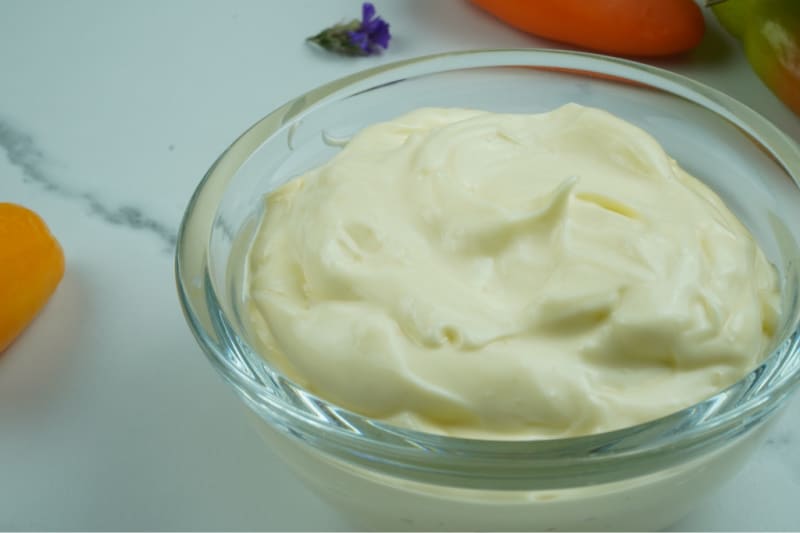
Does mayonnaise with olive oil taste different?
It’s very important that you use regular olive oil in this olive oil mayonnaise recipe. Do not use extra virgin olive oil which has a stronger taste and won’t be the best option for this recipe.
Can I use pasteurized eggs?
Yes, you can if you want to. This recipe does contain raw eggs. And, while I have never had an issue using it, it does concern some people. If you’re worried about salmonella, you can get pasteurized eggs from the grocery store.
Preserving homemade mayonnaise
Homemade mayonnaise should be made with pasteurized eggs because the eggs are not cooked. Refrigerate it immediately in a clean, airtight container at 40°F or below and use it within 3 to 4 days. Do not rely on fresh or organic eggs alone to prevent Salmonella.
We use ours in pasta salad, on sandwiches, and on burgers. It’s also delicious in homemade deviled eggs and potato salad.
To be sure that your mayonnaise lasts as long as possible, be sure not to allow cross-contamination to happen. Never put a knife or spoon in the container that has come in contact with other food. And, never dip food directly into the container.
Can you freeze homemade mayonnaise?
No, you cannot freeze this mayonnaise. If you do, the ingredients will separate when it freezes which will ruin it. This recipe is easy enough to make regularly when you need it.
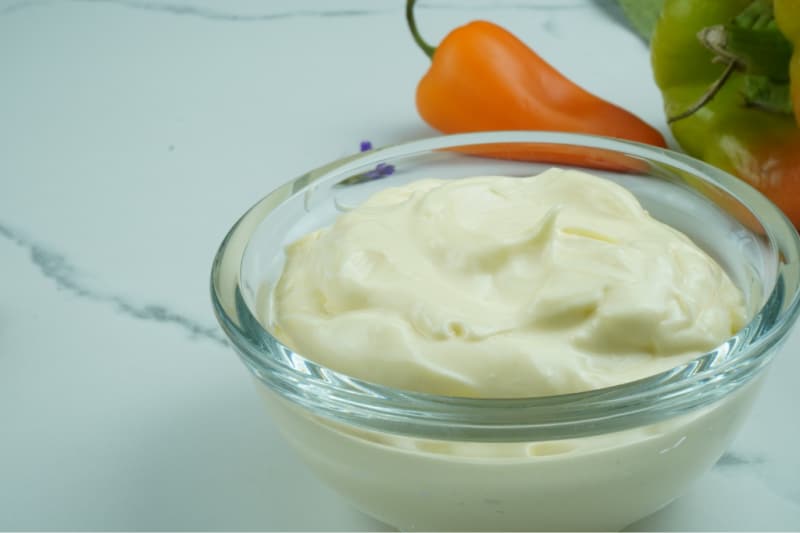
The good thing about this mayonnaise is that it is both Whole 30 and Paleo. Most of the commercially prepared mayonnaises contain soybean oil and soy is not allowed on either the Paleo or Whole 30 diet. So, you can use it in any of these recipes without a problem.
The most important thing to remember when making homemade mayonnaise is to drizzle the oil SLOWLY. Do not just pour it all in or it won’t thicken and turn into mayonnaise.
Some mayonnaise recipes use mustard, but if you’re wondering how to make white mayonnaise, follow this recipe.
Tools needed
To make homemade mayonnaise, you will need to have an immersion blender or a food processor. These options have the speed and focus needed to make mayonnaise. You may be able to get it to thicken up with a whisk or electric beater, but I’ve never had much luck with those methods.
- Immersion blender (fastest)
- Food processor
- Blender
- Whisk (traditional method)
Ingredients
- Eggs (fresh, room temperature)
- Olive oil (light olive oil creates a milder flavor)
- Lemon juice or vinegar
- Dijon mustard (helps emulsify)
- Salt
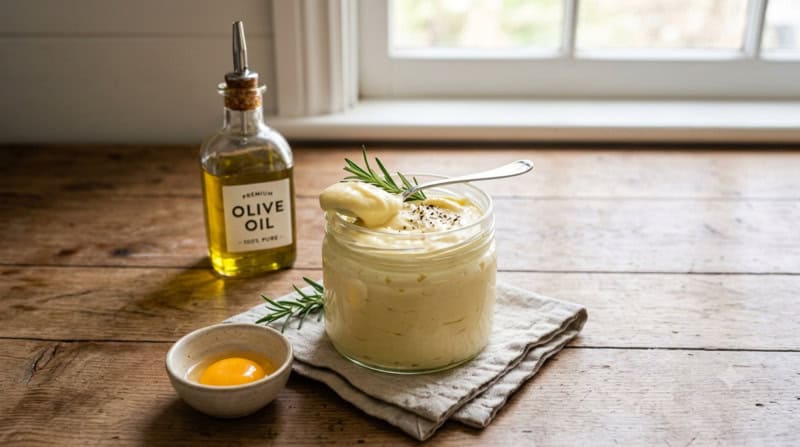
Step-by-Step Tips for Perfect Homemade Olive Oil Mayonnaise
Making homemade mayonnaise is surprisingly simple, but a few small details can make the difference between a thick, creamy spread and a runny mixture. Follow these tips for the best results every time.
Use Room Temperature Ingredients
For the smoothest, creamiest mayonnaise, make sure your egg, lemon juice, and mustard are at room temperature before you begin. Ingredients that are too cold don’t blend together as easily, making it more difficult for the mayonnaise to emulsify properly.
If you forgot to take your egg out of the refrigerator, place it in a bowl of warm (not hot) water for about 5 minutes to bring it to room temperature quickly.
Add the Oil Slowly
One of the most important steps is adding the olive oil gradually. If you’re using a food processor, blender, or whisk, start by adding the oil just a few drops at a time. Once the mixture begins to thicken, you can slowly pour the remaining oil in a thin, steady stream while continuing to blend.
Adding the oil too quickly can cause the mayonnaise to separate instead of forming a smooth emulsion.
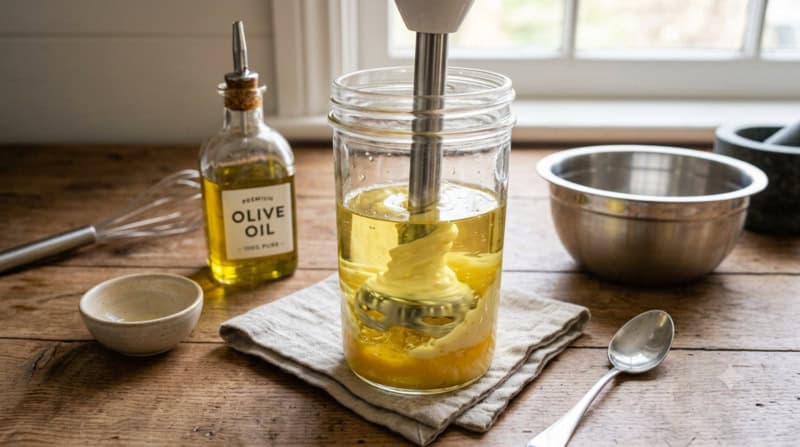
If you’re using an immersion blender with the ingredients layered in a jar, you can typically add all of the oil at once and let the blender do the work. Hold the blender at the bottom of the jar for several seconds before slowly lifting it upward.
Know What to Look For
As you mix, you’ll notice the texture changing in stages:
- Beginning: The ingredients will look thin and slightly cloudy.
- As the emulsion forms: The mixture will quickly become pale, creamy, and noticeably thicker.
- Finished mayonnaise: It should be smooth, glossy, and thick enough to hold its shape on a spoon. If it’s too thick for your liking, whisk in 1 to 2 teaspoons of water or lemon juice until it reaches your preferred consistency.
Taking your time during the mixing process will reward you with rich, creamy homemade olive oil mayonnaise that’s perfect for sandwiches, salads, dips, and dressings.
Olive oil mayonnaise success tips
- Use room-temperature ingredients.
- Add the oil slowly unless using an immersion blender.
- Choose light olive oil for a milder flavor.
- Taste and adjust the salt and lemon juice before serving.
- Store in the refrigerator and use within a week.
Homemade Mayonnaise Troubleshooting
Even homemade mayonnaise can be a little finicky the first time you make it. If your mayonnaise didn’t turn out quite right, don’t worry—most problems are easy to fix.
Why Didn’t My Mayonnaise Thicken?
If your mayonnaise stayed thin instead of becoming creamy, the ingredients probably didn’t emulsify. This can happen if:
- The oil was added too quickly.
- Your ingredients were too cold.
- The egg wasn’t fresh.
- The blender or food processor wasn’t running long enough.
To prevent this, use room-temperature ingredients and add the oil slowly in a thin, steady stream (unless you’re using the immersion blender method).
How Do I Fix Broken Mayonnaise?
If your mayonnaise separates or looks oily, it can usually be saved.
Place a fresh egg yolk in a clean bowl or food processor. Slowly drizzle the broken mayonnaise into the new egg yolk while whisking or blending constantly. The fresh yolk acts as a new emulsifier and helps bring everything back together into a smooth, creamy mayonnaise.
If you don’t have another egg, you can also try whisking one teaspoon of Dijon mustard into the broken mayonnaise before slowly blending it again.
Why Does My Mayonnaise Taste Bitter?
Olive oil is often the culprit. Extra virgin olive oil has a bold, peppery flavor that can become bitter when blended at high speed.
For a milder, more traditional-tasting mayonnaise, use light olive oil or combine extra virgin olive oil with a neutral oil, such as avocado oil or grapeseed oil. You can also brighten the flavor by adding a little more lemon juice or a pinch of salt.
Can I Save Runny Mayonnaise?
Yes! Runny mayonnaise can often be rescued.
Start with a fresh egg yolk in a clean bowl. While whisking continuously, slowly drizzle the runny mayonnaise into the egg yolk until it thickens.
If your mayonnaise is only slightly thin, try blending it for another 15 to 30 seconds. Sometimes it simply needs a little more mixing time for the emulsion to fully develop.
Remember that homemade mayonnaise will also thicken slightly after chilling in the refrigerator for an hour or two.
Is Homemade Mayonnaise Safe to Eat?
Traditional homemade mayonnaise is made with raw eggs, which raises questions about food safety. While the risk of foodborne illness is low, it’s important to take a few precautions.
Use Pasteurized Eggs When Possible
For the safest homemade mayonnaise, use pasteurized eggs. These eggs have been gently heated to kill harmful bacteria without cooking the egg, making them a great choice for recipes that call for raw or lightly cooked eggs.
Start with Fresh Ingredients
Always use fresh eggs and freshly squeezed lemon juice or vinegar. Check the expiration date on your eggs, and discard any that are cracked or damaged.
Keep It Refrigerated
Because homemade mayonnaise doesn’t contain preservatives, it should be refrigerated immediately after making it. Store it in a clean, airtight container and keep it at 40°F (4°C) or below.
Use Promptly
Homemade mayonnaise should be made with pasteurized eggs because the eggs are not cooked. Refrigerate it immediately in a clean, airtight container at 40°F or below and use it within 3 to 4 days. Do not rely on fresh or organic eggs alone to prevent Salmonella.
Don’t Leave It at Room Temperature
Homemade mayonnaise should not sit out for more than 2 hours. If the room temperature is above 90°F, such as at a picnic or barbecue, it should be discarded after 1 hour.
Who Should Avoid Raw Egg Mayonnaise?
If you’re pregnant, very young, over age 65, or have a weakened immune system, consider using pasteurized eggs or choosing a store-bought mayonnaise made with pasteurized ingredients.
By following these simple food safety guidelines, you can enjoy fresh, creamy homemade mayonnaise with confidence.
Homemade Mayonnaise
This Olive Oil Mayonnaise Recipe is both simple and delicious. Making and preserving homemade mayonnaise couldn't be easier. Try my recipe today.
Ingredients
- 1 large, fresh, organic egg
- 1 1/2 cups olive oil
- 1/2 tsp salt
- 1/2 tsp ground mustard seed (optional)
- 2 tablespoon lemon juice
Instructions
- Put the eggs and lemon juice into a bowl or the bowl of your food processor.
- Very very slowly drizzle in the olive oil while you are beating the eggs. You can use your food processor or an immersion blender.
- Once all the oil has been added, you have mayonnaise.
- You can add salt & pepper to taste if you like. Or, add garlic for garlic mayonnaise.
Nutrition Information:
Yield:
6Serving Size:
16Amount Per Serving: Calories: 343Total Fat: 38gSaturated Fat: 5gTrans Fat: 0gUnsaturated Fat: 31gCholesterol: 62mgSodium: 25mgCarbohydrates: 0gFiber: 0gSugar: 0gProtein: 2g

Ellen is a busy mom of a 29-year-old son and 33-year-old daughter. She owns nine blogs and is addicted to social media. She believes that it doesn’t have to be difficult to lead a healthy life. She shares simple healthy living tips to show busy women how to lead fulfilling lives. If you’d like to work together, email info@confessionsofanover-workedmom.com to chat.

First time I’ve managed without it flopping. Thanks so much.
I’m not sure what happened. It was working fine, I added all the oil slowly, it was getting thicker, then I added in a crushed clove of garlic. As soon as I did that, it all went liquidy. Also, I was using my vitamix and it got pretty warm. I had it on low for the first half of the oil then turned it up. Any ideas what happened? It’s just pure liquid now.
It may have been the garlic you added. I would add that right before serving personally – not while you are making it.
How long does it last?
Homemade mayonnaise should be made with pasteurized eggs because the eggs are not cooked. Refrigerate it immediately in a clean, airtight container at 40°F or below and use it within 3 to 4 days. Do not rely on fresh or organic eggs alone to prevent Salmonella.
It didn’t work at all. I followed your ingredients and instructions 🤷🏻♀️
It works. You have to add the oil very very slowly. If you add it too fast the emulsion will not work. If it did not combine, you added it too fast. Barely dribble it into the eggs.
What a great recipe for homemade mayo! Thanks so much for sharing your awesome post with us at Full Plate Thursday, 552 and come back to see us real soon!
Miz Helen
Thanks so much for stopping by!