
Last Updated on August 9, 2026 by Ellen Christian
If you’ve ever opened the cabinet under your kitchen sink and found six different bottles of cleaner, you’re not alone.
Posts may be sponsored. This post contains affiliate links, which means I will make a commission at no extra cost to you should you click through and make a purchase. As an Amazon Associate I earn from qualifying purchases.
There’s the cleaner you bought because it was on sale, the one you bought because someone recommended it, the one that’s supposed to work on a very specific surface, and the bottle that’s been sitting there so long that you can’t even remember why you bought it.
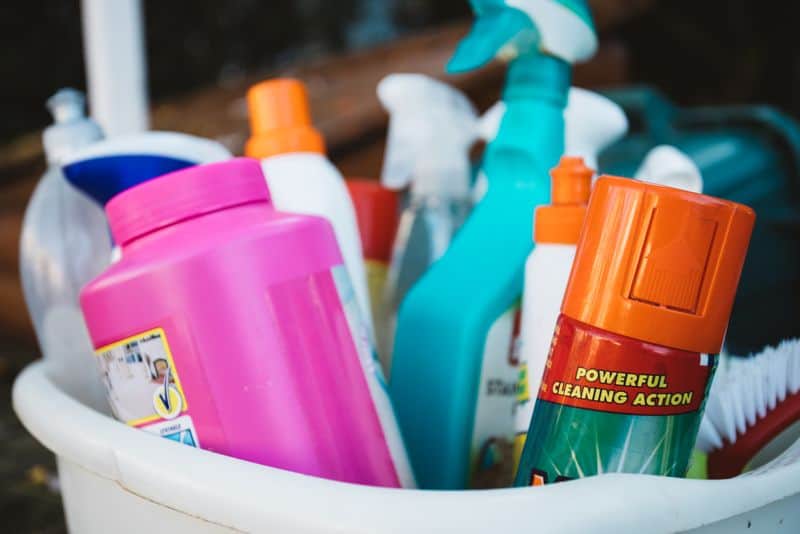
The problem is that throwing away perfectly usable cleaning products feels wasteful. But keeping every bottle you own isn’t exactly helpful either.
So what’s the solution?
Instead of buying more cleaning products or tossing everything out, I like the idea of using what you already have first and organizing what’s left.
It’s a simple way to declutter your cleaning supplies while saving money at the same time.
Start by Taking Everything Out
The first step is surprisingly important: take all of your cleaning products out of the cabinet.
Don’t try to organize them while they’re still sitting in a crowded cabinet. You’ll probably end up moving bottles around without actually deciding what you want to keep.
Put everything on the floor, counter, or another surface where you can see it.
Once everything is together, you may be surprised by how much you actually have.
Sort Your Cleaning Products
Now make a few simple groups.
You don’t need a complicated organizing system. Start with:
- Products you use regularly
- Products you use occasionally
- Products you want to use up
- Products you don’t intend to use
I also prefer keeping a supply of reusable cleaning cloths on hand rather than constantly buying disposable ones.
The last category is important.
Sometimes we keep products simply because we spent money on them. But if you don’t like the way a product works, don’t like the smell, or never reach for it, keeping it indefinitely doesn’t make the money you spent on it come back.
Create a “Use This First” Area
This is one of the easiest things you can do to keep your cleaning supplies under control.
Put the partially used products you want to finish in one designated area.
It doesn’t have to be fancy. A small basket or bin can work, or you can simply place those products toward the front of your cabinet.
The important part is that you can see them.
When you’re getting ready to clean the bathroom, wash the kitchen floor, or tackle another household job, check your “use this first” products before reaching for something new.
You may already have exactly what you need.
Don’t Buy Another Cleaner Until You Check Your Stash
This is where the organization becomes a money-saving habit.
Before buying another bottle of glass cleaner, bathroom cleaner, floor cleaner, or another specialty product, check what you already have.
You might discover that you have two partly used bottles at home.
Buying another one because you can’t find the first two isn’t saving money.
A good rule is:
Use what you have before buying another version of the same thing.
This is especially helpful if you tend to buy household products when they’re on sale.
A sale isn’t really a bargain if you already have more cleaning products than you can use.
Be Careful About Combining Cleaning Products
One important thing to remember when you’re trying to use up cleaning supplies: don’t mix cleaning products together.
Even if you think two products might work better together, combining household cleaners can create dangerous fumes or other hazards.
Use products according to their labels and intended uses.
If you’re unsure whether two products can be used on the same surface or one after another, check the label or manufacturer’s instructions rather than experimenting.
Organize Products by Where You Use Them
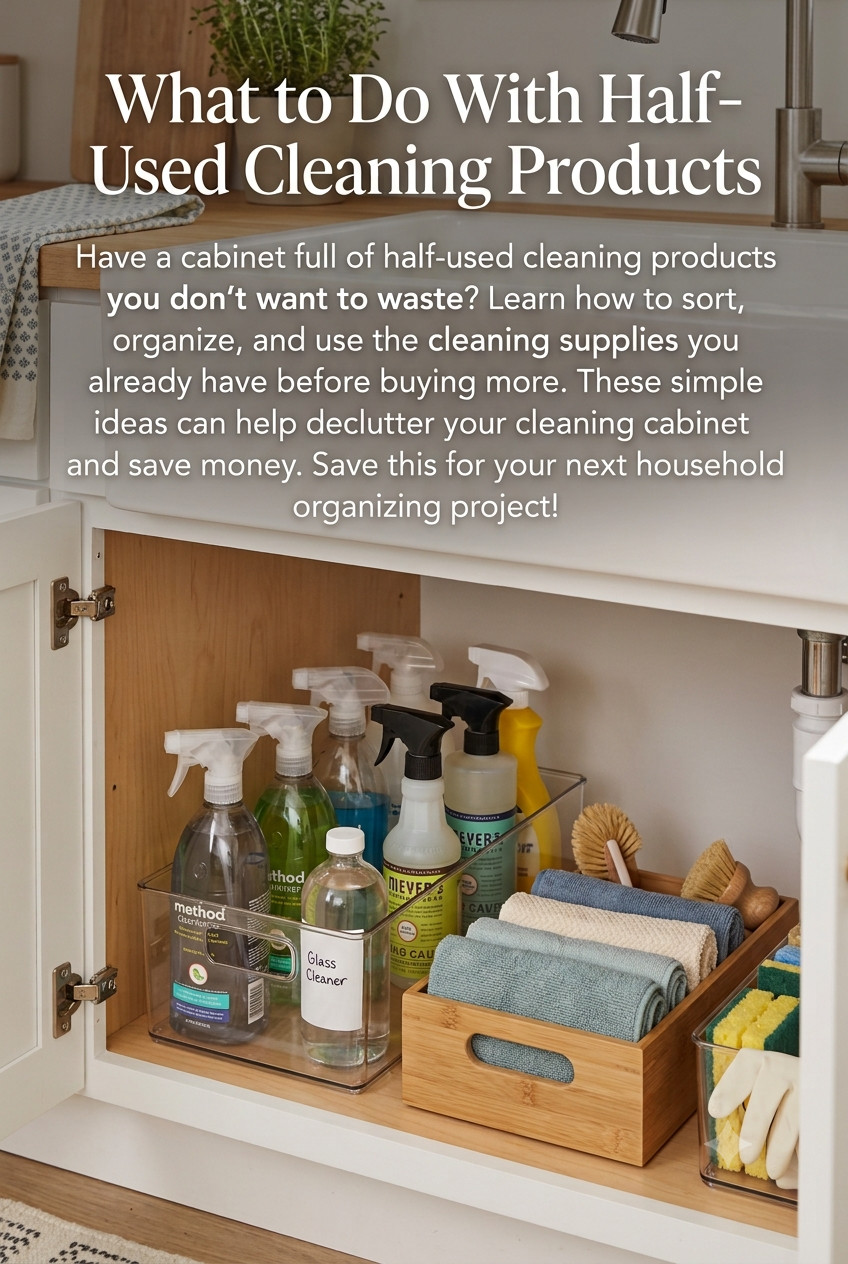
Once you’ve decided what you’re keeping, organize your remaining products in a way that makes sense for your household. It can be helpful to use a cleaning supply caddy.
You might group them by:
Kitchen
Keep the products you regularly use for kitchen counters, appliances, sinks, and other kitchen surfaces together. If your cleaning supplies tend to disappear into the back of the cabinet, an under-sink organizer can make everything much easier to see.
Bathroom
Bathroom cleaners, toilet-cleaning supplies, and products specifically intended for bathroom surfaces can go together.
Laundry
Keep laundry-related products together rather than scattered throughout the house.
General Cleaning
This can include products you use throughout the house for dusting, cleaning surfaces, or other everyday jobs.
Specialty Products
If you have something you only use occasionally, such as a product for a particular material or cleaning job, keep it in a separate area.
The goal isn’t to create a picture-perfect cleaning cabinet.
The goal is to be able to find what you need without buying another bottle because you can’t find the one you already own.
What About Products You Don’t Want?
This can be the hardest part.
Maybe you bought a cleaner and discovered you don’t like the smell. Maybe it didn’t work as well as you expected. Or perhaps you bought it for a cleaning project that you no longer need to do.
You don’t have to keep something forever just because you paid for it.
However, don’t simply pour unwanted cleaning products down the drain or dump them in the trash without checking the instructions.
Read the product label and check your local household hazardous-waste disposal guidelines to determine the appropriate way to get rid of unwanted products.
If a product is leaking, damaged, unlabeled, or has changed significantly in appearance or condition, handle it carefully and follow the manufacturer’s disposal recommendations.
Stop Letting Cleaning Products Multiply
Once you’ve reduced your collection, the next challenge is keeping it that way.
One simple rule can help:
One in, one out.
When you buy a new cleaning product, look at what you already have.
Do you have something that can do the same job?
If so, use that first. You don’t need anything fancy for a “use this first” area. A small basket or storage bin can keep those half-used products together and visible.
If you really do need the new product, make a point of finishing or appropriately disposing of an old product rather than allowing your collection to keep growing.
You don’t need 15 different cleaning products to keep your home clean.
Don’t Let “Organizing” Become an Excuse to Shop
This is something I think is especially important when you’re trying to save money.
It’s very easy to decide that your cleaning supplies are disorganized and then immediately start looking at containers, baskets, labels, and other organizing products.
Sometimes those things are helpful.
But you don’t necessarily need to buy anything.
Start by using what you already have.
An empty cardboard box can temporarily separate products. A basket you already own might work perfectly. Even a designated shelf can be enough.
The goal is to organize your cleaning supplies—not to buy more things to organize them with.
Make a “Use It Up” Habit
Once you’ve gone through your cleaning products, try making this a regular habit.
Every few months, take a quick look at your supplies.
Are there several bottles that are almost empty?
Put them where you’ll see them.
Do you have three versions of essentially the same product?
Stop buying that category until you’ve used some of them.
Are there products you haven’t touched in a year?
Decide whether they’re actually worth keeping.
It only takes a few minutes, but it can prevent the cabinet from becoming a collection of forgotten products again.
A Cleaner Cabinet Can Save You Money
Decluttering cleaning supplies isn’t just about having a prettier cabinet.
It’s about knowing what you own.
When you can easily see your supplies, you’re less likely to buy duplicates. When you use products before replacing them, you’re less likely to waste money. And when you stop buying every new cleaning product that catches your eye, you’ll probably find that you need far fewer products than you thought.
You don’t need a perfectly organized cleaning cabinet.
You just need to be able to open the door and know what you have, what you actually use, and what needs to be used first.
And honestly, that’s good enough for me.
Quick Cleaning Supply Reset
If your cleaning cabinet is overflowing, try this:
- Take everything out.
- Check the condition and labels.
- Separate regularly used and rarely used products.
- Create a “use this first” area.
- Stop buying duplicates.
- Organize what remains by use or location.
- Dispose of unwanted products according to label and local guidelines.
- Recheck your supplies before buying anything new.
It’s a small project, but it’s one of those household resets that can save you money long after the organizing is finished.
Helpful Organizing Tools

Ellen is a busy mom of a 29-year-old son and 33-year-old daughter. She owns nine blogs and is addicted to social media. She believes that it doesn’t have to be difficult to lead a healthy life. She shares simple healthy living tips to show busy women how to lead fulfilling lives. If you’d like to work together, email info@confessionsofanover-workedmom.com to chat.
