
Last Updated on September 17, 2026 by Ellen Christian
Some parts of a home demand attention, while others quietly work in the background until something goes wrong. The garage door usually belongs to the second group. In Pleasant Hill, where the latest population estimate is about 34,000 residents, everyday home maintenance includes keeping heavily used systems reliable rather than waiting for them to fail. A garage door can open and close hundreds or even thousands of times over the course of a year, placing repeated stress on springs, rollers, tracks, cables, and the opener. Paying attention to small changes can help you catch wear early, improve safety, and avoid an inconvenient breakdown.
Posts may be sponsored. This post contains affiliate links, which means I will make a commission at no extra cost to you should you click through and make a purchase. As an Amazon Associate I earn from qualifying purchases.
A Hardworking Door Deserves More Attention
A garage door may look simple from the outside, but several mechanical and electronic components work together every time it moves.
Springs help manage the door’s weight, rollers guide it along the tracks, cables contribute to controlled movement, and the opener provides powered operation. Sensors and other safety features add another layer to the system.
Because the door usually performs the same routine without complaint, gradual deterioration can be easy to miss. A slightly louder roller or slower opening cycle may become normal simply because the change happened over several months.
Good maintenance starts with noticing what normal operation looks and sounds like. Once you know that baseline, changes become much easier to recognize.
Safety Problems Should Move to the Front of the List
Some household maintenance can comfortably wait until the weekend. Problems involving garage door springs, cables, or unstable movement deserve greater urgency.
These components work with a heavy door and can involve considerable tension. Attempting to adjust or replace them without appropriate knowledge and equipment can create unnecessary risk.
When it comes to garage door repair Pleasant Hill has plenty of professional options for homeowners dealing with broken springs, worn cables, opener issues, misaligned tracks, or uneven door movement. The key is choosing a provider that can diagnose the underlying problem clearly, explain the repair, and restore safe, reliable operation without adding unnecessary work.
The safest repair is not always the one that looks simplest from the outside.
Strange Sounds Are Often Early Clues
Garage doors are not silent, but they should generally sound consistent.
Squeaking can indicate friction or worn moving components. Rattling may come from loose hardware, while grinding or scraping can suggest a problem that deserves closer inspection. Popping sounds can sometimes involve spring-related issues.
The important detail is change. If a door suddenly becomes louder or develops a sound that was not there before, investigate rather than simply turning up the radio.
Watch the door while it operates as well. Noise combined with shaking, hesitation, or uneven movement provides an even stronger reason to have the system checked.
Small mechanical problems often become more expensive when connected components are forced to compensate for them.

The Door’s Movement Tells a Story Too
Sound is only one indicator of condition. Watch how the door travels.
Healthy operation should look relatively smooth and controlled. A door that jerks, hesitates, rises unevenly, or repeatedly reverses may be showing signs of a mechanical or safety-system problem.
Also look at the door when it is fully closed. Large or uneven gaps may indicate alignment or sealing issues. If one side appears noticeably lower, avoid assuming the problem is purely cosmetic.
The opener can offer clues as well. If it sounds strained or suddenly takes longer to move the door, another part of the system may be creating additional resistance.
Observation costs nothing, yet it can reveal problems long before complete failure.
A Little Routine Care Can Prevent Bigger Hassles
Preventive maintenance does not require dismantling the system.
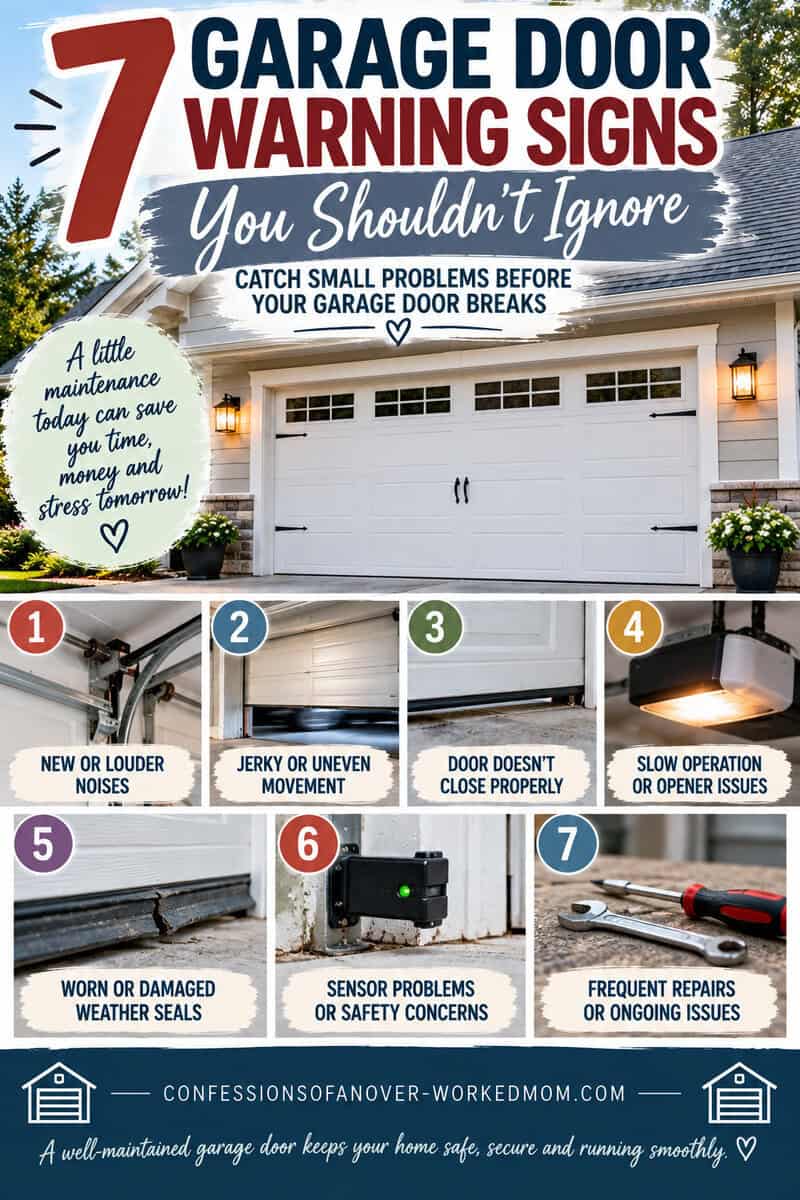
Keep the area around the tracks clear, clean, and accessible; carefully clean sensors, and periodically inspect visible hardware for changes. Weather seals can also be checked for cracks, flattening, or gaps that may allow outdoor air, dust, moisture, or pests inside.
Appropriate lubrication can reduce friction on certain moving components. General guidance on common garage door problems also explains how issues such as worn rollers, dirty tracks, loose hardware, and spring problems can affect operation.
The key is knowing the boundary between observation and repair. Routine care can support the system, but high-tension components and major alignment problems are better left alone.
Safety Features Need to Work Every Time
Automatic garage doors include protective features designed to reduce the chance of the door closing on a person, pet, vehicle, or object.
Photo-eye sensors near the floor should remain clean and properly positioned. If the door begins closing and unexpectedly reverses, check whether something is blocking the opening or interfering with the sensors.
Do not bypass a malfunctioning safety feature just to keep the door operating.
It is also worth becoming familiar with basic garage door safety practices, particularly if children regularly use or pass through the garage. Remote controls should be kept away from young children, and nobody should attempt to run beneath a moving door.
Convenience matters, but safe operation matters more.
Weather Seals Affect Comfort and Cleanliness
The flexible material around a garage door may seem insignificant compared with springs and motors, yet it performs an important everyday job.
A deteriorated bottom seal can leave gaps that allow dust, insects, water, and outdoor air to enter. Side and upper seals can develop similar problems as they age.
Check whether daylight is visible around the closed door. Small gaps may indicate that a seal has worn out or that the door is no longer sitting as evenly as it should.
This is particularly worth noticing when the garage connects directly with living areas. While a garage is not usually conditioned like the rest of the home, reducing unnecessary air movement can help make adjacent spaces more comfortable.
Appearance Can Reveal Functional Problems
A garage door occupies a large portion of many home exteriors, so dents, fading, rust, and damaged panels naturally affect curb appeal.
Some cosmetic changes, however, can also provide information about condition.
A dent caused by impact may alter how a panel travels. Corrosion around hardware can suggest prolonged moisture exposure. A door that appears crooked when closed may indicate a mechanical problem rather than an aesthetic one.
Do not assume every imperfection requires replacement. Instead, consider whether the damage changes movement, sealing, stability, or security.
Maintenance becomes more effective when appearance and performance are considered together.
Know When Repair Stops Making Sense
Not every noisy or aging garage door needs replacement. Many problems can be addressed by repairing individual components.
The calculation changes when breakdowns become frequent, several major parts are deteriorating, panels are extensively damaged, or an older system no longer operates reliably.
Keep track of recurring repairs rather than treating each one as an unrelated event. Repeated service calls can reveal a broader pattern that is easy to miss when problems happen months apart.
A professional assessment can help distinguish normal component wear from a system approaching the point where replacement deserves consideration.
Small Habits Say a Lot About Home Care
Good home maintenance is rarely about waiting for something to break and reacting quickly. It is about noticing gradual changes while there is still time to make a sensible decision.
Your garage door is a perfect example. Listen when its sound changes, watch how it moves, inspect seals and visible components, and take safety problems seriously.
You do not need to become an expert or turn every squeak into an emergency. You simply need to recognize when normal wear starts becoming abnormal behavior.
A garage door that receives regular attention is easier to keep safe, dependable, and pleasant to use. More importantly, that habit reflects a broader approach to homeownership: taking care of hardworking systems before they have to demand your attention.

Ellen is a busy mom of a 29-year-old son and 33-year-old daughter. She owns nine blogs and is addicted to social media. She believes that it doesn’t have to be difficult to lead a healthy life. She shares simple healthy living tips to show busy women how to lead fulfilling lives. If you’d like to work together, email info@confessionsofanover-workedmom.com to chat.
