
Last Updated on November 12, 2026 by Ellen Christian
A furnace that starts on every cycle may still send part of its fuel up the vent. Warm air at the registers shows the system runs, though it reveals little about the cost of each heating season. Homeowners who face a repair bill on an older unit need a clear way to judge what that furnace is worth.
Posts may be sponsored. This post contains affiliate links, which means I will make a commission at no extra cost to you should you click through and make a purchase. As an Amazon Associate I earn from qualifying purchases.
A fair verdict draws on several sources of evidence from the home itself. The efficiency label sets the starting point, while past gas bills show the real cost of heat. A local HVAC team like Trusted Gas Furnace Experts can inspect the unit to confirm what those numbers suggest. The sections below lay out each step with plain math a household can repeat from its own records.
How an AFUE Rating Describes Furnace Efficiency
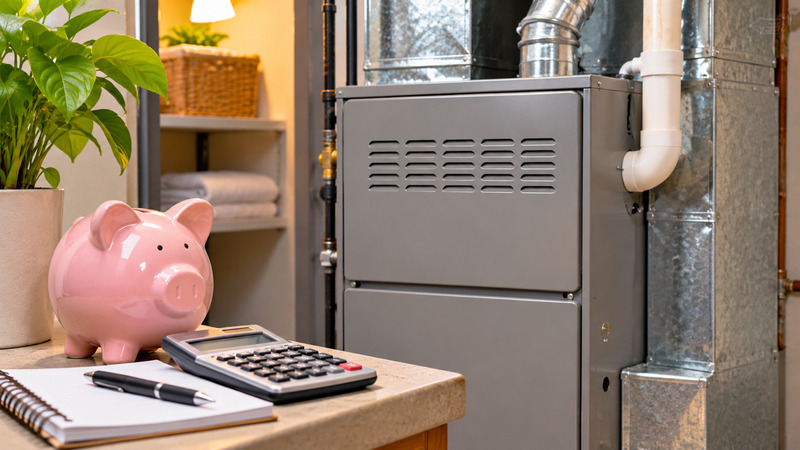
Gas furnaces sold in the United States carry an AFUE rating, which stands for Annual Fuel Utilisation Efficiency. The percentage shows how much fuel energy a furnace converts into heat for the home across a typical year. At 80 per cent AFUE, about 20 per cent of the fuel energy leaves through the vent. The U.S. Department of Energy places older furnaces in a range of 56 to 70 per cent AFUE, while modern high-efficiency systems can reach 98.5 per cent.
The rating comes from a standard laboratory test under controlled conditions. A furnace in a real home may perform below its label as parts wear or ducts leak. The rating plate inside the furnace door lists the model number. That number leads to the AFUE figure in the owner’s manual or on the manufacturer’s website. A photo of the plate saves time during later service calls or replacement quotes.
According to the U.S. Department of Energy’s guide to furnaces and boilers, upgrading from an older, low-efficiency furnace to a modern high-efficiency model can significantly reduce fuel consumption and heating costs.
Why AFUE Gains Differ from Gas Bill Savings
A higher AFUE rating reduces the gas a furnace burns, though it leaves other parts of the bill unchanged. Gas bills commonly include a fixed monthly service charge that stays the same at any level of use. A gas water heater or range adds its own share to each monthly total. Gas dryers or fireplaces on the same meter add further charges.
A furnace upgrade affects the heating portion of the bill alone. A move from 70 to 95 per cent AFUE trims furnace fuel use about 26 per cent for the same amount of heat. The total bill drops a smaller share once fixed charges or other appliances enter the math. AFUE leaves out the electricity the blower motor draws, which appears on the separate electric bill. Weather swings or gas rate changes shift actual savings from one year to the next. Leaky ducts in an attic or crawl space can waste part of the heat before it reaches a room.
Furnace Signs That Call for a Closer Look
Each sign below has several possible causes. A single sign fails to prove that a furnace needs replacement.
- Uneven room temperatures may stem from a clogged filter or closed supply vents. Leaky ducts or thin insulation in one room can produce the same pattern.
- Cool air at the registers for a minute or two after startup is common while the heat exchanger warms up. A longer stretch may point to a thermostat fan setting or an ignition fault.
- A steady blue flame is typical for a natural gas burner. Brief orange flecks may come from dust in the air. Yellow or wavering flames may signal dirty burners or a combustion air problem, which warrants a prompt technician visit.
- Higher winter bills may reflect colder weather or a rise in gas rates. A fair check compares gas use in therms for the same month across two years.
- Soot, rust or standing water around the cabinet can point to a venting problem or a condensate leak. A technician can check the heat exchanger for cracks or corrosion at the same visit.
- Repeat service calls within one heating season suggest wear across several parts. A full review of the furnace condition becomes worthwhile at that stage.
A gas odour or a carbon monoxide alarm calls for immediate action. The household should leave the home at once, then call the gas utility or 911 from outside. Other signs justify a service visit once they persist after a fresh filter goes in. A replacement discussion makes sense when a technician confirms a costly fault on an ageing furnace.
A dirty furnace filter can restrict airflow and make your heating system work harder. Keep the correct replacement furnace filters on hand so you can change them according to your furnace manufacturer’s recommendations.
A Worked Example of Savings against Replacement Cost
The figures below describe a hypothetical home to show the method. Each household should use its own bills to reach a usable estimate.
- Average the summer gas bills to find the base cost of fixed charges plus other appliances. In this example, the summer average comes to $45 per month.
- Average the bills from the heating months. Here the winter average is $180 per month across five months.
- Subtract the summer base from the winter average to isolate furnace use. That leaves $135 per month, or about $675 per heating season.
- Apply the formula: heating cost × old AFUE ÷ new AFUE. A switch from 70 to 95 per cent AFUE brings $675 down to about $497, a seasonal saving near $178.
- Run the same formula for a standard 80 per cent model, which lands near $591 for a saving of about $84. If the 95 per cent model costs $1,500 extra, its added $94 in yearly savings covers that gap in about 16 years.
The same formula puts a full replacement in context. A $5,000 installed system would recover about $178 a year in this example. At that pace, energy savings alone would take close to three decades to cover the price. Efficiency serves as one factor in the decision, next to repair costs plus safety. Utility rebates or local incentives, where available, can shorten the payback period. Condensing furnaces rated at 90 per cent AFUE or higher need plastic vent pipe plus a condensate drain, which may raise installation cost.

Factors That Shape a Repair or Replacement Decision
No single formula fits every furnace or every home. A repair quote deserves extra scrutiny when it approaches a large share of the price of a new system. Age adds context, since a furnace near the end of its expected service life may need further repairs soon. Recent service history shows whether problems are isolated or spreading across several parts.
Condition can outweigh every other factor. A cracked heat exchanger poses a carbon monoxide risk, so technicians commonly recommend replacement for that fault. Efficiency gains carry extra weight in homes with long heating seasons or high gas rates. Older models can face delays for discontinued parts, which stretches out the time without heat. A planned replacement leaves room to compare written quotes from several contractors. An urgent replacement during a cold snap may limit equipment choices or add after-hours fees.
Proper sizing shapes how close a new furnace comes to its rated efficiency. The Air Conditioning Contractors of America publishes Manual J as its standard method for residential heat load calculations. An oversized unit tends to run in short bursts, while an undersized unit may run long cycles to keep up. Quotes that include a load calculation give the household a sound basis for comparison.
What a Licensed Technician Checks during a Furnace Visit
A visit from a licensed technician makes sense when a warning sign persists after basic checks. On arrival, the technician inspects the burners for dirt or uneven flames. The ignitor gets a test, along with the flame sensor that confirms a safe burn. A combustion analysis measures carbon monoxide levels in the flue gases. The heat exchanger receives a visual inspection for cracks or heavy rust. Airflow at the blower gets a check, followed by a look at the vent pipe that carries exhaust outside.
Every home with fuel-burning heating equipment should have working carbon monoxide alarms installed in appropriate locations.
Routine maintenance can catch some problems early, such as a weak ignitor or a dirty flame sensor. Some manufacturer warranties list regular maintenance as a condition of coverage. A written summary of the findings gives the household a clear record for repair or replacement talks. That record lets the household weigh its options with measured readings from the actual unit.
Regular maintenance can also help your heating system operate more efficiently. Follow this seasonal HVAC checklist to keep up with important heating and cooling tasks throughout the year.
A Practical Next Step for Homeowners
A furnace holds its value when its heating cost plus repair outlook stay within reason. The best first step pairs a photo of the rating plate with a year of gas bills. A professional inspection then confirms whether repair or replacement suits the home. With that information in hand, a household can schedule any upgrade in spring or early fall on its own timeline.

Ellen is a busy mom of a 29-year-old son and 33-year-old daughter. She owns nine blogs and is addicted to social media. She believes that it doesn’t have to be difficult to lead a healthy life. She shares simple healthy living tips to show busy women how to lead fulfilling lives. If you’d like to work together, email info@confessionsofanover-workedmom.com to chat.
