
Last Updated on September 4, 2026 by Ellen Christian
Picture this: you get back from a long Fourth of July weekend away, open your front door, and walk into a house that feels like the inside of a parked car. The AC ran all weekend, but nothing actually cooled. That is a real situation plenty of homeowners face every summer, and almost always, a quick spring inspection would have caught the problem weeks earlier.
Posts may be sponsored. This post contains affiliate links, which means I will make a commission at no extra cost to you should you click through and make a purchase. As an Amazon Associate I earn from qualifying purchases.
The good news is that most of those “why isn’t my AC working” moments trace back to five basic things you can check yourself in under an hour. No special tools, no HVAC certification. Just a sharp eye and twenty minutes outside with the garden hose.

Why Running These Checks in Spring Actually Saves You Money
Your air conditioner is not a small appliance. According to the U.S. Energy Information Administration’s 2020 Residential Energy Consumption Survey, air conditioning accounts for roughly 19% of all electricity used in American homes and that figure climbs sharply in warmer states. When a system is straining because of a dirty filter or clogged coils, it burns more power to produce less cool air. Your bill goes up while your comfort goes down.
Catching a restricted filter or a blocked drain line in April costs you nothing but an afternoon. Catching it in August, after a compressor has been overworking for two months, can mean a repair bill that stings. Run the checks early. It genuinely pays.
The FILTER-FLOW-COIL-DRAIN-THERMOSTAT Checklist
This five-point checklist covers every part of your system that a homeowner can safely assess. Think of it as a pre-flight walk-around for your AC.
1. Filter
Pull the filter out and hold it up to a light source. If you cannot see light through it, it is time for a new one. A clogged filter restricts airflow, which forces your system to work harder on every single cycle. Replace standard disposable filters every 30 to 90 days depending on whether you have pets or live near construction. Write the date on the frame with a marker each time you swap one in.
2. Flow
Walk through every room and press your palm near each supply vent. You should feel a consistent, steady push of air. A room that gets noticeably less airflow than others points to a possible duct obstruction, a closed damper, or a vent that has been accidentally blocked by furniture or a rug. Move any furniture at least 18 inches away from supply registers.
3. Coil
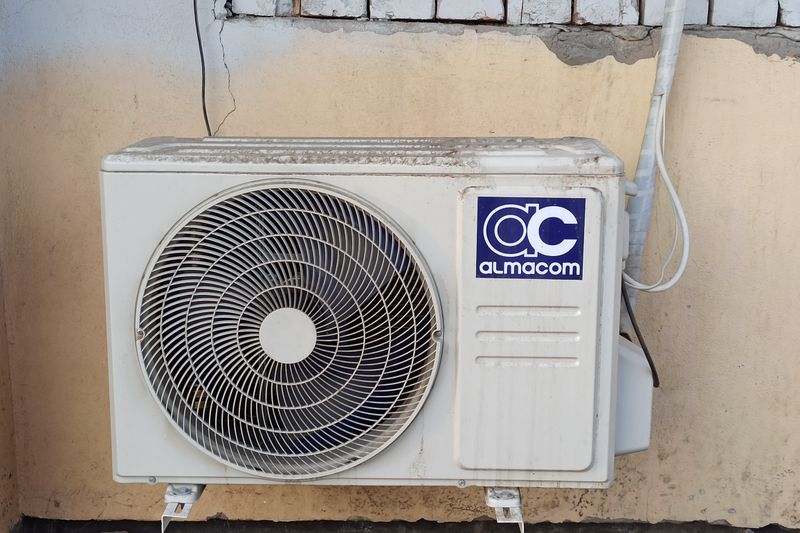
The outdoor condenser unit has aluminum fins running along its exterior. After a winter of sitting outside, those fins collect leaves, cottonwood fluff, lawn clippings, and general yard debris. Turn the power off at the disconnect box near the unit, then gently rinse the fins from the inside out with a garden hose on a low-pressure setting. Never use a pressure washer. Bent fins reduce the unit’s ability to shed heat, which cuts efficiency before summer even starts.
4. Drain
Your indoor air handler has a condensate drain line, typically a white PVC pipe that exits through a wall or drains into a floor drain. Algae and mold love that line. Pour a cup of plain white distilled vinegar into the drain pan access point and let it sit. This kills buildup before it can clog the line and cause the pan to overflow, which is one of the more common reasons for water stains on ceilings near air handlers.
5. Thermostat
Set your thermostat to “cool” and drop the temperature ten degrees below the current room temperature. The system should kick on within a minute or two and blow noticeably cool air within five to ten minutes. If it does not respond or blows lukewarm air, you have identified a problem before it becomes a crisis. Also check the batteries in any non-wired thermostats. Dead batteries are a surprisingly common culprit.
How Old Is Too Old? What the Lifespan Numbers Actually Tell You
Age matters more than most homeowners realize. The U.S. Department of Energy puts the average residential central air conditioner life at 18 years, though real-world performance depends heavily on how well the system has been maintained and how hard your local summers push it.
Here is the practical rule of thumb most HVAC technicians use: if your system is over ten years old and needs a repair that costs more than half the price of a new unit, replace it. A ten-year-old system running on borrowed time will eat through repair bills, and newer units run dramatically more efficiently.
On the flip side, a seven-year-old system that just needs a capacitor or a new contactor is absolutely worth repairing. Age is context, not a verdict on its own.
“The best time to find out your air conditioner has a problem is in April. The worst time is 6 p.m. on a Friday in August.” This captures the consistent advice offered across building performance communities: preventive spring inspection beats reactive summer repair every time.
What You Can Handle Yourself vs. What You Shouldn’t Touch
The five checks above are all fair game for a handy homeowner. But there is a firm line. Refrigerant handling requires an EPA 608 certification. According to a 2024 EPA technical document, air conditioning accounts for 19 percent of the average American household’s annual electricity use, with that share rising sharply in peak summer months. A system running short on refrigerant will drain your wallet on electricity while delivering weak cooling, and topping it off requires finding and fixing the leak first, not just adding more. That is a certified technician’s job, full stop.
Electrical components, including capacitors, contactors, and motor wiring, carry dangerous voltages even when the unit appears to be off. Do not open the control panel on the outdoor unit unless you have confirmed the disconnect is fully open and tested with a voltage meter.
If your spring checklist turns up something beyond a dirty filter or clogged coil, a local professional is your next call. Homeowners in eastern Oklahoma, for example, can reach out to Air Conditioning Services in Warner, OK for diagnosis, refrigerant work, and any repairs that go beyond what the checklist covers.
Quick DIY vs. Pro Reference Table
| Task | DIY Safe? | Notes
|
|---|---|---|
| Replacing air filter | Yes | Every 30 to 90 days; write date on frame |
| Rinsing outdoor coil fins | Yes | Power off at disconnect first; low-pressure hose only |
| Flushing condensate drain | Yes | White vinegar, annually in spring |
| Checking vent airflow | Yes | Furniture clearance, damper position |
| Thermostat function test | Yes | Fresh batteries; verify cool air within 10 minutes |
| Refrigerant check or recharge | No | Requires EPA 608 certification |
| Capacitor or contactor replacement | No | High voltage risk; certified technician only |
| Duct sealing or repair | Partial | Visible accessible runs: DIY fine. Hidden or major leaks: pro |
Do This Once a Year, Every Spring
Put a recurring reminder on your calendar for early April. Run the FILTER-FLOW-COIL-DRAIN-THERMOSTAT checklist every single year before you need the system. The whole process takes less time than watching an episode of whatever you’ve got queued up, and it keeps minor problems from compounding into major failures during the stretch of the year when your system is under the most stress.
Your AC does a lot of quiet work to keep your home livable. Giving it thirty minutes of attention in the spring is a fair trade. What did your last spring check reveal?

Ellen is a busy mom of a 29-year-old son and 33-year-old daughter. She owns nine blogs and is addicted to social media. She believes that it doesn’t have to be difficult to lead a healthy life. She shares simple healthy living tips to show busy women how to lead fulfilling lives. If you’d like to work together, email info@confessionsofanover-workedmom.com to chat.
