Last Updated on November 11, 2026 by Ellen Christian
You finally have thirty quiet minutes. The dishes are done, the house has settled, and the last thing you want is another screen. A hobby that fits that window, asks for no special talent, and leaves you with something pretty for the wall is rare, but punch needle comes close.
Posts may be sponsored. This post contains affiliate links, which means I will make a commission at no extra cost to you should you click through and make a purchase. As an Amazon Associate I earn from qualifying purchases.
The catch is the starting line. Plenty of beginners buy a needle in one place, fabric in another and yarn somewhere else, then discover the pieces don’t work together. The project ends up in a closet with the receipt. This guide covers what punch needle is, what it can honestly do for your mood, and how to pick supplies so you actually finish your first piece.
Why Punch Needle Suits a Busy Schedule
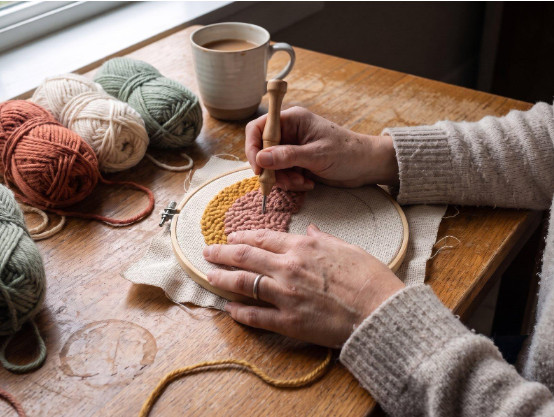
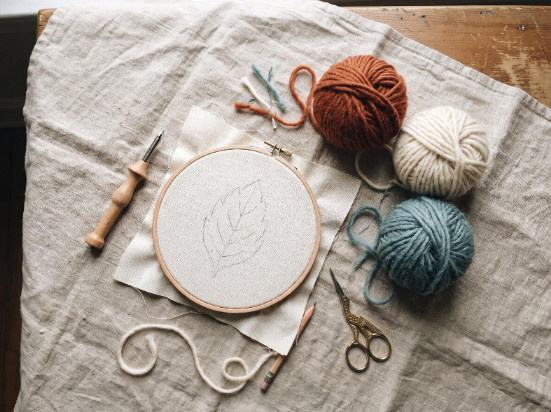
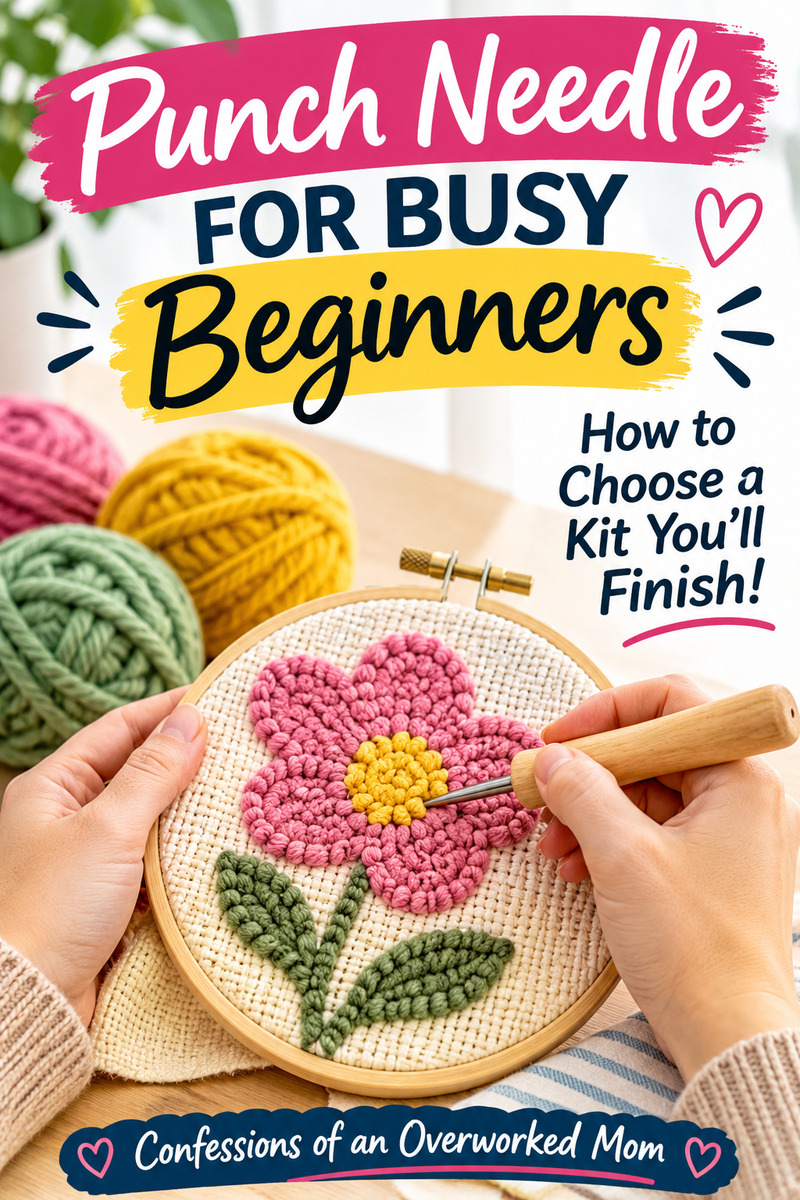
Punch needle is simple at heart. A hollow needle pushes yarn through tightly stretched fabric, and each push leaves a small loop on the other side. Fill in a pattern with those loops and you get a textured piece that looks far more complicated than it was to make. There’s no counting stitches, no tangled hooks and no pattern reading beyond following a printed outline.
That low barrier is the point for anyone short on time. A coaster takes a couple of evenings. You can stop mid-row, set the hoop down and pick it up three days later without losing your place. If you’d rather skip hunting for supplies one by one, the best punch needle kits bundle the tool, fabric and yarn so the pieces are matched before you open the box.
You’re also in good company. A 2025 Mintel report found that 71% of US consumers identify as crafters, and that many of them craft for stress relief and the satisfaction of making something tangible.
What Crafting Actually Does for Your Mood
Let’s keep expectations honest. A 2024 study from Anglia Ruskin University, published in Frontiers in Public Health, found that arts and crafts participation was linked to greater happiness, life satisfaction and a feeling that life is worthwhile. It was not linked to lower anxiety or loneliness. Researchers compared the size of the effect to the difference employment status makes.
So punch needle is a pleasant pause, not therapy. If you’re dealing with real anxiety, a hoop of yarn won’t fix it.
Still, the mood findings for needlecraft are encouraging. A 2024 scoping review of 25 studies in Issues in Mental Health Nursing reported that nearly all participants described joy and a better mood while doing needlecraft. Most of that evidence is self-reported, which is a limitation worth remembering. But for a low-cost evening habit, the downside is small.
What a Good Beginner Kit Should Include
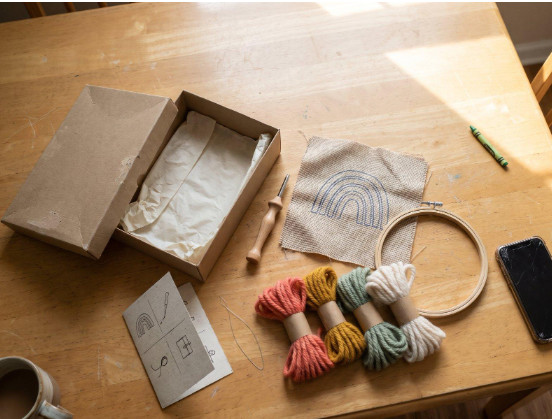
Not every kit is complete, and that’s where first-timers lose money. Before you buy, check for these:
- A punch needle, with the size listed
- Monk’s cloth or weaver’s cloth, ideally with the pattern already printed
- A hoop or frame to keep the fabric drum-tight
- Enough yarn in the right weight for the whole design
- Written or video instructions aimed at beginners
Some kits skip the tool and the frame entirely and assume you own them. That’s fine if you do, but it’s an expensive surprise if you don’t.
Needle size matters too. Larger punch needles work best with thicker, rug-weight yarn, while finer needles are better suited to worsted or sport-weight yarn. The needle size also affects the height of your loops. For a first project, a larger needle with chunky yarn is more forgiving; the loops are easier to see and the pattern fills in faster.
Once the kit arrives, give your supplies a home. Our tips for how to organize your yarn and supplies work just as well for a few skeins and a hoop, and a tidy basket makes it much easier to start when you only have twenty minutes.
Your First Evening: Setting Up and Punching
Tension is everything. Stretch the fabric until it’s taut enough to sound like a drum when you tap it, and retighten whenever it loosens. Loose fabric is the top reason loops pull out.
Thread the needle following your kit’s instructions, making sure the yarn moves freely through the tool. Then push the needle all the way into the fabric, lift just enough to move forward, and push again. Keep the needle close to the fabric as you travel so the loops stay even.
Three problems come up constantly:
- Loops pulling out: the fabric is too loose, or you lifted the needle too high between stitches.
- Skipped stitches: usually a sign the yarn is catching. Check that it runs freely from the ball.
- A lumpy back: you’re probably punching too close together. Leave a little space between rows.
Expect the first ten minutes to feel clumsy. By the end of the evening your hands will have found a rhythm.
Choosing a First Project and Finishing It
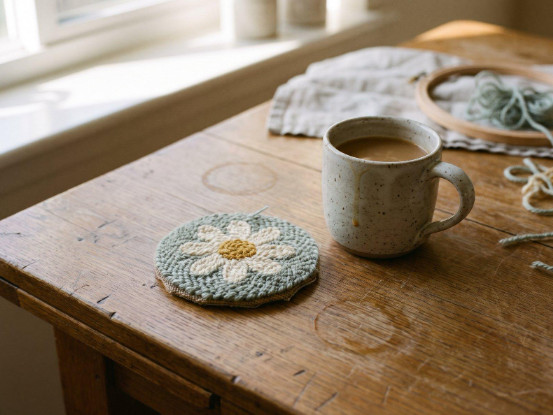
Start small, and resist the pull of a large wall hanging. A coaster, a small round hoop piece or a simple shape with two or three colors is plenty. Small projects finish, and finishing is what builds the habit.
To wrap up, trim any uneven loops with sharp, pointed scissors. Then follow the kit’s directions to secure the back, which usually means gluing a backing fabric or hemming the edge. Hoop art can stay in its hoop and go straight on a shelf.
On cost, expect a starter kit to be a modest outlay compared with most hobbies, and since the tool is reusable, your second project is cheaper than your first. If you enjoy this kind of slow, hands-on work, our look at another calming hobby for beginners makes a nice companion project for the weeks when you want something even simpler.
If you enjoy simple needlecraft projects, you might also like learning how to make a ribbon embroidery bookmark, another creative project that doesn’t require hours of free time.
Your Next Twenty Minutes
Pick one small kit, check that it includes the needle, fabric, hoop and yarn, and block out a single twenty-minute slot this week. Don’t plan the whole project. Just punch the first row and see how it feels.

Ellen is a busy mom of a 29-year-old son and 33-year-old daughter. She owns nine blogs and is addicted to social media. She believes that it doesn’t have to be difficult to lead a healthy life. She shares simple healthy living tips to show busy women how to lead fulfilling lives. If you’d like to work together, email info@confessionsofanover-workedmom.com to chat.
