
Last Updated on September 29, 2026 by Ellen Christian
Raleigh’s warm, humid climate creates conditions where excess moisture can become a concern throughout much of the year. Because moisture plays such an important role in mold growth, homeowners may wonder whether certain seasons are better suited for remediation work.
Posts may be sponsored. This post contains affiliate links, which means I will make a commission at no extra cost to you should you click through and make a purchase. As an Amazon Associate I earn from qualifying purchases.
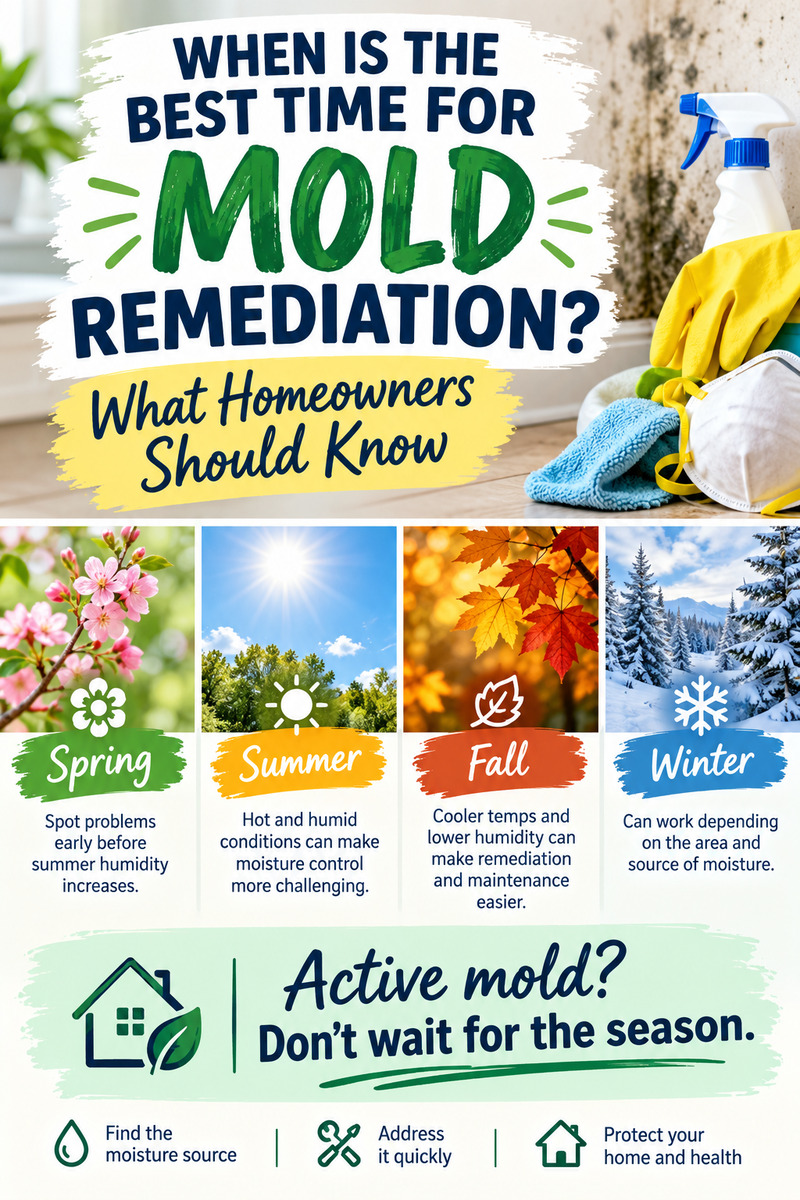
Season can affect drying conditions, indoor humidity, ventilation, and how easily the underlying moisture source can be identified and corrected. However, seasonal timing should not be used as a reason to postpone an active mold problem. If mold is already present or moisture damage is continuing, addressing the source promptly is generally more important than waiting for a particular month.
This article explains how Raleigh’s seasonal conditions can affect mold remediation and when weather may make planned remediation or preventive maintenance easier.

How Raleigh’s Climate Shapes Your Remediation Timeline
Raleigh experiences warm summers, frequent humidity, seasonal rainfall, and relatively mild winters. These conditions can contribute to moisture problems in areas such as crawl spaces, attics, basements, bathrooms, and other poorly ventilated parts of a home.
Because of this, home mold remediation services in Raleigh, NC may be needed at different points throughout the year.
The basic remediation process does not change dramatically with the season. Professionals still need to identify the moisture source, contain affected areas when appropriate, remove or clean contaminated materials, manage indoor moisture, and verify that the affected area has been properly addressed.
What does change is the surrounding environment. Temperature and humidity can influence drying time, ventilation strategies, dehumidification needs, and how easily moisture levels can be controlled after remediation.
Why Summer Can Make Mold Remediation More Challenging in Raleigh
Raleigh summers are typically hot and humid, which can make moisture control more demanding.
During periods of high outdoor humidity, crawl spaces, attics, basements, and other areas may require additional dehumidification or ventilation management. Even after affected materials have been cleaned or removed, controlling the moisture that contributed to the original problem remains important.
Summer conditions can also make attic and crawl-space work more physically demanding because temperatures in enclosed areas can become significantly warmer than outdoor temperatures.
That does not mean remediation should be avoided during summer. If mold or ongoing moisture is present, it is usually better to address the problem rather than wait several months for cooler weather.
A summer remediation project may simply require closer attention to:
- Indoor humidity levels
- Dehumidification
- Crawl-space or attic ventilation
- Plumbing or roof leaks
- HVAC condensation
- Drainage around the home
- Post-remediation moisture readings
Correcting these conditions can help reduce the likelihood of the same moisture problem returning.
Why Fall Can Be a Convenient Time for Planned Remediation
For homeowners who discover a minor issue during an inspection or are planning preventive maintenance, fall can be a practical time to schedule remediation work.
Temperatures generally become cooler, and outdoor humidity often decreases compared with peak summer conditions. These changes can make it easier to dry certain building materials and maintain more stable indoor moisture levels.
Fall can also be a useful time to inspect areas that may have accumulated moisture during spring and summer, including:
- Crawl spaces
- Attics
- Basements
- Areas around plumbing
- Window and door openings
- Roof penetrations
Addressing moisture problems before winter can also give homeowners an opportunity to repair leaks, improve drainage, replace damaged insulation, or make ventilation improvements before the next humid season.
For planned projects where there is no ongoing leak or rapidly worsening moisture problem, fall can therefore be one of the more convenient periods for remediation and related home maintenance.
Is Spring a Good Time for Mold Remediation?
Spring can also be a reasonable time for remediation, especially for homeowners who want to identify moisture problems before Raleigh’s summer humidity becomes more intense.
Seasonal rainfall can reveal roof leaks, drainage problems, foundation moisture, and other vulnerabilities that may not have been obvious during winter.
A spring inspection may be particularly useful for checking:
- Gutters and downspouts
- Roof leaks
- Foundation drainage
- Crawl-space humidity
- Bathroom and kitchen ventilation
- HVAC condensation lines
If a moisture issue is discovered, correcting it early may help prevent the problem from becoming more extensive during warmer months.
When the Season Matters Less Than the Moisture Problem
Seasonal conditions are useful for planning, but they should not determine whether an active moisture or mold problem gets addressed.
If materials remain damp, a leak is continuing, or visible mold is spreading, waiting for lower humidity or cooler temperatures can allow the underlying moisture problem to continue.
The priority should be identifying and correcting the source of moisture.
Situations That Should Be Addressed Promptly
Certain situations are better handled as soon as they are discovered rather than scheduled around the season.
For example, prompt attention may be appropriate after:
- A plumbing leak
- Roof damage
- Flooding or water intrusion
- Repeated crawl-space moisture
- HVAC condensation problems
- Visible mold growth that continues to spread
- Persistent damp or musty conditions
The U.S. Environmental Protection Agency recommends drying water-damaged areas and items within approximately 24 to 48 hours when possible to help reduce the potential for mold growth.
Health effects associated with mold exposure can vary considerably from person to person. Some people may experience irritation or respiratory symptoms in damp or moldy environments, while others may notice little or no reaction. Because individual responses differ, broad claims about a specific type of mold causing a particular health outcome should be avoided.
From a home-maintenance perspective, the clearer concern is moisture. The longer building materials remain damp, the greater the chance that additional materials may need to be cleaned, repaired, or replaced.
RELATED: How smart home improvements can support comfort and health
Conclusion
There is no single season when mold remediation must take place in Raleigh, NC.
Fall can be a convenient period for planned remediation because cooler temperatures and lower humidity may create more favorable drying conditions. Spring can also be useful for identifying and correcting moisture problems before summer.
Summer projects may require more careful humidity and moisture management, but remediation can still be completed successfully. Winter can also work depending on the affected area and the source of moisture.
The most important factor is not the month on the calendar. It is whether the moisture source has been identified and corrected.
If mold is already visible, materials remain wet, or a leak is actively contributing to the problem, addressing those conditions promptly is generally more important than waiting for a supposedly ideal remediation season.

Ellen is a busy mom of a 29-year-old son and 33-year-old daughter. She owns nine blogs and is addicted to social media. She believes that it doesn’t have to be difficult to lead a healthy life. She shares simple healthy living tips to show busy women how to lead fulfilling lives. If you’d like to work together, email info@confessionsofanover-workedmom.com to chat.
