
Last Updated on July 29, 2026 by Ellen Christian
A bottle sanitizer and dryer becomes a real decision when bottles, nipples, pacifiers, and pump parts start piling up faster than they dry. Hand washing, steaming, open-air drying, and storage all have to stay clean and land at the right time, even when parents are tired. The comparison below covers a separate-step routine against an all-in-one bottle washer path, including cleaning, 212°F steam, drying, storage, capacity, and counter space.
Posts may be sponsored. This post contains affiliate links, which means I will make a commission at no extra cost to you should you click through and make a purchase. As an Amazon Associate I earn from qualifying purchases.
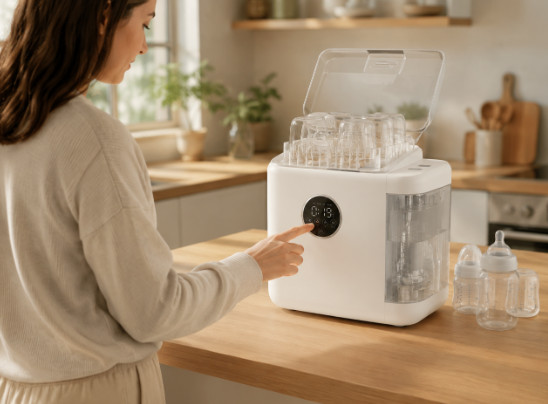
Hand washing, sterilizing, and drying as separate steps
Many families still handle bottle care by washing at the sink, steaming in a standalone unit, and drying on a rack. That sequence can work. The question is how much extra handling it adds once bottles, pump parts, and night feeds pile up.
Where separate steps add extra handling
The separate routine looks manageable on paper. Wash each part, steam it, unload hot pieces, and spread them on a rack. The hard part is returning to the counter again and again while keeping track of what is washed, steamed, still damp, or ready to use. Once pump flanges, valves, pacifiers, caps, and night bottles join a few bottles, the sink, sterilizer, and drying rack can take over a whole corner of the kitchen.
The CDC outlines infant feeding item care as washing, sanitizing when needed, air drying, and safe storage. That sequence is sound. It still assumes someone can carry each step through without leaving gaps. Those gaps are what the routine leaves unfinished.
| Bottle care setup | What parents do by hand | Counter space used | Where the routine usually slips |
| Sink plus drying rack | Wash and arrange every part | Sink area plus open rack | Small pieces stay damp or get moved again |
| Sink plus standalone sterilizer | Wash, load, unload, and dry elsewhere | Sink area, sterilizer, and rack | Sterilized parts sit wet or exposed |
| Bottle washer flow | Load once and remove when dry | One appliance footprint | Requires machine space and cycle planning |
For a family using a few bottles, the first setup may be enough. Once formula feeding, pumped milk, or several night bottles enter the picture, repeated handling starts to feel like scheduling instead of cleaning.
Why washing must happen before sterilizing
Sterilizing gets the attention, but washing comes first. Steam treats surfaces; it will not lift dried milk film, formula residue, or buildup inside a nipple rim, so a bottle can look sanitized and still hold residue. A standalone sanitizer and dryer is not the same purchase as a washer. The first fits parents who scrub well and only need drying. The second matters when the sink runs the whole day.
Residue hides fastest in pump valves, collars, pacifiers, and curved bottle bottoms because those are the pieces people rush through. When those parts pile up, keeping wash, sterilize, and dry in one place starts to matter more than adding another steamer beside the sink.
RELATED: How to create a safe space in your community
The all-in-one path moves from wash to storage
n all-in-one bottle sterilizer and dryer runs through washing, steaming, drying, and storage in order. Parents should not have to shake water out of collars at midnight, and clean parts should be able to wait in the chamber instead of moving to an open rack.
Unlike a separate steamer, the all-in-one route keeps the work inside one chamber from dirty load to dry storage, so a parent is not left managing transfers between steps.
The eufy S1 and S1 Pro bottle washer models in the eufy baby follow that path with 3D HydroBlast™ washing, 212°F steam, drying, and storage for up to 72 hours. For families comparing systems, the full sequence matters more than any one feature on the spec sheet. The machine washes in the same unit before steaming, then dries the load instead of sending wet parts back to the rack.
The tradeoff is that an all-in-one machine asks for more upfront budget, a fixed counter spot, and regular care. Parents still have to load parts correctly, use the right detergent, empty and refill water as required, and keep washable parts clean. If the daily bottle load is small, those extra responsibilities may not save enough time to justify the appliance.
When each bottle care setup makes sense
Daily load should decide the setup. A machine that looks helpful for two bottles may not solve the problem if half the pump kit still waits beside the sink. At the same time, a full all-in-one bottle washer can be more machine than a light feeding routine needs.
| Daily routine | Better fit | Why |
| A few bottles and quick sink access | Hand washing plus drying rack | Lower cost and less counter commitment |
| Bottles plus occasional sanitizing | Sink plus standalone sanitizer | Useful when washing is already under control |
| Several bottles before morning | All-in-one bottle washer | Reduces repeated loading, unloading, and drying checks |
| Pump parts used alongside bottles | Larger all-in-one washer | Keeps small valves, flanges, and bottles in one cycle |
| Tiny kitchen or tight budget | Separate steps first | Avoids buying a machine before the workload proves it is needed |
Night feeds can pile several bottles before morning, pump sessions can leave flanges and valves waiting, and damp gear becomes a problem when packing to leave home. That is when capacity matters more than automation alone.
The eufy Baby Bottle Washer S1 Pro fits heavier daily loads better than light ones. One load holds up to 10 bottles, or 4 bottles and a full pump kit, so a morning bottle pile or a post-pump session does not have to wait beside the sink while one or two items run. At that volume, nipple threads and small pump parts need attention before milk film dries, which is why running washing, sterilizing, drying, and storage in the same cycle matters more than squeezing in a single bottle at a time.
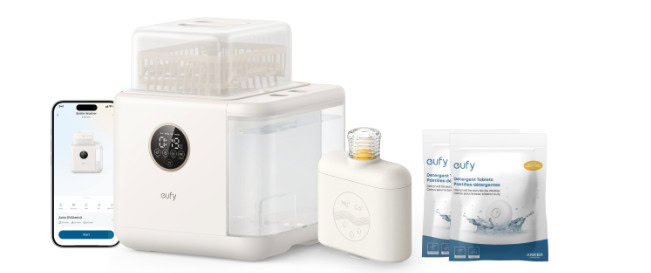
Storage matters after the cycle ends
A separate sterilizer often creates a timing problem. The cycle ends, but the parts are still wet, hot, or sitting in a chamber that was never meant to be long-term storage. If nobody unloads it soon, parents start wondering whether those pieces are still ready to use.
Closed storage changes that part of the routine. When drying and storage happen in the same chamber, parents do not have to move everything to an open rack just to finish the job. For households using an eufy breast pump routine alongside bottles, that extra holding space helps because pump parts accumulate quickly after a few sessions.
Pick the setup that fits the bottles, pump parts, and counter space you actually have. The best bottle sterilizer with dryer for your home depends on daily load more than the feature list on the box. A small setup works when bottles are few, and someone can wash them right away. A larger rotation needs somewhere for clean parts to wait.
Conclusion
Separate washing, sterilizing, drying, and storage can work well for a light routine, especially when there are only a few bottles, enough counter space for a rack, and someone can wash parts soon after feeding. A bottle sanitizer and dryer combo makes more sense when bottles, pump pieces, and the next feed keep overlapping. Choose separate steps when the workload is small or the budget is tight. Choose an all-in-one washer path when repeated transfers, damp parts, and storage space are already making bottle care harder to keep up with.

Ellen is a busy mom of a 29-year-old son and 33-year-old daughter. She owns nine blogs and is addicted to social media. She believes that it doesn’t have to be difficult to lead a healthy life. She shares simple healthy living tips to show busy women how to lead fulfilling lives. If you’d like to work together, email info@confessionsofanover-workedmom.com to chat.
