
Last Updated on March 19, 2026 by Ellen Christian
How do you usually plan your year? Do you flip through months one at a time, hoping nothing important slips through the cracks? Or do you ever wish you could step back and see the entire year unfolding in front of you, birthdays, vacations, school schedules, deadlines, everything?
Posts may be sponsored. This post contains affiliate links, which means I will make a commission at no extra cost to you should you click through and make a purchase. As an Amazon Associate I earn from qualifying purchases.
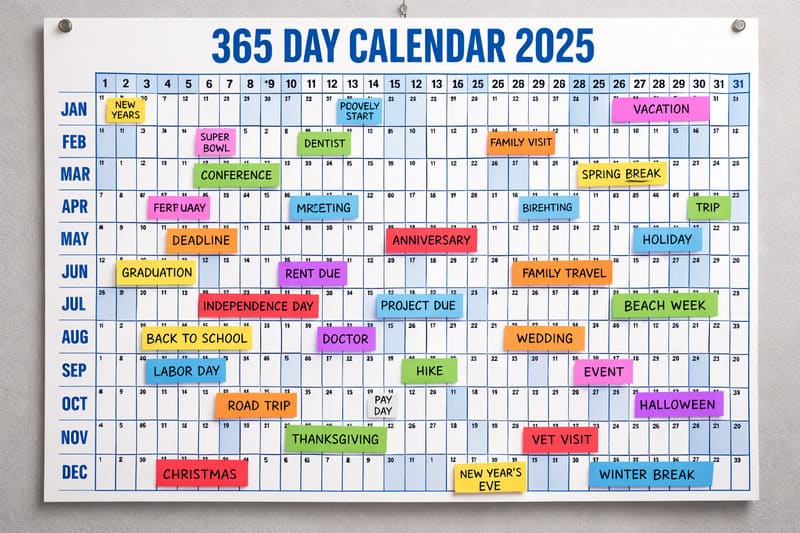
Most people rely on traditional monthly calendars without thinking much about the format. They’ve been around for decades, and for basic planning, they work well enough. But when schedules start filling up, work projects overlapping with family commitments, travel plans booked months ahead, and school events appearing unexpectedly, those small monthly boxes can begin to feel restrictive.
Calendars themselves have changed many times throughout history as societies searched for better ways to track time and organize important events. Different cultures created systems to follow seasons, agricultural cycles, and religious observances. Even today, the structure of modern calendars reflects centuries of adjustments and cultural influences.
Yet the question remains, does viewing life month by month really show the full picture?
Why Seeing the Full Year Changes the Way You Plan
Traditional calendars naturally push people into short-term thinking. You look at the current month, maybe peek at the next one, and make decisions based on what’s immediately visible.
The problem is that real life rarely follows neat monthly boundaries. School terms stretch across seasons, vacations are planned months ahead, and busy work periods often build gradually.
That’s where a 365 day calendar starts to feel different. Instead of flipping between pages, the entire timeline of the year sits in front of you. You can quickly spot where things cluster together and where there’s breathing room. Planning becomes less about reacting to what’s next week and more about understanding how your whole year flows.
This broader perspective is exactly what inspired The Big Ass Calendar, which focuses on making the full year visible so families and busy professionals can map their schedules more thoughtfully without constantly jumping between months.
Here are some clear ways a 365-day calendar works differently from the traditional calendars most of us are used to.

1. Shows the Entire Year in One Continuous View
Traditional calendars break the year into separate months. Twelve pages and twelve grids. It works, sure, but it also forces you to think in short bursts.
A 365-day calendar flips that idea. Instead of treating time as disconnected monthly chunks, the entire year appears as one continuous timeline. When everything is visible at once, patterns start to emerge.
Vacation weeks stand out. Busy seasons become obvious. School terms, holidays, and project timelines suddenly connect in ways you wouldn’t normally notice. It’s the difference between looking at puzzle pieces versus seeing the entire picture. And once you get used to it, going back to a month-by-month layout can feel oddly limiting.
2. Long-Term Planning Becomes Easier
With a full-year layout, planning often becomes more thoughtful because you can see how events line up months ahead. Instead of scheduling something simply because the current month looks open, you can check how it fits with the rest of the year.
For example, people often notice things like:
*Multiple events are stacking up in the same season
*Travel plans overlapping with work deadlines
*Busy weeks form around holidays or school activities
Seeing those patterns early makes it easier to space commitments more evenly and gives you the peace of mind to work effectively.
3. Better Visibility for Shared Schedules
In many households, calendars aren’t just personal tools; they’re shared resources. Parents track school events, kids add activities, and work commitments often overlap with family plans.
Traditional calendars can become crowded quickly, especially when several people are using the same monthly grid.
When the entire year is visible, everyone can see how schedules interact. Instead of squeezing notes into small boxes, events can be spread across a larger timeline. This makes it easier for families to coordinate plans and stay aware of what’s coming next.
Even simple things, like noticing when weekends are already booked or when holidays fall during busy weeks, become much easier when the whole year is visible at once.
4. Easier to Notice Busy and Quiet Times
When you look at a traditional calendar, you usually see only one month at a time. Because of that, it can be difficult to notice patterns in your schedule. You might feel busy during certain weeks, but it’s not always clear how those busy periods are spread throughout the year.
When everything is visible together, you can quickly see when your schedule is packed and when things are more relaxed.
For example, you might notice:
*Several family events are happening in the same season
*work deadlines piling up during certain months
*quieter weeks that could be perfect for travel or personal time
Seeing these trends helps you plan ahead and avoid overloading the same parts of the year. Instead of discovering conflicts later, you can balance your schedule more easily from the start.

5. Encourages a Bigger Picture Mindset
Traditional calendars naturally guide people to think about time one month at a time. You focus on the current page, fill in a few important dates, and worry about the next month when it arrives. While that approach works for simple planning, it often keeps attention fixed on the short term.
Seeing the entire year at once creates a different mindset. When every day is visible, it becomes easier to think about how plans fit into the larger flow of the year. Vacations, family events, work projects, and personal goals start to feel connected rather than scattered across separate pages.
That broader perspective often leads to more thoughtful scheduling. Instead of reacting to what’s coming next week, people begin to consider how their commitments spread across the entire year and where they might want to leave space for rest or flexibility.
Quick Comparison
Sometimes the easiest way to understand the difference is to look at both formats side by side. When you compare how each calendar presents time, the contrast becomes much clearer.
| Feature | Traditional Calendar | 365-Day Calendar |
| View of time | Month-by-month pages | The entire year at once |
| Planning style | Short-term focus | Long-term overview |
| Pattern recognition | Hard to notice trends | Patterns appear quickly |
| Visual clarity | Can become crowded | Events spread across a wider timeline |
| Best for | Basic scheduling | Busy or long-term planning |
The real difference comes down to perspective, whether you plan life one month at a time or prefer to see the whole year unfolding at once.
Conclusion
The way a calendar displays time can shape how we plan our days, weeks, and months. Traditional calendars focus on one month at a time, which works well for basic scheduling but can limit long-term visibility.
A full-year view offers a broader perspective, making it easier to understand how events and commitments spread across the year. When people can see the bigger picture, planning often feels clearer, more balanced, and less rushed.

Ellen is a busy mom of a 29-year-old son and 33-year-old daughter. She owns nine blogs and is addicted to social media. She believes that it doesn’t have to be difficult to lead a healthy life. She shares simple healthy living tips to show busy women how to lead fulfilling lives. If you’d like to work together, email info@confessionsofanover-workedmom.com to chat.
