
Last Updated on September 15, 2026 by Ellen Christian
Books provide warmth, personality, and texture to any home. However, how your book collection is arranged will determine the entire layout and appearance of your interior.
Posts may be sponsored. This post contains affiliate links, which means I will make a commission at no extra cost to you should you click through and make a purchase. As an Amazon Associate I earn from qualifying purchases.
The selection process for a solid wooden bookcase is an attempt to balance the technical efficiency of the structure with the design goals. While planning your storage, you will encounter the dilemma between built-in and freestanding solutions that have a number of advantages in terms of aesthetics, efficiency, and functionality.
Understanding how each variant interacts with the dimensions of the room ensures that your selection will serve you for years.
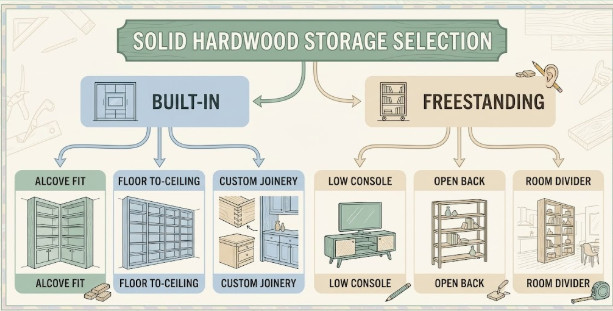
Built-in Timber Bookcases: Architectural Integration and Seamless Storage
The built-in version of a bookcase creates an architectural presence that ordinary furniture cannot offer. Having the ability to fill the entire wall or perfectly fit into alcoves, built-in construction transforms an unused space into a fully integrated library.
- Removes Space Wastage: Custom-built cabinetry snuggly fits against plasterboard and baseboards, leaving no gaps to gather dust.
- Optimizes Height of Ceilings: Floor-to-ceiling design creates an illusion of more space in low rooms.
- Creates Architectural Unity: Together with the rest of joining shelves, this results in giving a sense of being a natural part of the house’s construction and improving its financial condition.
Built-in structure working in tight spaces provides an edge over freestanding furniture in places like over the chimney or under sloping ceilings. This structure allows building different sections, including hidden low cabinets and drawers, and provides assistance in storing valuable pieces.
Freestanding Timber Bookcases: Versatility and Timeless Design
Built-in units may be useful for creating a seamless part of the interior but freestanding units give more freedom in terms of arrangements. Additionally, wooden bookcase can become beautiful decorative pieces of furniture by changing their place from being in a corner to the centre of the room.
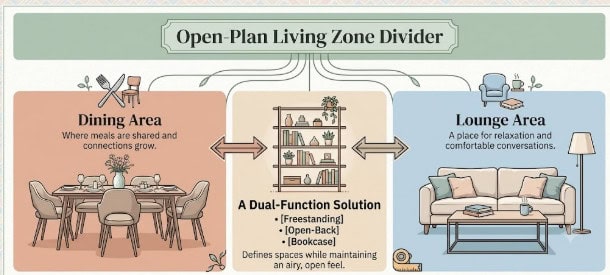
Moreover, freestanding pieces are great temporary storage solutions for people who like making changes in their homes or often move. Freestanding structural edges offer glimpses of natural wood grains from different angles when they have sides that are open and tapered edges. Modern double-sided furniture designs are also great for room dividers, making it possible to separate spaces without blocking the entry of light.
Comparing Structural Durability, Load Capacity, and Custom Options
In order to decide between built-in storage and freestanding furniture, one has to look at important criteria of construction, storage fittings, and spatial development.
| Feature | Built-in Timber Bookcase | Freestanding Timber Bookcase |
| Mobility | Fixed permanently to wall and floor structure | Portable, repositionable, and easy to relocate |
| Load Capacity | High; anchored frame offers structural stability | High; dependent on solid shelf thickness and spans |
| Room Impact | Architectural statement piece; seamless finish | Versatile furniture focal point or room divider |
| Fitting | Requires precise on-site spatial measurements | Fits standard or custom room footprints directly |
| Flexibility | Tailored to a specific room layout permanently | Adapts seamlessly to changing interiors and homes |
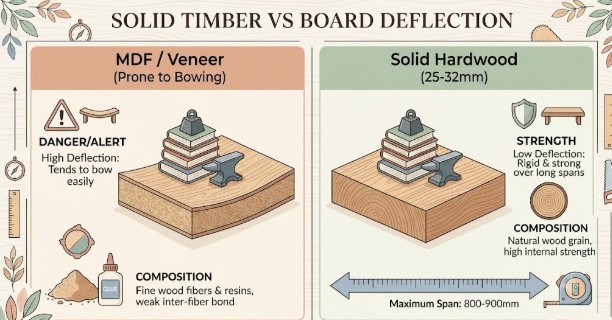
In terms of durability, wood has superior qualities as compared to particle board and medium-density fiberboard. Shelves need to be at least 25 to 32 mm thick to avoid warping with time. Moreover, ensuring that the shelves’ length is between 800 and 900 mm will safeguard against sagging as well, due to the hardwood grains being able to hold firm.
Making Your Decision: Room Size, Budget, and Long-Term Goals
To make a decision on the best arrangement for your room, compare your short-term needs with your requirements for a long-term storage system.
Opt for a Built-in Unit if:
- You are a homeowner and wish to increase the attractiveness of your property in the long term.
- You have built-in recesses, chimney walls, or very high walls to make use of.
- You need a system with a library spanning the entire wall and built-in cabinets at the bottom.
Opt for a Freestanding Unit if:
- You need to move items easily and intend to keep the expenses incurred on the furniture for your next home.
- You want to change the arrangements of rooms, works of art, and furniture periodically.
- You want a piece of furniture serving several purposes at the same time, for instance, a low shelf unit or a room divider.
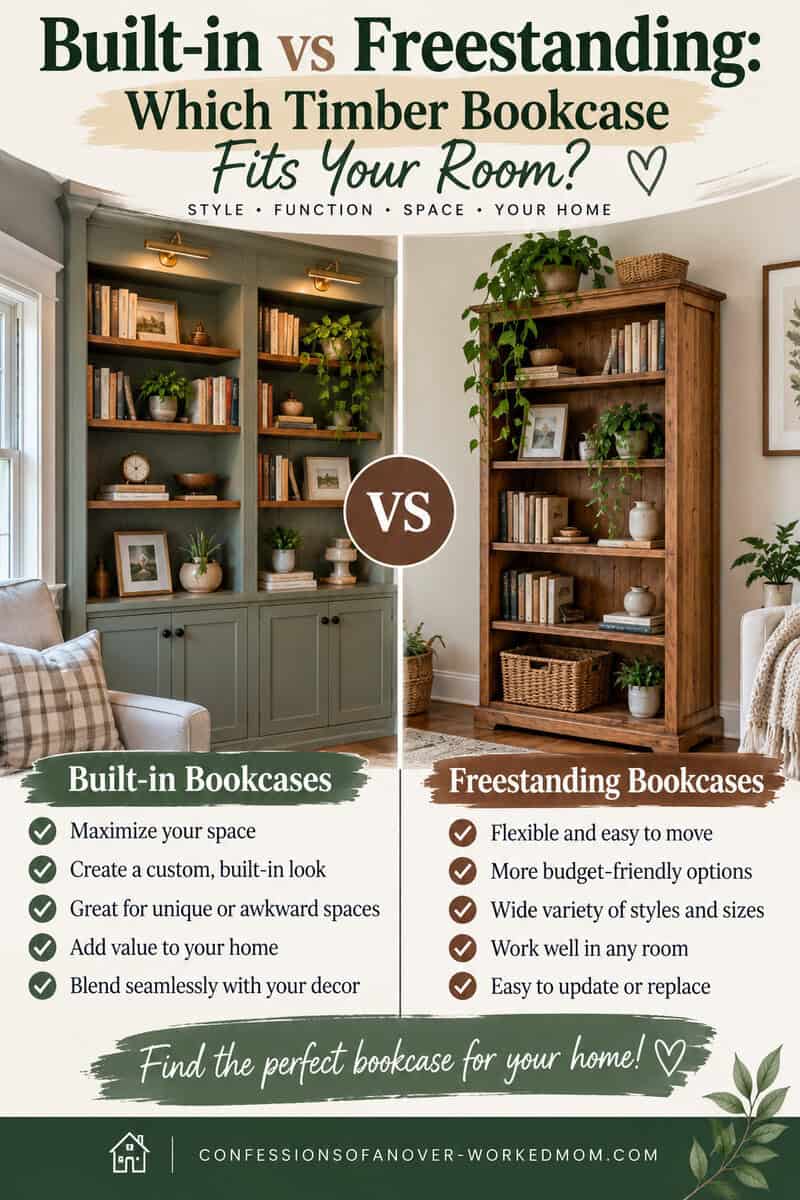
Finding the Perfect Match for Your Living Space
Whether you decide to make use of a built-in version or go for a free-standing option, selecting natural solid wood makes all the difference. Some natural wood species, such as American Oak, Tasmanian Blackwood, or Victorian Ash, give you warmth that can’t be achieved with artificial materials. You will achieve a perfect effect by matching the style of your furniture with the needs of your room.

Ellen is a busy mom of a 29-year-old son and 33-year-old daughter. She owns nine blogs and is addicted to social media. She believes that it doesn’t have to be difficult to lead a healthy life. She shares simple healthy living tips to show busy women how to lead fulfilling lives. If you’d like to work together, email info@confessionsofanover-workedmom.com to chat.
