Last Updated on May 28, 2026 by Ellen Christian
The wellness conversation has become remarkably open in recent years. We freely discuss hot flashes, shifting moods, libido changes, and even bladder control with our friends over coffee.
Posts may be sponsored. This post contains affiliate links, which means I will make a commission at no extra cost to you should you click through and make a purchase. As an Amazon Associate I earn from qualifying purchases.
Yet, somehow, hair thinning remains the glaring exception. It is the change most women still process largely alone, whispered to a trusted hairdresser or researched frantically on Google at midnight.
Navigating a midlife hair thinning honest conversation often feels isolating, but you do not have to settle for outdated advice.
As hormone levels shift, scalp hair becomes noticeably thinner for many women.
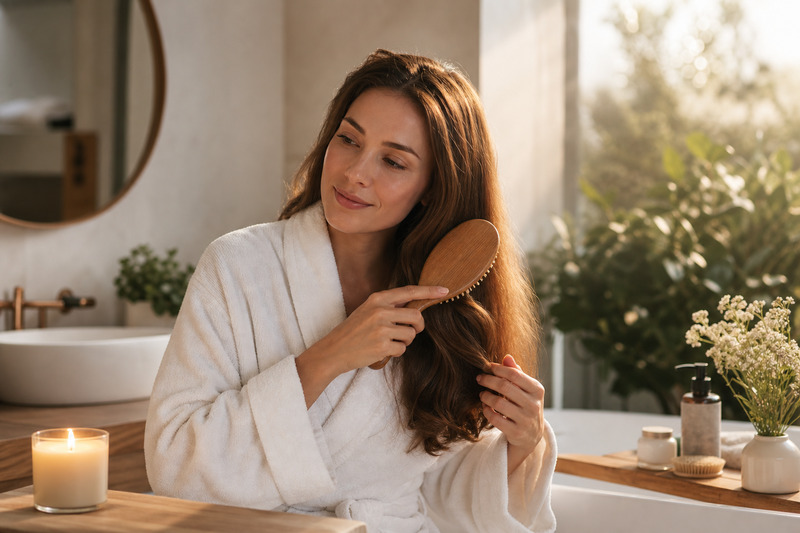
Understanding what no one tells you about hair loss helps you bypass empty product promises and focus on what actually works.
We are handed two deeply inadequate cultural scripts when this happens. One script tells us to accept it gracefully, while the other pushes miracle serums designed to sell rather than solve.
By dismantling the outdated stigma around alternative hair and replacing it with accurate information, better options emerge.
For instance, exploring hair toppers for thinning hair from Daniel Alain provides a completely undetectable solution, bypassing years of frustration.
1. It’s Not Your Shampoo – So You Can Stop Buying a New One Every Month
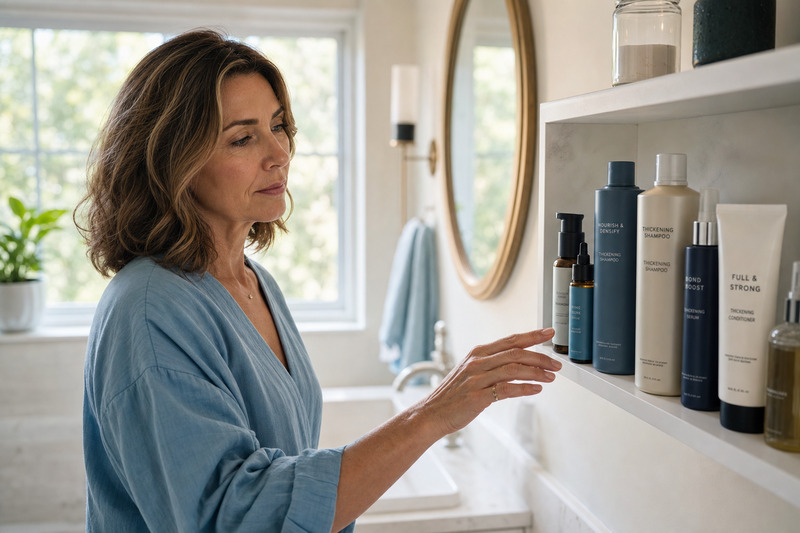
When you first notice a widening part or extra shedding in the shower, the immediate reflex is to switch products.
However, the reality of hormonal hair loss women face during perimenopause happens far beneath the scalp.
As estrogen and progesterone levels decline, your hair follicles can become highly sensitive to androgens. This leads to a complex biological process known as follicle miniaturization.
This biological shift explains why endless cycling through thickening shampoos and scalp serums leaves so many thinning hair women 40s and beyond feeling deeply frustrated.
A standard bottle simply cannot alter a systemic hormonal root cause. For example, after 12 months without a period, a woman officially passes menopause, cementing these systemic changes.
Those topical products were never medically equipped to solve such deep biological shifts.
Understanding this biology should feel incredibly liberating rather than defeating. Failing to find the right shampoo is not your fault at all.
Once you redirect your attention away from topical solutions that cannot work, you permit yourself to focus your resources on interventions that actually do.
| Key Insight: The haircare aisle was never medically equipped to solve hormonal hair loss. Failing to find the right bottle is not your failure – it is a biological impossibility. |
2. Your Feelings Are Not an Overreaction, and They Are Not Vanity
There is a profound, often unspoken gap between internal experience and external perception when it comes to hair volume.
You might look entirely fine to your colleagues while simultaneously feeling quietly unmade every time you look in the mirror.
Because of this disconnect, the hair loss’s emotional impact on women is frequently brushed aside or entirely minimized by loved ones.
Our hair remains inextricably tied to our personal identity and self-expression. It is part of the story we have always told ourselves about who we are and how we move through the world.
Grieving the loss of that familiar reflection is not disproportionate, and it is certainly not mere vanity.
In fact, sudden emotional weight is often added when medical intervention accelerates menopause, completely changing a familiar appearance.
Having a midlife hair thinning honest moment with yourself is the first necessary step of self-care.
You need specific language for this grief to successfully process it over time. Saying that you feel like you are losing a piece of yourself is a completely valid reality.
The kindest thing you can do right now is to stop minimizing your own lived experience before anyone else does.
3. The “Just Accept It” Advice Usually Comes from People Who Haven’t Walked This Path
Most women try a long, exhausting sequence of insufficient coping mechanisms before they finally demand better.
The landscape is intimately familiar to anyone walking this path.
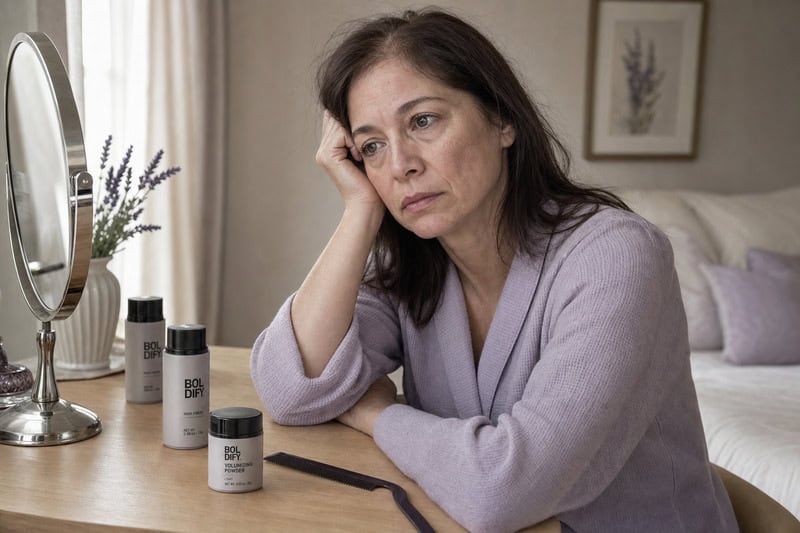
We constantly rearrange our parts to hide the scalp, use volumizing powders that itch aggressively, and endure stressful three-way mirror checks before every Zoom call.
These temporary hair fibers often look fine indoors, but become terribly obvious the second natural sunlight hits them.
Part of what no one tells you about hair loss is the cumulative real cost of these stopgap measures.
It is not just the financial drain of purchasing products that overpromise and severely underdeliver.
It is the ongoing toll on your valuable time, your daily emotional energy, and your overall hope.
When well-meaning friends or articles suggest you should simply embrace the change, the advice usually comes from people completely disconnected from this reality.
You have absolute, unwavering permission to want a real, tangible solution. You do not have to settle for a better coping strategy or a more graceful way to hide.
| Pro Tip: You have absolute permission to want more than a better coping strategy. Stop rearranging your part, and start seeking an answer that actually addresses the problem. |
4. Hair Toppers Have Changed Completely, and Your Old Mental Image Is Out of Date
If the idea of wearing alternative hair makes you hesitate, your mental image likely belongs to an era that no longer exists.
Most women picture stiff, heavy, obviously artificial pieces that look like costumes rather than integrated styles.
However, the category has undergone a complete transformation, making modern luxury options virtually undetectable to the naked eye.
Today’s construction relies on meticulous advancements that prioritize true realism.
These modern pieces utilize hand-tied bases that allow the hair to move and fall naturally while perfectly mimicking your own skin.
Highly customized color matching ensures an incredibly seamless blend with your biological hair.
Wearers consistently report that even their closest friends and longtime hairdressers cannot tell they are wearing anything extra.
This stunning level of artistry represents the true standard of a hair topper’s natural look today.
The stigma many of us still harbor was never about the beautifully refined human hair options a woman would actually choose now.
That outdated stigma was built entirely around a ghost from decades ago, and letting go of it finally opens the door to genuine restoration.
5. Addressing Thinning Hair Is a Legitimate Act of Self-Care
There is a false, pervasive equation in modern wellness culture that needs to be permanently dismantled.
This mindset suggests that true self-acceptance requires compulsory passivity about every physical change our bodies go through.
Choosing to address your personal hair identity is actually about honoring your emotional well-being.
It is an act of careful stewardship, not an admission that your appearance solely defines your worth.
Consider the other midlife self-care behaviors we fully accept and publicly celebrate without hesitation.
Tending to our skin barrier, fiercely protecting our sleep schedules, moving our bodies for longevity, and nourishing our mental health are all recognized as worthy investments.
Restoring your hair belongs in that same category of personal wellness.
Engaging in a sincere dialogue with yourself means recognizing that you are allowed to care deeply about this.
You are allowed to invest in a premium solution that makes you feel comfortable and confident.
More importantly, you are allowed to want to look in the mirror and instantly recognize the woman looking back at you.
| Quote: Choosing to address your hair loss is not an admission that appearance defines your worth. It is an act of careful stewardship over your emotional well-being. |

The Bottom Line
The most useful thing about finally having an honest conversation around midlife hair thinning is not just acquiring better information.
It is the quiet, steady reminder that you are part of a massive shared experience.
Nothing about you is broken, and no woman is obligated to pretend she hasn’t noticed the distinct changes happening to her body.
When we pull this topic out of the shadows, we make real room for actual, lasting relief.
Discarding the heavy stigma of outdated solutions and miracle-cure marketing allows you to focus on what truly works.
You deserve to navigate this transition with absolute clarity, accurate knowledge, and the comforting reassurance that finding your way back to yourself is always a worthwhile pursuit.
| Author Profile: Daniel Alain is the leading manufacturer and supplier of premium European human hair wigs and toppers for women experiencing hair loss. |

Ellen is a busy mom of a 29-year-old son and 33-year-old daughter. She owns nine blogs and is addicted to social media. She believes that it doesn’t have to be difficult to lead a healthy life. She shares simple healthy living tips to show busy women how to lead fulfilling lives. If you’d like to work together, email info@confessionsofanover-workedmom.com to chat.
