Last Updated on August 29, 2026 by Ellen Christian
Have you ever tried an Omelette Roulée, or French rolled omelette, like the one Julia Child made famous? Unlike a traditional diner-style omelet, this classic French omelette is cooked quickly and rolled rather than folded around a generous filling.
Posts may be sponsored. This post contains affiliate links, which means I will make a commission at no extra cost to you should you click through and make a purchase. As an Amazon Associate I earn from qualifying purchases.
The technique may look intimidating at first, but once you get the pan movement right, this is actually a very simple omelette to make. It’s tender, buttery, and ready in just a few minutes.
What is an omelette roulee?
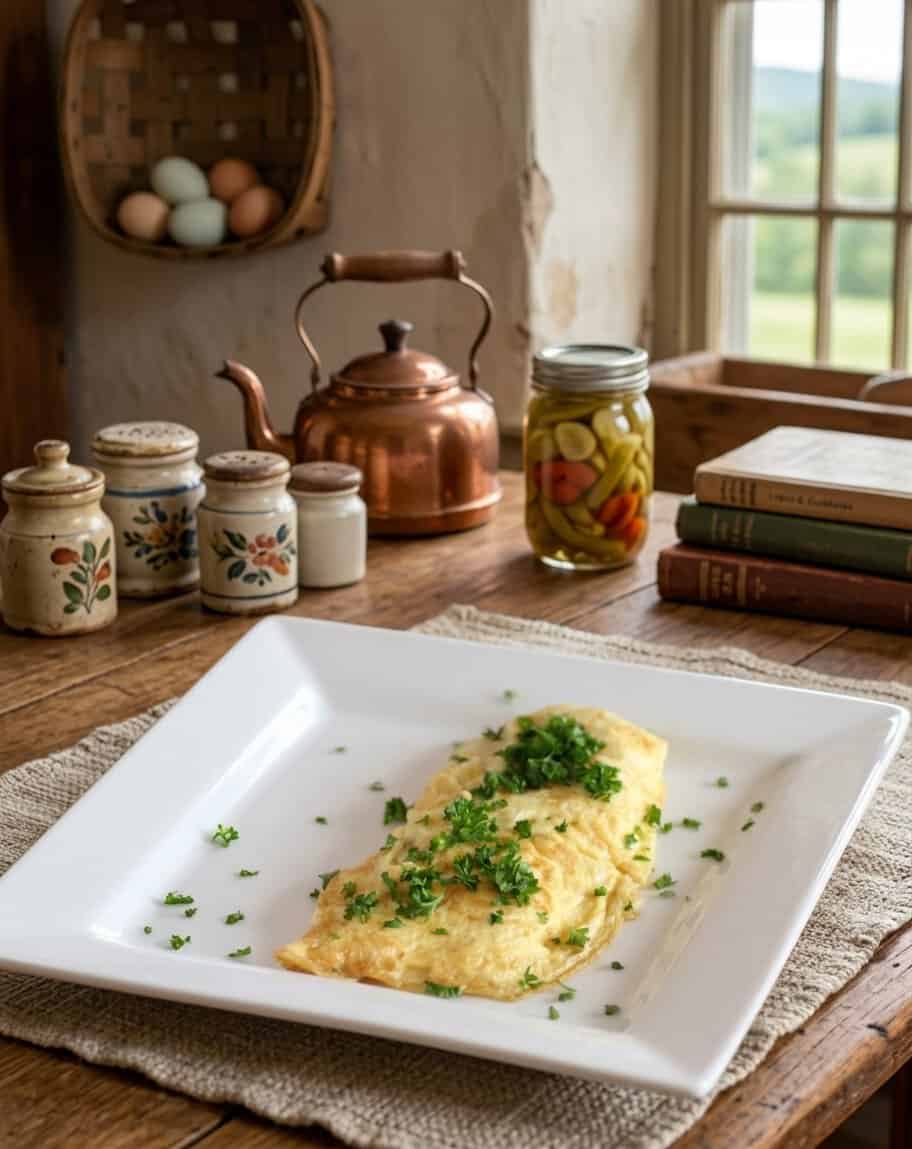
Omelette roulée means “rolled omelette.” It is a classic French-style omelette that is cooked quickly and rolled onto the plate rather than folded in half like the omelets you might order at a diner.
One of the things that makes Julia Child’s omelette technique so interesting is that the eggs aren’t meant to become browned or firm. The omelette should remain tender while you use the movement of the pan to help the eggs roll over themselves.
This is also why having the right pan and practicing the technique can make such a difference.

French Omelette vs. Traditional Omelet
A traditional American or diner-style omelet is usually cooked until the eggs are nearly set before fillings such as cheese, vegetables, meat, or herbs are added. The omelet is then folded over with a spatula.
A French omelette is different.
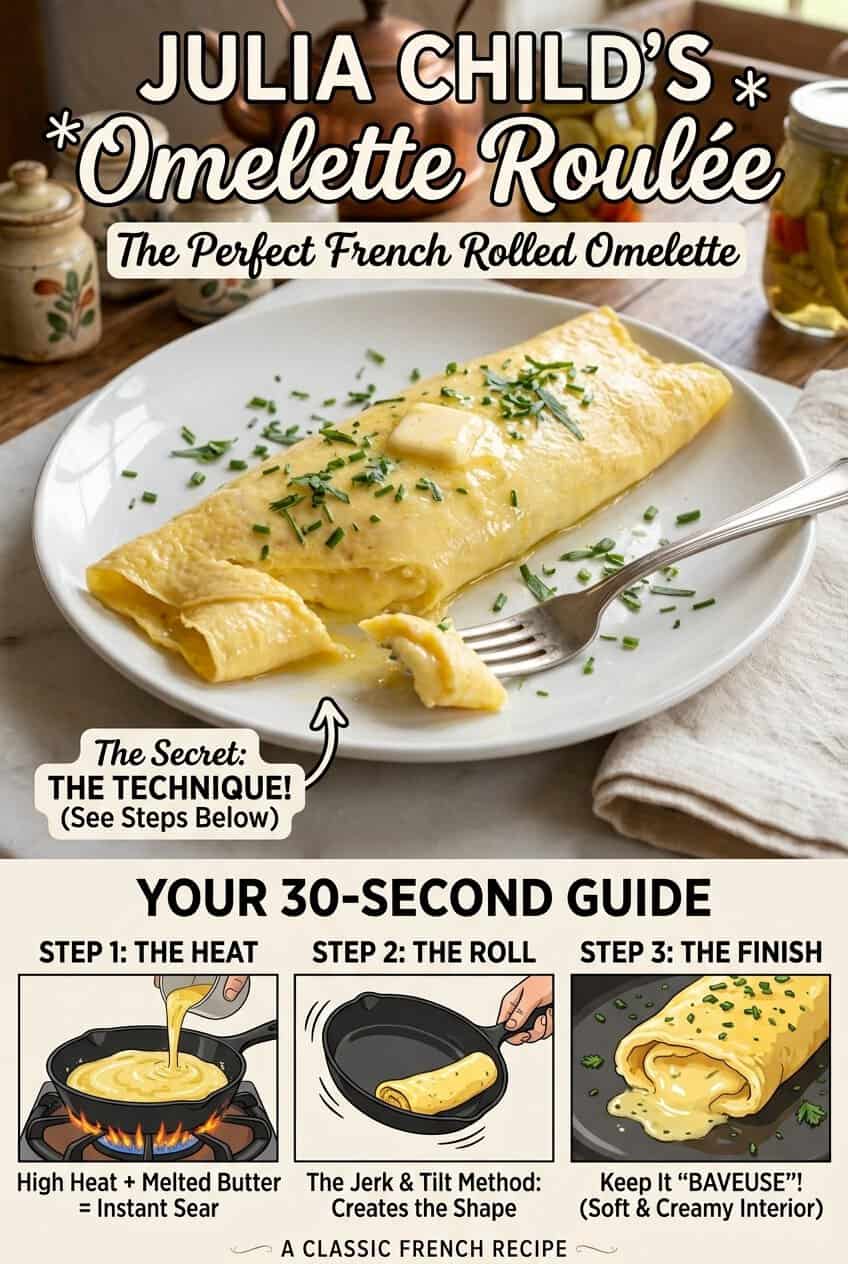
The eggs are cooked quickly, and the omelette is rolled while it is still tender. Rather than relying on a spatula to fold the eggs, you use the movement of the pan to help create the roll.
If you’re used to making diner-style omelets, the technique may take a little practice. But that’s part of the fun of making this Julia Child recipe.
How to Make an Omelette Roulée
The ingredients for this recipe are very simple. You don’t need a long list of fillings or specialty ingredients to make a delicious French omelette.
The most important part is learning how to work quickly with the pan.
1. Prepare the eggs
Beat the eggs with the water and seasonings according to the recipe. Have everything ready before you heat the pan because the cooking process happens quickly.
2. Heat the omelet pan
Heat your pan and add the butter if you’re using it. You want the pan ready before the eggs go in.
3. Add the eggs
Pour the egg mixture into the hot pan. Begin moving the pan as the eggs start to cook.
4. Keep the eggs moving
This is one of the most important parts of Julia Child’s technique. Rather than simply letting the eggs sit in the pan, use a shaking motion to help the omelette form.
5. Roll the omelette
Tilt and move the pan so the omelette rolls over itself and toward one side of the pan. You may need to help it along with a spatula, especially while you’re learning the technique.
6. Serve immediately
A French rolled omelette is best served right away while it is still warm and tender.
The Trick to Rolling an Omelette
If you’ve never made a rolled omelette before, don’t be discouraged if the first one isn’t perfect.
The pan movement is the part that takes practice.
You want to shake the pan rather than simply pushing the eggs around. As the eggs begin to set, that movement encourages them to fold and roll over themselves.
If you’re adding vegetables, cheese, meat, or other fillings, the omelette may require a little more help from your spatula because the additional ingredients make it harder for the eggs to roll on their own.
And remember: a slightly imperfect omelette is still a delicious omelette!
Tips for Making a French Rolled Omelette
- Have all of your ingredients and serving plate ready before you start cooking.
- Use a good nonstick omelet pan or another pan that allows the eggs to move easily.
- Don’t overcook the eggs.
- Keep the pan moving as the eggs begin to set.
- Work quickly because a French omelette cooks in only a few minutes.
- Don’t worry if your first attempt isn’t perfectly rolled. The technique gets easier with practice.
- Serve the omelette immediately for the best texture.
Why Is My Omelette Breaking?
If your omelette breaks when you try to roll it, it may simply need more practice. The eggs can also break apart if they have been cooked too long or if you’re trying to force the roll with a spatula.
Try using the movement of the pan to do most of the work.
The goal isn’t to make a perfectly shaped omelette on your first attempt. Once you become comfortable with the motion, the process becomes much easier.
What Do I Need to Make an Omelette Roulée?
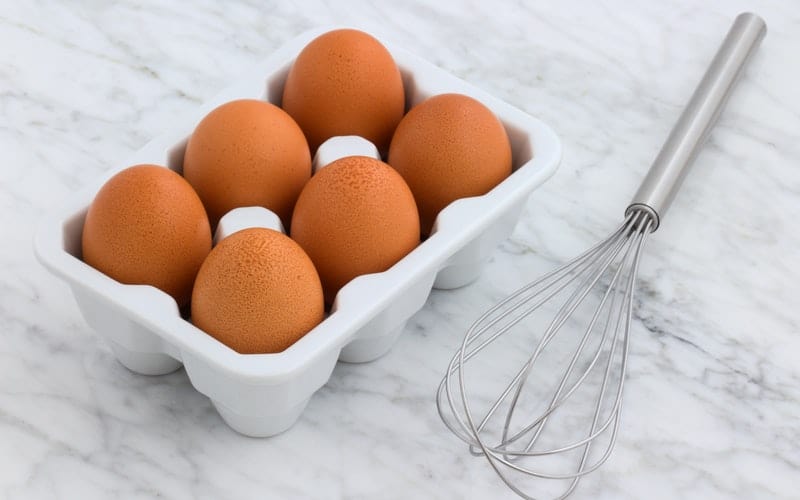
This is one of the easiest omelette recipes when it comes to ingredients. You’ll need:
- Eggs
- Water
- Salt
- Pepper
- Butter, if desired
The pan is probably the most important piece of equipment. You will need a good omelet pan. Making an omelet in just any old pan really doesn’t work well. At least, it doesn’t work well for me.
What Kind of Pan Is Best for an Omelette?
I recommend using a good omelet pan with a nonstick surface. The eggs need to move easily around the pan, and a pan with gently sloping sides makes the rolling motion easier.
I don’t find that making this type of omelette in just any old skillet works as well. Having a pan that is the right size and easy to maneuver makes the technique much less frustrating.
If you’re making French omelets regularly, investing in a dedicated omelet pan can be worthwhile.
Can You Add Fillings to an Omelette Roulée?
Yes, you can customize a rolled omelette, although the classic French preparation is often enjoyed fairly simply.
You can experiment with:
- Fresh herbs
- Sautéed vegetables
- Cheese
- Cooked bacon or sausage
- Mushrooms
- Leftover cooked vegetables
- Lobster or other seafood for a more decadent omelette
Keep in mind that the more filling you add, the more difficult it may be to roll the omelette neatly.
If you’re new to the technique, I’d recommend making the omelette plain the first time. Once you’ve mastered the rolling motion, experiment with your favorite additions.
What Should I Serve With an Omelette Roulée?
This rolled omelette makes a wonderful breakfast, brunch, or light lunch.
For breakfast, serve it with bacon, sausage, fresh fruit, or toast.
For lunch, a simple green salad makes an easy accompaniment.
You can also serve it with roasted potatoes or seasonal vegetables for a more substantial meal.
This gluten-free bread recipe is one of my daughter’s favorite types of bread to toast. She loves spreading it with strawberry butter.
Original omelette roulee recipe excerpted from Mastering the Art of French Cooking by Julia Child. Copyright © 1961 by Alfred A. Knopf. Reprinted with permission from the publisher Alfred A. Knopf, a division of Random House, Inc.
Frequently Asked Questions
What does omelette roulée mean?
Omelette roulée is French for a rolled omelette. Instead of folding the omelette in half, the eggs are rolled as they finish cooking.
Is an omelette roulée the same as a French omelette?
An omelette roulée is a style of French omelette in which the cooked eggs are rolled rather than folded. The technique produces a tender omelette with a distinctive rolled shape.
Can I add cheese to a rolled omelette?
Yes. Cheese, herbs, vegetables, and cooked meats can all be added. However, keeping the filling light makes the omelette easier to roll.
Why does my omelette stick to the pan?
A good nonstick pan and properly heated cooking surface can make a big difference. Make sure the pan is prepared before adding the eggs, and avoid letting the eggs overcook and stick.
How do I keep my omelette from breaking?
Avoid overcooking the eggs and don’t try to force the omelette into a roll. Use the movement of the pan to help the eggs roll over themselves, and use a spatula gently when necessary.
My Julia Child Connection
We eat a lot of eggs at our house because we have our own ducks and chickens. During the spring, we often have more eggs than we know what to do with, so this recipe was especially well timed when I originally shared it.
I also have a special connection to Julia Child’s recipes because I grew up watching her on PBS with my mom. My mom was a huge Julia Child fan, so participating in the JC100 celebration was something I was particularly excited about.
This recipe was originally published in 2012 as part of that celebration. It’s fun to look back at the original photographs and remember how excited I was to be making one of Julia Child’s recipes.
I hope you enjoy trying this classic rolled omelette as much as I did.
More Egg Recipes
If you enjoy making eggs for breakfast or brunch, be sure to check out some of my other egg and breakfast recipes.
- How to make scrambled eggs
- IHOP Bacon Temptation Omelet
- How to make a frittata
- Keto Egg Casserole Recipe
- Bagked Eggs in Portobellow Mushroom Caps
This post was originally created in 2012. It is in the process of being updated.
Julia Child's Omelette Roulée (Rolled Omelette)
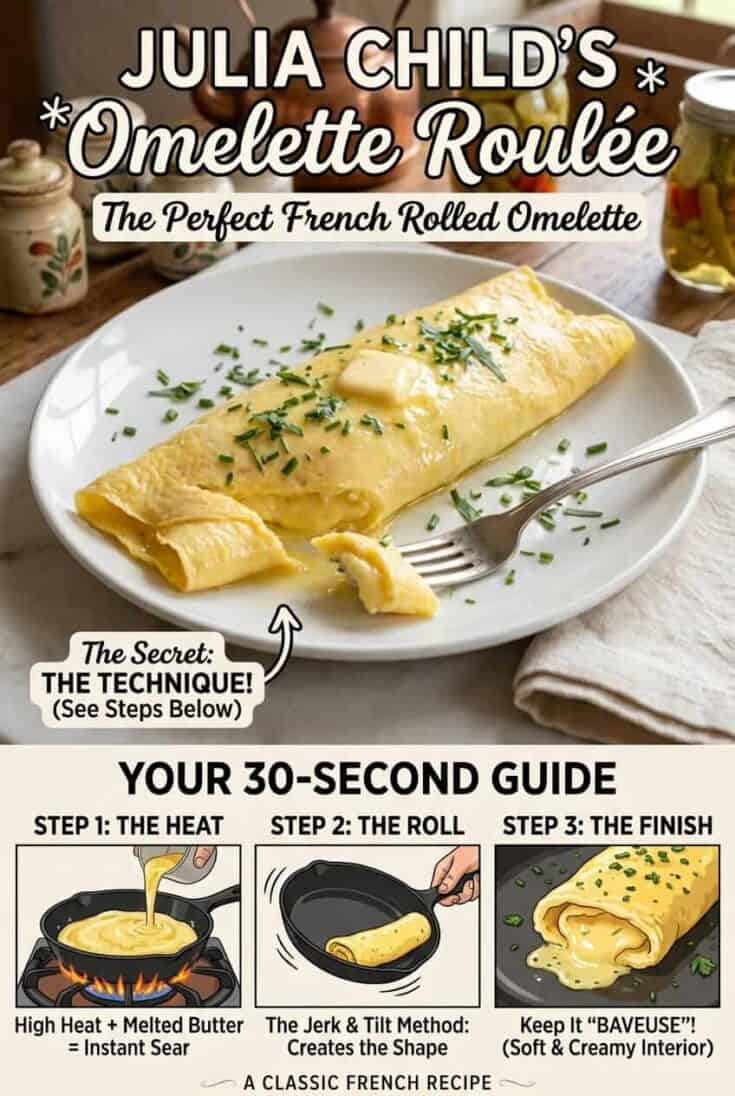
This is an easy omelet that is ready in only a few minutes. Unlike traditional omelets, the omelet is not usually stuffed.
Ingredients
- 2-3 eggs
- spoonful of water
- butter
- pinch of salt and pepper
- any fillings you like
Instructions
- Crack the eggs into a bowl and add the water, salt, and pepper.
- Beat until well combined.
- Heat an 8-10" omelet pan over very high heat.
- Melt a tablespoon of butter in the pan and pour in the eggs.
- Let the eggs set for a few seconds.
- Begin shaking the pan towards you without stopping.
- Continue to shake the pan, until the shaking starts to force your omelet to roll over.
- Add any fillings that you want in the center of the omelet.
- Keep moving the pan until the omelet is rolled up and in one end of the pan.
- Let it sit until the top edges get a golden color.
- Tilt pan and gently slide omelet onto a plate.
Nutrition Information:
Yield:
1Serving Size:
1Amount Per Serving: Calories: 316Total Fat: 26gSaturated Fat: 12gTrans Fat: 1gUnsaturated Fat: 12gCholesterol: 589mgSodium: 379mgCarbohydrates: 1gFiber: 0gSugar: 1gProtein: 19g

Ellen is a busy mom of a 29-year-old son and 33-year-old daughter. She owns nine blogs and is addicted to social media. She believes that it doesn’t have to be difficult to lead a healthy life. She shares simple healthy living tips to show busy women how to lead fulfilling lives. If you’d like to work together, email info@confessionsofanover-workedmom.com to chat.

Looks amazing! I’ll have to use this recipe. Thanks for sharing.
http://familyfocusblog.com
Thanks, Hannah. Hope you enjoy it.
that looks really good! I have a ton of eggs right now, too!
You’re omelette looks delicious! I’m with you – I can’t wait to see what we’re cooking this week 🙂
Thanks, Laura! Yours looks amazing!
Sure looks good! I’m hungry 🙂
That looks SUPER yummy!!!