Last Updated on May 3, 2026 by Ellen Christian
Learn how to do a no-buy week the realistic way. Simple rules, mindset shifts, and practical tips to help you save money without feeling restricted.
Posts may be sponsored. This post contains affiliate links, which means I will make a commission at no extra cost to you should you click through and make a purchase. As an Amazon Associate I earn from qualifying purchases.
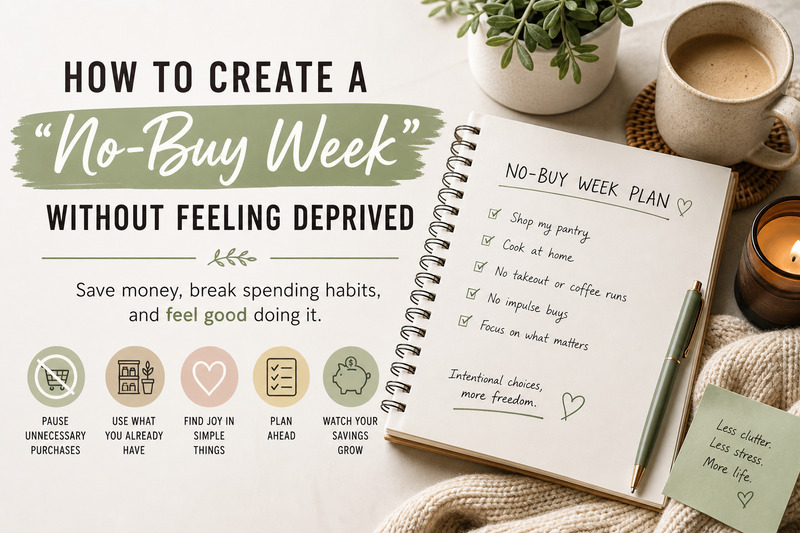
How to Create a No-Buy Week Without Feeling Deprived
A no-buy week sounds great—until you’re halfway through craving takeout, scrolling sales, and convincing yourself that one small purchase doesn’t count. The problem isn’t lack of discipline. It’s approach.
Done right, a no-buy week shouldn’t feel like punishment. It should feel like a reset—one that helps you spend with more intention, not less joy.
What a No-Buy Week Really Means
A no-buy week isn’t about spending zero dollars. It’s about pausing unnecessary purchases.
You still pay for essentials:
* Groceries (within a plan)
* Gas
* Bills
* Medication
What you skip:
* Impulse buys
* Takeout and coffee runs
* Just browsing purchases
* Convenience spending
Think of it as creating space between you and automatic spending habits.
RELATED: How to create unpaper towels
Step 1: Set Clear (and Realistic) Rules
Vague goals lead to quick burnout. Decide your boundaries before you start.
Ask yourself:
* Will you allow groceries? (Yes—but with a list.)
* Any exceptions? (Birthdays, emergencies, etc.)
* What counts as a “want” vs. a “need”?
Write your rules down. When you’re tempted midweek, you won’t have to negotiate with yourself.

Step 2: Use What You Already Have
This is where the magic happens.
Challenge yourself to:
* Cook meals from pantry staples
* Wear outfits you haven’t reached for lately
* Use up half-finished products
Instead of focusing on what you *can’t* buy, you start noticing how much you already own—and how little you actually need.
Step 3: Replace the Habit, Not Just the Spending
Most spending is tied to routine, not necessity.
If you usually:
* Grab coffee → Make it at home and upgrade it (frothed milk, flavored syrup)
* Shop online at night → Replace with a different wind-down habit
* Order takeout → Plan one easy, comforting meal in advance
You’re not removing joy—you’re just shifting where it comes from.

Step 4: Plan Small Treats (Yes, Really)
Deprivation leads to rebound spending. Instead, build in low-cost rewards:
* Movie night at home
* A long bath or self-care evening
* Using something you’ve been saving
The goal is to still feel good during the week—not to “survive” it.
Step 5: Track What You *Didn’t* Spend
This is surprisingly motivating.
Keep a simple list:
* Skipped takeout: $25
* Didn’t buy impulse item: $18
* No coffee runs: $15
Seeing those numbers add up makes the experience feel rewarding instead of restrictive.
Common Mistakes to Avoid
* Going too extreme: Cutting everything at once makes it harder to stick with
* No plan for meals: This leads straight to takeout
* Relying on willpower alone: Systems beat motivation every time
A no-buy week should feel doable—not like a challenge you’re destined to fail.
Conclusion
A successful no-buy week isn’t about saying “no” to everything. It’s about saying “yes” to more intentional choices.
When you remove the noise of constant spending, you start to see what actually adds value to your life—and what doesn’t.
Start simple. One week. Clear rules. A little planning. You might be surprised how freeing it feels.

Ellen is a busy mom of a 29-year-old son and 33-year-old daughter. She owns nine blogs and is addicted to social media. She believes that it doesn’t have to be difficult to lead a healthy life. She shares simple healthy living tips to show busy women how to lead fulfilling lives. If you’d like to work together, email info@confessionsofanover-workedmom.com to chat.
