
Last Updated on September 25, 2026 by Ellen Christian
Getting into better shape sounds simple until real life barges in with school, work, errands, family plans, and the occasional urge to do absolutely nothing. If you live in Sunrise, Florida, you’ve also got warm weather, busy schedules, and plenty of options competing for your attention. A routine that works for you needs to fit your actual life, not some fantasy version of it. Once you approach fitness that way, it stops feeling like punishment and starts feeling useful.
Posts may be sponsored. This post contains affiliate links, which means I will make a commission at no extra cost to you should you click through and make a purchase. As an Amazon Associate I earn from qualifying purchases.

Start With a Reason That Goes Beyond the Scale
If your only goal is to “lose weight,” motivation can disappear fast. Numbers move slowly, and your patience usually moves even slower. A stronger reason gives your routine some backbone.
You might want more energy for long school days, less stress after work, better sleep, or enough stamina to climb stairs without sounding like you just finished a sprint. Those goals are practical, personal, and easier to notice week by week.
Try writing down two or three reasons you want to exercise. Keep them specific. “I want to feel stronger carrying groceries” works better than “I want to get fit.” One sounds real. The other sounds like something a cereal box would say.
When your reason feels connected to daily life, skipping every workout gets harder to justify.
Choose a Workout Space That Removes Friction
The best workout location is the one you’ll actually use. Convenience matters more than people like to admit. If getting started feels complicated, your couch usually wins.
Some people do great with home workouts. Others need equipment, structure, or the subtle social pressure of being around people who are also trying not to skip leg day. If you’re in South Florida and want a place that supports regular training, checking out a local gym can make the routine easier to maintain.
Look at practical factors:
– How far is it from home, school, or work?
– Are the hours realistic for your schedule?
– Does the space feel comfortable, not intimidating?
– Is there enough equipment for your goals?
You are not choosing the “perfect” setup. You’re choosing the one with the fewest excuses built into it.

Keep Your Plan So Simple You Can’t Talk Yourself Out of It
A common mistake is building a routine that looks impressive on paper and collapses by Thursday. You do not need a six-day split, matching workout sets, and a personality transplant.
Start with three sessions a week. That’s enough to create momentum without turning your calendar into a hostage situation. Aim for 30 to 45 minutes per session. If that still feels like a lot, begin with 20 minutes.
A basic weekly structure could look like this:
– One strength workout
– One cardio session
– One mixed workout with mobility or core work
That setup covers the essentials without frying your schedule. Once it feels normal, then you can add more. Consistency beats intensity when you’re building the habit.
Simple plans often look less exciting, but they survive contact with real life.
Focus on the Big Three: Strength, Cardio, and Recovery
A balanced routine works better than obsessing over one area and ignoring the rest. You need strength for muscle and joint support, cardio for heart health and stamina, and recovery so your body doesn’t file a formal complaint.
Strength training can include machines, dumbbells, resistance bands, or bodyweight moves like squats, push-ups, and lunges. Cardio can mean brisk walking, cycling, rowing, or intervals on a treadmill. Recovery includes stretching, sleep, hydration, and rest days.
A practical week might include two strength sessions, two moderate cardio workouts, and at least one lighter day. That lighter day still counts. Walking, mobility work, or gentle stretching can help more than trying to “power through” fatigue.
Fitness is not just about effort. It’s also about managing effort intelligently.
Track Progress in Ways That Actually Show Change
If the scale is your only scoreboard, you’ll miss half the progress happening in front of you. Plenty of improvements show up before body weight changes much.
Pay attention to signals like:
– Lifting heavier weights
– Finishing workouts with less rest
– Walking farther without getting tired
– Sleeping better
– Feeling less stiff during the day
– Not dreading every workout
You can keep notes in your phone or use a simple app. Record exercises, reps, time, or even just how you felt. Patterns become easier to spot when they’re written down.
Photos and how your clothes fit can also tell a more accurate story than one number on a scale. Progress is often quiet at first. Tracking gives it a microphone.
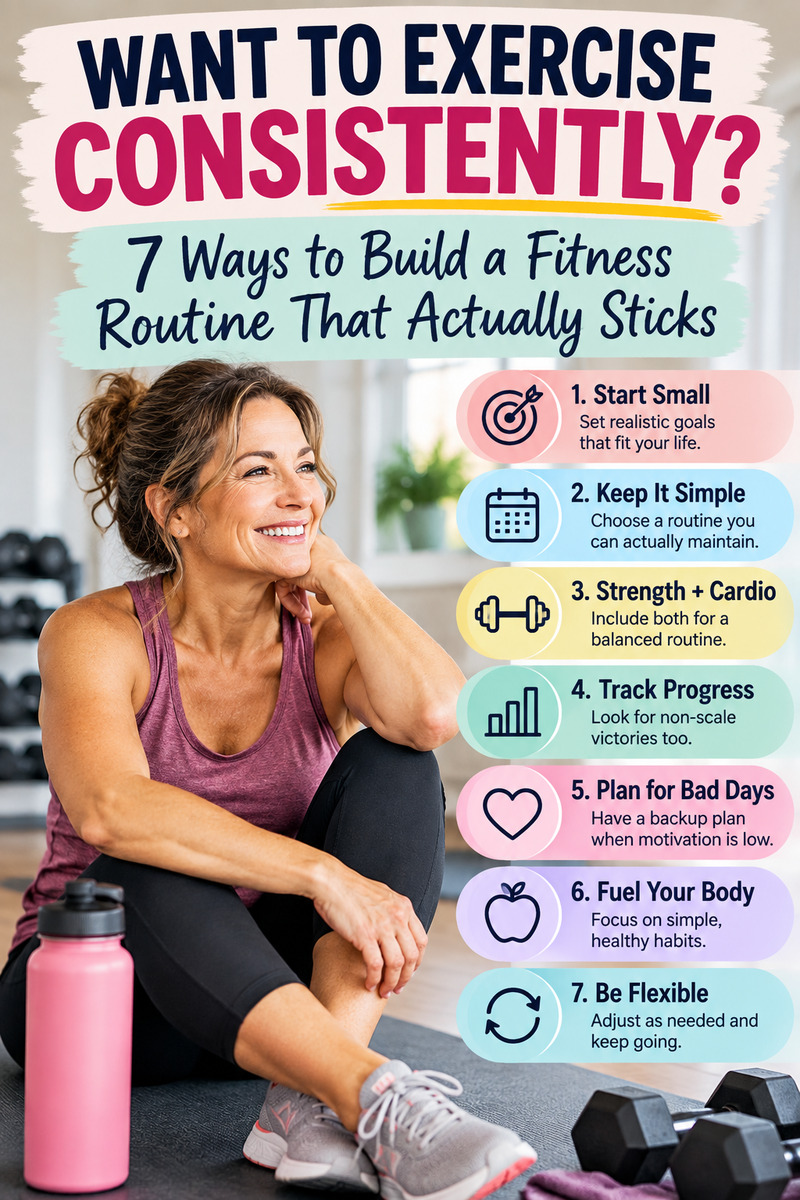
Plan for Low-Motivation Days Before They Happen
You are not going to feel motivated every week. That is normal, not a character flaw. The people who stay consistent usually have a backup plan for days when enthusiasm disappears.
Create a “minimum version” of your workout. Maybe it’s a 15-minute walk, two sets of basic exercises, or a short bike ride. The goal on those days is not perfection. It’s keeping the routine alive.
It also helps to tie exercise to existing habits. Go right after school, right after work, or before you sit down at home. Once you sit down “for a minute,” strange things happen, and suddenly it’s two hours later.
You can also prep small details in advance:
– Set out workout clothes
– Pack your bag the night before
– Save a playlist or podcast for training only
Reduce decision-making, and follow-through gets easier.
Make Nutrition Support the Routine, Not Complicate It
You do not need a hyper-restrictive meal plan to support your fitness goals. Most people benefit more from a few solid habits than from chasing nutrition trends with the lifespan of a fruit fly.
Try focusing on these basics:
– Eat enough protein to support muscle recovery
– Include carbs for workout energy
– Drink water consistently during the day
– Add fruits and vegetables without turning every meal into a lecture
– Avoid skipping meals and then overeating later
If you exercise regularly but under-eat, energy and performance often tank. If you rely on snacks that barely count as food, recovery gets harder. You want your meals to help you train, not sabotage the whole project.
A good routine is easier to maintain when your body is properly fueled and not running on caffeine and hope.
Build a Routine That Can Survive Real Life
The most effective fitness routine is rarely the flashiest one. It’s the one you can repeat during busy weeks, stressful weeks, and weeks when your schedule looks like a prank. That usually means realistic goals, flexible structure, and fewer all-or-nothing decisions.
Give yourself room to adjust. Missed one workout? Fine. Get back to it tomorrow. Had a rough week? Scale it down instead of quitting. Progress depends far more on what you do consistently over months than what you do perfectly for five days.
If your routine fits your life, you won’t need constant willpower to keep it going. You’ll have a system. That’s a much better deal. Fitness gets easier when you stop treating it like a dramatic overhaul and start treating it like a skill you build over time.

Ellen is a busy mom of a 29-year-old son and 33-year-old daughter. She owns nine blogs and is addicted to social media. She believes that it doesn’t have to be difficult to lead a healthy life. She shares simple healthy living tips to show busy women how to lead fulfilling lives. If you’d like to work together, email info@confessionsofanover-workedmom.com to chat.
