
Last Updated on October 13, 2026 by Ellen Christian
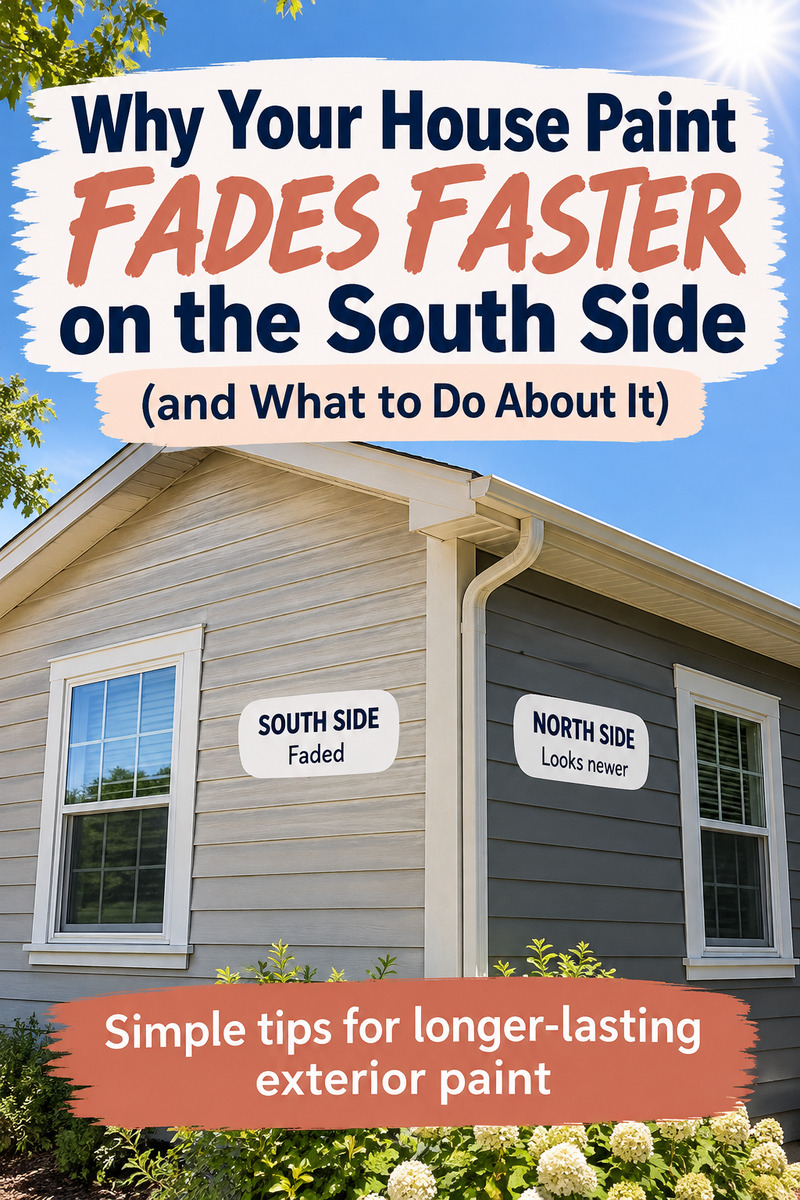
Walk around your house at noon on a clear day and look at the south wall. See how the color looks a shade or two lighter than the north side? That is not your imagination, and it is not a defect in the paint. That wall is taking the full force of the sun for six to eight hours a day, every single day, and the chemistry of your paint is losing a slow war. The fix is not buying more expensive paint and hoping. It is understanding why one wall fails first, then adjusting how you prep, when you paint, and what you put on that specific elevation.
Posts may be sponsored. This post contains affiliate links, which means I will make a commission at no extra cost to you should you click through and make a purchase. As an Amazon Associate I earn from qualifying purchases.
Here is the short version: south-facing walls get more intense ultraviolet radiation and more extreme surface temperatures than any other side of the house. You cannot stop the sun, but you can absolutely change what you ask your paint to withstand. This guide walks you through the mechanics, the timing, and the product choices that separate a three-year chalk job from a finish that still looks right at year eight.
Why the South Side Takes the Worst Beating
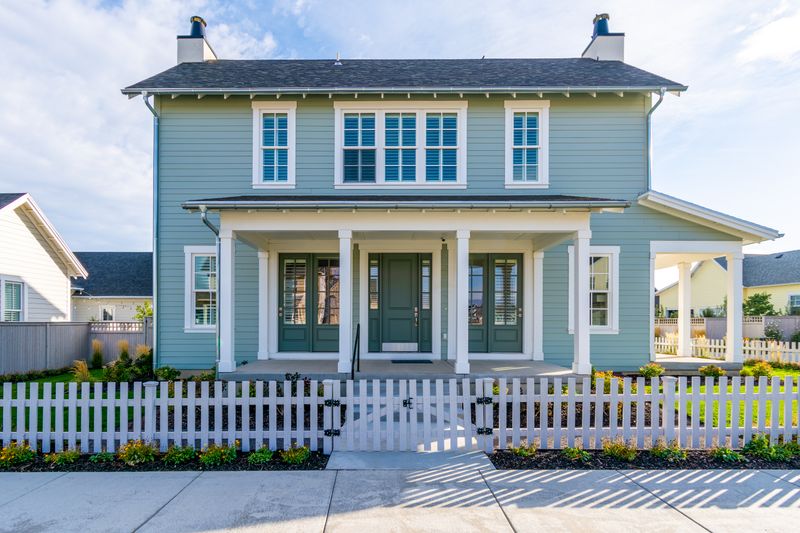
The sun rises in the east and sets in the west, but in the northern hemisphere it tracks across the southern sky. That means your south wall is the one facing the sun for the largest chunk of the day. East walls get morning light when the air is cooler. West walls get afternoon light, which is hot, but the sun is lower in the sky by then and the angle is more oblique. The south wall gets high-angle, direct sun from mid-morning through mid-afternoon, which is exactly when the day peaks.
The numbers back this up. The U.S. Department of Energy notes that windows on the south side of a home receive the most solar heat gain of any orientation in the northern hemisphere, which is why passive solar design relies on south-facing glass in the winter (energy.gov, 2024).
If the glass is taking that much heat, the siding and trim right next to it are absorbing the same radiation. The surface temperature of a dark-colored south wall can run 40 to 60 degrees hotter than the ambient air on a summer afternoon. Paint is designed to flex and breathe, but it has limits. Push the surface past those limits daily and the binder that holds the pigment together starts to break down.
That breakdown shows up as chalking first. You run your hand along the wall and it leaves a dusty colored residue on your fingers. That dust is the paint literally sacrificing its top layer to protect what is underneath. It is a normal failure mode, but on a south wall it accelerates because ultraviolet light attacks the chemical bonds in the resin. Once the binder degrades, the pigment particles lose their grip and wash away in the next rain. The color fades because the color is leaving the surface, not because the sun bleached it in place.
Desert Climates Turn This Into an Emergency
Everything above gets worse when you live somewhere the sun is not just bright but relentless. In the desert Southwest, including places like St. George, Utah, summer highs run past 110 degrees for weeks at a stretch. The air is dry, which sounds gentle, but dry air means the sun’s energy goes straight into the surface instead of being diffused by humidity. And the area only gets around eight inches of rain in a good year, so the natural washing that clears away chalked pigment barely happens.
The result is that a south wall in a desert climate does in three years what a south wall in Ohio does in seven. A study from the U.S. Geological Survey, which has tracked mineral and material degradation in arid environments for decades, found that ultraviolet exposure in high-desert regions is among the strongest in the continental United States because of the combination of elevation, clear skies, and low atmospheric moisture (doi.org, 2020). The same physics that bleaches rock and fades canyon walls is working on your siding.
This is where the typical homeowner advice stops being useful. Most painting guidance assumes a temperate climate with four seasons and regular rainfall. If you live in the desert, you need to plan around a different calendar and a different set of expectations. The good news is that the fix is straightforward once you accept the problem is real and not something a premium paint can ignore.
Timing Your Paint Job by Shade, Not Just by Season
Here is the framework that actually works, and it is the same one professional crews use when they work in high-heat areas. You do not paint a south wall during the hottest part of the day, period. Paint needs to cure at a controlled temperature. Most latex paints are formulated to apply best between 50 and 85 degrees Fahrenheit. When the surface temperature climbs past 90, the water in the paint evaporates too fast, the film skins over before the layers underneath have bonded, and you get a finish that looks fine for a month and then peels in sheets.
The professional approach is what I call shade sequencing. You paint the east elevations in the morning, move to the north and west as the sun swings around, and save the south wall for the late afternoon or the shoulder seasons of spring and fall. In a place like St. George, that often means pushing major south-side work to October or April, when the air temperature stays in the safe range even at midday.
So before you book any painting company, ask them two specific questions. First, do they check surface temperature with an infrared thermometer before each coat, not just the air temperature? Second, will they schedule the south elevations for the cooler part of the day or the cooler months? The answer to both should be yes without hesitation. A crew that shrugs at these questions is going to give you a job that fails early no matter what brand they spray.
You can do the same thing on a DIY project. Check the forecast, aim for a stretch of days under 85 degrees, and start the south wall at 4 p.m. so it cures overnight in relative cool. The product does not change. The conditions do.
Choosing Paint That Fights the Sun Instead of Surrendering
Not all paint is created equal when it comes to UV resistance, but the difference is not about the price tag alone. It is about the binder system and the pigment chemistry. Acrylic latex binders hold up better to UV exposure than vinyl or alkyd binders, so look for 100 percent acrylic formulations on exterior work. The label will say it right on the front. If it says “acrylic resin” in the fine print rather than “100 percent acrylic,” keep looking.
Color matters more than most people realize. Dark colors absorb more heat, which means they hit the critical surface temperature threshold faster and more often. A deep navy south wall will chalk and fade faster than the same house painted in a light beige. You do not have to give up the dark color if you love it, but you should expect to repaint that wall more frequently and should choose a product line specifically rated for dark colors, which use more durable pigment dispersions.
The U.S. Environmental Protection Agency’s research on cool coatings found that lighter exterior colors can reflect 50 to 80 percent of solar radiation, while dark colors absorb the same percentage instead (epa.gov, 2023). That absorbed energy does not just heat your home, it bakes the coating on the surface. Reflective paint technology has improved a lot in the last five years. Some major brands now offer specially formulated “cool” versions of dark colors that use infrared-reflective pigments. They look like the same deep shade but run ten to twenty degrees cooler on the surface. If you want a dark south wall, those are the only products worth considering.
Prep Work That Doubles the Life of the Finish
The actual painting is maybe a third of the job. The other two thirds is prep, and on a south wall the prep list is longer because the surface has already been abused. Here is the checklist that separates a lasting job from a wasted weekend.
First, wash the surface with a pressure washer and a mild detergent. The chalked pigment from the old coat needs to come off completely, or the new paint has nothing to grip. Let the wall dry for at least 48 hours. Desert air dries things fast, but the substrate underneath can trap moisture for days, so do not rush this step.
Second, scrape and patch every crack, then prime the bare spots. You do not need to prime the whole wall if the old paint is sound, but any exposed wood or bare stucco absolutely must get a coat of high-quality exterior primer. The primer seals the substrate so the finish coat can do its actual job of protecting rather than soaking in.
Third, caulk every seam and gap around windows, doors, and trim. Water intrusion is the silent killer of paint jobs. A south wall that looks chalky is also a wall that has likely developed hairline cracks at the joints, and water gets in, freezes, expands, and pops the paint from underneath. Ten minutes with a caulk gun can add years to the life of the whole elevation.
Fourth, back-roll anything you spray. Spraying is fast and lays down an even coat, but back-rolling pushes the paint into the pores of the surface and gives you better adhesion. This matters double on rough surfaces like stucco and brick. A spray-only job on a south wall will fail sooner. It is that simple.
What to Expect Realistically
Set honest expectations before you spend the money. A properly prepped, professionally applied south wall with a quality acrylic paint in the right season should give you seven to ten years in a moderate climate and four to six in a harsh desert location. That shorter number is not a failure. It is physics. The sun is doing real work on that surface every afternoon, and no coating on the market stops that entirely.
The good news is that you can extend the life with a simple annual habit. Once a year, in the spring before the heat ramps up, grab a soft brush and a bucket of water with a little dish soap and wash the south wall. You are removing the chalk layer before it builds up and shields the next coat of light from penetrating where it can do more damage. Ten minutes on a ladder once a year is a small price compared to a full repaint every three years.
Your south wall will never look as fresh as the north side permanently, no matter what you do. But with the right timing, the right product, and prep that treats the sun as an enemy rather than an afterthought, the difference becomes small enough that only you will notice it. And honestly, that is the goal. Paint that fades gracefully over a decade beats paint that fails dramatically in three years every single time. The question is whether you will do the work the conditions demand, or just slap another coat on and hope the sun gets bored.

Ellen is a busy mom of a 29-year-old son and 33-year-old daughter. She owns nine blogs and is addicted to social media. She believes that it doesn’t have to be difficult to lead a healthy life. She shares simple healthy living tips to show busy women how to lead fulfilling lives. If you’d like to work together, email info@confessionsofanover-workedmom.com to chat.
