
Last Updated on July 29, 2026 by Ellen Christian
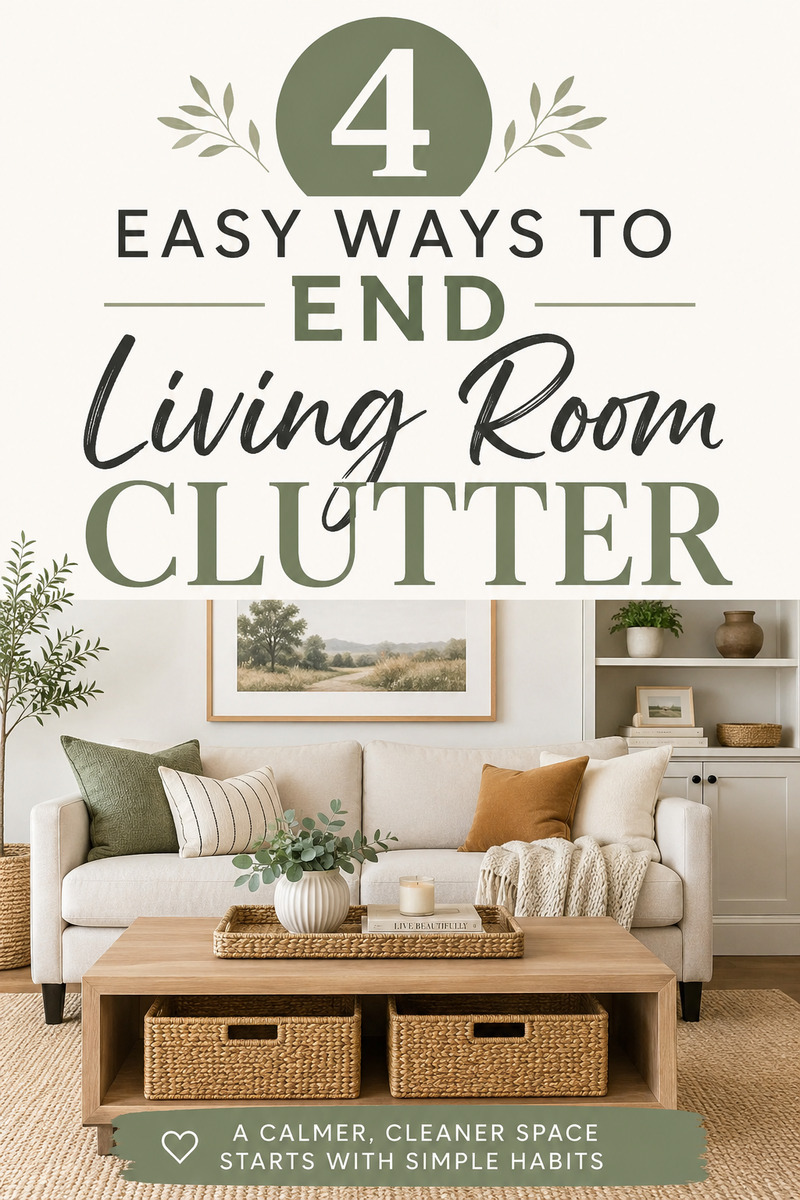
The top four living room decluttering tips include clearing horizontal surfaces of visual clutter, utilizing hidden storage furniture, building a daily five-minute family pickup zone, and choosing ready-for-real-life washable materials.
Posts may be sponsored. This post contains affiliate links, which means I will make a commission at no extra cost to you should you click through and make a purchase. As an Amazon Associate I earn from qualifying purchases.
Implementing these strategies immediately shifts how your space works, reducing visual chaos and making the living room easier to maintain without a costly renovation.
You can easily start utilizing these methods today.
You finally get the baby down for a nap, tiptoe to the living room expecting five minutes of quiet, and walk straight into chaos.
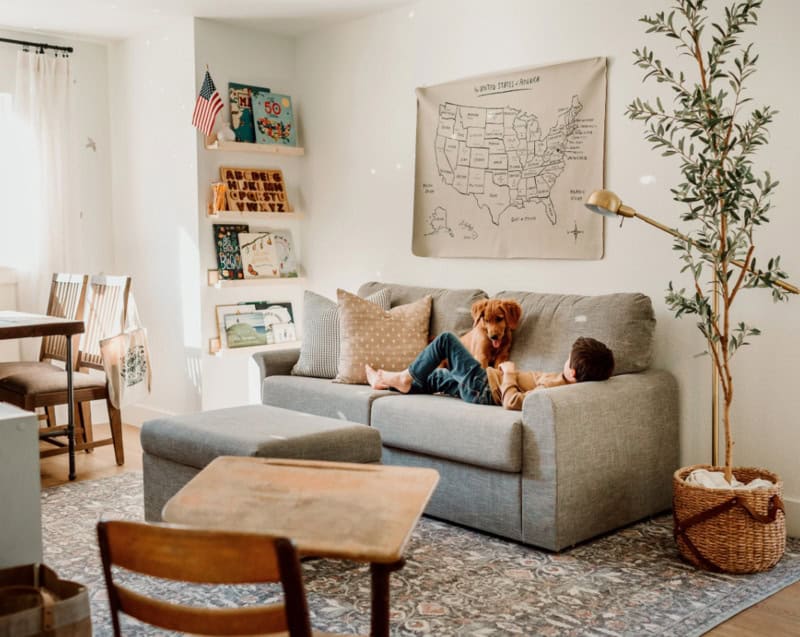
There are LEGO bricks scattered across the rug, laundry piled high on the sofa, and dog toys multiplying in the corner.
The room is impossible to relax in because the mental load of the mess is heavier than the mess itself, as dense environments are known to trigger higher cortisol levels.
A bigger home is not the answer, and neither is a personality overhaul, especially since messy spaces damage your overall mental health.
What your room needs is a smarter system. These four living room decluttering tips shift how the room works for the whole family, allowing you to reclaim your space without a gut renovation.
1. Clear Your Surfaces and Give Your Eyes a Rest
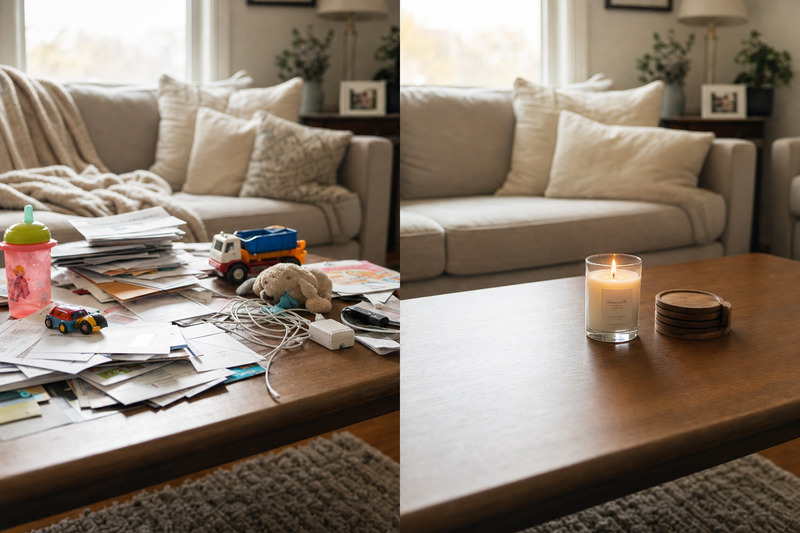
Visual clutter hits the brain much harder than physical clutter. Consider the common culprits, like a coffee table stacked with mail or a media console hosting everything except the actual remote.
Even a technically tidy room feels chaotic because visual clutter severely alters information flow.
To fix this, introduce the clean zone concept. Designate intentional surfaces where the eye can land and rest, because not every surface needs a job.
Strip the coffee table down to one coaster set and a single candle. Nothing else earns permanent residency there without genuinely earning its keep.
Instead of collecting multiple small, single-purpose pieces that naturally attract junk, choose fewer but harder-working furniture items that consolidate function.
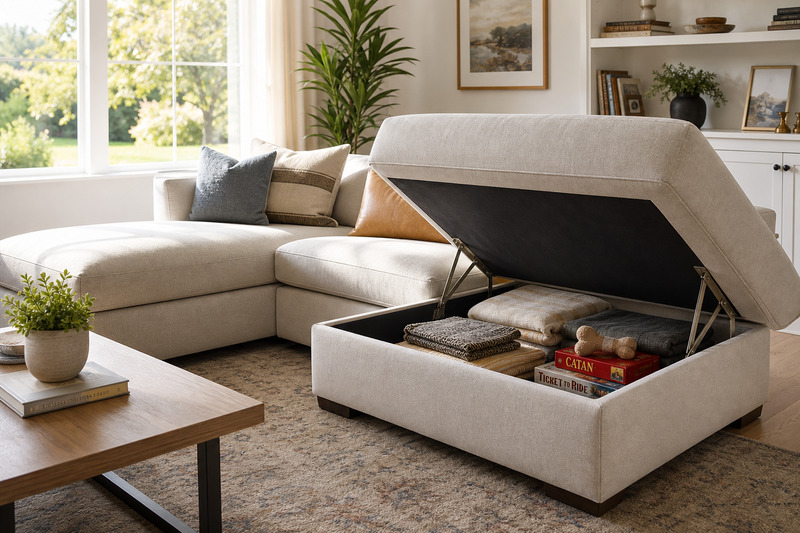
This is where small living room storage ideas genuinely shine. A smart strategy for tight spaces is investing in modular seating with hidden compartments, like Home Reserve’s cozy loveseat.
Pieces that double as storage reclaim both visual and physical square footage, reducing your daily stress.
2. Make Your Furniture Pull Double Duty
Most standard furniture simply occupies space without solving any problems. For a busy family, that is a dealbreaker rather than a design choice.
Upgrading to family-friendly furniture is about how much that furniture can hide and how hard it can work.
The goal is to easily transition between Saturday morning pancakes and Sunday movie pileups.
The biggest dead space problem in most homes is the sofa. The interior of a standard couch is nothing but wasted wooden framing and accumulated dust.
That real estate should be earning its keep instead of sitting empty. Bringing in hidden storage furniture is the most powerful upgrade you can make for everyday clutter control.
Modular seating with built-in under-cushion storage transforms movie blankets, a toddler’s board book avalanche, and extra throw pillows into invisible residents.
Hidden storage lives under every seat cushion, so pet gear disappears without crowding the room with a separate shelving unit.
Integrating modular seating strategies means that when your furniture solves a daily problem instead of creating one, the room practically manages itself.
| Pro Tip: Make your sofa earn its keep. Look for hidden under-cushion storage to tuck away throws, toys, and pet supplies instantly, no extra furniture needed. |

3. Build a Five-Minute Family Pickup Zone
Clutter will always arrive, regardless of how organized you are. After-school backpacks, the dog’s daily ball delivery, endless stacks of kids’ artwork, and mystery snacks are just facts of family life.
The goal is to build a reliable catch system, not to chase a prevention fantasy. Accept that items will enter the room and prepare a structured place for them.
Enter the pickup zone. This is one designated spot where all incoming daily debris lands immediately, without sorting and without guilt.
Choose a corner near the entry, the bottom shelf of a console, or the interior of a storage ottoman. Declare it the official pickup zone and defend it as sacred ground.
Every evening, initiate a five-minute blitz. Set a timer, cue a fun playlist, and loop in the kids for a quick cleanup.
The key tip is to use a lidded basket or under-seat storage rather than a clear plastic bin to hide the visual pile entirely.
In five minutes, the space goes from looking like an exploded toy store to being ready for unexpected guests.
4. Choose Washable, Ready-for-Real-Life Materials
Owning nice furniture in a house with small children and a dog creates a specific, low-grade stress that quietly kills the cozy vibe.
This anxiety inevitably leads to clutter-causing workarounds, like slipcovers that never fit right.
Homeowners often drape thick throws over everything as makeshift armor or reposition decorative pillows nightly as juice-spill shields.
These extra layers simply add to the room’s visual weight.
Upgrading to washable furniture is not just a cleaning convenience, as it serves as a vital decluttering strategy.
It removes the protective layers homeowners pile on when they do not trust their own furniture.
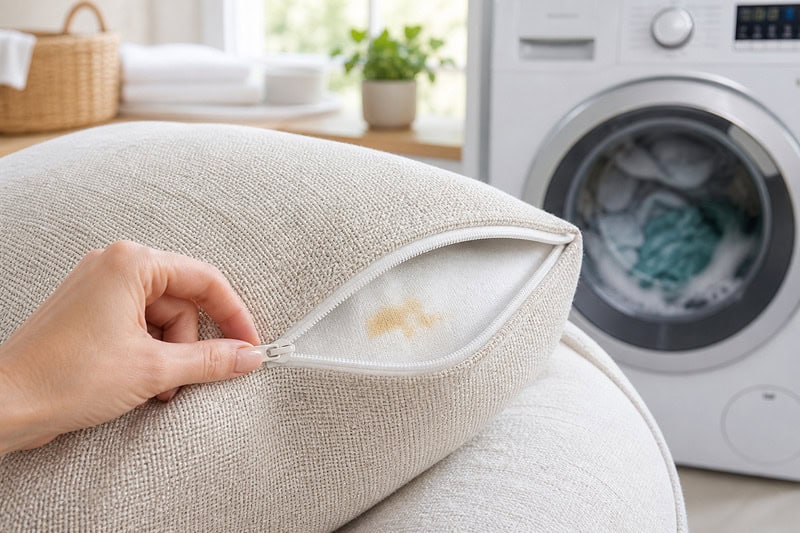
When you choose machine-washable fabric covers, the maintenance is incredibly plain and straightforward. You simply unzip the cover, toss it in the wash, and you are immediately done.
There is no need for specialty dry-cleaning, no five-step stain protocol, and no panic spiral over a muddy paw print.
This approach also adds a layer of renewability to your living space. If one cushion takes a direct hit, replacing that single piece rather than the whole sofa keeps the budget rational.
When your furniture is built for real life, all those protective barriers disappear, leaving a cleaner room.
| Important: If you’re draping your furniture in protective layers, those layers become clutter. Choose machine-washable fabrics so you can actually use your space without fear. |
The Bottom Line
Your living room should be the place where everyone collapses in comfort at the end of the day, not the place everyone dreads walking through.
By creating surfaces that let the eye rest, choosing seating that hides what it needs to, and establishing a quick-reset zone, you change the atmosphere.
Investing in materials genuinely built for family life also contributes to a stress-free environment. You can finally enjoy a space that supports your lifestyle instead of hindering it.
The goal is not a catalog-perfect living room. You just need a room where shoulders drop, feet go up, and the couch never feels like a liability.
Start small today by picking one change from this list and implementing it this week. The room does not need to be perfect because it just needs to work seamlessly for the family living in it.
| Author Profile: Home Reserve is the leading manufacturer of adaptable modular furniture for families seeking durable, sustainable solutions for everyday living. |

Ellen is a busy mom of a 29-year-old son and 33-year-old daughter. She owns nine blogs and is addicted to social media. She believes that it doesn’t have to be difficult to lead a healthy life. She shares simple healthy living tips to show busy women how to lead fulfilling lives. If you’d like to work together, email info@confessionsofanover-workedmom.com to chat.
