
Last Updated on August 24, 2026 by Ellen Christian
Coffee flavour is influenced by many variables, including bean origin, processing method, roast level, water quality, brewing temperature, and freshness. One of the simplest factors to adjust, however, is grind size. Changing the size of the coffee particles can alter how quickly water moves through the grounds and how efficiently different flavour compounds are extracted. As a result, the same beans can taste noticeably different when brewed with a fine, medium, or coarse grind.
Posts may be sponsored. This post contains affiliate links, which means I will make a commission at no extra cost to you should you click through and make a purchase. As an Amazon Associate I earn from qualifying purchases.
This is particularly relevant when brewing coffees described with chocolate, cocoa, caramel, hazelnut, or roasted-nut tasting notes. These flavours are often associated with rounded and balanced cups, but they can become less noticeable when extraction is poorly controlled. A grind that is too fine may make the coffee taste bitter and heavy, while a grind that is too coarse can produce a weak or underdeveloped cup.
Understanding the relationship between grind size and extraction can therefore help coffee drinkers bring out the characteristics they expect from a chocolate-forward coffee. It does not create chocolate flavour where none exists, but it can influence which existing flavour compounds are most noticeable in the finished drink.
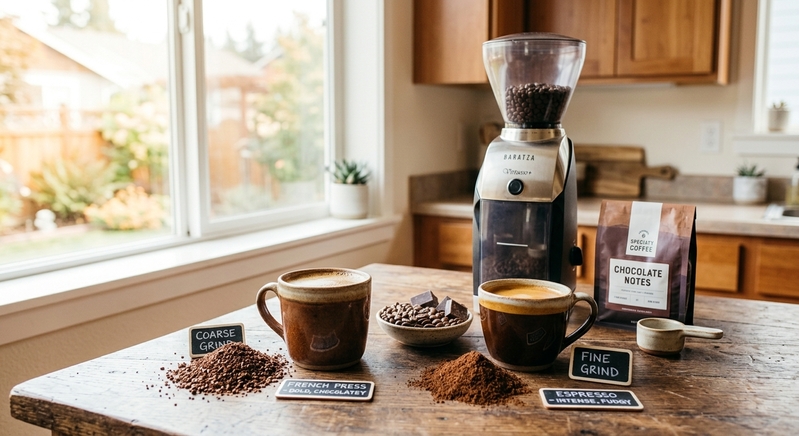
1. Why Grind Size Changes Coffee Extraction
Grinding coffee increases the total surface area exposed to water. Smaller particles provide more surface area, allowing water to interact with the coffee more quickly. Larger particles expose less surface area and generally slow the extraction process.
This is why grind size needs to correspond with the brewing method. Espresso uses a fine grind because water passes through the coffee under pressure over a short period. French press requires a coarse grind because the grounds remain immersed in water for several minutes. Pour-over and drip brewing generally use a medium grind as a starting point.
The objective is not simply to extract as much as possible. Coffee contains hundreds of compounds, and they do not all dissolve into water at the same rate. An appropriate grind helps create a balance between sweetness, acidity, bitterness, aroma, and body.
When a chocolate-forward coffee is properly extracted, the cup can feel rounded and balanced, allowing cocoa, dark chocolate, caramel, or nut-like characteristics to remain noticeable. If extraction moves too far in either direction, those qualities can become less distinct.
2. How Grind Size Can Bring Out Nutty Chocolate Coffee Flavors
When working with a nutty chocolate coffee, grind size can influence whether its deeper flavour characteristics appear smooth and balanced or become dominated by bitterness or weakness. Coffee Roast Lab’s nutty and chocolatey collection, for example, includes coffees described with notes such as dark chocolate, hazelnut, caramel, roasted nuts, cocoa, and roasted peanut.
A grind that is too fine can cause water to extract the coffee too aggressively, particularly if the brewing method already involves a long contact time. The resulting cup may taste bitter, dry, or overly heavy. In this situation, delicate chocolate and nut characteristics can be difficult to distinguish because bitterness dominates the palate.
A grind that is too coarse creates the opposite problem. Water can pass through the coffee without extracting enough of its soluble compounds. The result may taste thin, sour, or hollow. Instead of producing the rounded sweetness associated with cocoa or roasted nuts, the coffee can seem underdeveloped.
A properly adjusted medium grind can help maintain balance in methods such as drip coffee and many pour-over recipes. For example, Coffee Roast Lab describes its chocolate- and hazelnut-forward New Orleans Blend as suitable for drip brewing, French press, espresso, and moka pot, with different grind settings recommended according to the brewing method.
This illustrates an important point: there is no single “best” grind size for chocolate-flavoured coffee. The appropriate setting depends on how the coffee is brewed.

3. Fine Grinds and Chocolate Flavors in Espresso
Espresso requires a fine grind because the brewing process uses pressure and a relatively short extraction time. When the grind is correctly adjusted, chocolate and nut characteristics can become concentrated, producing a dense and full-bodied cup.
However, espresso is particularly sensitive to grind changes. If the grind is too fine, water may move too slowly through the coffee. This can increase extraction and produce pronounced bitterness or a dry aftertaste. If it is too coarse, water can pass through too quickly, resulting in a weak and acidic shot.
For a chocolate-forward espresso, small adjustments are often more useful than making large changes. If the cup tastes harsh and bitter, slightly coarsening the grind may help reduce extraction. If it tastes thin and sharp, a slightly finer grind may increase extraction and improve balance.
Chocolate and nut notes can also work well in milk-based espresso drinks because their deeper flavour characteristics tend to remain noticeable after milk is added. The important factor is still achieving a balanced extraction before introducing milk.
4. Medium Grinds for Drip and Pour-Over Brewing
Medium grinds are commonly used for drip coffee and pour-over methods because they provide a balance between surface area and water flow. These brewing methods allow the drinker to control several variables, including water temperature, pouring speed, total brew time, and grind size.
For a chocolate-forward coffee, a medium grind can help preserve sweetness and body without creating excessive bitterness. If the finished cup tastes too weak or watery, a slightly finer grind may increase extraction. If it tastes bitter or dry, moving slightly coarser may improve the balance.
The same principle applies to coffees with caramel, cocoa, hazelnut, and roasted-nut notes. These flavours are tasting descriptions rather than added ingredients. Coffee Roast Lab explains that tasting notes describe what a coffee reminds the drinker of and reflect characteristics shaped by the bean, its origin, processing, and roasting.
Therefore, changing the grind does not add chocolate or nut flavour. Instead, it changes extraction and can make certain naturally occurring characteristics easier or harder to perceive.
5. Coarse Grinds and Longer Brewing Methods
Coarse grinds are generally appropriate for brewing methods where coffee remains in contact with water for a longer period. French press is a common example. The larger particles reduce the surface area exposed to water and can make it easier to avoid excessive extraction during extended steeping.
A chocolate-rich coffee prepared in a French press can develop considerable body and a rounded mouthfeel. If the grind is too fine, however, extraction can become excessive and the cup may become bitter or muddy. Fine particles can also pass through the filter more easily, affecting the texture of the drink.
Cold brew is another method where coarse grinding is commonly used. Coffee Roast Lab recommends a coarse grind and a long steeping period for its chocolate- and nut-oriented New Orleans Blend, illustrating how grind size and brewing time need to work together rather than being considered independently.

6. How to Adjust Grind Size When the Flavor Is Not Balanced
The simplest way to adjust grind size is to change only one variable at a time. Keep the coffee dose, water quantity, temperature, and brewing method consistent, then make a small grind adjustment.
If the coffee tastes bitter, dry, or overly harsh, the extraction may be too high. Try grinding slightly coarser.
If the coffee tastes thin, sharp, sour, or weak, the extraction may be too low. Try grinding slightly finer.
If the coffee tastes balanced but lacks sweetness, consider whether the brewing time, water temperature, or coffee-to-water ratio also needs adjustment rather than changing the grind immediately.
Freshness matters as well. Coffee Roast Lab notes that its coffees are roasted weekly and recommends keeping coffee protected from light, heat, moisture, and air to preserve flavour. Grind size cannot compensate completely for stale coffee or unsuitable water.
Conclusion
Grind size is one of the most practical variables for shaping the flavour of coffee. Smaller particles increase the surface area available for extraction, while larger particles slow the process. The correct setting therefore depends on the brewing method, contact time, and the balance of flavours desired in the cup.
For coffees with cocoa, hazelnut, caramel, or roasted-nut characteristics, appropriate grinding can help preserve the rounded qualities that make these profiles distinctive. Fine grinds are generally suited to espresso, medium grinds to drip and pour-over brewing, and coarse grinds to longer methods such as French press and cold brew.
The key is to treat grind size as part of a larger extraction system. If a coffee tastes bitter and dry, a slightly coarser grind may help; if it tastes weak or sharp, a finer grind may provide greater extraction. With small, controlled adjustments, drinkers can better reveal the natural flavour characteristics already present in the beans and produce a more balanced cup.

Ellen is a busy mom of a 29-year-old son and 33-year-old daughter. She owns nine blogs and is addicted to social media. She believes that it doesn’t have to be difficult to lead a healthy life. She shares simple healthy living tips to show busy women how to lead fulfilling lives. If you’d like to work together, email info@confessionsofanover-workedmom.com to chat.
