
Last Updated on September 4, 2026 by Ellen Christian
Your air conditioner quietly eats a bigger chunk of your energy bill than almost any other appliance in the house, and most of it is preventable. A little grime on a coil, a filter you forgot to swap, a condenser unit buried in overgrown shrubs. None of these are dramatic failures. They just quietly push your system toward one. The good news? A good portion of AC maintenance genuinely belongs in the DIY category, and you don’t need a toolbox full of specialized skills to pull it off. What you do need is a clear picture of which tasks are yours to own and which ones belong to a licensed tech. That’s exactly what this guide covers.
Posts may be sponsored. This post contains affiliate links, which means I will make a commission at no extra cost to you should you click through and make a purchase. As an Amazon Associate I earn from qualifying purchases.
The Real Cost of Running Your Air Conditioner
Before you decide whether a tune-up is worth your Saturday morning, it helps to know what’s actually at stake. Air-conditioning equipment is used in 87% of homes in the United States and, according to EIA’s Residential Energy Consumption Survey, home air-conditioning costs averaged $265 in 2015, or 12% of total home energy expenditures. The Southeast runs even hotter: air-conditioning costs ranged from an average of $525 in the hot-humid region in the Southeast to about $60 in the temperate marine region along the West Coast, according to the U.S. Energy Information Administration (EIA, 2018). If you’re in Florida or anywhere in the deep South, that number trends toward the high end of the range every single summer.
A system running at 70% efficiency because nobody cleaned the coils is not just uncomfortable. It’s expensive. And the fix often costs under $30 and an hour of your time.
The SPOT Check: A Simple Framework for Catching Problems Early
Before running through a full checklist, use the SPOT Check. This is a quick five-minute walk-through that gives you a working diagnosis of your system’s health any time of year. Run it at the start of cooling season, then once a month while the system is running hard.
- S — Sound. Stand next to the outdoor unit while it’s running. A steady hum is normal. Banging, rattling, squealing, or a grinding noise means something is loose, worn, or about to fail.
- P — Power bill. Pull up last month’s bill and compare it to the same month a year ago. A jump of 10% or more with no change in usage habits often signals a system working harder than it should.
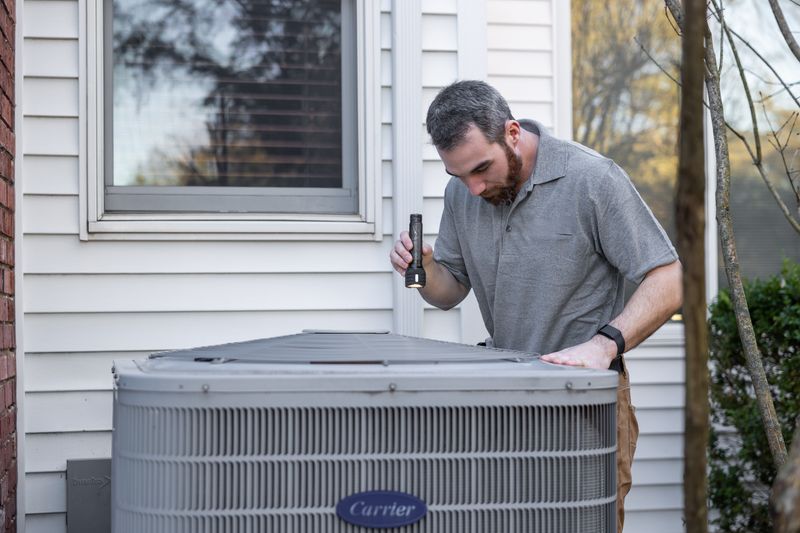
- O — Outdoor unit. Walk outside and look at the condenser. Debris, bent fins, or plants growing within 24 inches of the unit restrict airflow and cut efficiency. This is a DIY fix every time.
- T — Thermostat. Set it five degrees below the current room temperature. The system should kick on within a minute and cool the space noticeably within fifteen. If it doesn’t, you have a clue worth investigating.
If all four check out fine, you’re probably in good shape. If two or more flag, move to the full checklist below and consider calling a pro.
Your Seasonal DIY Maintenance Checklist
These are the tasks you can genuinely do yourself. Not every item is monthly, so the list is organized by frequency. Work through it once at the start of each cooling season, and you’ll be ahead of most homeowners before the first hot day hits.
Every 30 to 90 days: Swap your air filter. This single task has a bigger payoff than almost anything else on this list. The U.S. Department of Energy estimates that keeping your filter clean can reduce your energy consumption by 5 to 15%, according to a U.S. Department of Energy guidance resource on AC maintenance. Mark Zeller, an HVAC journeyman and building engineer with years of hospital-facility HVAC experience, put it plainly: “Changing your filter once a month is one of the simplest and most important preventative maintenance practices you can do for your HVAC system. It will prolong the life span of the furnace, as well as help with the efficiency of the unit.” Choose a pleated filter over fiberglass. The surface area difference is real, and so is the dust-trapping performance.
“Changing your filter once a month is one of the simplest and most important preventative maintenance practices you can do for your HVAC system.”
— Mark Zeller, HVAC Journeyman and Building Engineer/HVAC Lead Tech
Every spring, before cooling season:
- Clear a 2-foot perimeter around the outdoor condenser unit. Trim back any shrubs, remove leaves, and rinse the fins gently with a garden hose from the inside out. Never use a pressure washer; it bends the fins and makes things worse.
- Check that the condenser sits level on its pad. A condenser that isn’t level can cause the compressor to fail much earlier than it should. If it’s shifted, rot-resistant shims from a hardware store fix this in ten minutes.
- Flush the condensate drain line. Pour a cup of diluted white vinegar down the drain access point near the air handler. This prevents algae buildup, which is the most common cause of water damage around indoor units.
- Test your thermostat batteries and clean the vents throughout the house with a vacuum brush attachment. Blocked return vents make your system work harder for no reason.
Once a year: Clean the evaporator coil. Open the evaporator coil door on the indoor air handler, dust it off, and spray it with a commercially available no-rinse coil cleaner. The foam does the work and drips into the drain pan. Follow up by wiping the drain pan clean.
DIY vs. Pro: What Belongs Where
Knowing where your role ends is just as useful as knowing what to do. This table is the honest breakdown:
| Task | DIY or Pro? | Why
|
|---|---|---|
| Air filter replacement | DIY | No tools, no risk, high payoff |
| Clearing condenser debris | DIY | Simple, no electrical exposure needed |
| Flushing condensate drain | DIY | Vinegar and a cup; 5 minutes |
| Leveling the condenser pad | DIY | Shims only; power stays off |
| Refrigerant check or recharge | Pro only | Requires EPA certification; illegal to DIY |
| Electrical component inspection | Pro only | Capacitors hold lethal charge after shutdown |
| Ductwork sealing and testing | Pro only | Requires pressurization equipment |
| Annual system tune-up | Pro recommended | Catches what visual checks miss |
When to Stop the DIY and Call a Technician
Here’s a pattern worth knowing: only 42% of homeowners perform annual maintenance on their HVAC systems, according to a 2026 residential HVAC industry report from wifitalents.com. That means the majority of AC systems are running without any scheduled care at all. By working through the seasonal checklist above, you’re already ahead of most of your neighbors. But the DIY checklist has a hard ceiling.
If you’ve done everything on the list and your system still isn’t cooling correctly, making strange noises, or leaking water around the air handler, that’s the signal to stop and call a licensed technician. Refrigerant handling, electrical diagnostics, and full system tune-ups fall outside what any homeowner should attempt without training. A good example of when professional ac repair matters: if your system runs constantly but never actually reaches the set temperature, you likely have a refrigerant issue or a failing compressor, both of which require certified hands and proper equipment.
Think of your DIY maintenance as a partnership with the professionals, not a replacement for them. Your job is to keep the system clean, clear, and well-filtered between visits. Their job is to handle the diagnostics and components that carry real risk. Do your part consistently, and the odds of a mid-August breakdown drop considerably.
So start simple: go check that filter right now. If it looks like a gray wool blanket, that’s costing you real money every day you leave it in place.

Ellen is a busy mom of a 29-year-old son and 33-year-old daughter. She owns nine blogs and is addicted to social media. She believes that it doesn’t have to be difficult to lead a healthy life. She shares simple healthy living tips to show busy women how to lead fulfilling lives. If you’d like to work together, email info@confessionsofanover-workedmom.com to chat.
