Last Updated on November 10, 2026 by Ellen Christian
If you enjoy knitting or crocheting, you know how much time goes into making a sweater, blanket, or pair of socks. The last thing you want is for your finished project to start looking worn out after only a few months.
Posts may be sponsored. This post contains affiliate links, which means I will make a commission at no extra cost to you should you click through and make a purchase. As an Amazon Associate I earn from qualifying purchases.
Choosing the right yarn can make a big difference in how long your handmade items last. Natural wool and synthetic blends are both popular choices, but they have different advantages when it comes to durability, comfort, and everyday care.
So, is natural wool really better than synthetic yarn? And which one should you choose if you want your projects to last for years?
Let’s look at the differences and how to choose the best yarn for your next project.
Natural Wool vs Synthetic Blends: What’s the Difference?
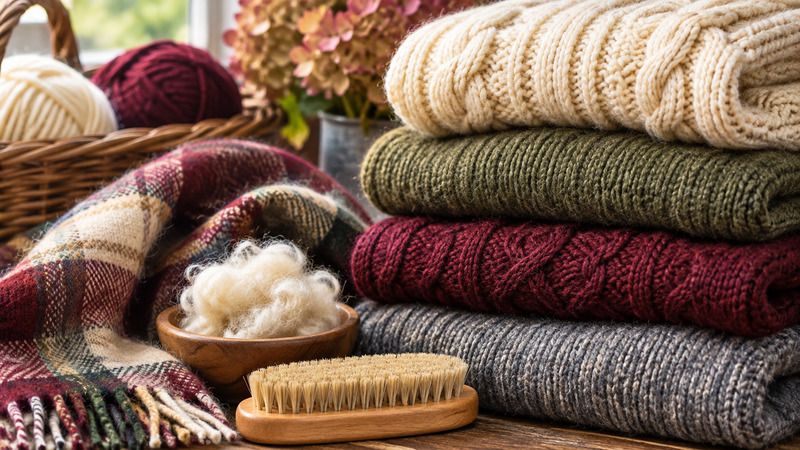
Natural wool comes from animals, most commonly sheep. It’s known for being warm, breathable, and naturally elastic. Wool fibers can stretch and return to their original shape, which helps knitted clothing maintain its fit.
Synthetic yarns are made from manufactured fibers such as acrylic, polyester, and nylon. These materials are often less expensive than wool and can be easier to wash and care for.
Blended yarns combine two or more fibers to take advantage of their different qualities. For example, a wool and nylon blend can provide the warmth of wool with additional resistance to wear.
Here’s a quick comparison.
| Feature | Natural Wool | Synthetic Blends |
|---|---|---|
| Warmth | Excellent insulation | Varies depending on the blend |
| Stretch and recovery | Naturally elastic | Depends on the fibers used |
| Durability | Can last many years with proper care | Can also be long-lasting |
| Washing | Often requires gentle care | Many blends are machine washable |
| Pilling | Can develop pills with friction | Can also pill, sometimes persistently |
| Cost | Often more expensive | Usually offers more budget-friendly choices |
Neither option is automatically better for every project. The best choice depends on what you’re making and how it will be used.
Does Natural Wool Last Longer Than Synthetic Yarn?
Natural wool has several qualities that make it a good choice for clothing and household items you want to keep for years.
Wool fibers have a natural crimp, or wave, that helps them stretch and recover. This elasticity is one reason wool sweaters can maintain their shape when they’re properly cared for.
Wool is also breathable and helps regulate temperature. That makes it especially useful for sweaters, scarves, hats, and blankets.
However, wool isn’t indestructible. It can develop holes from friction, shrink when washed incorrectly, or become damaged by moths during storage.
Synthetic yarns have their own advantages. Nylon is particularly useful for adding strength to items that experience repeated rubbing, such as socks. Acrylic yarn is lightweight, affordable, and available in many colors.
The important thing to remember is that fiber content alone doesn’t determine how long a knitted item will last.
The thickness of the yarn, how tightly it’s spun, the knitting pattern, and how often the item is worn or washed all affect durability.
A well-made sweater from a quality synthetic blend may last longer than a loosely knitted sweater made from delicate wool.
Even high-quality wool can develop small fuzz balls over time, especially in areas exposed to repeated friction. Learning how to remove pilling from sweaters can help keep wool garments looking their best without damaging delicate fibers.
Why Some Sweaters and Blankets Develop Pills
Have you ever noticed little balls of fuzz appearing on your favorite sweater?
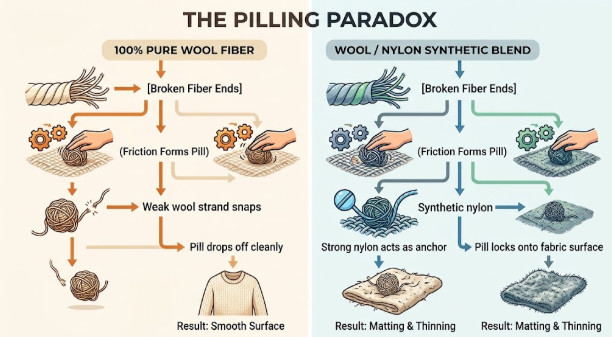
Those small balls are called pills. They develop when loose fibers work their way to the surface of the fabric and become tangled through rubbing and everyday use.
Pilling is common in areas that experience friction, including:
- Under the arms of sweaters
- Along the sides of jackets
- Around cuffs and sleeves
- On blankets that receive frequent use
- Around the heels and toes of knitted socks
Both natural wool and synthetic yarns can pill.
Some synthetic fibers are strong enough that pills remain attached to the fabric rather than breaking away. This can make pilling more noticeable over time.
However, pilling doesn’t necessarily mean that an item is falling apart. It can simply be a result of normal wear.
As research on wool fiber structure and strength explains, wool fibers have an outer layer of overlapping cuticle cells, and fiber strength influences their resistance to breakage. Over time, friction and everyday wear can cause surface fibers to become damaged or loosen.
How to Reduce Pilling
There are several things you can do to keep handmade items looking nice.
Choose a tightly spun yarn. Loosely spun yarns often have more fibers that can work their way to the surface.
Wash items gently. Follow the instructions on the yarn label and avoid unnecessary agitation.
Turn garments inside out. This can help reduce friction against the visible surface during washing.
Use a fabric comb carefully. A sweater comb or fabric shaver can remove pills, but using too much pressure may damage delicate fibers.
Avoid unnecessary washing. Many wool garments can be aired out between wears, although they should still be washed when needed.
Taking a little extra care can help your handmade clothing look better for longer.

How to Choose Good-Quality Yarn
You don’t need to understand the science of textile fibers to decide which yarn is right for the job.
A few simple checks can help you decide whether a yarn is right for your project.
Understanding the different types of wool and their natural characteristics can help shoppers recognize a sign of good wool quality when choosing sweaters, scarves, and other wool clothing.
Read the Yarn Label
Start by checking the fiber content.
A yarn labeled 100% wool will behave differently from one made with 80% wool and 20% nylon.
The label should also provide washing instructions and information about the yarn’s weight.
Look at How the Yarn Is Spun
Yarn made from several tightly twisted strands often holds up better to everyday friction than a very loosely spun yarn.
That doesn’t mean soft, fluffy yarn is bad. It simply means it may be better suited to a scarf or decorative project than something that receives heavy wear.
Think About Washing and Care
Before choosing a yarn, consider how much maintenance you’re willing to do.
A beautiful wool sweater may require hand washing and drying flat. A machine-washable blend might be more practical for something you’ll use every day.
Make a Small Test Swatch
If you’re planning a large project, knit or crochet a small sample first.
Wash it according to the label and let it dry completely.
Then check whether it has changed size, stretched, become fuzzy, or lost its shape.
This simple step can help you avoid spending hours on a project made with the wrong yarn.
Which Yarn Is Best for Different Projects?
The best yarn for a sweater isn’t necessarily the best choice for socks or blankets.
When shopping for Australia knitting yarn, think about how the finished item will be used before deciding between natural wool and synthetic blends.
Sweaters and Cardigans
Natural wool is an excellent choice for warm sweaters and cardigans.
Its natural elasticity helps garments maintain their shape, while its insulating properties provide warmth without requiring an extremely heavy fabric.
Wool blends can also work well, especially if you want something easier to care for or more affordable.
For a sweater that will receive frequent use, look for a yarn with a firm twist and good stitch definition.
Socks
Socks experience a lot of friction, especially around the heels and toes.
This is one situation where a wool blend may be a better choice than pure wool.
A blend containing approximately 75% to 80% wool and 20% to 25% nylon is a popular option for hand-knitted socks.
The wool provides warmth and comfort, while the nylon helps improve resistance to abrasion.
Blankets and Throws
For a blanket you want to keep for many years, natural wool can be a wonderful choice.
It’s warm, breathable, and comfortable in cooler weather.
However, a wool blend or quality acrylic yarn may be more practical for a blanket that needs frequent washing.
Think about whether the blanket will be decorative or used every day before choosing your yarn.
Hats, Scarves, and Mittens
Wool is especially useful for winter accessories because it provides warmth and helps manage moisture.
A soft merino wool may be comfortable for a scarf worn close to the skin.
For mittens that will see a lot of outdoor use, a durable wool blend may be a better choice.
If you’re making a gift, consider whether the recipient will be comfortable following special washing instructions.
How to Make Wool and Synthetic Yarn Projects Last Longer
Even the best yarn won’t last as long as it should without proper care.
Fortunately, a few simple habits can help protect your handmade projects.
Proper storage is just as important as choosing high-quality wool. Learn how to protect stored clothes from moths naturally to help prevent damage to wool sweaters, scarves, and other natural-fiber clothing.
Follow the Washing Instructions
Not all wool is machine washable.
Untreated wool may shrink or felt when exposed to heat and agitation. Superwash wool is specially treated to make it more resistant to felting, but you should still follow the manufacturer’s care instructions.
Synthetic yarns are often easier to wash, although some can be damaged by high heat.
Always check the label before putting a handmade item in the washing machine or dryer.
Dry Sweaters Flat
Hanging a wet knitted sweater can cause it to stretch out of shape.
Instead, gently remove excess water and lay it flat on a clean towel or drying rack.
Reshape the garment while it’s damp and allow it to dry completely before putting it away.
Store Wool Properly
Clean wool garments before storing them for the season.
Fold sweaters rather than hanging them, and keep them in a clean, dry storage area.
Wool can attract clothes moths, so check stored garments periodically for signs of damage.
Repair Small Problems Early
A loose stitch or tiny hole doesn’t always mean a handmade item is ruined.
Learning a few basic mending techniques can help extend the life of your favorite sweaters, blankets, and socks.
Repairing a small hole early is usually much easier than fixing a large one later.
Frequently Asked Questions
Is 100% wool better than a wool blend?
Not necessarily. Pure wool offers excellent warmth, breathability, and natural elasticity. However, wool blends may be more durable in areas exposed to friction or easier to care for. The best choice depends on the project.
Does acrylic yarn last as long as wool?
Quality acrylic yarn can last for many years with proper care. However, some acrylic yarns may develop persistent pilling or lose their appearance with repeated use. Wool also varies in quality, so neither fiber guarantees a particular lifespan.
Why is nylon added to wool socks?
Nylon is often blended with wool to improve resistance to abrasion. This is especially helpful around the heels and toes, where socks experience the most friction.
Is superwash wool as durable as regular wool?
Superwash wool is treated to reduce felting and make washing easier. Its durability depends on the yarn’s construction and how it’s used. Some superwash yarns may stretch more than untreated wool, so it’s important to follow the care instructions.
Can you put wool sweaters in the washing machine?
Only if the yarn or garment label says it’s safe. Some wool garments can be washed on a gentle wool cycle, while others require hand washing. Untreated wool can shrink or felt if washed incorrectly.
Final Thoughts on Natural Wool vs Synthetic Blends
When it comes to choosing yarn that lasts, there isn’t one perfect answer for every project.
Natural wool is a great option for warm sweaters, scarves, and blankets that you want to enjoy for years. Its elasticity and insulating properties make it especially useful for handmade clothing.
Synthetic blends can be just as practical, particularly for socks, everyday accessories, and projects that need frequent washing.
Before starting your next knitting or crochet project, consider how often the finished item will be used, how much wear it will receive, and how easy it needs to be to care for.
Choosing the right yarn for the job, and taking good care of your finished project, is one of the best ways to make your handmade items last.

Ellen is a busy mom of a 29-year-old son and 33-year-old daughter. She owns nine blogs and is addicted to social media. She believes that it doesn’t have to be difficult to lead a healthy life. She shares simple healthy living tips to show busy women how to lead fulfilling lives. If you’d like to work together, email info@confessionsofanover-workedmom.com to chat.
