
Last Updated on August 3, 2026 by Ellen Christian
You sit down at nine with a clear list. By eleven you’ve finished maybe a third of it, and you already know what you’ll tell yourself about that. You should have focused harder. You should have started earlier. You bought the planner, you tried the twenty-five-minute timer, you turned off notifications, you installed the app that locks you out of everything for two hours. Some of it helped for a week. None of it stuck.
Posts may be sponsored. This post contains affiliate links, which means I will make a commission at no extra cost to you should you click through and make a purchase. As an Amazon Associate I earn from qualifying purchases.
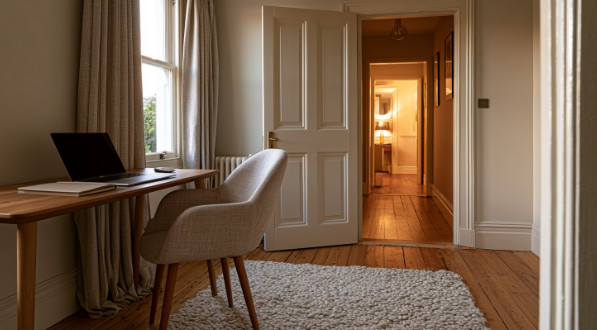
Here’s what nobody mentions in any of those productivity guides: your brain processes speech automatically, whether you want it to or not. The television through the wall, your kids negotiating over something in the hallway, the neighbor on his phone in the driveway. None of it registers as loud enough to complain about, and all of it takes something from you. Offices solved this particular problem more than twenty years ago using sound masking solutions, a technology almost nobody has heard of in a residential context.
Your brain can’t ignore words
Run the vacuum, and you can still read a paragraph and retain it. Have two people talking quietly in the next room and the same paragraph takes three attempts. The vacuum is significantly louder.
The difference is meaning. Steady mechanical noise carries no information, so your attention filters it out after a minute or two. Speech carries information, and the part of your brain that decodes language starts working the moment it detects a voice. You don’t decide to listen. You can’t decide to stop. If you catch even fragments of a conversation, some portion of your attention goes to assembling the rest.
This reframes what you’ve been trying to do. You’ve been trying to make your house quieter. The thing that would actually help is making the words unintelligible.
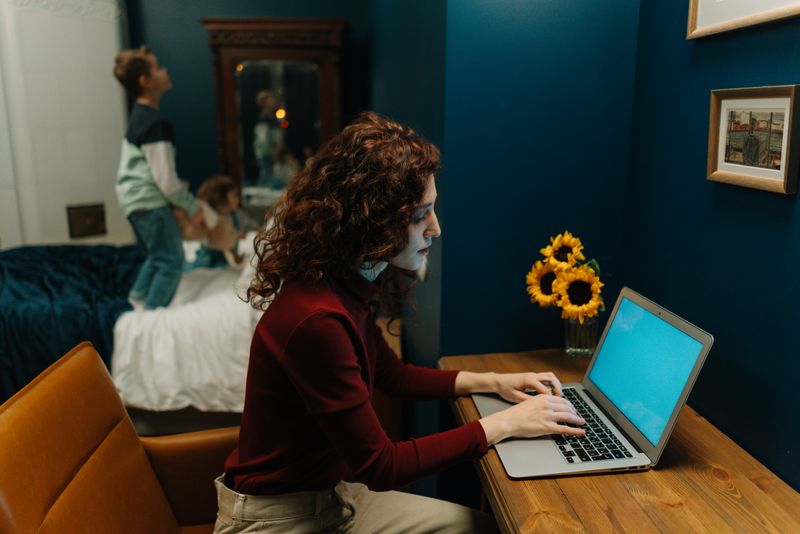
What’s actually happening in your house between nine and five
Most of us have never audited our own homes. Try it on paper.
Morning brings the tail end of everyone leaving, plus the dishwasher you started and the laundry running on a timer. Mid-morning is deliveries, the recycling truck, somebody’s landscaping crew, the constant low hum of the HVAC cycling on and off. Early afternoon is often the quietest window you get, which is exactly when most people schedule their calls and lose it. After three, kids come home, and the house repopulates.
Underneath all of it sits the building itself. Interior doors in most homes are hollow-core and stop almost nothing. Shared walls in townhouses and condos transmit conversation clearly. Open floor plans, which were sold to us as the modern way to live, remove every barrier that once separated sound into separate rooms.
None of this was a mistake. Houses were designed for people who left them during the day.
The fixes that don’t work, and why you tried them all
Noise-canceling headphones handle steady low-frequency sound impressively and handle speech much less well, because voices sit in a frequency range the technology struggles with. They also become uncomfortable somewhere around hour three, and wearing them all day means missing everything you might actually need to hear.
Music with lyrics adds a second stream of language competing for the same processing. Instrumental music helps some people and does nothing for others.
Closing your office door lowers the volume without changing the intelligibility, which is why you can still follow the conversation happening down the hall.
Asking your family to keep it down works beautifully for about forty minutes.
Every one of these is a reasonable attempt, and they all aim at the same target: volume. That’s the wrong target.

What offices figured out a long time ago
Think about working in a coffee shop. Twenty conversations happening around you and somehow you get more done there than at your kitchen table. It isn’t the coffee or the ambiance. It’s that no single conversation is clear enough to follow, so your brain gives up on all of them and leaves you alone.
Sound masking recreates that on purpose. A system adds a soft, engineered background sound tuned specifically to the frequencies of human speech. Conversations beyond your immediate area become unintelligible. The sound itself is designed to sit below conscious notice, and most people in a masked environment never realize it’s running. They notice they can concentrate.
Two things worth being clear about. Masking doesn’t remove noise; it removes the information the noise was carrying, which is what your attention was reacting to. And it’s a different thing from soundproofing entirely. Soundproofing stops sound from passing through a wall and involves construction. Masking changes what you perceive inside the room and involves speakers.
The benefit nobody mentions: they can’t hear you either
We’ve been talking about noise coming toward you. It goes the other way too.
Your work calls are audible to your household. So is the conversation with your doctor’s office, the call about your mother’s insurance, the salary discussion with your manager, the argument with a client you’d rather your twelve-year-old hadn’t overheard. Working from home means conducting your professional life in a space with no private rooms.
This is actually the primary reason offices install masking rather than a side effect. Medical practices use it so patients discussing symptoms aren’t audible from the waiting area. Law firms use it so client conversations stay inside the office they’re happening in. The technology reduces intelligibility in both directions, meaning a system that stops you from hearing the television also prevents the household from hearing your calls.
Cheap things that help before you spend real money
Start here, because some of it costs nothing.
Move your desk to an interior wall rather than the one shared with the living room. This single change does more than most people expect, and it takes an afternoon.
Put down a rug with a proper felt underlay if the room has hard flooring. The floor is usually the strongest reflecting surface in a room, and a thin rug laid directly on wood does very little compared with one that has padding under it.
Hang lined curtains, particularly on any wall with a lot of glass. Weight and fullness matter more than fabric.
Add a door sweep and adhesive seal around the frame of your office door. This is a twenty-dollar fix that closes the gap, doing most of the transmitting.
Run the dishwasher and laundry outside your working hours instead of during them.
A white noise app or machine will help somewhat as a stopgap. It’s a blunter instrument than a calibrated system, since it isn’t tuned to the frequencies that carry speech, but it costs nothing to try tonight.

When it’s worth doing properly
Some signs that household adjustments have hit their ceiling:
- You work from home most days rather than one or two
- Calls make up a significant part of your working hours
- Someone in the house keeps a different schedule than you do
- Your floor plan is open, and there’s no door to close
- You end the day tired without having finished what you planned
A professional installation starts with someone measuring the actual noise conditions in the space and identifying where the problems concentrate. The design that follows specifies where speakers go, and after installation the system gets calibrated zone by zone, because ceiling height and surface materials change how the sound distributes. Residential speakers are chosen to sit flush with the ceiling finish, and the control side can integrate with whatever smart home platform you’re already running. Nothing about it is visible once it’s in.
You weren’t the problem
Your house presents your attention with dozens of intelligible sentences a day, and no planning system, app, or timer changes that. The discipline framing was never going to work, because discipline isn’t the mechanism involved.
The technology got refined in commercial spaces first. New York Soundproofing, which has been installing these systems since 2014 for clients including Microsoft, Sony, and WeWork, now does the same work for home offices, where the problem turns out to be the same one in a smaller room.
Try the free things this week. If working from home became permanent rather than temporary, the question stops being a household one.

Ellen is a busy mom of a 29-year-old son and 33-year-old daughter. She owns nine blogs and is addicted to social media. She believes that it doesn’t have to be difficult to lead a healthy life. She shares simple healthy living tips to show busy women how to lead fulfilling lives. If you’d like to work together, email info@confessionsofanover-workedmom.com to chat.
