
Last Updated on November 16, 2026 by Ellen Christian
Many household leaks start small. A damp cabinet floor, a musty smell under a sink, or a toilet that rocks on its base each means water is reaching a spot built to stay dry. These clues deserve a closer look within days, since slow leaks can soak into wood, drywall, or subflooring over time.
Posts may be sponsored. This post contains affiliate links, which means I will make a commission at no extra cost to you should you click through and make a purchase. As an Amazon Associate I earn from qualifying purchases.
Other failures arrive with no earlier sign at all. A washing machine hose can split during a cycle, or a supply fitting can let go under pressure. For those moments, a household benefits from a working main shutoff valve, a short plan for the first few minutes, plus the number of a licensed emergency plumber saved ahead of time. The sections below cover the routine checks that catch slow leaks, along with safe steps for sudden ones.
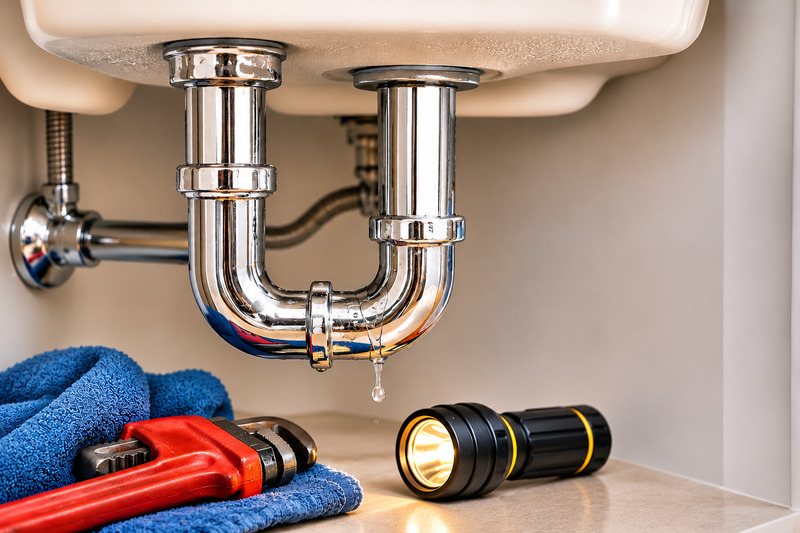
Plumbing Failures Range from Slow Leaks to Sudden Breaks
Slow leaks build over weeks or months. A nut on a sink supply line loosens gradually, a toilet seal compresses unevenly, or a water heater tank corrodes from the inside. These gradual problems tend to leave stains, soft spots, white mineral crust, or odors that a regular look can catch.
Sudden failures follow a different pattern. Burst hoses, frozen pipes, or cracked fittings can release water within minutes, sometimes with no visible sign the day before. Routine checks can lower the odds of some of these events, such as replacing a blistered washer hose before it fails. No inspection can predict every failure, which is why a reachable, working shutoff valve matters as much as any checklist.
Cold weather adds its own risk for pipes in unheated garages, crawl spaces, attics, or along exterior walls. The American Red Cross frozen pipe guidance recommends insulation for exposed pipes ahead of winter. During severe cold, it also suggests a slow drip from faucets served by those pipes, with garage doors kept closed. A faucet that releases only a trickle in freezing weather may signal a frozen pipe. Thawing should rely on gentle heat such as a hair dryer, never an open flame.
A Seasonal Walk-Through Covers the Common Leak Points
A short inspection at each change of season gives a household a baseline to compare against. Following the same route each time makes a new stain or drip easier to notice. A flashlight with a dry paper towel covers most of the work.
- Dry the pipes under each sink, run the faucet for a minute, then check the supply lines plus the curved drain trap for fresh moisture.
- Feel the cabinet floor beneath each sink for dampness, warped wood, or a musty smell.
- Inspect the water heater fittings, tank surface, plus drain pan for rust streaks, white crust, or standing water.
- Pull the washing machine forward slightly to look for a bulging, cracked, or blistered supply hose.s
- Check the thin water line behind the refrigerator for kinks, drips, or a damp floor below .it
Any of these findings is worth a call to a plumber, since each one involves a connection under steady water pressure. Rust on the tank body or water beneath a water heater calls for a professional assessment, as the unit holds hot water under pressure.
One simple way to catch hidden plumbing leaks early is to place a water leak detector alarm under your sink or near your washing machine. These inexpensive devices sound an alarm when they detect water, giving you a chance to address a small leak before it causes serious damage.

Toilet Leaks Can Start at the Base or Inside the Tank
The base of a toilet sits on a wax ring, a soft seal between the toilet and the drain opening in the floor. A failing seal may show up as water on the floor after a flush, staining around the base, a sewer odor, or a toilet that rocks. A soft or spongy floor near the toilet suggests moisture has reached the subfloor, which calls for a plumber’s inspection.
Cracked caulk around the base is a cosmetic issue on its own, with no proof of a leak. Caulk can also hide a failing seal, since water trapped under the toilet may soak into the floor out of sight. This Old House notes that many plumbers skip caulk at the base for this reason, though some local codes require it. A stain on the ceiling below a bathroom deserves attention for the same reason.
The second leak point sits inside the tank, where a worn flapper can let water slip into the bowl without a sound. A dye test from the EPA WaterSense program checks for this. Add a few drops of food coloring to the tank, wait about 10 minutes without a flush, then look for color in the bowl. Color in the bowl points to a flapper due for replacement. A flush afterward clears the dye.
The Water Meter Can Reveal Leaks Hidden Inside Walls
A water bill that climbs with no change in household routine may point to a hidden leak. The meter offers a simple check. Turn off every faucet, water-using appliance, plus any irrigation, then note the reading. After two hours with no water use, read the meter again. Any change suggests water is escaping somewhere out of sight.
The EPA WaterSense program recommends this same two-hour check. Some leaks run on and off, such as a toilet that refills now and then, so a single test may miss them. A changed reading with no visible source is a reason to call a plumber, who can trace the leak with specialized equipment.
A Jammed Garbage Disposal Needs the Power Off First
A disposal that hums without grinding usually has a jammed turntable, the spinning plate inside the unit. A switch left on in this state can overheat the motor, so the first step is to turn it off. Unplug a plug-in unit, or switch off the breaker for a hardwired one. Hands should stay out of the grinding chamber at all times, even with the power off.
InSinkErator’s jam guide outlines the standard fix for most of its models. Insert the hex wrench supplied with the unit, or a 1/4-inch Allen wrench, into the center hole on the bottom. Work it back and forth until it turns freely in full circles. Shine a flashlight into the drain, then lift out any object with tongs or pliers. Next, press the small red reset button on the bottom of the unit, and wait about 10 minutes if it fails to stay in. Restore power, start the cold water, then switch the disposal on.
Models differ, so the owner’s manual is the best guide for a specific unit. A disposal that keeps humming, trips the reset again, or leaks from its housing needs a plumber or a replacement.
Older Main Shutoff Valves Need Gentle Handling
The main shutoff valve stops water to the whole house. It usually sits where the supply line enters the home, such as a basement wall, crawl space, garage, or utility closet. Every adult in the household should know its location before an emergency.
Many older homes use a gate valve, a wheel handle that takes several turns to close. Years of mineral buildup can seize these valves. Force applied to a stiff handle can snap the internal stem, which may leave water running with no way to stop it from inside. This Old House warns against jerking or forcing an old main valve.
A gentle approach works best. Turn the handle slowly, then stop at firm resistance. A valve that resists, drips at the stem, or fails to stop the flow needs service from a plumber, who may swap it for a quarter-turn ball valve with a lever handle. Households with a valve untouched for years may prefer to have a plumber check it during a routine visit. If the indoor valve fails during a leak, the local water utility can close the curb valve near the street.
Certain Signs Call for a Licensed Plumber
A finding moves from routine check to service call once water shows up outside the pipes, or once a safety part stops working. Clear examples include a meter reading that moves with all water off, a soft floor near a toilet, rust or pooling at a water heater, a shutoff valve that refuses to turn, or a frozen pipe out of reach. Active water inside a wall or ceiling calls for an emergency visit. Close the main valve first, then cut power to wet areas only if that can be done without standing in water.
On arrival, a plumber typically locates the source, checks the nearby connections, tests the shutoff, then explains whether a repair or a replacement fits. A clear diagnosis spares the household from guesswork about the cause. It also gives a firm basis for the next decision, from a quick part swap to a larger repair.
A slow drain is often one of the earliest signs of trouble. Learn more about why drains slow down before they become completely clogged and what you can do before a minor problem becomes an expensive repair.
Small Checks Limit the Damage from Plumbing Failures
Plumbing problems range from slow drips that leave clues to sudden breaks that leave none. A seasonal walk-through, a periodic meter check, plus a working shutoff valve address each case. The result is fewer surprises, with less water reaching floors, walls, or ceilings when a pipe or fitting does fail.

Ellen is a busy mom of a 29-year-old son and 33-year-old daughter. She owns nine blogs and is addicted to social media. She believes that it doesn’t have to be difficult to lead a healthy life. She shares simple healthy living tips to show busy women how to lead fulfilling lives. If you’d like to work together, email info@confessionsofanover-workedmom.com to chat.
