
Last Updated on November 29, 2026 by Ellen Christian
The holidays fill a house with things pets love to investigate, like fudge on the coffee table and a guest’s purse holding sugar-free gum. An emergency kit packed before the first party lets you act fast if one of those things ends up inside your dog or cat.
Posts may be sponsored. This post contains affiliate links, which means I will make a commission at no extra cost to you should you click through and make a purchase. As an Amazon Associate I earn from qualifying purchases.
A good holiday kit covers emergency phone numbers and records, first aid supplies, poison-response items you use only on a vet’s direction, and anything your pet’s own health calls for, like daily medications. It all goes in one bag you can grab on the way to the car.
Below, you’ll find what to pack in each part of the kit, which holiday foods and decorations cause the most trouble, and how to plan for the drive if your regular vet is closed on Christmas Day.
Start With Phone Numbers and Paperwork
When something goes wrong, the slowest step is often figuring out who to call. Many regular clinics close or cut hours between Christmas and New Year’s, so look up the nearest 24-hour emergency animal hospital now and confirm its holiday schedule.
If you live in the country, that hospital may be an hour or more away. Know the route before you need it, and save the address in your phone’s map app.
Write these on an index card and slip it into a zip-top bag:
- Your regular vet’s number and holiday hours
- The nearest 24-hour emergency vet, with its address
- ASPCA Animal Poison Control Center: (888) 426-4435
- Pet Poison Helpline: (855) 764-7661
- Your pet’s current weight, medications and doses, vaccination record, and any diagnosed conditions
Both poison lines answer around the clock and charge a consultation fee. Keep the card in the kit and a photo of it on your phone. If a house sitter or visiting relative is watching your pet, tape a copy inside a kitchen cabinet.
Basic First Aid Supplies
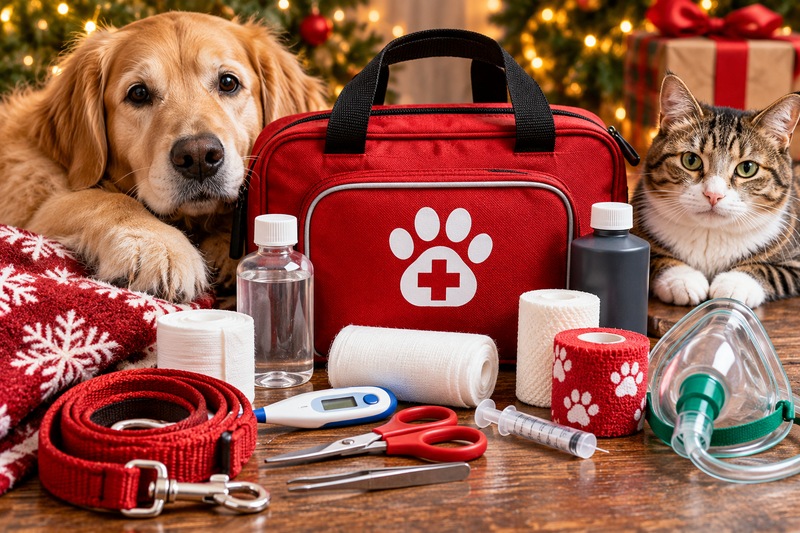
Winter brings its own small injuries. Dogs cut paw pads on ice, cats knock glass ornaments off low branches, and rock salt cracks dry skin between the toes. A few basic supplies handle the first few minutes:
- Gauze pads and a roll of self-adhesive bandage wrap, which clings to itself and leaves fur alone
- A bottle of sterile saline for flushing eyes or a dirty scrape
- Blunt-tipped scissors and tweezers
- A digital thermometer and a small tube of water-based lubricant
- Disposable gloves
- A slip leash and a soft muzzle sized for your dog
- An old towel or small blanket
The muzzle can feel unnecessary for a sweet family dog. Pain changes behavior, though, and even a gentle pet may snap when you touch a hurt leg. The towel does double duty as a wrap for a frightened cat or a sling for carrying a small dog.
For bleeding, press gauze firmly over the wound. If blood soaks through, leave that pad in place and stack fresh gauze on top. Deep cuts, punctures, and bleeding that won’t slow after a few minutes of pressure all need a vet the same day.
A dog or cat’s normal temperature runs roughly 100.5 to 102.5°F. A reading well above or below that range is a reason to call your vet or the emergency hospital.
The American Veterinary Medical Association’s pet first aid guide provides additional emergency care tips. Remember that first aid is not a substitute for professional veterinary treatment.
Poison-Response Items to Use Only on Instruction
Most holiday emergencies start in the kitchen. The foods and decorations that cause the most calls this time of year include:
- Chocolate, especially dark chocolate and baking chocolate
- Xylitol, a sweetener found in sugar-free gum, mints, some baked goods, and some peanut butters
- Grapes, raisins, and currants, which hide in fruitcake, stuffing, and holiday breads
- Onions and garlic in gravy, stuffing, and leftovers
- Raw yeast dough and spilled alcoholic drinks
- Lilies in holiday bouquets, which can cause kidney failure in cats from very small exposures
- Tinsel and curling ribbon, which cats like to swallow
Antifreeze belongs on that list too, since winter is when it leaks onto garage floors and driveways. It tastes sweet to pets, and a small amount can be fatal.
If you suspect your pet ate something dangerous, call your vet or a poison line before doing anything else. They’ll ask what was eaten, how much, and when, so grab the wrapper or package and bring it with you.
Two items belong in the kit for use only when a vet or poison control tells you to use them.
The first is an unopened bottle of 3% hydrogen peroxide with an oral syringe, which a vet may have you give a dog to make it vomit. It isn’t used in cats, and vomiting makes some swallowed items more dangerous.
The second is activated charcoal, which binds certain toxins in the gut. Some substances don’t bind to it at all, and timing matters, so the decision about whether and how much to give belongs to your vet or the poison control specialist on the phone.
Extras for Pets With Heart or Breathing Conditions
Senior dogs, flat-faced breeds like Pugs and French Bulldogs, and pets diagnosed with heart disease, collapsing trachea, or feline asthma have a harder time with the season. Excited greetings, a crowded house, fireplace smoke, scented candles, and cold air can all push a struggling pet into a breathing crisis.
Some signs mean you need to leave for the emergency hospital now: blue or gray gums, breathing that stays fast while your pet is resting, a stretched-out neck with elbows held wide, collapse, and open-mouth breathing in a cat. Cats rarely pant, so a panting cat needs a vet right away.
Pack at least a week of your pet’s daily medications in the kit, along with any rescue medications your vet has prescribed. Holiday travel delays and closed pharmacies can turn a two-day supply into a problem.
Ask your veterinarian whether portable oxygen belongs in the bag for your pet. Pawprint Oxygen’s rescue kits pair a 15-liter oxygen canister with a pet oxygen mask and a regulator preset for your pet’s weight, and they don’t require a prescription.
Depending on flow rate, one canister lasts up to 30 minutes. That’s meant to ease your pet’s breathing effort while you drive to the emergency hospital, where a veterinarian can find and treat whatever caused the crisis.
If you’re flying to see family, keep in mind that canned oxygen isn’t allowed on airplanes in checked bags or carry-ons. Arrange for any oxygen supplies to be waiting at your destination instead.
Packing for Holiday Travel and Houseguests
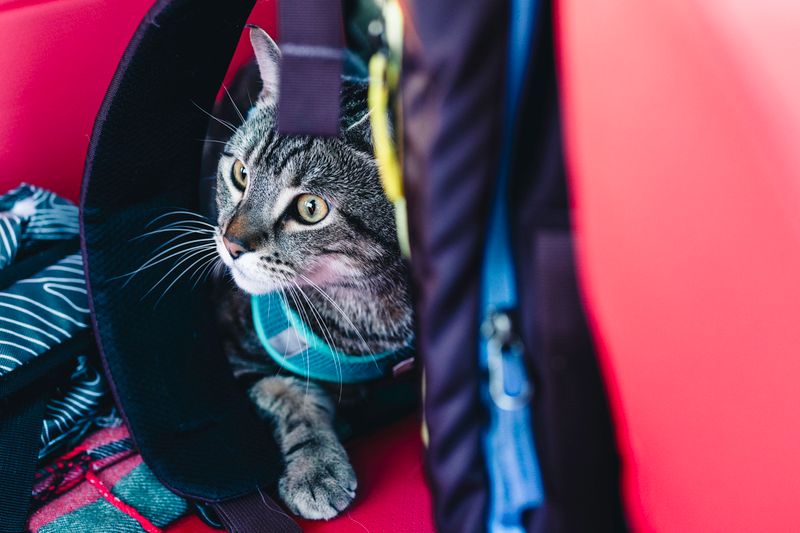
A road trip to Grandma’s calls for a bigger version of the same kit. Add a secured carrier or a crash-tested car harness, a gallon of water, a few days of your pet’s regular food in a sealed container, and a recent photo of your pet in case they slip out a door somewhere unfamiliar.
Before you leave, check that your pet’s ID tag has your cell number and that the microchip registration lists your current contact information. If you’ve moved or changed numbers since your pet was chipped, update the registry now.
Hosting brings its own risks. Ask guests to keep purses and coats out of reach, since gum and medications often ride in pockets. A quiet back room with water, a bed, and a closed door gives an anxious pet somewhere to rest when the house gets loud.
Helpful Supplies for Your Holiday Pet Emergency Kit
Having the right supplies organized and ready to grab can make holiday travel and unexpected emergencies less stressful.
- Pet first aid storage bags: Keep emergency supplies organized and easily accessible.
- Waterproof document pouches: Protect vaccination records, emergency contact information, and medication instructions.
- Collapsible pet bowls: Make offering food and water during holiday travel more convenient.
- Rechargeable flashlights: Provide extra visibility during nighttime emergencies and winter power outages.
- Washable pet travel blankets: Provide familiar bedding and comfort when away from home.
Keep these supplies together so you can find everything quickly when needed.
Where the Kit Lives Between Thanksgiving and New Year’s
Keep the finished kit somewhere everyone in the house knows, such as the coat closet by the door you use most. When you head out for a holiday trip, it goes in the car with the luggage.
Before the season starts, open the bag and check expiration dates on the saline, hydrogen peroxide, and medications. After any emergency, restock what you used that same week, so the gauze, the phone card, and the fresh bottle of peroxide are all there the next time your dog finds the fudge.
Holiday emergencies aren’t limited to pet injuries or accidental poisoning. Winter storms and power outages can also disrupt your pet’s care. Check out these tips for preparing for bad weather to make sure your entire household is ready for unexpected emergencies.

Ellen is a busy mom of a 29-year-old son and 33-year-old daughter. She owns nine blogs and is addicted to social media. She believes that it doesn’t have to be difficult to lead a healthy life. She shares simple healthy living tips to show busy women how to lead fulfilling lives. If you’d like to work together, email info@confessionsofanover-workedmom.com to chat.
