Last Updated on August 3, 2026 by Ellen Christian
If you’re drowning in stacks of paperwork but don’t have room for a bulky filing cabinet, you’re not alone. Between medical records, insurance papers, school forms, tax documents, and household paperwork, it’s easy for paper clutter to take over your counters and kitchen table.
Posts may be sponsored. This post contains affiliate links, which means I will make a commission at no extra cost to you should you click through and make a purchase. As an Amazon Associate I earn from qualifying purchases.
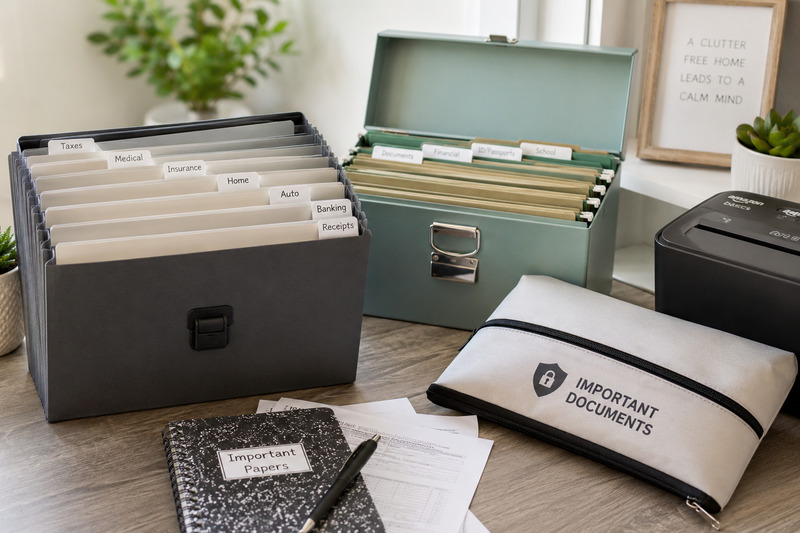
The good news is that you don’t need a traditional filing cabinet to keep important documents organized. With a few simple systems, you can store paperwork efficiently, find what you need quickly, and reduce clutter throughout your home.
Start by Sorting Your Papers
Before you organize anything, gather all your important papers from around the house. Check kitchen counters, desk drawers, purses, backpacks, and mail piles.
Create separate categories such as:
- Financial documents
- Tax records
- Insurance policies
- Medical records
- Home and vehicle information
- School paperwork
- Personal identification documents
- Warranties and manuals
Sorting everything first helps you see exactly what you have and prevents duplicates from being stored in multiple locations.
Get Rid of Unnecessary Paperwork
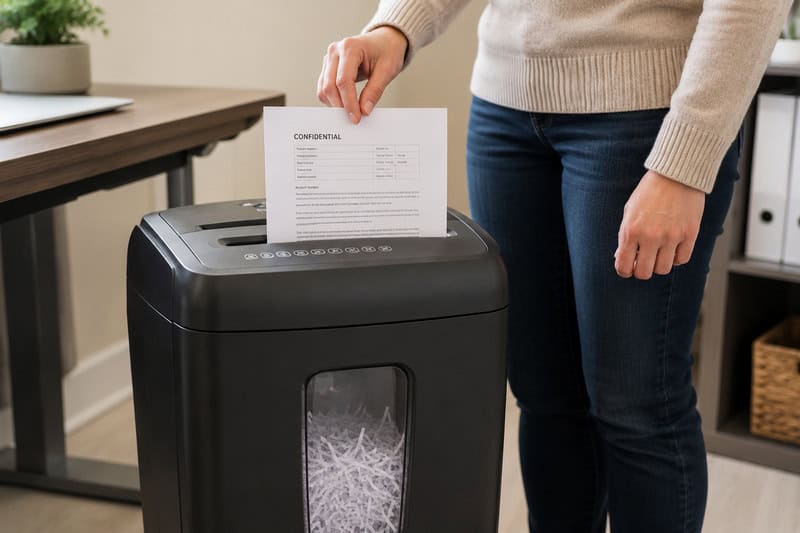
One of the easiest ways to organize important papers without a filing cabinet is to reduce the amount of paper you keep.
Shred or recycle:
- Expired warranties
- Old utility bills you no longer need
- Duplicate documents
- Junk mail
- Outdated statements available online
The less paper you keep, the easier your system will be to maintain.
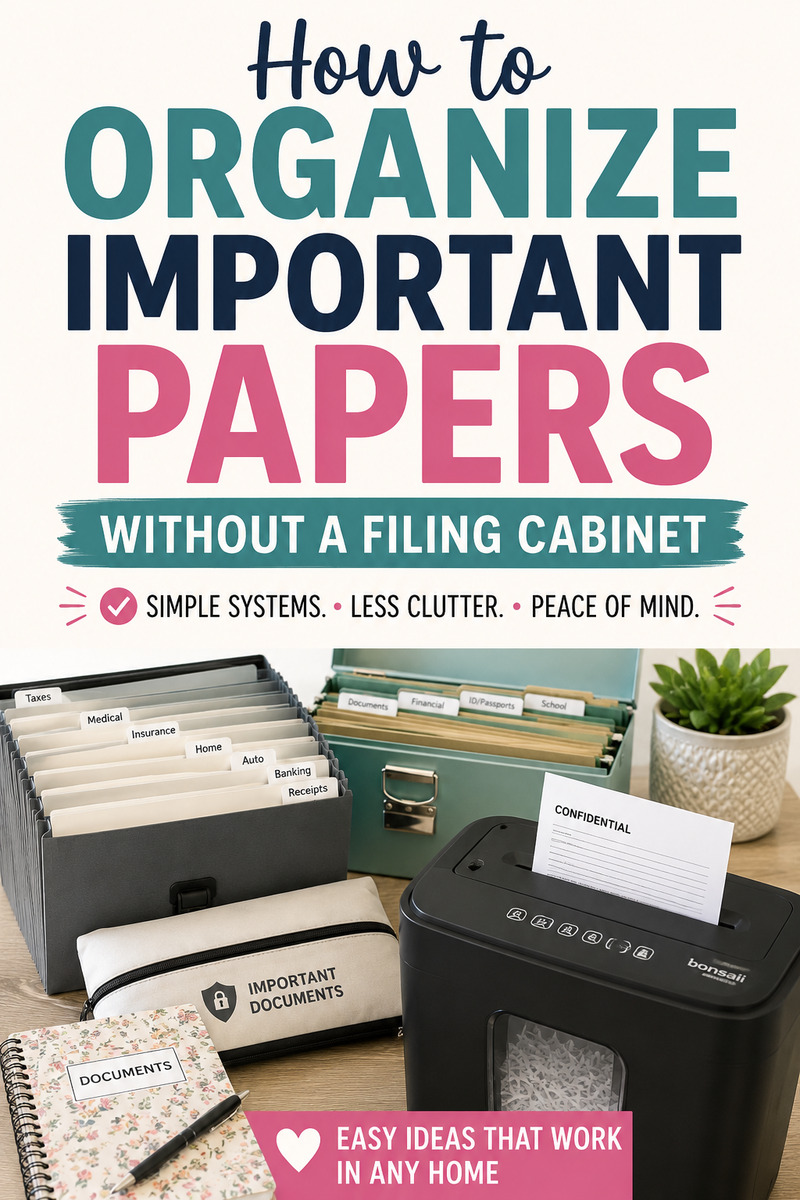
Use an Accordion File Organizer
An accordion file is one of the best alternatives to a filing cabinet. It takes up very little space and can hold a surprising amount of paperwork.
Label each section clearly:
- Taxes
- Medical
- Insurance
- Home
- Auto
- Banking
- Receipts
Store the organizer on a bookshelf, inside a closet, or on a desk shelf where it’s easy to access when needed.
Create a Portable File Box
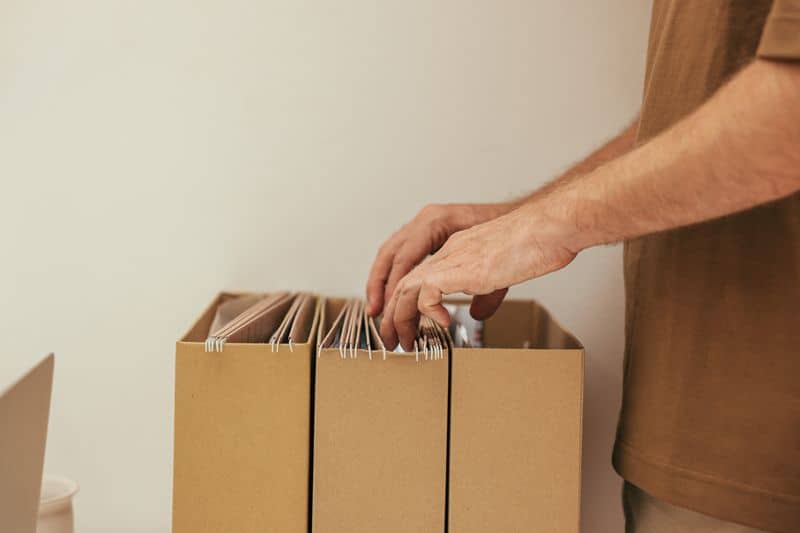
If you have more paperwork than an accordion folder can hold, consider a portable file box with hanging folders.
Unlike a filing cabinet, a file box can be stored:
- In a closet
- Under a bed
- On a shelf
- In a home office corner
Use hanging folders with clear labels so you can quickly locate documents.
Store Vital Documents Separately
Certain papers deserve extra protection.
Keep items such as:
- Birth certificates
- Social Security cards
- Passports
- Marriage certificates
- Property deeds
in a fireproof document bag or fireproof lockbox.
Having these documents stored together makes them easy to find during emergencies.
Go Digital When Possible
Many documents no longer need to be stored on paper.
Consider scanning:
- Insurance policies
- Receipts
- Medical records
- Warranties
- Tax documents
Save digital copies in clearly labeled folders on your computer or a secure cloud storage service.
A digital backup provides extra protection if physical documents are lost or damaged.
Set Up an Action Folder
One reason paper piles build up is because incoming paperwork doesn’t have a designated home.
Create a simple “Action Needed” folder for:
- Bills to pay
- Forms to complete
- School papers requiring signatures
- Documents waiting for review
Once the task is completed, file the paper or discard it.
Maintain Your System Monthly
Paper organization isn’t a one-time project.
Spend 10 to 15 minutes each month:
- Filing loose papers
- Shredding outdated documents
- Updating records
- Emptying your action folder
Regular maintenance keeps paperwork from becoming overwhelming again.
Final Thoughts
You don’t need a large filing cabinet to keep important papers organized. With an accordion file, portable file box, digital storage, and a simple filing routine, you can create a system that works in almost any home.
The key is choosing a method you’ll actually use. A simple, easy-to-maintain system is far more effective than a complicated filing setup that quickly gets abandoned. By reducing paper clutter and giving every document a designated home, you’ll spend less time searching for paperwork and more time enjoying a calmer, more organized home.

Ellen is a busy mom of a 29-year-old son and 33-year-old daughter. She owns nine blogs and is addicted to social media. She believes that it doesn’t have to be difficult to lead a healthy life. She shares simple healthy living tips to show busy women how to lead fulfilling lives. If you’d like to work together, email info@confessionsofanover-workedmom.com to chat.
