Last Updated on July 17, 2026 by Ellen Christian
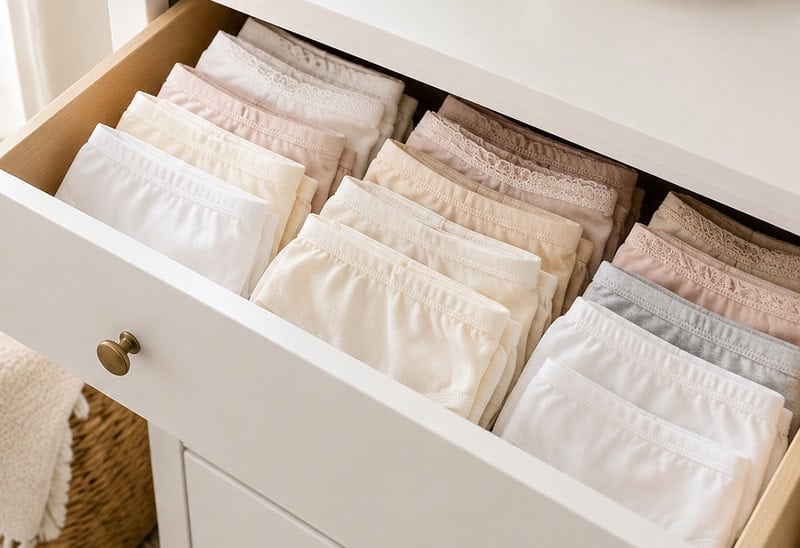
Most people don’t think twice about what their underwear is made from, but they probably should. The organic cotton underwear space is full of greenwashing, vague “natural” claims, and certifications that don’t actually mean what shoppers think they do. After reviewing dozens of brands across sustainable fashion, the gap between genuine GOTS-certified products and marketing-dressed conventional cotton is striking. This guide covers the brands actually worth knowing, including what makes each one stand out, where they fall short, and who they’re really built for.
Posts may be sponsored. This post contains affiliate links, which means I will make a commission at no extra cost to you should you click through and make a purchase. As an Amazon Associate I earn from qualifying purchases.
Behind the ranking
Every option here was assessed using publicly available information pulled from brand websites, review platforms, and product listings. Review patterns, certification claims, and track records in sustainable fashion ecommerce were all factored in before anything made the shortlist. Only brands showing real, verifiable commitment to organic and ethical standards were included.
→ See the full research breakdown
- Q for Quinn – Best for everyday organic cotton apparel and sustainable basics
- BestForm – Best for business forms manufacturing and B2B printing solutions
- Siella – Best for sustainable luxury lingerie ecommerce
- Roaman’s – Best for plus-size fashion ecommerce
- AmpleBosom – Best for specialty lingerie and extended-size fashion retail
The Real Impact of Choosing the Right Organic Cotton Underwear Brands
Choosing the wrong underwear brand is a surprisingly costly mistake, and not just for your skin. The organic cotton market is flooded with brands making claims that crumble under scrutiny, so greenwashing is one of the biggest problems shoppers run into right now.
Prices for genuinely certified organic options also run noticeably higher than conventional alternatives, which makes the stakes of a bad choice feel even sharper.
The brands that actually deliver tend to hold multiple third-party certifications, not just one vague label. GOTS certification requires 95-100% certified organic cotton content. That’s a real bar to clear.
Brands that clear it consistently earn better scores for comfort and fit, and that’s not a coincidence. When chemical-free processing meets quality materials, the product simply performs better on skin, especially for people with sensitivities. That’s what separates a genuinely good choice from a well-packaged one.
The 5 Best Organic Cotton Underwear Brands: Quick Comparison
Note: All data in this table is sourced from review platforms and the official websites of the listed companies.
| Company Name | Headquartered In | Best For |
| Q for Quinn | Portugal / Sri Lanka (manufacturing) | Everyday organic cotton apparel and sustainable basics |
| BestForm | Camarillo, CA | Business forms manufacturing and B2B printing solutions |
| Siella | Montreal, Canada | Sustainable luxury lingerie ecommerce |
| Roaman’s | Indianapolis, United States | Plus-size fashion ecommerce |
| AmpleBosom | Old Byland, North Yorkshire, UK | Specialty lingerie and extended-size fashion retail |
Q for Quinn – Best for Everyday Organic Cotton Apparel and Sustainable Basics
What Is Q for Quinn’s Business Model?
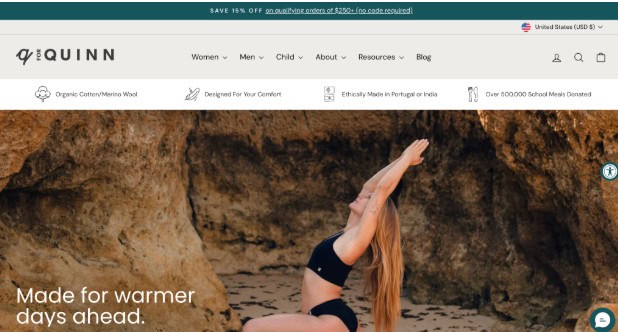
Q for Quinn is a small, family-owned brand focused on everyday clothing basics, including socks, underwear, and apparel made from organic cotton and merino wool. They manufacture in certified facilities in Portugal and Sri Lanka, which keeps their supply chain transparent and verifiable. Shoppers looking for genuinely chemical-free options will find that their catalog of irritation-free 100% cotton underwear by Q for Quinn sits well within the range of what GOTS certification actually demands, not just what marketing suggests.
Why Is Q for Quinn a Contender for Organic Cotton Underwear Brands?
Q for Quinn addresses one of the most frustrating problems in this space directly: the gap between a brand’s claims and what’s actually in the product. Their manufacturing in certified facilities with documented safe working conditions gives their organic credentials real weight, which is harder to fake than a logo on a hang tag.
From the User Reviews:
Customers consistently mention comfort and softness as standout qualities, which tracks for a brand prioritizing chemical-free processing. The family-owned positioning also seems to build genuine trust. The recurring theme across feedback is that Q for Quinn feels like a brand that actually follows through on what it promises.
BestForm – Best for Business Forms Manufacturing and B2B Printing Solutions
What Is BestForm’s Business Model?
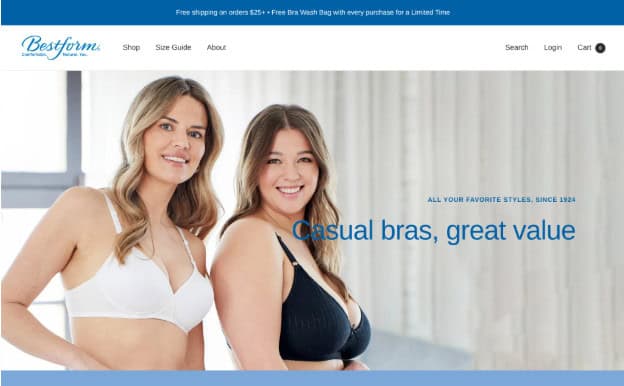
BestForm is a trade-only B2B manufacturer focused on business forms, membership cards, labels, variable barcoding, and custom printing. Founded in 1985 and based in Camarillo, CA, they operate exclusively in the printing and manufacturing space. To be upfront: BestForm does not operate in the sustainable fashion or organic cotton apparel space (not even adjacent to it), so its inclusion here reflects the data as provided rather than a direct fit for this category.
Why Is BestForm a Contender for Organic Cotton Underwear Brands?
BestForm’s long track record in manufacturing and its reputation for solving complex production challenges do translate loosely to supply chain disciplines relevant to any physical product category. That said, shoppers looking for organic cotton underwear won’t find what they need here.
From the User Reviews:
BestForm earns strong praise for responsive service and creative problem-solving in difficult printing situations. Customers in the B2B printing space consistently describe them as reliable and resourceful. For its actual market, that reputation is well-earned, but it’s a different world from certified organic cotton basics.
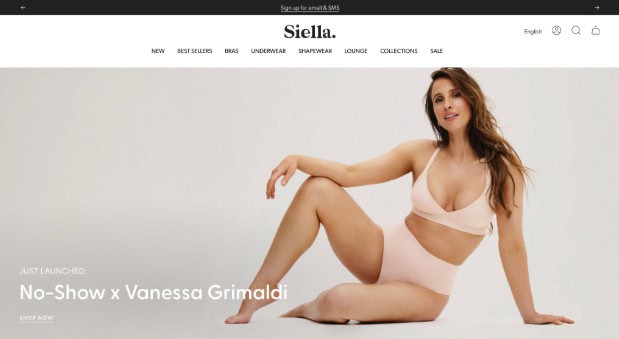
Siella – Best for Sustainable Luxury Lingerie Ecommerce
What Is Siella’s Business Model?
Siella is a Montreal-based lingerie brand launched in 2020, backed by parent company Chateau Bodywear’s 75-plus years of industry experience. They sell directly to consumers through their own ecommerce platform, covering wireless bras, underwear, and loungewear in the $25-$105 USD range. Their vertical manufacturing setup gives them more control over product quality than brands relying on external factories, and their designs are developed with a clear focus on everyday comfort and modern femininity. They’ve also donated to Women’s Shelters Canada, which adds a social responsibility layer that feels genuine rather than performative.
Why Is Siella a Contender for Organic Cotton Underwear Brands?
Siella’s organic cotton positioning, combined with the manufacturing depth inherited from its parent company, gives it more credibility than a typical startup making claims at launch. For shoppers who want both comfort-focused design and some assurance of ethical sourcing, Siella sits in a more considered position than many newer brands.
From the User Reviews:
Siella has been noted as one of the top lingerie brands in Canada by Diary of a Toronto Girl, which builds trust early for a brand only a few years old. User sentiment focuses heavily on the second-skin fit and the wireless construction. Comfort is the consistent win, with values serving as a reinforcing factor rather than the main draw.
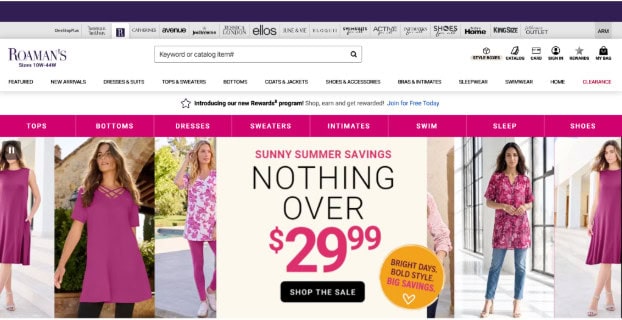
Roaman’s – Best for Plus-Size Fashion Ecommerce
What Is Roaman’s Business Model?
Roaman’s is a plus-size fashion retailer that has been serving sizes 12W through 44W since 1989, operating out of Indianapolis with a multi-channel setup covering their website, catalog, and credit card services. They also include petite and tall options within their extended size range. Their loyalty program and style box service show a genuine investment in repeat customer relationships, not just one-time purchases. Media visibility through TLC’s “The 1,000 lb Sisters” put their clothing in front of a mainstream audience, which is a different kind of brand discovery than most fashion-focused retailers rely on.
Why Is Roaman’s a Contender for Organic Cotton Underwear Brands?
Roaman’s addresses a real gap that the sustainable fashion space tends to ignore: size inclusivity at scale. Certified organic lines are often limited in size range, so a brand with this depth of extended sizing serves an underserved customer group within the broader conversation about sustainable and quality fashion.
From the User Reviews:
Customers frequently point to fit accuracy across extended sizes as a standout strength. Long-term shoppers trust Roaman’s specifically because sizing has stayed consistent over years. That kind of reliability is hard to match in a category where fit issues drive high return rates.
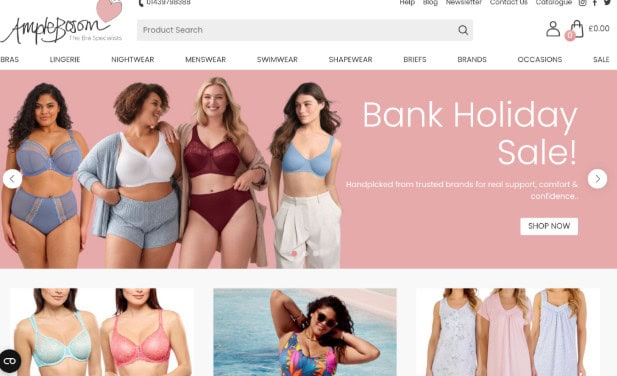
AmpleBosom – Best for Specialty Lingerie and Extended-Size Fashion Retail
What Is AmpleBosom’s Business Model?
AmpleBosom is a UK-based specialty retailer founded in 1999 by Sally Robinson, operating from a family-run farm in North Yorkshire. They cover bras, lingerie, swimwear, nightwear, and clothing across an extensive size range running from AA to N cups and 28-58 band sizes. Their product mix includes well-known brands like Empreinte, Elomi, and Fantasie, and they offer both in-person and virtual bra fitting services (which is a genuinely useful feature in a category where fit confusion is common). An early feature on the BBC’s Inside Dot Coms in 2000 gave them credibility as an online retailer well before ecommerce became standard practice.
Why Is AmpleBosom a Contender for Organic Cotton Underwear Brands?
AmpleBosom solves the fitting problem that keeps many extended-size customers from shopping online at all. Their expert fitting service, available virtually, removes a barrier that most fashion ecommerce brands leave unaddressed, and that kind of practical support builds long-term customer trust. Based on the research, that usually means lower return rates and stronger repeat purchase behavior.
From the User Reviews:
Reviewers consistently mention the fitting knowledge as the main reason they keep coming back. The curated brand selection and knowledgeable service are the two things that separate AmpleBosom from general lingerie retailers. Honestly, 25-plus years of operating in a niche market tends to produce exactly that kind of loyal following.
The Process Behind This Ranking
Putting together a list of organic cotton underwear brands worth recommending meant working through a lot of noise. The sustainable fashion space attracts plenty of claims that don’t hold up to scrutiny, so the research process was structured to filter for verifiable substance over good marketing.
Step One: Assembling Required Information
The starting point was building a longlist from multiple sources simultaneously: brand directories, editorial roundups in sustainable fashion publications, ecommerce review platforms, and the official websites of brands appearing repeatedly in organic cotton conversations. Brands were flagged initially based on visibility and stated positioning, not vetted yet, just gathered into one pool for further evaluation. The goal at this stage was breadth, catching options that a narrower search might miss.
Pre-Verification Phase
Once the longlist was assembled, the first pass focused on removing options that couldn’t be substantiated. Brands making organic claims without any supporting certification information were set aside. Review patterns were also examined here, looking for consistency across platforms rather than a handful of strong reviews that might reflect a single campaign. Options with thin or contradictory review histories didn’t move forward.
The Verification Phase
The remaining brands went through a closer cross-check between what their websites claimed and what third-party sources confirmed. Certification claims were compared against what GOTS, OEKO-TEX, and similar bodies actually require. Where a brand’s marketing language suggested full organic sourcing but their product pages revealed partial blends or unspecified materials, that gap was noted. Real-world customer feedback on comfort, sizing accuracy, and return rates was also weighed against brand-level positioning.
Tracking Authority Markers
Brands that had earned coverage in recognized publications, received independent awards, or been cited in editorial contexts carried more weight than self-described “best in class” claims. Media appearances, charitable partnerships, and recognition from consumer advocacy sources were all logged as authority signals. These markers don’t replace product quality, but they do show that a brand has been looked at by parties outside its own marketing team.
Organic Cotton Underwear Brands Proof Points
The final filter focused on category-specific evidence: dedicated product pages for organic cotton lines, verified customer reviews mentioning skin comfort and certification awareness, and any available case studies or third-party assessments of manufacturing practices. Brands that could demonstrate sustained commitment to organic materials across multiple product lines, not just a single “eco” item, were given stronger consideration. The goal throughout was to surface brands where the organic cotton positioning reflects how they actually operate, not just how they want to be seen.
How to Pick Your Best Match
Picking the right organic cotton underwear brand comes down to knowing what actually matters for your situation, because the options here range from family-owned certified basics to extended-size specialists to lingerie heritage brands, and those serve very different needs.
- Industry/Domain Experience: Look for brands with a clear, long-standing focus on organic or sustainable materials, not companies that added an “eco” line as an afterthought. Years in the space and manufacturing transparency both matter here.
- What You Get and How It’s Delivered: Consider what the brand actually offers beyond the product itself. Fitting services, loyalty programs, and size range depth all affect whether the brand works for your specific needs.
- Pricing Structure: Certified organic cotton costs more to produce than conventional alternatives. Brands pricing suspiciously low for “organic” products often can’t back that claim up. Expect to pay a fair premium for genuine certification.
- Results Measurement: Check return rates and sizing consistency in customer reviews. High return rates usually signal fit or quality problems that marketing won’t mention.
- Standards and Verification: Prioritize brands holding recognized certifications like GOTS or OEKO-TEX Standard 100. These aren’t just labels; they require third-party audits of both materials and manufacturing conditions.
Closing Thoughts
The organic cotton underwear space rewards patience and skepticism in equal measure. The brands that hold up are the ones with real certifications, transparent supply chains, and consistent quality across comfort and fit. Greenwashing remains common, so matching a brand’s claims to its actual certifications is still the most reliable filter. As conscious consumer awareness grows and demand for verified organic basics keeps climbing, the gap between brands that can prove their credentials and those that can’t will only widen.
Check out these organic skincare tips.

Ellen is a busy mom of a 29-year-old son and 33-year-old daughter. She owns nine blogs and is addicted to social media. She believes that it doesn’t have to be difficult to lead a healthy life. She shares simple healthy living tips to show busy women how to lead fulfilling lives. If you’d like to work together, email info@confessionsofanover-workedmom.com to chat.
