Last Updated on May 29, 2026 by Ellen Christian
Life has a way of piling on — deadlines, school runs, endless to-do lists, and the kind of tension that settles into your shoulders and just refuses to leave. If you’ve been putting off booking a massage because you’re not sure where to start, you’re not alone.
Posts may be sponsored. This post contains affiliate links, which means I will make a commission at no extra cost to you should you click through and make a purchase. As an Amazon Associate I earn from qualifying purchases.
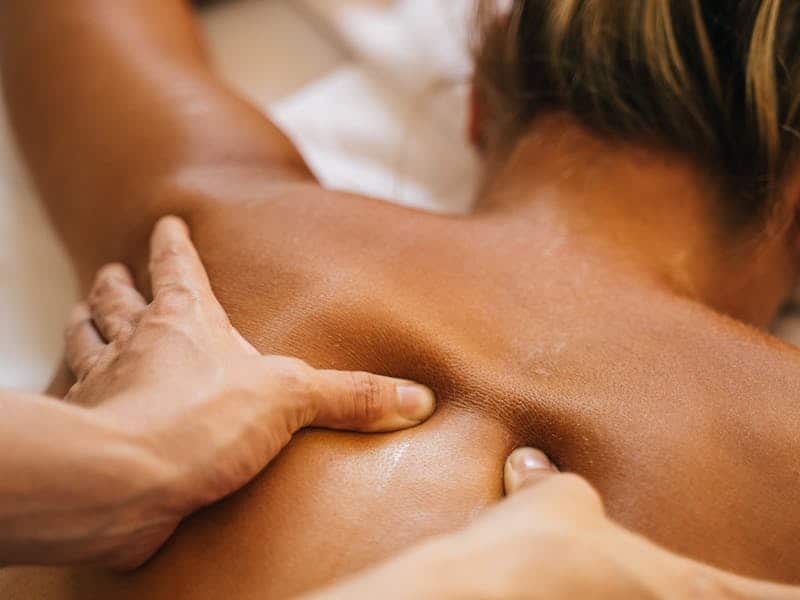
The wellness scene has grown enormously in recent years, with cities like Birmingham now home to a wide range of skilled therapists offering everything from gentle relaxation sessions to targeted therapeutic work. There’s genuinely something for everyone — but knowing the difference between your options makes all the difference in actually getting what you need from the experience.
Here’s a friendly breakdown of the most popular massage therapy styles for relaxation, and what makes each one worth considering.
1. Swedish Massage
If you’ve never had a professional massage before, Swedish is almost always the recommended starting point — and for good reason.
It uses long, flowing strokes, gentle kneading, and rhythmic tapping to ease muscle tension and calm the nervous system. The pressure is typically light to medium, making it accessible even if you’re sensitive or just need a proper wind-down.
When exploring your options for massage therapists in Birmingham, Swedish massage tends to be one of the most widely offered treatments across the city’s wellness studios.
Platforms like I Love Massage list therapists who specialise in this style, making it straightforward to find someone experienced in delivering a genuinely restorative session.
Swedish massage is particularly good for:
- First-time clients unsure what to expect
- General stress and mental fatigue
- Improving circulation and sleep quality
- A full-body reset after a demanding week
2. Hot Stone Massage
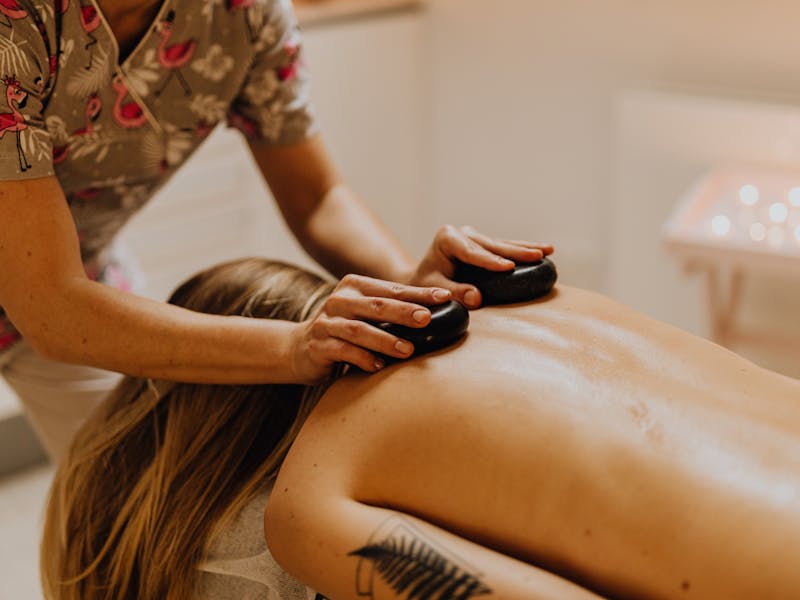
Few things are as deeply relaxing as the weight and warmth of smooth heated stones placed along your spine. Hot stone massage takes the foundations of Swedish technique and adds thermal therapy — and the combination is genuinely something else.
The heat penetrates muscle tissue more deeply than hands alone can manage, releasing tension in a way that feels almost effortless. It’s especially popular during colder months when the warmth adds an extra layer of comfort.
Hot stone massage consistently ranks among the top requested specialty treatments in professional therapy settings — a reflection of just how effective people find it.
It’s a particularly good choice if you:
- Carry chronic tension in your back or shoulders
- Find deep pressure uncomfortable but want more than a surface-level massage
- Struggle with poor circulation or always feel cold
- Want something that feels genuinely indulgent, not just functional
3. Aromatherapy Massage
Aromatherapy massage combines the physical benefits of touch with the mood-enhancing effects of essential oils — and the result is a deeply immersive experience that works on both body and mind simultaneously.
The therapist selects oils based on what you’re looking for. Lavender for calm and sleep support. Eucalyptus for mental clarity. Rose or ylang-ylang for emotional balance. The oils are blended into a carrier and worked into the skin using gentle, flowing strokes similar to Swedish technique.
It’s one of the most holistic options available, particularly well-suited to people dealing with anxiety, emotional burnout, or disrupted sleep. The scent itself becomes part of the therapeutic experience — long after the session ends, a familiar fragrance can trigger that same sense of calm.
4. Deep Tissue Massage
Deep tissue often gets misunderstood as simply “a harder version of Swedish” — but it’s a genuinely distinct technique with a different purpose.
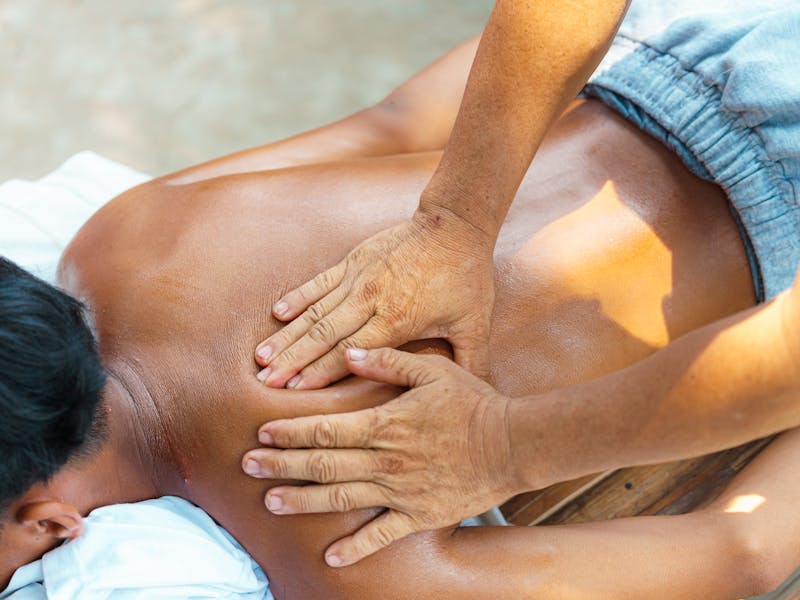
Rather than broad surface strokes, deep tissue work targets the deeper layers of muscle and connective tissue, using slower, more focused pressure to break down adhesions and release chronic tension patterns.
It’s not always the most comfortable experience in the moment, but the results — particularly for people with persistent muscle tightness, postural issues, or old injuries — can be remarkable.
RELATED: Cupping Massage Benefits for Shoulder Pain
A few things to keep in mind:
- It’s normal to feel some soreness for 24–48 hours after
- Always communicate with your therapist about pressure levels
- It’s not the best choice if you’re purely after relaxation — Swedish or aromatherapy will serve you better for that
- Hydrating well before and after helps your body process the work
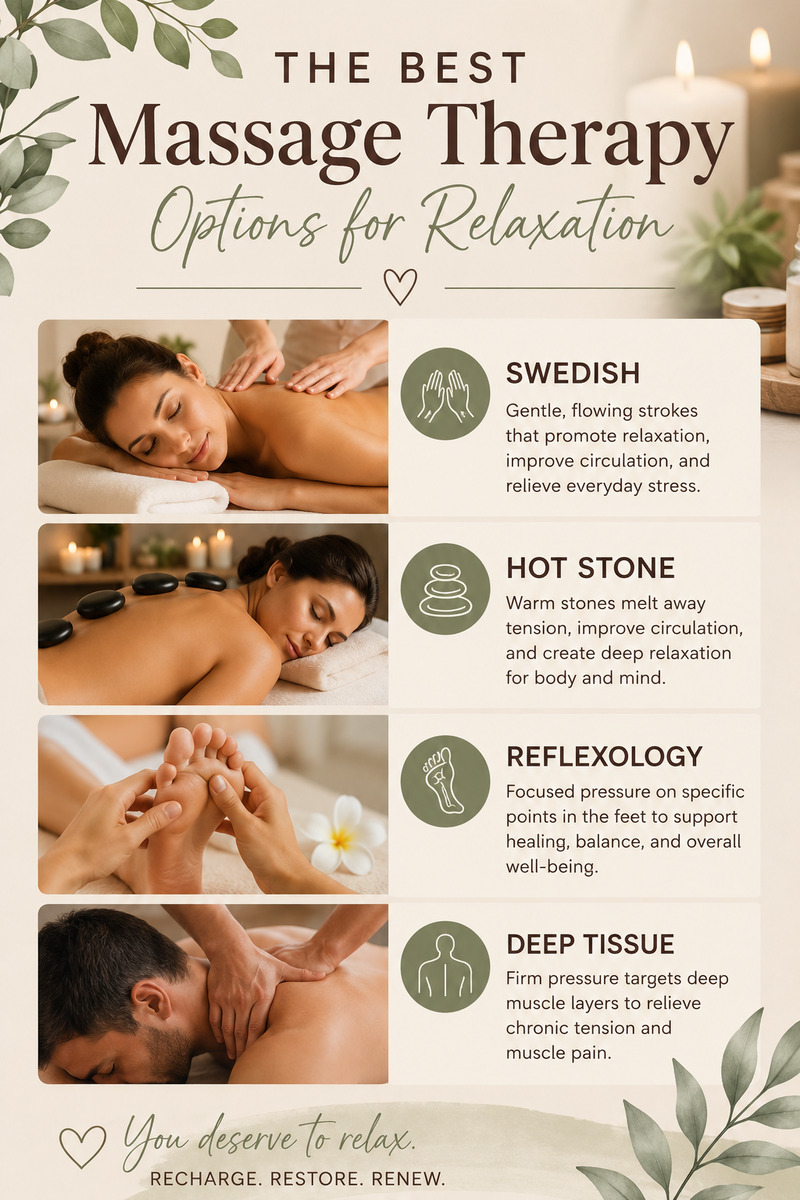
5. Reflexology
Reflexology is a little different from the others on this list — it focuses almost entirely on the feet (and sometimes hands or ears), working specific pressure points that are believed to correspond to organs and systems throughout the body.
Whether or not you buy into the full theoretical framework, the practical effect is hard to argue with. A good reflexology session leaves most people feeling deeply relaxed, unusually calm, and often surprisingly sleepy.
It’s a brilliant option if:
- You prefer to remain fully clothed during a session
- You’re not comfortable with full-body massage
- You’re on your feet all day and your legs carry the brunt of it
- You want something that feels genuinely different from a standard massage
The Conclusion
Honestly, the best massage is the one that actually gets booked. If you’ve been waiting for the “perfect” choice, the simpler answer is to start with what appeals to you most and adjust from there.
Most experienced therapists will also talk you through the options during a brief consultation before your session — so you don’t need to have all the answers before you walk in the door. Trust the process, be honest about what you’re looking for, and let the session do its work.
Your body has been waiting for this longer than you probably realise.
Ellen is a busy mom of a 29-year-old son and 33-year-old daughter. She owns nine blogs and is addicted to social media. She believes that it doesn’t have to be difficult to lead a healthy life. She shares simple healthy living tips to show busy women how to lead fulfilling lives. If you’d like to work together, email info@confessionsofanover-workedmom.com to chat.
