
Last Updated on July 9, 2026 by Ellen Christian
A family home comes with a soundtrack, and the soundtrack never pauses. Footsteps thundering across the ceiling. Cartoons at a volume only children consider normal. “MOM!” arriving in stereo from three different rooms. A toy bin emptied onto a hardwood floor with the acoustic force of a small avalanche. You love every person making that noise — and some days you would still trade a kidney for five quiet minutes.
Posts may be sponsored. This post contains affiliate links, which means I will make a commission at no extra cost to you should you click through and make a purchase. As an Amazon Associate I earn from qualifying purchases.
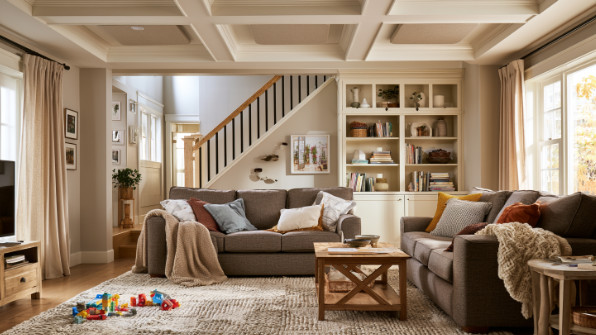
Here’s the good news I wish someone had told me sooner: a quieter family home is absolutely possible, and it has nothing to do with making kids sit still (we all know how that goes). It’s about stopping the house itself from carrying and amplifying every sound. And for the number-one complaint — hearing every single footstep from upstairs — acoustic ceiling panels for home are the fix that finally works.
Let’s walk through why your house is so loud and what actually helps, room by room.
Why Family Homes Are So Loud (It’s Not Just the Kids)
Take a look around your main living space. Bare walls, hard floors, big windows, maybe an open floor plan connecting the kitchen to everything else. Beautiful — and acoustically, it’s an echo chamber. Hard surfaces bounce sound instead of soaking it up, so every shout and clatter gets replayed around the room and carried through the house. Your kids provide the noise; the house provides the amplifier.
It helps to know that home noise comes in two flavors. Airborne noise is anything that travels through the air: voices, the TV, that one talking toy that never runs out of batteries. Impact noise is anything that strikes the structure itself: running feet, jumping, dropped toys. They travel differently and they’re fixed differently — soft materials tame the airborne kind, while impact noise needs to be addressed at the surface it hits.
That’s why footsteps upstairs sound like a stampede downstairs. A running child isn’t loud in the hallway sense — the sound is hammering directly into the floor, and the floor delivers it straight into your ceiling like a drum. Which brings us to the big one.
The Upstairs Problem: Quieting Noise Between Floors
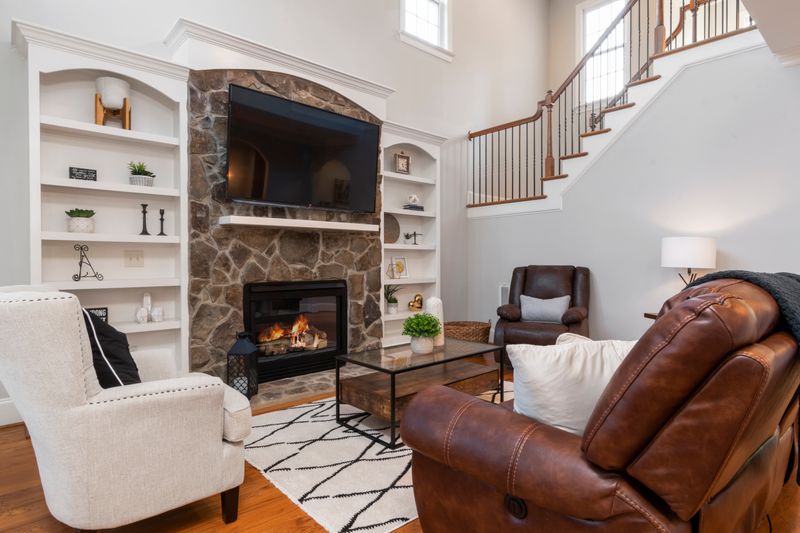
If your kids’ bedrooms or playroom sit above your living room or office, you already know this problem by heart. You can identify which child is walking, at what speed, and roughly what they’re carrying. It’s the top complaint in two-story homes, and it has answers on both sides of the floor.
From above, softness is your friend. Rugs with thick pads in the kids’ rooms, foam play mats in the play zone — every soft layer absorbs part of the impact before it reaches the structure. It won’t erase the noise, but it takes the sharp edge off.
From below is where the real difference happens. Acoustic ceiling panels are soft, fabric-finished panels that mount onto the existing ceiling of the room underneath the noise. They absorb sound at the surface where all that thumping arrives, so the room stops acting like the inside of a drum. And here’s the part that matters for a busy household: they attach to the ceiling you already have. No tearing open drywall, no construction dust, no week of contractors — a project, not a renovation. Modern ones look like clean design elements, not office tiles.
Where do they earn their keep most? The living room under the play area, the home office where you take calls, and the main bedroom if it sits under an early riser. Treat the ceiling in the one room where noise from above drives you craziest, and you’ll wonder why you waited.
Room by Room: A Mom’s Noise-Reduction Map
The living room collects noise from the whole house, so give it layers: a large rug (the thicker the better), proper curtains, upholstered furniture. Each soft surface takes a bite out of the echo. If the playroom is overhead, this is your prime candidate for ceiling panels.
In the kids’ rooms and play areas, think soft and think containers. Play mats where the action happens, fabric bins instead of toy boxes with slamming lids, curtains and a rug. Bonus: a room with less echo is genuinely calmer, and many parents notice the kids themselves wind down easier in it.
Your home office — or the corner pretending to be one — deserves special defense, because that’s where the outside world hears your household live and uncensored. Panels on the ceiling if the noise comes from above, a panel or two on the wall, and a simple seal on the door to close the gap the sound sneaks through.
And the main bedroom should be the quiet zone of the house. Heavy curtains, an upholstered headboard, soft flooring. You spend your whole day absorbing noise; your room shouldn’t make you do it at night too.
Quick Wins That Cost Almost Nothing
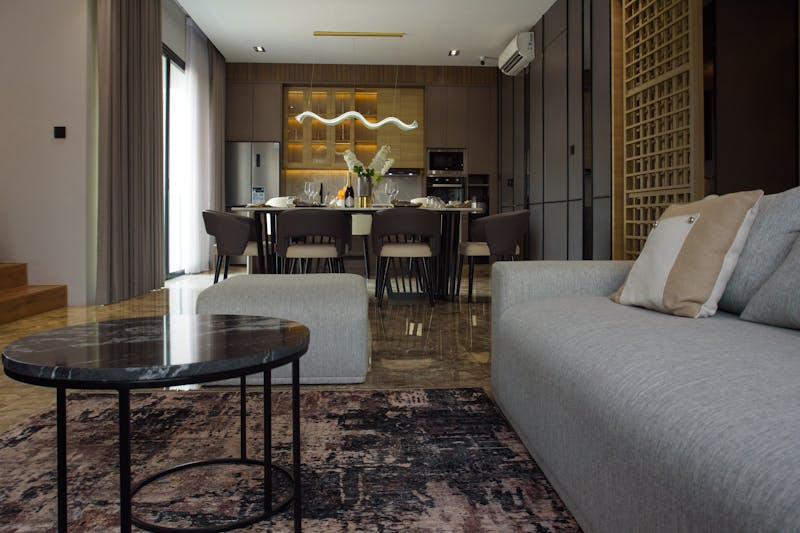
Some of the best fixes are embarrassingly small. Felt pads under every chair leg — the scrape of chairs on hard floor is one of the most grating sounds a house produces, and it disappears for pocket change. Soft-close bumpers on cabinet doors and drawers. A door snake or draft stopper under a bedroom door during nap time.
Pair the physical fixes with a little family policy: loud games live in the designated loud zone (ideally the room you’ve padded), and quiet hours exist around naps and work calls. Rules alone don’t survive contact with children — but rules plus a house that doesn’t amplify every slip work surprisingly well together.
Furniture placement is free soundproofing, too. A full bookshelf against the wall you share with a neighbor or a noisy room adds a thick, mass-heavy barrier. And if you can avoid mounting the TV on the bedroom wall, your evenings will thank you.
What to Skip (Save Your Money)
A few popular “solutions” deserve a warning label. Egg cartons and thin decorative foam do close to nothing — they slightly reduce echo inside a room but won’t stop noise traveling between rooms or floors. Soundproof paint sounds miraculous because it is; a millimeter of anything cannot block sound.
The principle that keeps your money safe: soft materials fight echo, mass and sealed gaps fight noise between rooms, and ceiling treatment fights the footsteps from above. If a product doesn’t fit one of those jobs, it’s decor.
Quiet Is Allowed, Mama
A peaceful home isn’t a luxury, and it isn’t something you have to postpone until the kids are grown. It’s the result of a handful of right decisions — a treated ceiling here, a thick rug there, felt pads everywhere — starting with whichever room is loudest right now.
When you’re ready to start, suppliers like Sound Pro Solutions carry ceiling panels made for homes along with other family-friendly acoustic products, so you can match the fix to your loudest problem. The kids will still be gloriously, wonderfully loud. Your house just doesn’t have to help them.

Ellen is a busy mom of a 29-year-old son and 33-year-old daughter. She owns nine blogs and is addicted to social media. She believes that it doesn’t have to be difficult to lead a healthy life. She shares simple healthy living tips to show busy women how to lead fulfilling lives. If you’d like to work together, email info@confessionsofanover-workedmom.com to chat.
