
Last Updated on October 20, 2026 by Ellen Christian
It’s surprising how many little unfinished projects can accumulate around a house over time. A missing piece of baseboard behind the couch. Two mismatched outlet covers. A bathroom towel bar that has been leaning against the wall for months instead of being installed.
Posts may be sponsored. This post contains affiliate links, which means I will make a commission at no extra cost to you should you click through and make a purchase. As an Amazon Associate I earn from qualifying purchases.
None of these projects is particularly expensive or difficult to fix, but together they can make an otherwise comfortable home feel like the moving-in process was never quite finished. That’s the trap: big home improvement projects get all the attention, while the small details quietly determine whether a house feels complete or not.
Here is what actually moves the needle, in the order it usually matters. A trim carpenter or remodeler like NextGen Builders can knock out a punch list like this in a single visit, but you can also do most of it yourself on a couple of weekend mornings.
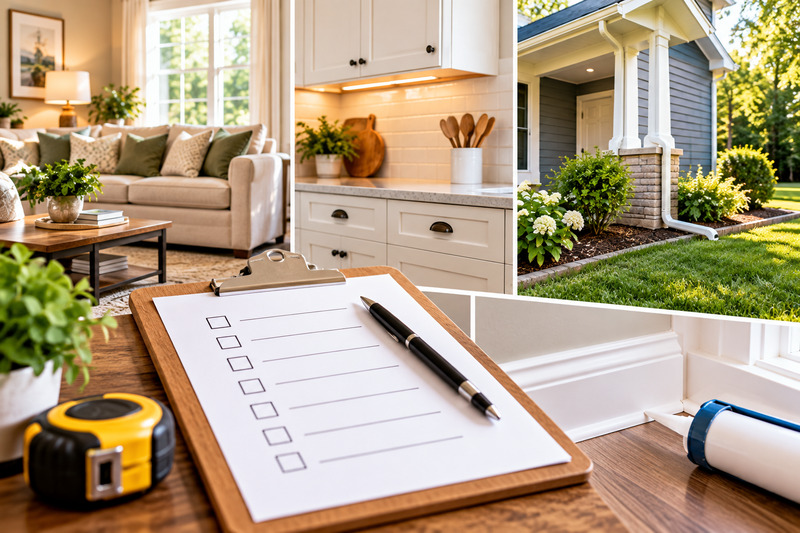
Start With a Punch List, Not a Project
Most homeowners skip this step and go straight to pricing out a kitchen. That is backwards. Walk through every room with a notepad and write down anything that is unfinished, broken, or mismatched. Be specific. “Guest room feels off” is useless. “Guest room has no closet door, one unpainted outlet cover, and a curtain rod hung four inches too low” is a to-do list you can actually finish.
Give yourself a gut check on each line: is this a two-hour fix or a two-week job? Sort the list into those two piles. Finish the two-hour pile first, all of it, before you touch anything bigger. You will be shocked how much different the house feels at the end of that weekend.
My own rule is that nothing stays in the two-hour pile for more than one month. If it is still there after thirty days, it either moves to the real project list or it gets deleted from my brain forever. Deleting it counts as progress. Some things genuinely do not matter.
What Does “Finished” Actually Look Like Room by Room?
Finished is not a style. It is a set of small details that all agree with each other. Here is where I look first in any room, and these are the spots buyers and guests notice without being able to name them.
- Trim: baseboards, door casings, and crown molding all in one consistent profile
- Wall plates: outlet and switch covers painted to match the wall, or swapped for a clean matte plate
- Hardware: cabinet pulls, door knobs, and hinges in a single finish instead of three
- Caulk lines: a fresh bead where the counter meets the backsplash, where a tub meets the tile
- Lighting: bulbs matched in color temperature so one warm lamp is not fighting two cool ones
That last one costs about the same as lunch and changes a room more than a new rug does. Walk through your house tonight with the lights on and count mismatched bulbs. Most people find at least three.
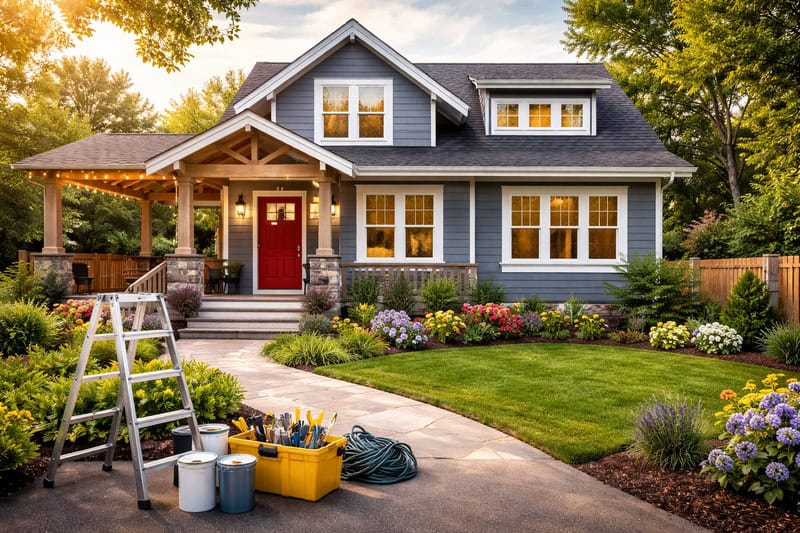
Outside Counts More Than You Think
The exterior is the first thing you see when you pull into the driveway, which means an unfinished exterior drags down the whole house. The good news is that curb appeal work tends to be small in scope and high in payoff.
Check the gutters, the downspout extensions, and the slope of the soil around your foundation. According to the U.S. Department of Energy, water management around the foundation is one of the basic steps to protect a home from moisture damage, and it is far cheaper than fixing the damage later. Clean gutters that drain away from the house do more for how a place looks and lasts than any new mailbox.
Then look at where the house stops and the yard begins. A deck with a hidden frame or missing corner board makes the whole backyard feel half done, the same way an unpainted outlet cover does in a bedroom. Fix the edges first. Nobody notices the middle until the edges are clean.
Where Most of the Money Actually Goes
Home improvement spending in America is enormous, and it keeps climbing. Data from the U.S. Census Bureau shows American households spend hundreds of billions of dollars a year on home improvement and repairs. What that number hides is how much of it goes toward the wrong end of the list.
People buy new appliances while the trim is still raw. They replace a front door before sealing the gap around the old one. If you have a fixed budget this year, spend the first chunk on the details that make everything else look intentional, and only then move to the upgrade you have been eyeing.
| Priority | Typical Task | Why It Comes First
|
|---|---|---|
| 1 | Trim, wall plates, caulk, hardware | Cheap, fast, and it changes how every room reads at a glance |
| 2 | Water management, gutters, grading | Protects everything you already paid for |
| 3 | Paint, inside and out | The largest visual change per dollar you can make |
| 4 | Decks, steps, exterior edges | Defines where the house ends and the yard begins |
| 5 | Full room remodels and additions | Worth doing well, but only once the rest is settled |
Repairs Versus Upgrades, and Why Timing Matters
There is a difference between fixing what is broken and improving what already works. Both have a place. The mistake is doing them in the wrong order or at the wrong time of year.
Exterior work has a season, and it is shorter than most people plan for. Paint, caulk, and deck staining all need dry conditions and reasonable temperatures to cure properly. The Environmental Protection Agency notes that some paints and finishes carry specific temperature and handling requirements for exterior use, which is why late fall and winter are usually the wrong window. If you are scheduling anything for the outside of the house, book it in spring or early summer, and use the cold months for interior lists.
If you go the contractor route, the worst thing you can do is hand over a vague wish. Hand over your punch list instead. A good general contractor would rather see a specific list than hear “make it look nicer.” Specific lists get accurate bids, and accurate bids do not balloon halfway through.
A Weekend Plan You Can Actually Run
Saturday morning: walk the house with a notepad, write the list, and sort it into quick fixes versus real projects. Saturday afternoon: hit the hardware store once, not three times, and buy everything for the quick-fix pile at once. Double check your outlet cover color and your bulb color temperature before you check out.
Saturday evening through Sunday: work the list top to bottom and finish it. Caulk the counter line, swap the bulbs, tighten the handles, hang the towel bar. Sunday evening: stand in each room and look at it with fresh eyes. Write down the one thing that still bothers you and put it at the top of next weekend’s list.
That is the whole method. The house stops feeling unfinished when you stop treating small things as someday projects, because someday never shows up on the calendar. So what is the one unfinished thing in your house that you have walked past a hundred times? Write it down right now, pick the smallest version of it, and finish that before Sunday night.

Ellen is a busy mom of a 29-year-old son and 33-year-old daughter. She owns nine blogs and is addicted to social media. She believes that it doesn’t have to be difficult to lead a healthy life. She shares simple healthy living tips to show busy women how to lead fulfilling lives. If you’d like to work together, email info@confessionsofanover-workedmom.com to chat.
