
Last Updated on July 21, 2026 by Ellen Christian
Kona, located on the west coast of Hawaii‘s Big Island, is one of the world’s most celebrated marine adventure destinations. The area is known for its warm waters, exceptional visibility, and abundant ocean wildlife throughout the year. Visitors travel from across the globe to experience the region’s unique underwater encounters and vibrant marine environment.
Posts may be sponsored. This post contains affiliate links, which means I will make a commission at no extra cost to you should you click through and make a purchase. As an Amazon Associate I earn from qualifying purchases.
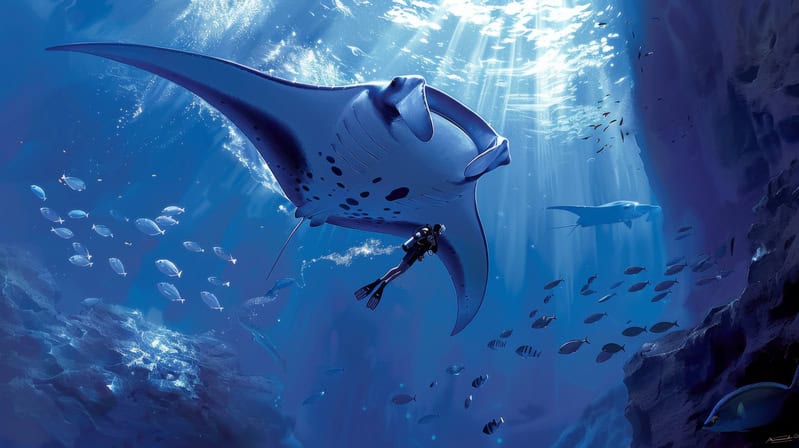
Among the many marine species that call Kona’s waters home, manta rays are undoubtedly one of the most fascinating. These gentle giants are highly intelligent, completely harmless to humans, capable of impressive migrations, equipped with unique identifying markings, and play an important role in marine ecosystems. Understanding these fascinating facts can make your experience even more memorable when you see them up close in their natural environment.
As a result, Kona manta ray diving has become one of the area’s most popular ocean activities, offering an incredible opportunity to observe these majestic creatures in their natural habitat.
1. Manta Rays Are Surprisingly Intelligent
Many people are surprised to learn that manta rays possess one of the largest brain-to-body ratios of any fish species. Researchers have observed behaviors that suggest advanced learning abilities, problem-solving skills, and even curiosity toward divers.
Manta rays are known to investigate their surroundings and often appear calm when interacting with people underwater. While they are not mammals, their intelligence sets them apart from many other marine species and contributes to the fascination they inspire among divers and marine biologists.
2. They Cannot Sting or Harm Humans
Because manta rays are related to stingrays, some people mistakenly believe they are dangerous. In reality, manta rays do not have a stinger, barb, or venomous tail. These gentle giants feed primarily on plankton and tiny marine organisms.
They use their large mouths and specialized cephalic fins to funnel food into their mouths while swimming through nutrient-rich waters. Their peaceful nature is one reason why encounters with manta rays are considered among the most enjoyable wildlife experiences in the ocean.
RELATED: Types of Catamaran Day Tours
3. Every Manta Ray Has a Unique Pattern
Just as human fingerprints are unique, each manta ray has a distinct pattern of spots on its underside. Researchers use these markings to identify individual animals and track their movements over time. This identification method has helped scientists learn more about manta ray populations, migration routes, and behaviors.
In locations where manta rays are regularly observed, long-term monitoring programs have documented individual rays returning to the same feeding areas year after year. For divers, this means the manta ray they see on one trip may be a known individual with years of documented history.

4. Manta Rays Can Travel Great Distances
Although some manta rays frequently visit the same feeding grounds, they are also capable of traveling significant distances across the ocean. These migrations are often influenced by food availability, water temperatures, and breeding behavior. Scientists continue to study their movement patterns, and new tracking technology has revealed that some manta rays travel much farther than previously believed.
Their ability to navigate vast stretches of open ocean remains one of the most intriguing aspects of their biology. This combination of site fidelity and long-range travel makes them both predictable and mysterious at the same time.
5. They Play an Important Role in Ocean Ecosystems
Manta rays contribute to healthy marine life by feeding on plankton and helping maintain ecological balance within the food web. Their presence often indicates productive ocean environments that support diverse marine life.
Because manta rays mature slowly and produce relatively few offspring, their populations can be vulnerable to environmental pressures and human activities. Conservation efforts around the world focus on protecting critical habitats and reducing threats that could impact these remarkable animals.
For those interested in Kona manta diving, learning about conservation efforts can add another layer of appreciation to the experience and highlight the importance of protecting these magnificent creatures.
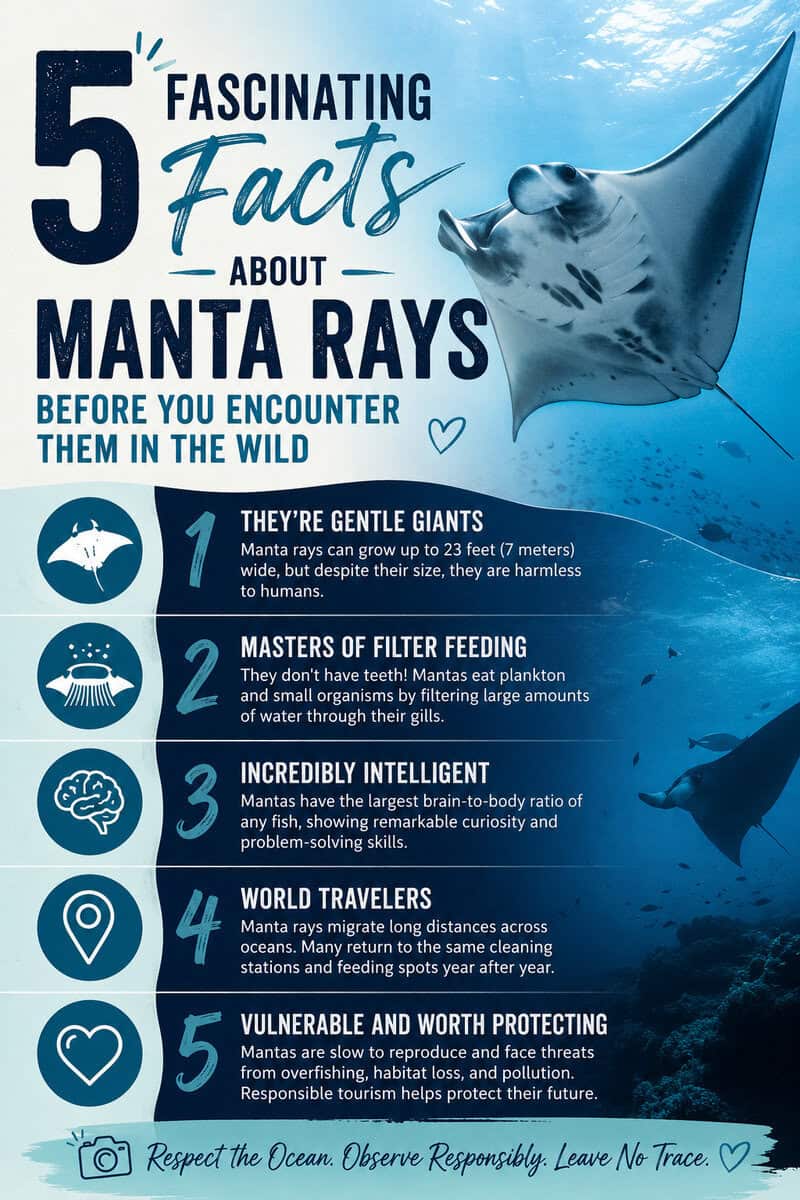
Key Takeaways
- Manta rays are among the most intelligent fish species in the ocean
- They are harmless to humans and do not possess stingers
- Each manta ray has unique spot patterns used for identification
- These animals are capable of traveling long distances across the ocean
- Manta rays play an important role in maintaining marine ecosystem balance

Ellen is a busy mom of a 29-year-old son and 33-year-old daughter. She owns nine blogs and is addicted to social media. She believes that it doesn’t have to be difficult to lead a healthy life. She shares simple healthy living tips to show busy women how to lead fulfilling lives. If you’d like to work together, email info@confessionsofanover-workedmom.com to chat.
